PART 6 (THE END): The Letter That Changed Everything 008
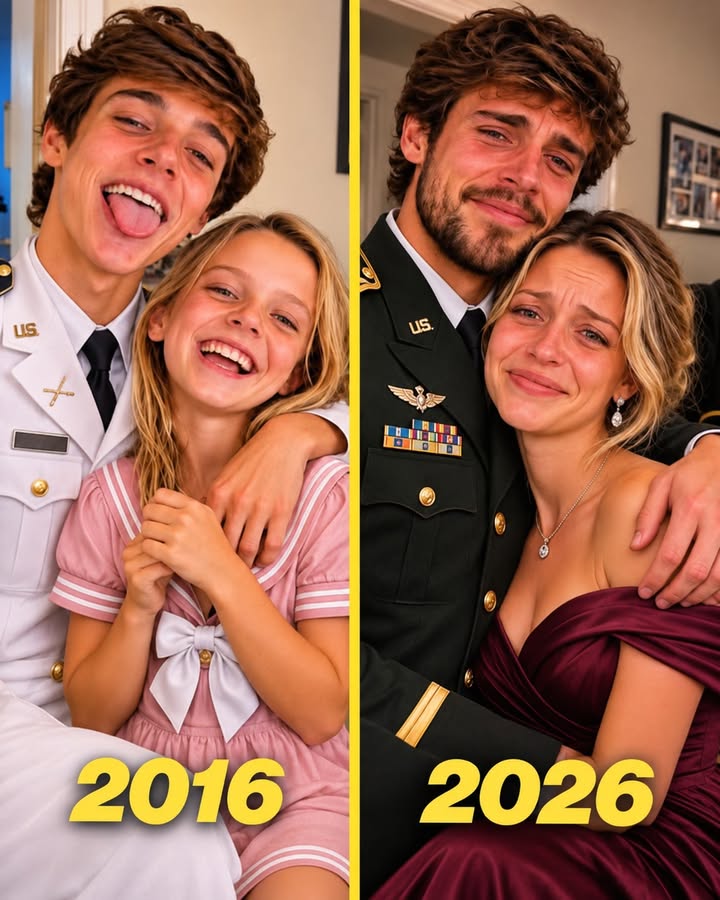
Part 6 – The Last Pancake
I read Mom’s handwriting twice, unable to make the words fit with the mother who had spent so many years saying she didn’t know.
“If he comes back, tell him I knew.”
Rick took the postcard from my hands, his thumb resting just below her note.
Mom’s face had gone pale.
“I wrote that after I read it,” she said. “I don’t remember putting it there.”
“You knew what?” Rick asked.
“That you hadn’t stolen the money.” Her voice faltered. “I knew enough to know Howard had found it, and I knew he’d sent you away anyway.”
For a moment, even the distant traffic seemed to hush.
“You knew before I left?” Rick asked.
“I learned the next morning. Mrs. Alvarez brought the money back to Howard, and I heard them speaking in the kitchen.” Mom looked down at the postcard. “I asked him what it meant. He said he’d handled it, and that bringing you home would only start another fight.”
Rick held the card carefully, as though the paper might give way beneath the weight of all those years.
“And you wrote this because you thought I’d come back?”
“I hoped you would.” Mom’s eyes filled. “I also knew I was too afraid to be the one who went looking for you.”
The truth did not arrive like a door swinging open.
It came quietly, in a few sentences that could not make the past right, but could finally name what had been hidden inside it.
I looked at Mom, seeing the grief and shame in her face, but also the fact that she had come outside to tell us more when she could have let us leave with the earlier story.
“Why didn’t you tell us tonight?” I asked.
“I didn’t understand that I had written it until I saw the card again.” She swallowed. “And because I kept hoping there was a version of the truth that would hurt you less.”
Rick looked at her.
“There wasn’t.”
“No,” she said. “There wasn’t.”
The three of us stood beneath the awning, the restaurant’s light warm behind us and the night air cool against our faces.
Mom did not ask Rick to forgive her.
She did not reach for him.
She simply held the truth in both hands, like something fragile she was finally willing to carry in the open.
“I’m going to leave now,” Rick said. “I need time to think about all of this.”
Mom nodded.
“All right.”
“I don’t want you to call tomorrow and ask if I’m ready.”
“I won’t.”
“And I don’t want Emily to be caught between us.”
“You won’t be,” she said, looking at me. “I promise.”
Rick glanced at the postcard once more, then gave it back to me.
“You keep that, bug.”
I folded it carefully and tucked it into my coat pocket.
Mom watched us, tears gathering along her lower lashes.
“I love you both,” she said. “I know those words don’t repair what I did, but they’re true.”
“I know,” Rick replied.
It was the gentlest answer he could offer, and she received it without asking for more.
Then we walked to the car.
Rick opened the passenger door for me as he had once opened the door to his old, battered bicycle when I was little, inviting me to climb onto the back and promising to ride slowly.
This time there was no need to hurry.
I glanced over my shoulder before getting in.
Mom remained beneath the awning, one hand held close to her chest, but she was not alone.
Mrs. Alvarez had come out behind her and stood at her side.
They were speaking softly, not to solve everything at once, but to stay in the same conversation.
Rick started the car.
As we pulled away, I watched the restaurant lights grow smaller in the side mirror.
“Do you believe her?” I asked.
He kept his eyes on the road.
“I believe she’s telling the truth now.”
“That isn’t the same as trusting her.”
“No,” he said. “It isn’t.”
I rested my head against the window.
“I don’t know how to feel about that note.”
“You don’t have to decide tonight.”
“I hate how many things we’re only learning now.”
“So do I.”
His voice was steady, but I heard the weariness beneath it.
I reached across the console and touched his sleeve.
He laid his hand over mine for a moment.
That was enough for the drive.
The next morning, we met at a small café near the river, where the windows fogged around the edges and the coffee smelled stronger than it tasted.
Rick arrived first, and I found him sitting at a table with the worn envelope beside his cup.
I sat across from him and pulled the postcard from my bag.
The note on the back seemed different in daylight.
“If he comes back, tell him I knew.”
“Do you want me to keep it?” I asked.
“No.” He touched the envelope. “You should keep the postcard.”
“Why me?”
“Because it was always meant for you.”
I slid it between the pages of my wallet, where I could feel its thin edge whenever I opened it.
We talked for an hour, sometimes about the night before and sometimes about nothing important at all.
We talked about the neighborhoods we had lived in, the jobs Rick had taken, the small apartment where he’d learned to cook for himself, and the friends who had become family along the way.
He told me about the first time he had made pancakes alone and burned them so thoroughly that he’d opened every window in the apartment.
I laughed, and his smile made the years between us feel less like a wall and more like a road we had both traveled from different ends.
Before we parted, he said, “I want to see you again.”
“I want that too.”
“I’m not ready to see Mom yet.”
“You don’t owe her a timetable.”
He studied my face.
“And you?”
“I’m not ready either.”
“Okay.”
He did not ask me to reconsider, and I loved him for that.
We began with what we could manage.
A call every Sunday.
A message when something reminded us of the other.
A walk through the park where we used to race along the path, though our adult legs carried us slower and our conversations wandered in new directions.
Some Sundays we talked for hours.
On others, we exchanged a few words and let that be enough.
Mom did not call to hurry us.
She did not ask me to tell Rick what she had said, or ask him to tell me what he thought of her.
When she wanted to speak, she asked if I was willing to listen.
Sometimes I was.
Sometimes I wasn’t.
She accepted both answers.
A month after the anniversary, she sent me a message asking whether Rick would be willing to receive a letter.
I showed him the message and asked what he preferred.
He thought about it for a day, then said he would read one if she sent it.
The letter arrived a week later.
Mom did not defend herself in it.
She wrote about the things she had done, not only what she had meant to do.
She said she had let fear make her choices, and that her silence had made Rick responsible for consequences he had never deserved.
She wrote that hiding the postcard from me had deprived me of the right to know my brother was still reaching for me.
She didn’t ask me to carry the letter to him.
She mailed one to each of us, with a separate apology addressed to the person she had hurt.
Rick read his in private.
When I called him that evening, he said only, “She didn’t ask me to make her feel better.”
“No,” I said. “She didn’t.”
“I’m glad.”
It was not forgiveness.
But it was another step toward the possibility of something honest.
In the months that followed, Mom kept her promises.
She began seeing a counselor, not because anyone ordered her to, but because she wanted to understand why she had spent so long mistaking silence for peace.
She found work of her own and began making decisions without waiting for Howard’s approval.
Their marriage did not mend in the way she once would have called mending.
She and Howard separated quietly, with no public blame and no attempt to make Rick or me responsible for the choice.
When they spoke, they did so carefully, and Mom kept the boundaries she had once been afraid to set.
Howard wrote to Rick twice.
In the first letter, he apologized without asking for a reply.
In the second, he acknowledged that he had used the missing money as a reason to send Rick away because he feared losing influence over the family.
Rick kept both letters in a drawer.
He did not answer them.
That, too, was a boundary.
Mom never described it as punishment.
She simply accepted that Howard’s regrets belonged to him, and Rick’s decision belonged to Rick.
By spring, Mom and I had begun meeting for lunch every few weeks.
The first time, we spoke mostly about work and the weather.
The second time, she asked whether I remembered the old kitchen drawer.
I told her I remembered its chipped handle, the way it stuck, and the day I had watched Rick’s clothes land on the lawn.
She listened without interrupting.
When I finished, she said, “I’m sorry you had to remember it alone.”
“I wasn’t alone,” I replied. “I had Rick in my memory.”
She looked down at her tea.
“You did.”
It was not a perfect conversation, but it was a real one.
Over time, I learned that trust did not return as a single grand moment.
It came in small, ordinary pieces.
Mom said when she would call, and then she called.
She answered questions without turning them back on me.
When she did not remember something, she said she did not remember.
When she had made a mistake, she did not wrap it in a story about how everyone had been doing their best.
She let the truth stand, even when it made her look smaller.
Rick noticed the difference too, though he did not move as quickly toward her as I did.
He met her once for coffee after several months.
He told me afterward that she had not asked him to hug her or tell her everything was all right.
“She asked what I needed,” he said. “Then she listened.”
I asked if he thought he might meet her again.
“I think I might.”
That was the beginning of their own slow road back.
They did not become the mother and son they might have been if the lie had never happened.
They became two adults learning how to speak honestly after years of not knowing how.
It was harder than pretending.
It was also more real.
By the time Rick’s birthday came around, Mom had not seen him for several weeks.
I asked him if he wanted a celebration.
“Not a big one,” he said. “Just dinner.”
“Would you want Mom there?”
He considered it, then nodded.
“If you think she can come without making it a promise about everything being fixed.”
“I’ll ask.”
Mom agreed, but only after I told her Rick wanted it quiet.
She said she would come as a guest, not as someone expecting to be welcomed back into his life all at once.
The three of us met at my apartment on a rainy evening near the end of the year.
I cooked too much food because I had forgotten that Rick no longer ate like a teenager who had spent the afternoon playing soccer.
Mom brought a pie from the bakery.
She asked before setting it on the counter, an awkward little courtesy that made us all smile.
For most of dinner, we talked about safe things.
The weather.
A neighbor who had adopted a loud little dog.
Rick’s new job and my latest project at work.
Then Mom looked toward him and said, “I’m glad you came.”
Rick set down his fork.
“I’m glad I came too.”
The words were simple, but Mom’s eyes shone.
She did not ask what they meant.
She let them be enough for that evening.
After dinner, I brought out the birthday cake, and Rick pretended not to notice the candles I had arranged in a crooked line.
“You always were bad at counting,” he said.
“I am not.”
“You put seven candles on a cake for a thirty-two-year-old man.”
“I ran out.”
Mom laughed.
The sound startled me with its familiarity, but it did not hurt the way it once might have.
It belonged to this moment, not to a past we were trying to recreate.
Rick closed his eyes before blowing out the candles.
I did not ask what he wished for.
When it was time for dessert, Mom helped me clear the plates while Rick stayed at the table with his coffee.
She paused beside him.
“Would it be all right if I called next week?” she asked.
He thought for a moment.
“Yes,” he said. “You can call.”
“Thank you.”
“Don’t thank me for a phone call.”
“I’m not thanking you for the call,” she said. “I’m thanking you for telling me what you’re comfortable with.”
He looked at her, and something in his expression softened.
“You’re learning.”
“I’m trying.”
“I can see that.”
Mom returned to the kitchen, blinking quickly.
Rick watched her go, but he did not look away as though he wished she had stayed gone.
The next morning, I woke to the smell of butter and coffee.
I found Rick at the stove, turning pancakes in the old pan I had brought from my first apartment.
He had arrived early, saying he wanted to make breakfast before driving back.
“You remember,” I said.
“How could I forget?”
The batter was a little too thick, and the first pancake came out lopsided.
Rick examined it with unnecessary seriousness.
“Still not as bad as the ones I burned when I was alone.”
“You left every window open for a week.”
“Only two days.”
“Mrs. Alvarez said she could smell them from her porch.”
“She was exaggerating.”
I took plates from the cupboard and watched him pour the next round.
The kitchen filled with the warm sweetness of browning batter.
A place that had once held the beginning of our separation now held an ordinary morning, bright with rainwater on the windows and the comfort of having time.
Rick slid a pancake onto my plate, then set aside the last one.
“Not that one,” I said. “You made it.”
“I’m saving it.”
“For who?”
He gave me the familiar look that had once made me feel safe before I had a name for safety.
“For you, bug.”
I laughed, and this time the word did not pull me back into grief.
It brought me here, to the kitchen, with my brother beside me and the truth no longer hidden in a drawer.
We were not the family we had been.
We were not going to pretend the years had disappeared, or that love alone could erase what fear and silence had done.
We were something new, built from honest words, patient choices, and the small promises we kept.
Rick placed the last pancake on my plate.
Outside, the morning opened softly around us.
I reached for the syrup, and he nudged the plate closer, just as he had when we were children.
For the first time in years, I did not have to wonder whether he would stay.
He was here, and he was choosing to begin again with me.
**–THE END–PLEASE
Share your thoughts or feedback to motivate us to create more stories ♥️
* * *
[PREVIOUS: PART 5](https://puretales.idolsgift.com/blog/part-5-the-letter-that-changed-everything-008)
✓ Lynn R. Adams
Part 6 – The Last Pancake I read Mom’s handwriting twice, unable to make the words fit with the mother who had spent so many years saying she didn’t know. “If he comes back, tell him I knew.” Rick …