PART 6 (THE END): The Letter She Never Got to Give Him 041
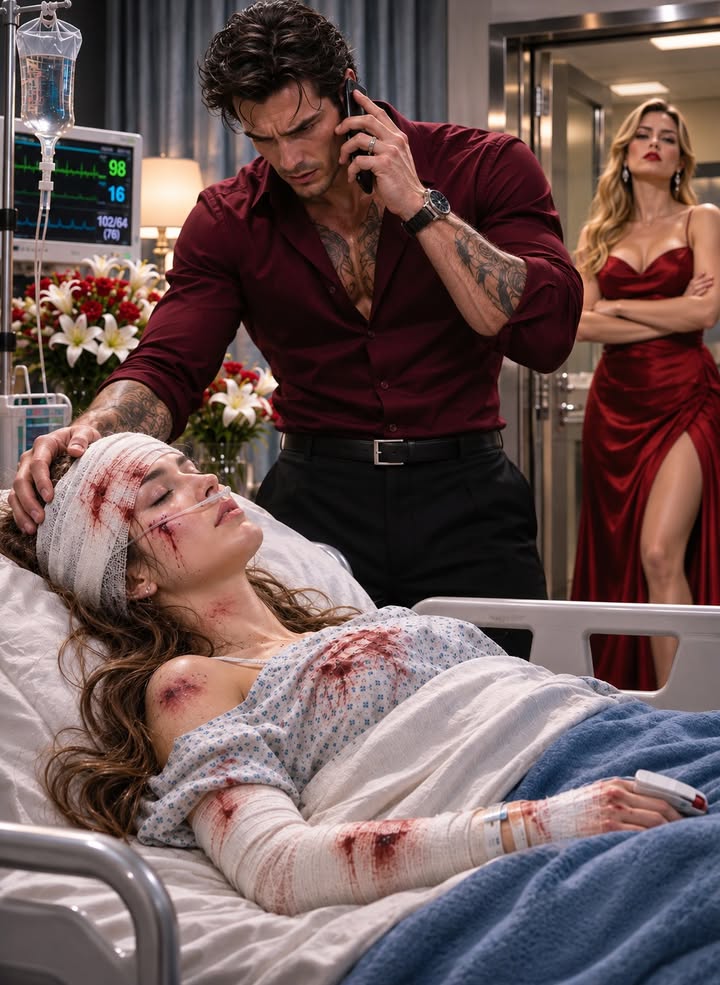
Part 6 – The Life They Chose
The second voice was Marco’s.
I looked up from the transcript, and he was standing at the far end of the corridor, his expression drained of color.
For one breath, neither of us spoke.
Then he came toward me, slowly, palms open at his sides.
“Dante,” he said, and his voice held no defense, only disbelief. “I need you to hear the whole recording.”
I glanced at Detective Alvarez, who had just stepped into the corridor.
“Did you listen to it?”
“Not yet,” she said. “The technician sent the transcript first.”
“Then let’s listen together.”
Marco’s eyes closed briefly.
“I’ll tell you what I know.”
“You’ll tell the detective,” I said. “And you’ll tell the truth.”
He nodded once.
We moved into the small family room, where Detective Alvarez connected the audio file to a portable speaker.
The recording began with Elena’s quiet voice and the rustle of papers.
Then came Vincent’s words, followed by Marco’s.
“Then why did you tell me to make sure she never reached the hospital?”
Marco stared at the table as his recorded voice filled the room.
Vincent answered, “I told you to keep her away from the records until I could speak to Dante.”
“You said she was carrying something important.”
“I didn’t know what it was.”
“She was driving to the hospital.”
“I thought she was going to the police.”
The recording went on, revealing no plan to harm Elena, but enough to show that Vincent had asked Marco to track her and prevent her from reaching the safe house with the documents.
Marco had changed the instruction.
He had asked the driver assigned to watch Elena to keep his distance and report her direction, not stop her.
But the contractor had not listened.
He had taken Vincent’s pressure as permission to act more forcefully, turning an effort to intercept her into the reckless pursuit that caused the crash.
No one in the recording knew Elena was pregnant.
No one had intended for her to be gravely injured.
That did not make the chain of choices harmless.
It made the truth more complicated, not less.
When the audio ended, Marco sat very still.
“I should have told you,” he said. “I was afraid you’d ask me to bury it.”
“Would I have?”
“I don’t know.”
“I might have,” I said. “That’s the worst part.”
His eyes lifted to mine.
“For years, I believed loyalty meant keeping things from you if I thought they would hurt you.”
“And now?”
“Now I know I was protecting the wrong thing.”
Detective Alvarez asked him to repeat everything he knew, beginning with Vincent’s request and ending with the call after the crash.
Marco did not soften his part.
He explained that he had followed the instruction to locate Elena, but had not arranged the pursuit or known that the contractor would try to force her car to stop.
He admitted he had kept quiet because he was afraid of what Vincent would do and because he knew I might demand a private solution.
The detective recorded his statement and told him that the investigators would need to verify each detail.
Marco accepted that without protest.
“I’ll give them my phone, the messages, everything,” he said.
I watched the man who had stood beside me for eleven years offer up the same habits that had once made him useful: silence, loyalty, and the belief that he could keep danger contained if he carried it alone.
“Why didn’t you tell me when Elena was hurt?” I asked.
“Because I was ashamed.”
“That isn’t an answer.”
“No,” he said. “It isn’t.”
He took a breath.
“I was ashamed because I knew I’d helped create the circumstances, and I thought if I kept the truth quiet long enough, I could fix it before it reached you.”
“You couldn’t.”
“I know.”
For a long time, we had measured trust by how readily people obeyed.
Now I understood that trust was what remained when someone told you the truth even though they could not control what you would do with it.
“I can’t promise what the investigators will decide,” I said.
“I’m not asking you to.”
“And I can’t keep you in my security team.”
“I understand.”
He looked toward the corridor that led to Elena’s room.
“Can I tell her I’m sorry?”
“Not until she’s well enough, and only if she wants to hear it.”
Marco nodded.
“I’ll wait.”
Detective Alvarez completed the interview and brought the recording to the investigators handling Vincent’s case.
By that afternoon, they had enough to move forward.
The contractor who had followed Elena was located through the old payment records and agreed to speak with them.
The evidence supported Marco’s account that he had been told to track Elena but not to cause a collision.
It also supported the investigators’ conclusion that Vincent had authorized an attempt to frighten her into stopping her inquiry and had failed to prevent the contractor from escalating it.
When the investigators questioned Vincent again, he stopped describing the crash as an unfortunate misunderstanding.
He confirmed that he had approved the operation, accepted that he had put Elena in danger, and acknowledged that he had spent years moving money through companies that obscured where it went.
His explanation was that he had started with my father’s permission to protect the family’s people and properties, then begun treating the arrangement as his own to manage.
Over time, he used it to enrich himself.
He had paid Vanessa through consulting companies to make the transfers appear legitimate, though she had not known their source.
When Elena discovered the pattern, Vincent saw her investigation as a threat not only to his position but to the entire life he had built around his access to our accounts.
He had used the affair to deepen the distance between Elena and me.
He did not create my betrayal, and he had not needed to.
I had made those choices willingly.
That distinction hurt more than any accusation could have.
Vincent was arrested after the financial investigators and police reviewed the ledgers, the messages, the recordings, and the contractor’s statement.
He did not ask to see me before they took him into custody.
Neither did I ask to see him.
There was nothing left to say that could change the years behind us.
The investigation continued beyond his arrest.
The companies connected to the scheme were examined, the remaining assets were traced, and the people who had received payments without understanding their source were interviewed.
Some funds could be recovered.
Some could not.
Vanessa cooperated fully, gave investigators her records, and agreed to repay the money she had received.
She was held responsible for accepting payments and failing to ask questions, though the evidence supported her claim that she had not known they came from my companies or that the accounts were being manipulated.
She did not ask me to protect her from the consequences.
In time, she sent Elena a short letter of apology.
Elena read it once and folded it away.
“She needed to say it,” she told me later. “I don’t have to decide what to do with it yet.”
I thought of how often I had mistaken an apology for a request to be absolved.
This time, I understood the difference.
Marco cooperated with the investigators, surrendered his records, and stepped away from my security team.
He did not ask me to restore his old position.
When Elena was strong enough for visitors, he came to the hospital and waited outside her room.
He carried no flowers, only the plain truth of what he had done.
Elena let him enter for five minutes.
He stood near the door, his hands clasped in front of him.
“I’m sorry,” he said. “I followed Vincent’s instructions instead of stopping to ask whether what I was doing was right.”
Elena watched him quietly.
“I don’t know if you can forgive me.”
“I don’t know either,” she said. “But you told the truth when you could have kept hiding it.”
“I should have told it sooner.”
“Yes.”
“I know.”
She looked toward the window.
“That’s all for today.”
Marco nodded and left without asking for more.
The doctors waited until Elena was strong enough before performing the next surgery.
The days around it passed slowly, marked by small improvements and cautious conversations.
A nurse told us when Elena could sit up.
A doctor explained every procedure in plain terms, and I learned to ask questions without pretending I already knew the answers.
When the time came to address the pregnancy, I sat beside Elena while the obstetric specialist explained that the baby had survived the crash but remained at risk because of Elena’s injuries and the strain of her recovery.
There was no promise.
There was only careful monitoring and the instruction to give her body time.
I held Elena’s hand.
She squeezed once, lightly.
“We’ll take the next step when it comes,” she said.
I wanted to promise that our child would be safe.
I wanted to offer certainty because fear was so much easier to bear when I could name an outcome.
Instead, I said, “We’ll hear what the doctors say, and we’ll take it one day at a time.”
She looked at me, then gave the smallest nod.
For the first time, the words between us felt like something we could both stand on.
Elena spent several weeks in the hospital.
Her recovery was not a straight line.
Some mornings she could talk with the nurses and sit by the window.
Other days she was exhausted by the effort of eating or moving from the bed to a chair.
I learned how to be useful without making my presence another demand.
I brought the books she asked for, left when she needed quiet, and stayed when she asked me to stay.
I stopped checking my phone every few minutes to see whether someone needed me.
I began to understand that being present was not the same as being available on someone else’s terms.
When Elena asked about the records, I gave her the updates without trying to soften them.
The investigators were looking at the companies.
My own decisions were under review.
Some parts of the organization would have to close or be sold.
Other people connected to the old accounts might face legal consequences.
I did not know what the final cost would be.
She listened, then asked, “Are you going to fight them?”
“I’m going to cooperate.”
“Even if it costs you the company?”
“Yes.”
“Even if it costs more than that?”
I considered the question.
“I don’t know what will happen. But I won’t hide what I’ve done or what I knew.”
Elena looked at the blanket.
“That’s not the same as being ready to forgive you.”
“I know.”
“Good.”
She was not cruel.
She was simply refusing to hand me a comfort I had not earned.
I began counseling while she was still in the hospital.
At first, I thought it would be another place to explain myself.
Instead, I had to listen to the space between what I said and what Elena had experienced.
I talked about grief after the miscarriages, about the way I had buried it beneath work and control, about the shame I felt whenever we tried again and nothing changed.
None of it excused my affair or my decision to leave.
It helped me understand how I had become so willing to run from the people who needed me to stay.
Elena joined counseling after she was discharged, when her doctors said she was strong enough.
She was careful in those sessions.
She did not promise that we would return to the marriage we had before.
She asked what I would do the next time I felt afraid, or accused, or uncertain.
I learned to answer without reaching for a grand gesture.
“I’ll tell you I’m afraid,” I said.
“And if you’re angry?”
“I’ll say that, too, without turning it into a reason to punish you or disappear.”
“What if I don’t believe you?”
“Then I’ll keep showing you the same answer until it becomes more than a promise.”
She studied me for a long moment.
“That will take time.”
“I know.”
Her injuries healed slowly.
The bruising faded, the pain eased, and the doctors gradually loosened the restrictions that had kept her in bed.
At each appointment, we listened for the quiet reassurance of the baby’s heartbeat.
The first time we heard it after the surgery, I closed my eyes.
Elena kept hers open.
She was listening with the concentrated attention she had once given the financial records, as if care itself were a form of courage.
When the sound ended, the specialist explained what to watch for and when to return.
In the hallway afterward, I started to say, “We’re going to be fine.”
Elena looked at me.
I stopped.
“I hope we’ll be,” I corrected.
“That’s honest,” she said.
It was a small thing, but I held on to it.
By the time she was well enough to leave the hospital, I had made another decision.
I gave the investigators access to the remaining accounts and agreed to appear in court when asked.
I cooperated with the financial review, even when it made clear that my name appeared on documents I should have examined more closely.
I did not claim ignorance as innocence.
The consequences were not simple, and they did not arrive all at once.
Some company assets were seized.
Several operations closed.
Former allies who had once called me family stopped returning my calls.
Others said I had chosen outsiders over the people who had built the organization beside me.
I understood why they were angry.
I also understood that my old life had depended on making fear and loyalty look like the same thing.
I would not rebuild it.
The legal process took months.
I accepted the penalties imposed for my role in running parts of the organization and for the business decisions I had made without asking where the money came from.
I did not receive a clean escape because I had cooperated.
I did not ask for one.
When I returned home after the first long court hearing, Elena was waiting in the kitchen.
The house was quiet.
Our old photographs still hung along the staircase, but some had been taken down while we prepared the rooms for repairs.
I placed my coat over a chair and stood across from her.
“I’m not asking you to tell me I did the right thing,” I said.
“I know.”
“I just wanted you to hear from me that I told the whole truth.”
“I believe you told the truth today.”
The word today mattered.
I let it matter.
“Thank you.”
She set two cups of tea on the table.
“Do you want to sit?”
“Yes.”
We sat together, not close enough for our knees to touch, but not on opposite sides of the room either.
It was not a reunion.
It was a beginning measured in cups of tea and difficult conversations.
The months that followed were quieter than any life I had known.
I worked with a legal team to unwind the remaining legitimate businesses and create a smaller company built around property restoration and financial consulting.
I learned how to answer a call without sending someone else to handle the unpleasant part.
I learned that a business could survive a question.
I learned that saying no to an old associate did not have to become a threat.
There were days when I missed the certainty of my former life.
That surprised me.
I missed knowing that a word from me could move a room, that problems vanished when I ordered them to.
Then I remembered the hospital corridor, Elena’s hand under mine, and the years I had spent mistaking obedience for trust.
I let the feeling pass without building a life around it.
Elena returned to her work gradually.
Her forensic skills helped the investigators understand the route the money had taken, but she did not return to the case as their employee.
She chose a separate role reviewing financial irregularities for a legitimate firm, with boundaries she set herself.
The work gave her a part of her life back that had never belonged to me.
I was proud of her without needing to be involved.
We continued counseling.
Some sessions were tender.
Others were difficult enough that we walked home without speaking.
Elena did not erase the affair from our history because I had apologized.
She did not erase the night I left because the baby survived.
I did not ask her to.
Trust returned in ordinary increments.
I told her when a former associate contacted me.
I answered the questions she asked without changing the subject.
When I had to travel, I told her where I was going and when I expected to return.
If I was late, I called.
If she needed space, I gave it without turning the distance into an accusation.
The work was not dramatic.
That was part of its meaning.
Months after Elena left the hospital, the baby began moving beneath her hand.
She called me into the living room one evening and placed my palm against her stomach.
At first, I felt nothing.
Then a small movement pressed beneath my fingers.
I looked up at her.
Her eyes shone, but she was smiling.
“Did you feel it?”
“Yes.”
I kept my hand where it was, as if the moment might disappear if I moved too quickly.
“We’re really here,” I whispered.
“We’re here,” she said.
Neither of us said everything would be easy.
We knew better by then.
We said we would keep showing up.
The nursery took shape slowly, with no grand plan and no staff hired to finish it in a night.
We painted one wall a soft green.
Elena chose a small wooden crib, and I learned how to follow the instructions without pretending I could build it from instinct.
I made mistakes.
She laughed when I fitted one of the rails backward.
The sound startled us both.
Then we laughed together.
It did not repair everything.
It reminded us there was still a place for joy.
When labor began, I drove her to the hospital with both hands on the wheel and no phone calls made to anyone except the doctor.
Elena squeezed my hand on the way inside.
I stayed beside her through the long hours, offering water, listening when she needed me to listen, and staying quiet when my words were not useful.
There were moments when fear pulled me toward the old habit of taking control.
Each time, I looked at her and remembered that love was not the power to decide for someone else.
It was the willingness to remain with them in what neither of us could command.
Our daughter arrived just before sunrise.
She was small and loud, with a dark line of hair beneath the cap and a fierce grip around one of Elena’s fingers.
The nurse placed her in Elena’s arms first.
I watched them together, feeling the future gather around us in a way that was both ordinary and miraculous.
“Would you like to hold her?” Elena asked.
I nodded, afraid my voice would fail.
She placed our daughter into my arms.
The baby weighed less than I expected and more than I knew how to describe.
I held her carefully, supporting her head as the nurse had shown me.
Elena rested against the pillow, exhausted and radiant.
I looked at her.
“I’m here,” I said.
“I know,” she whispered.
This time, the words did not ask her to forgive me.
They simply named where I was.
Later, when the room had quieted and our daughter slept between us in her clear bassinet, Elena turned her face toward me.
“We have a lot to learn.”
“Yes.”
“We’ll have hard days.”
“Yes.”
“And I won’t pretend the past didn’t happen.”
“I don’t want you to.”
She reached across the small space between our beds and took my hand.
It was not a promise that everything was restored.
It was a choice to keep trying.
I held her fingers gently.
“I’ll keep telling the truth,” I said.
“Then keep choosing it.”
“I will.”
Months later, our home was full of the soft, unsteady music of a baby learning to sleep and parents learning not to panic at every quiet breath.
There were counseling appointments on the calendar, feedings in the middle of the night, and work waiting at the small desk where I handled the legitimate business I had built from what remained.
There was no empire to command.
There was no room full of frightened men waiting for my decision.
There was Elena, tired and alive, and our daughter sleeping against her shoulder.
There was a home where no one had to wonder what I was hiding.
When Elena looked up from the baby, I met her eyes.
We had not returned to the people we were before.
We had built something different, slower and more honest, with room for grief, mistakes, and the truth.
I bent and kissed our daughter’s soft hair.
Then I kissed Elena’s forehead, and she leaned into me without flinching.
For years, I had thought love was the thing I might lose if I failed to control the world around me.
At last, I understood that love was what I had to choose, again and again, when control offered the easier path.
In the quiet home we made together, I chose it.
**–THE END–PLEASE
Share your thoughts or feedback to motivate us to create more stories ♥️
* * *
[PREVIOUS: PART 5](https://echoesofstories.idolsgift.com/blog/part-5-the-letter-she-never-got-to-give-him-041)
✓ Lynn R. Adams
Part 6 – The Life They Chose The second voice was Marco’s. I looked up from the transcript, and he was standing at the far end of the corridor, his expression drained of color. For one breath, neit…