Part 6 (THE END): The Letter Beneath the Memory-053
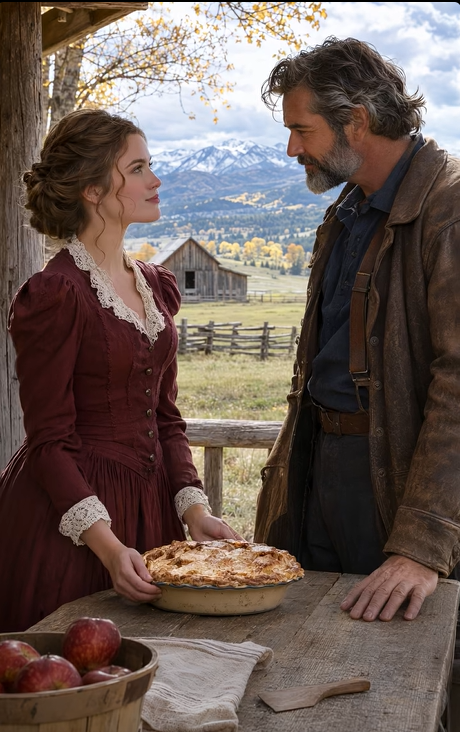
Thomas stood beneath the oak tree, holding Eleanor’s final letter.
For several seconds, he could not bring himself to continue reading.
His mother had been gone for nearly fifteen years.
Eleanor had been gone for three.
Yet somehow, the two women seemed to have left one final conversation waiting for him.
Margaret gently touched his arm.
“Would you like me to read it?”
Thomas shook his head.
“No.”
He smiled faintly.
“I think this one should come from me.”
He unfolded the paper.
_My dearest Thomas,_
_There is something I have never told you about the day we first met._
_You always believed our meeting at the autumn harvest gathering was an ordinary coincidence._
_You probably remember arriving late, complaining about the weather, and spending most of the evening helping your father unload sacks of grain._
_What you never knew was that your mother had arranged for me to be there._
Thomas stopped.
He looked at William.
“My mother?”
William nodded, although he appeared just as surprised.
Thomas continued reading.
_Your mother and I had become friends through the ladies’ church circle._
_She often spoke about you, especially about your kindness and the way you worked harder than anyone she knew._
_She also worried that you had become so devoted to your responsibilities that you would never allow yourself to enjoy the simple pleasures of being young._
_One afternoon, she asked whether I would attend the harvest gathering._
_She told me that you would be there._
_I remember laughing because I had already noticed you several times at the market._
_I had wanted to speak to you for months._
_Your mother knew._
_She simply smiled and told me that sometimes two people needed a little help finding the courage to introduce themselves._
Thomas lowered the letter.
A quiet laugh escaped him.
“My mother arranged our first meeting.”
Margaret smiled.
“Apparently, she was rather good at matchmaking.”
William laughed.
“She never told me that part.”
Thomas continued.
_I remember standing near the cider table when you finally approached me._
_You asked whether I knew where the refreshments were, even though you were standing directly beside them._
_I thought you were the most charmingly awkward man I had ever met._
_I also remember that you offered to walk me home afterward, although my family’s farm was in the opposite direction from yours._
_You insisted that the longer road was more pleasant._
_I knew then that something wonderful might happen between us._
Thomas’s eyes glistened.
He remembered that evening now.
He remembered Eleanor’s blue dress, the lanterns hanging between the trees, and the way she had laughed when he accidentally stepped into a puddle.
He remembered walking home alone afterward, smiling like a foolish young man.
He had never known that Eleanor had wanted that meeting just as much as he had.
The letter continued.
_I am telling you this because I want you to understand something._
_Our happiness did not happen because everything was perfect._
_It happened because two imperfect people chose to give one another a chance._
_I hope you and Margaret will understand that love does not always arrive at the expected time._
_Sometimes it comes when the house is quiet._
_Sometimes it comes after years of waiting._
_And sometimes it comes from across a meadow, carrying an apple pie._
Thomas laughed through his tears.
Margaret covered her mouth.
Eleanor had somehow understood the entire story.
_Please give Margaret my gratitude._
_She has brought kindness into your life, and I hope you will give her the same freedom to become everything she dreams of being._
_Do not make her world smaller because you are afraid of losing her._
_Walk beside her._
_Let her teach._
_Let her grow._
_And when you look at the future, remember that happiness is not something you receive only once._
_With all my love,_
_Eleanor._
Thomas slowly folded the letter.
The autumn wind rustled the branches overhead.
He looked at Margaret, who was crying quietly.
“She would have liked you,” he said.
Margaret smiled.
“I think I would have liked her, too.”
“She would have liked that you argue with me about breakfast.”
Margaret laughed.
“Then she would have liked me very much.”
Thomas reached for her hand.
For the first time, he felt that remembering Eleanor no longer required him to remain standing in the past.
He could carry her memory into a future that belonged to both of them.
The next morning, the schoolhouse opened its doors.
Thomas arrived before sunrise.
He had barely slept, partly because of the excitement and partly because he had spent half the night reviewing old arithmetic lessons.
Margaret found him standing in the classroom, writing numbers on the blackboard.
“You are going to wear that board out before the children arrive,” she teased.
Thomas turned.
“I am making certain I haven’t forgotten anything.”
“You taught arithmetic for years.”
“That was a long time ago.”
Margaret walked toward him and examined the board.
“You have written the same problem three times.”
Thomas looked at it.
Then he laughed.
“I suppose I have.”
She straightened his collar.
“You will be wonderful.”
He looked at her with quiet affection.
“And you will be an excellent teacher.”
Outside, the sound of wagon wheels approached.
The first families were arriving.
Samuel was among them, carrying his little notebook and holding his mother’s hand.
Behind him came two sisters, a boy from the neighboring farm, and several other children.
Margaret welcomed each family at the door.
She showed the children their desks, explained where they could keep their books, and introduced them to Sarah, who would help with the younger pupils.
Thomas stood near the fireplace, watching.
The room gradually filled with voices.
There was laughter, nervous conversation, and the occasional scrape of a wooden chair against the floor.
Then Margaret rang the small brass bell.
The children settled.
She stood before them.
“Good morning, everyone.”
“Good morning, Miss Hale!” they answered.
Margaret smiled.
“Today is the beginning of something wonderful.”
She glanced toward Thomas.
“But before we begin, I would like you to meet someone very special.”
Thomas stepped forward.
The children looked at him curiously.
“This is Mr. Calloway,” Margaret explained.
“He helped bring this schoolhouse back to life.”
Samuel raised his hand.
“Are you going to be our teacher, too?”
Thomas smiled.
“I hope to teach you a few things.”
“What things?”
Thomas considered the question.
“Arithmetic, perhaps.”
Samuel nodded enthusiastically.
Then Thomas looked at the other children.
“But I also hope to teach you something that cannot be written on a blackboard.”
The children waited.
“Never believe that your circumstances determine how far your dreams can take you.”
He glanced at Margaret.
“Some of the most important things in life begin with a small idea that someone refuses to abandon.”
Margaret felt tears gather in her eyes.
She knew he was not simply speaking to the children.
He was speaking about Eleanor.
About the schoolhouse.
About the life they were beginning together.
Thomas picked up a piece of chalk.
Then he wrote the first arithmetic problem on the board.
The children began working.
Within minutes, Samuel was asking questions, the sisters were whispering over their slates, and one little boy had already managed to drop his pencil twice.
Thomas laughed.
The sound filled the room.
Margaret stood beside the window, watching the morning sunlight fall across the desks.
For the first time in many years, the old schoolhouse was alive again.
Three months passed.
Winter settled over the farming community, covering the fields in a delicate layer of snow.
The schoolhouse remained warm, filled with children, books, and the comforting smell of wood burning in the fireplace.
Margaret quickly became one of the most respected young teachers in the county.
Thomas taught arithmetic twice a week and occasionally took the older children outside to explain farming, weather patterns, and the changing seasons.
William and Sarah continued helping whenever they could.
Even Mrs. Whitcomb began volunteering to read stories to the younger pupils.
The school had become something larger than Eleanor’s original dream.
It had become a place where families gathered, children discovered their abilities, and neighbors who had barely spoken to one another began sharing meals and stories.
And somewhere in the middle of all that happiness, Thomas and Margaret began preparing for their wedding.
They decided against an elaborate celebration.
Margaret wanted something simple.
Thomas agreed.
They planned to marry in the little village church, followed by supper at the farmhouse.
There would be flowers from the garden, homemade pies, warm bread, and music played by the local fiddler.
One evening, Margaret sat beside Thomas in the kitchen.
She was examining a small piece of lace her mother had left behind.
“I have been thinking about something,” she said.
Thomas looked up from his newspaper.
“That usually means I am about to receive another assignment.”
Margaret laughed.
“I was thinking about the wedding.”
“What about it?”
“I would like to visit Eleanor’s grave that morning.”
Thomas became quiet.
“Of course.”
“I would like to leave some flowers.”
He reached across the table.
“She would appreciate that.”
Margaret looked at him.
“Would you come with me?”
“Always.”
She smiled.
Then she hesitated.
“Thomas, I want to ask you something else.”
“What is it?”
“Do you think your mother would have approved of me?”
Thomas put down his newspaper.
He looked at Margaret for a long moment.
Then he smiled.
“I believe she would have wondered what took me so long.”
Margaret burst into laughter.
Thomas joined her.
And for a moment, the kitchen seemed filled with the warmth of people who were no longer there, but whose kindness had helped bring them together.
The wedding morning arrived beneath a clear February sky.
The village church was decorated with white flowers and evergreen branches.
William stood beside Thomas, adjusting his brother’s collar.
“You look nervous.”
Thomas shook his head.
“I am not nervous.”
William smiled.
“You have checked your watch six times.”
“I want to make certain everything begins on time.”
“You are marrying Margaret, not conducting a business meeting.”
Thomas laughed.
Then his expression became thoughtful.
“William?”
“Yes?”
“Thank you.”
William looked at him.
“For what?”
“For being there when I needed you.”
His brother rested a hand on his shoulder.
“You would have done the same for me.”
Thomas nodded.
Then the church doors opened.
Margaret entered.
She wore a beautiful ivory dress with delicate lace at the sleeves and a simple bouquet of white roses.
Her hair was arranged beneath a small veil, and Eleanor’s old gold ring rested on her finger.
Thomas looked at her as though he were seeing her for the first time.
She walked slowly toward him.
When she reached the altar, she smiled.
“Hello, Thomas.”
He smiled back.
“Hello, Margaret.”
The ceremony was simple and heartfelt.
They promised to respect one another’s dreams, to remain patient through difficult seasons, and to make their home a place where kindness would always have room to grow.
When the minister pronounced them husband and wife, Thomas gently took Margaret’s hands.
“I believe I owe you an apple pie,” he whispered.
Margaret laughed.
“You owe me considerably more than one.”
He smiled.
“Then I shall spend the rest of my life trying to make up the difference.”
They kissed.
The small congregation applauded.
And outside, the winter sunlight fell across the church steps.
Later that afternoon, Thomas and Margaret walked to the enormous oak tree.
Margaret carried a bouquet of white roses.
Thomas held her hand.
They stood quietly beside Eleanor’s resting place.
Thomas removed his hat.
“Eleanor, I wanted you to know that we were married today.”
He paused.
“She is a wonderful woman.”
Margaret placed the flowers gently near the tree.
“I wish I could have known you,” she whispered.
Thomas smiled.
“I think you would have become friends.”
Margaret looked up at the branches.
Then she turned toward her husband.
“Shall we go home?”
Thomas nodded.
“Yes.”
They walked back across the meadow together.
The farmhouse no longer seemed like a place where someone was missing.
It was a home filled with memories, new plans, and the promise of ordinary mornings shared between two people.
And when they reached the porch, Thomas noticed a small envelope resting beside the door.
It had arrived that morning.
The handwriting was unfamiliar.
Margaret picked it up.
“Who is it from?”
Thomas examined the return address.
It came from a town several counties away.
Inside was a photograph of a little girl standing beside an older woman.
On the back, someone had written:
_Dear Mr. Calloway,_
_I attended your winter lessons when I was a child._
_I am now a schoolteacher myself._
_I recently heard that the old schoolhouse has reopened, and I wanted to tell you something I never had the courage to say._
_You once told me that being poor did not mean being without a future._
_I remembered those words every time I wanted to give up._
_Because of you, I became the first person in my family to teach._
_I hope your new school gives other children the same opportunity._
_With gratitude,_
_Your former student,_
_Elizabeth._
Thomas read the letter twice.
Then he looked at Margaret.
“I had forgotten her.”
Margaret smiled.
“But she never forgot you.”
He looked toward the meadow, where the old schoolhouse stood beyond the trees.
For years, he had believed that his life had ended when Eleanor died.
He had believed that the happiest moments belonged to the past.
But now he understood something he had never fully appreciated.
The people we love leave pieces of themselves in the lives they touch.
Sometimes those pieces remain in letters.
Sometimes they live in old photographs, familiar songs, or the memories of a place we once called home.
And sometimes, without our realizing it, they become the beginning of something beautiful.
Thomas slipped the letter into his coat pocket.
Then he reached for Margaret’s hand.
“Come inside, Mrs. Calloway.”
She smiled.
“I thought you would never ask.”
He laughed.
And together they stepped through the farmhouse door.
Outside, the meadow stretched toward the horizon, touched by the last golden light of the afternoon.
The old oak tree stood quietly in the distance.
The schoolhouse windows glowed warmly.
And somewhere between the memories of yesterday and the promises of tomorrow, Thomas Calloway finally discovered that the heart does not have to choose between remembering a great love and welcoming another.
Sometimes, the greatest tribute to the love we have lost is finding the courage to live fully again.
**THE END**
**Share your thoughts or feedback to motivate us to create more stories ♥️**
**–THE END–PLEASE
✓ Lynn R. Adams
Thomas stood beneath the oak tree, holding Eleanor’s final letter. For several seconds, he could not bring himself to continue reading. His mother had been gone for nearly fifteen years. Eleanor ha…