PART 6 (THE END): The Key Brenda Couldn’t Explain 035
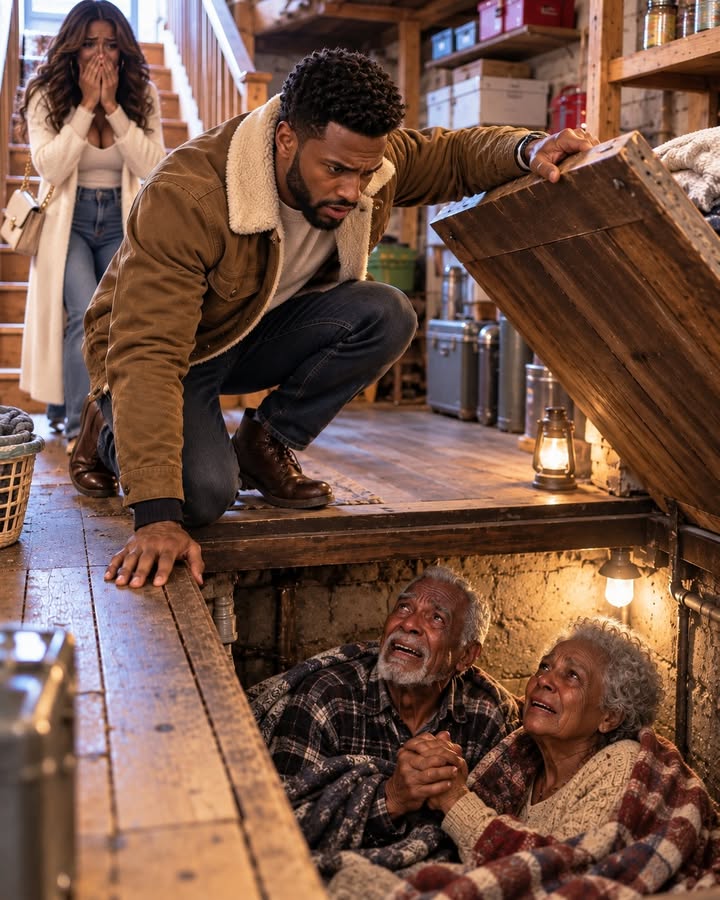
Part 6 – The Door Left Open
Mom’s question remained between us, gentler than a warning and more difficult than one.
I looked at the letter in my hand, at the familiar slant of her writing, then at Brenda waiting by the hospital door.
“I want the truth,” I said.
Mom gave a small nod.
“Then read it when you’re ready.”
I opened the envelope carefully.
The paper inside had been folded in half, and its edges had softened from being handled.
My mother had written only a few paragraphs.
Shawn, she began, your father had a fall, and we are frightened.
Brenda is doing her best, but she’s tired, and your father keeps insisting everything is fine.
I don’t want you to come home because you feel you have to choose between your life and ours.
I want you to come home because we miss you, and because I think it might help to hear your voice.
The last line was written smaller than the others.
Please tell us that you still know the way back.
I read it twice.
Nothing in the letter accused Brenda, or demanded that I return, or asked for money.
It was simply my mother reaching across a distance that had grown so familiar none of us had known how to measure it.
“I do know the way,” I said.
Mom’s eyes glistened.
“I hoped you did.”
Brenda stood motionless by the door.
“I’m sorry I kept it,” she said. “I should have given it to you.”
“Yes,” I replied. “You should have.”
She accepted the words without looking away.
“I was afraid you’d come home and everything would change.”
“Everything did change,” Mom said softly. “It just changed without us talking about it.”
Brenda lowered her head.
“I know.”
I folded the letter and placed it in my coat pocket.
“Bring Dad’s things to the hospital,” I said. “Then come back so we can talk with the social worker.”
She nodded.
“I will.”
“Not because I’m giving you permission to handle everything again,” I added. “Because I want you involved, and so do they.”
Her face shifted, the relief there cautious and unsteady.
“All right.”
She left for the house.
Mom settled back into her chair, while Dad watched the door close.
“Will she come back?” he asked.
“She said she would,” Mom replied.
Dad seemed to weigh the answer.
“She usually does.”
The next few days unfolded more slowly than any of us wanted, but more honestly than we had been used to.
Dad remained in the hospital while the doctors assessed his strength and memory.
The tests did not offer a neat answer, and neither did the doctors, who spoke instead about follow-up appointments, routines, medication reviews, and the importance of support.
Dad asked questions until he understood what each recommendation meant.
When he did not remember a detail, he asked again.
No one hurried him.
Mom sat beside him through the appointments, sometimes taking notes and sometimes simply holding his hand.
Brenda came every day.
She brought the clothes Dad asked for, the blue sweater Mom wanted, and his reading glasses in a little case wrapped in a clean dish towel.
The glasses were bent, but the lenses were intact.
Dad examined them when she handed them over.
“I thought I’d lost these,” he said.
“You left them on the table,” Brenda replied.
“I suppose I did.”
She offered to have them repaired.
Dad turned the glasses over in his fingers.
“Not yet,” he said. “I’d like to see if I can fix them first.”
It was a small wish, but we let it belong to him.
The social worker helped us arrange a safe plan for Dad’s return home.
A nurse would visit regularly, and a home-care aide would come each day while we learned what support worked best.
The care plan included Mom, Dad, Brenda, and me, with George as a neighbor they trusted and Nancy as someone willing to return to help once the arrangements were clear.
Dad insisted that the plan include time in the garden, even if he needed someone beside him.
Mom asked that no one speak about him as though he were absent when he was sitting in the room.
Both requests went into the plan.
Brenda listened without interrupting.
When it was her turn to speak, she explained what she had done, what she had spent, and what she still did not know how to put right.
She gave the social worker the bank records she had gathered and agreed to meet with the appropriate people to answer their questions.
There were consequences, some practical and some painful.
She had to explain the misuse of funds, repay what she could, and follow the safeguards put in place for our parents’ care.
The authorities did not treat her choices as a family matter to be hidden, but they also listened to the full account: Dad’s request for secrecy, Mom’s fear, Brenda’s decisions, and the months in which proper help had been delayed.
Brenda cooperated with every conversation.
She did not ask us to say less.
After the meetings, she and I sat together in the hospital café with the list of transfers between us.
The total was lower than she had feared and higher than I had hoped.
“I can repay a little each month,” she said. “I’ve already spoken with my bank.”
“We’ll make the arrangement clear and manageable,” I replied. “Their care comes first.”
“I know.”
“And the records stay open. Not because I want to watch you, but because trust needs something solid to stand on.”
She nodded.
“I understand.”
For a while, we sat without speaking.
The café smelled of coffee and warm bread, and a family nearby was trying to persuade a little boy to eat his apple slices.
Brenda watched them, then looked down at her hands.
“I used to think you left because you wanted a life without us,” she said.
“I left because I wanted a life I could build myself.”
“I know that now.”
“I should have made more room for you in it.”
She looked up.
“You don’t have to say that.”
“I’m not saying it to make you feel better.”
“I know.”
“I could have called more. I could have asked about Dad, about Mom, about you.”
“You sent money.”
“I treated that like an answer to questions I hadn’t asked.”
Brenda’s eyes shone.
“I was angry about the money sometimes.”
“I understand.”
“I knew it was for them, but it made me feel like you could help without being here.”
“I can see how it felt that way.”
“And then when I started using some for myself, I told myself that I had earned it because I was the one who stayed.”
“That doesn’t make it right.”
“No.”
“But it tells me what you were telling yourself.”
She let out a slow breath.
“I’m going to have to learn how to ask for help before I’m desperate.”
“Yes.”
“And you’re going to have to learn how to show up before something is wrong.”
“Yes.”
The answer made her smile faintly, though the smile did not erase the hurt.
“Maybe we both have some work to do.”
“We do.”
Dad was discharged a week after Christmas, on a bright, cold morning when the sky looked newly washed.
He asked to return to his own bedroom.
We carried his things upstairs together, and Mom chose where each item belonged.
The home-care aide arrived before noon and introduced herself to Dad, who asked her what she liked to be called and whether she knew anything about tomatoes.
She laughed and said she knew enough to follow instructions.
“That’s all gardening takes,” Dad said. “Knowing when to listen.”
Brenda stood in the kitchen doorway while the nurse reviewed the schedule with Mom and Dad.
She had brought the repaired glasses case, though the glasses themselves were still bent.
Dad turned the frames over in his hands and began working on them at the table.
Brenda watched him.
“Would you like me to take those to an optician?” she asked.
“No,” he said. “You can sit with me while I try.”
She pulled out a chair.
Dad showed her how the hinge fit, then let her hold the tiny screwdriver while he steadied the frame.
Their hands worked slowly, with no promise that the glasses would be perfect.
At one point, Dad looked up and asked Brenda to remind him where they had stopped.
She told him.
He continued.
No one rushed to fill the quiet or pretended he had remembered on his own.
That evening, Nancy came by to check in.
She did not make a speech about being right, and Brenda did not ask her to pretend the past had not happened.
They spoke in the kitchen, while Mom put tea on the table and Dad rested in his chair.
“I’m sorry I let you go when you were trying to help,” Brenda said.
Nancy held the mug in both hands.
“You were frightened,” she replied. “But I should have made sure someone else knew how serious things had become.”
“I’m glad you told George.”
“I’m glad George listened.”
Brenda nodded.
“Would you consider helping again?”
“I would,” Nancy said. “With a clear plan and all of us involved.”
“That’s fair.”
The word came easily, but the agreement took longer to build.
No one returned to the old arrangement.
Nancy met with the nurse, the social worker, and our parents before accepting regular hours.
Brenda remained part of their care, but not its sole keeper.
I stayed in Pinewood Ridge through the winter.
At first, I told myself it was only until Dad’s appointments were organized and the home-care schedule felt steady.
Then I realized I was choosing to remain beyond the point of necessity.
I moved some work calls to a small desk in the front room and asked my business partner to take on more of the daily decisions.
The company continued without me at its center.
My parents did not need me to abandon my life.
They needed me to stop pretending that love could be sent in a monthly transfer and left there.
In February, Dad sat in the garden for the first time since his fall.
The ground was still hard, and the beds lay brown beneath the winter sky, but he insisted on going outside.
Mom wrapped a blanket around his shoulders.
Brenda walked on his other side, and I carried the folding chair.
He sat near the old apple tree and looked over the yard.
“I thought I might not get back out here,” he said.
“You’re here now,” Mom replied.
He glanced at the bare branches.
“Not much to look at.”
“It’ll come back,” Brenda said.
Dad studied her face, then gave a quiet nod.
“So will we, if we pay attention.”
The sentence was not a promise that everything had been repaired.
It was an invitation to keep tending what could still grow.
In the weeks that followed, Brenda began repaying the money in small, regular amounts.
She kept the records and showed them to me each month.
Some payments went to the account for our parents’ care, and some covered the debts she had taken on for herself.
She did not ask me to forgive the balance.
I did not ask her to make a perfect apology.
We spoke more often, sometimes about the past and sometimes about groceries, appointments, or whether Dad had found the right screwdriver.
The ordinary conversations mattered.
Trust returned in ordinary ways too: Brenda calling before making a decision, Mom asking directly for help, Dad admitting when a day felt confusing, and me answering the phone even when work was busy.
One afternoon, I found Brenda in the basement sorting through boxes.
The room was clean and bright now, the bare bulb replaced with a proper light.
The small window had been uncovered, and winter sun reached the concrete floor in a pale rectangle.
There was no bed, no folding table, and no stack of blankets.
Only shelves, tools, and a row of labeled boxes.
Brenda held the old lock in her hand.
“I found it in the garage,” she said.
I stood at the bottom of the stairs.
“What are you going to do with it?”
“I don’t know.”
She turned it over in her palm.
“I thought about throwing it away.”
“Would that help?”
“Probably not.”
She set it on the workbench.
“I don’t want to pretend it didn’t happen.”
“Neither do I.”
“But I don’t want to keep it as a warning either.”
“Then let it be something we remember honestly.”
She looked toward the open stairs.
“I’m trying to learn the difference between keeping someone safe and keeping them where I can control what happens.”
“That’s a hard difference.”
“Yes.”
She looked down at the lock again.
“I was scared all the time, and I made everyone else smaller so I wouldn’t have to face it.”
“I know.”
“I don’t want to do that again.”
“I know.”
She reached for a cardboard box and set the lock inside.
Then she closed the lid without taping it shut.
The basement door remained open behind us.
That Christmas, the family gathered around the kitchen table for the first time in years.
The house smelled of cinnamon, roasted potatoes, and the pine branches Mom had arranged in a glass bowl.
The old kitchen clock still ticked above the doorway, but nobody measured the evening by it.
Dad sat in his usual chair with his repaired glasses resting beside his plate.
The frame was not quite straight, but it held.
He wore his gray sweater, freshly washed and folded over the back of his chair until the room warmed.
Mom had made the bread she used to bake when Brenda and I were children.
Brenda brought a pie and a handwritten list showing the latest repayment and the next care appointments.
She set the list on the counter rather than hiding it in her purse.
“I thought we might keep these records in the drawer by the phone,” she said. “Then everyone can see them.”
“That sounds good,” Mom replied.
Dad picked up the list and examined the page.
“You’ve written the date clearly.”
“I thought you’d want to check it.”
“I do.”
He passed it to Mom, who placed it in the drawer.
No one applauded the gesture.
No one needed to.
It was one small choice among many that showed how much had changed.
George stopped by with a jar of honey and stayed for dinner.
Nancy came later, bringing a tin of cookies and a story about a patient who had insisted on teaching her how to prune roses.
The house was crowded, warm, and noisy in the ways it had once been.
At one point, Dad looked toward the basement door.
It stood open at the end of the kitchen, its empty darkness visible beyond the stairs.
“Leave it open,” he said.
Brenda looked over.
“Of course.”
“I like knowing where it goes.”
She nodded.
“So do I.”
After dinner, Mom brought out a small stack of old letters she had found while sorting the bedroom drawers.
There were birthday cards, postcards from places I had visited, and several envelopes she had never mailed.
She placed them in the center of the table.
“I don’t think we need to read them all tonight,” she said. “I only want them where we can see them.”
I looked at the letter that had asked whether I still knew the way home.
“I know now,” I said.
Mom reached across the table and touched my hand.
“I think you always did.”
Brenda sat opposite me, listening.
“I’m sorry I made you believe you had to choose,” she said.
“I’m sorry I made it so easy to believe I was gone.”
She considered that, then nodded.
“We can keep apologizing for the rest of our lives.”
“Or we can keep doing better.”
“That sounds harder.”
“It probably is.”
Her smile was small but real.
Dad lifted his glass.
“To doing better,” he said.
We raised ours.
The toast was not a declaration that everything had been forgiven.
It was not a promise that the next year would be without fear, mistakes, or difficult conversations.
It was a choice to keep making room at the table, even when the truth made the room feel crowded.
Later, as the dishes were cleared, Dad asked me to walk with him to the open basement door.
He stood at the top of the stairs, one hand resting on the railing.
“Do you remember the box where you found the spare key?” he asked.
“Yes.”
“I used to hide it there because I thought you’d find it if you ever needed it.”
“I didn’t find it until George helped.”
Dad smiled.
“Then I hid it better than I meant to.”
I looked down the steps toward the empty room.
“Do you want the key back?”
He thought for a moment.
“No,” he said. “I want the door to stay open.”
Mom came to stand beside us.
Brenda joined her, then George and Nancy behind them.
No one blocked the doorway.
The basement was only a basement now, with shelves, tools, and a clean floor.
Nothing waited beneath it except the ordinary things a family had stored and forgotten.
Dad placed his repaired glasses in his pocket.
“Shall we go back to the table?” he asked.
I looked at the kitchen, where the lights shone over the last of the pie and the empty chairs waiting to be pushed in.
“Yes,” I said. “Let’s go together.”
And together, we did.
**–THE END–PLEASE
Share your thoughts or feedback to motivate us to create more stories ♥️
* * *
[PREVIOUS: PART 5](https://puretales.idolsgift.com/blog/part-5-the-key-brenda-couldn-t-explain-035)
✓ Lynn R. Adams
Part 6 – The Door Left Open Mom’s question remained between us, gentler than a warning and more difficult than one. I looked at the letter in my hand, at the familiar slant of her writing, then at B…