PART 6 (THE END): The Heart Between Them 069
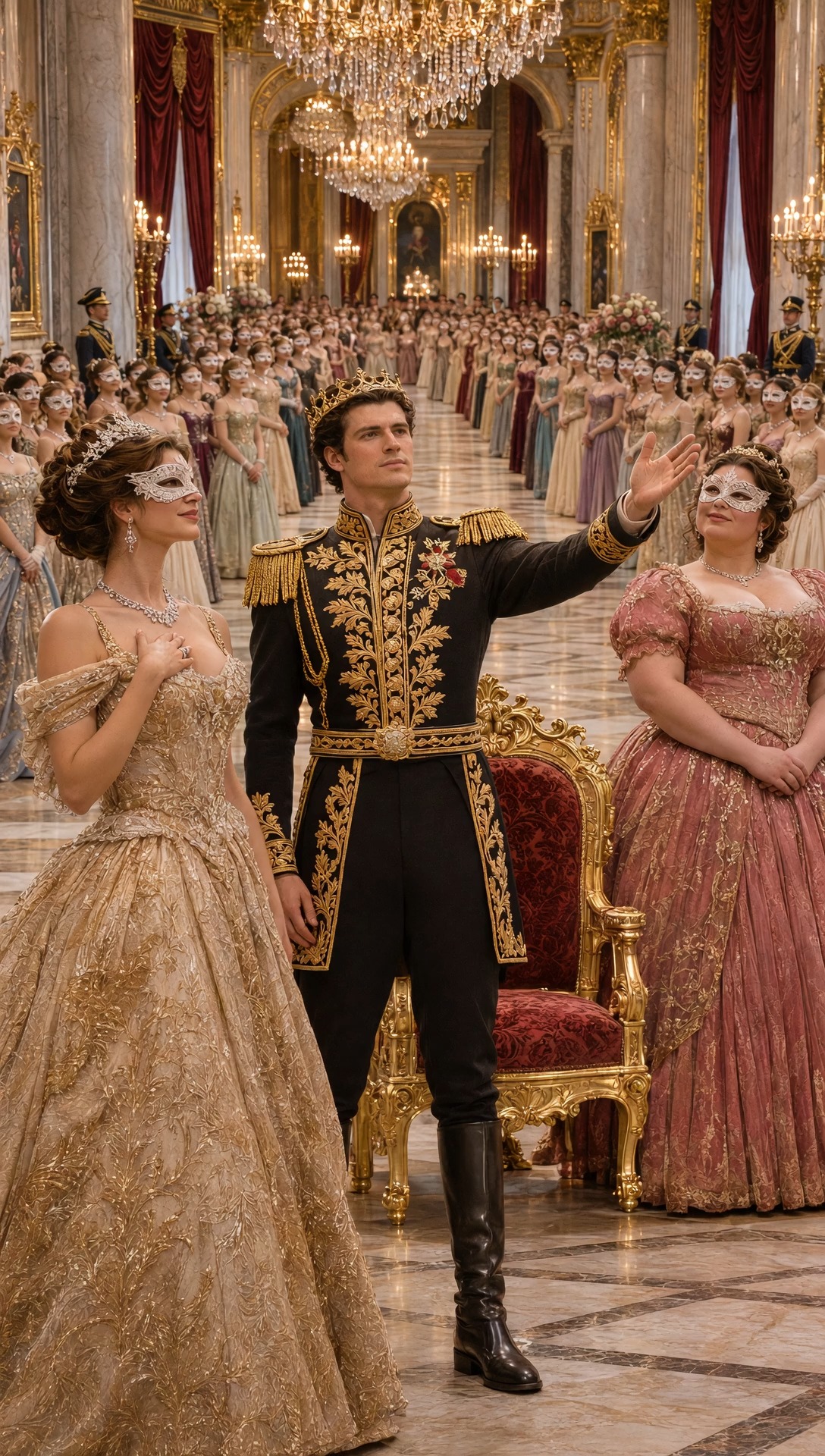
Part 6 – A Heart Shared Whole
The prince held the old letter as carefully as if its faded paper might crumble beneath the weight of what it said.
Elara read the queen’s reply again, following the elegant strokes of ink with her eyes.
Then let him learn it from the person who taught us both how to share a heart.
For a few breaths, neither of them spoke.
The council chamber had emptied around them, leaving only the hush of evening and the soft rustle of the page between their hands.
“Your mother knew,” Elara said.
“She knew your mother wanted the truth preserved.”
“And she trusted her with that promise.”
The prince nodded, his eyes fixed on the queen’s handwriting.
“My mother must have told her about the cookie.”
“Perhaps she taught her.”
He looked up.
“Then the recipe was never just a recipe.”
“No,” Elara said. “It was a way of staying close when people were afraid.”
The chamberlain stood near the door, giving them what privacy he could without leaving his post.
“Lady Catherine sent a note with the box,” he said. “She asks that you read the letter before deciding what to do with it.”
The prince unfolded the second paper.
This one was in Catherine’s hand.
She explained that her family had kept the documents because an earlier member of the household had been asked to preserve them after the queen’s death.
The papers had passed down through the family, but their purpose had been misunderstood.
Catherine’s ancestors had believed the letter was evidence of a private royal favor, something best kept out of public view.
Only recently, while searching their old records, Catherine had realized that the papers described not a favor, but an agreement between two women who wanted the truth remembered.
At the bottom, Catherine had added a brief line.
I believe they belong with the record now.
The prince lowered the letter.
“She could have kept them,” he said.
“She could,” Elara replied. “Instead, she chose what she believed was right.”
A quiet smile touched his face.
“She is finding her own way.”
“Perhaps we all are.”
The king entered the council chamber a moment later, carrying no papers and wearing no crown.
He looked first at the letter in his son’s hand, then at Elara.
“Catherine’s family has delivered the original,” he said. “I have read it.”
The prince held the page out.
“Do you know why my mother wrote that she taught us both how to share a heart?”
The king came to stand beside the table.
“I believe I do.”
He did not take the letter.
Instead, he looked at Elara.
“Your mother visited the queen often after the illness. Not as a physician, or as a servant summoned to perform a task, but as someone your mother trusted.”
Elara listened without moving.
“Your mother would bring the little cookies when the queen was tired,” the king continued. “She said they were easier to share than words.”
The prince’s expression softened.
“Did my mother make them?”
“She tried. She was not very good at shaping them.”
Elara smiled faintly.
“That seems to be a family trait.”
The king’s smile appeared and vanished again, touched by grief and affection.
“She told me once that your mother had taught her how to break the cookie at the notch. She said the two halves reminded her that being frightened did not mean she had to be alone.”
The prince lowered his gaze to the old letter.
“Why was the truth kept from the official record?”
The king took a breath.
“Your mother asked that her name remain private while she was alive. She feared the court would turn her kindness into a story of obligation, and she did not want your father’s household to feel it owed her family anything.”
“But the letter says she could not keep the truth from her son forever,” Elara said.
“She wrote that after you were born,” the king replied. “She wanted you to learn the story when you were old enough to understand that gratitude is not ownership.”
The prince’s eyes lifted.
“And then she died before she could tell me.”
“Yes.”
The king’s voice grew softer.
“She asked me to preserve the letter. I promised I would. After she was gone, I kept putting off the moment when I would explain it to you.”
“Because you were afraid I would misunderstand?”
“Because I was afraid the court would.”
The prince studied his father.
“You thought silence would protect us.”
“I thought it would protect your mother’s wishes, the physicians’ dignity, and the stability of the crown.”
“And in doing so, we left her friend unnamed.”
The king bowed his head.
“Yes.”
The admission was quiet, without defense.
That made it easier to hear.
Elara thought of her mother’s note, and of the words she had written: Tell it whole.
“My mother did not want to be made into a symbol,” she said. “But she also did not want the truth erased.”
“I understand that now,” the king replied. “I should have understood it sooner.”
The prince looked at the letter again.
“Then let us make the correction the way they wanted it made.”
The king nodded.
“Together.”
In the days that followed, the palace did not transform all at once.
There were meetings, careful revisions, and long discussions about the wording of the public account.
The royal physicians were named for the work they had done.
The household staff were acknowledged for the care they had provided.
Elara’s mother was named as the kitchen worker who had prepared the herbal infusion at the queen’s request, after the first treatments had failed to bring relief.
The queen’s trust in her was recorded, along with her recovery and the continued attention of the physicians.
No one was called the sole savior.
No one was turned into a legend.
The truth was allowed to remain human.
When the correction was read before the full court, Elara stood beside the prince and the king.
Catherine stood on the other side of the king, holding her place without her family’s crest pinned to her dress.
The chamberlain read the statement in a clear, measured voice.
He did not rush the name.
“Elara Bell, kitchen worker and daughter of the late Elara Bell, was asked by the queen to prepare an herbal infusion during her illness.”
At the sound of her mother’s name, Elara felt the room shift around her.
She did not look toward the assembled nobles.
She looked at the prince.
He was listening with the same stillness he had shown in the kitchen months before, when he had first understood that being heard could be a kind of shelter.
The statement concluded by acknowledging that an earlier public account had omitted the kitchen worker’s name by instruction of the royal secretary.
The king then rose.
“My family has kept an incomplete account of this event,” he said. “We will not defend that omission. The queen’s trust, the physicians’ care, the household’s service, and Elara Bell’s mother’s kindness all belong to the same story.”
A hush held the court.
No applause followed at first.
The prince had not asked for it, and the king had not invited it.
Then Lady Catherine stepped forward.
“My family also preserved a copy of the queen’s correspondence without understanding its purpose,” she said. “We return it now to the royal archive, where it can be read alongside the corrected account.”
She placed the old letter on the table.
The king accepted it with both hands.
“Thank you, Lady Catherine.”
Catherine inclined her head.
The court’s response was neither unanimous nor immediate.
Some faces remained uncertain.
Others softened.
A few councilors looked troubled by the admission, but none could deny the documents before them.
For Elara, that was enough for the day.
Afterward, the prince found her in the portrait gallery, where the queen’s painted face looked out over a garden silvered by winter light.
He had given her space during the proceedings, as he had promised.
Now he approached slowly, stopping at a respectful distance.
“May I stand with you?” he asked.
“You may.”
He came to her side.
For a while they looked at the portrait without speaking.
“My father says he should have told me,” the prince said.
“Do you believe him?”
“Yes.”
“Does that make the years easier to understand?”
“No,” he admitted. “But it makes it possible to begin.”
Elara looked at the painted queen.
“She trusted my mother.”
“She did.”
“And my mother trusted her.”
“I think they gave each other something the palace could not.”
“What was that?”
“A place to be a person before being a queen or a servant.”
Elara’s eyes warmed.
“My mother would have liked that answer.”
“I wish I could have asked her what she thought.”
“So do I.”
The prince turned toward her.
“I also wish I had met her.”
“You might have disappointed her with your baking.”
“I would have expected as much.”
“She would have made you start again.”
“I would have deserved it.”
Elara smiled, and the small, familiar ease between them made the gallery feel less like a corridor of history and more like a room they had chosen to share.
The prince’s expression grew serious.
“The council will review the succession rules before the winter session.”
“That sounds difficult.”
“It will be.”
“What will you ask them to change?”
“That access to positions of responsibility should be based on ability, not only on family name.”
“And the marriage rules?”
He smiled faintly.
“I suspect that reform will take longer.”
“Will you be patient?”
“I will try.”
“Trying is a beginning.”
“I remember.”
He looked down at his hands.
“I have something else to ask you, but I want you to know you can say no.”
“You can ask.”
“Would you consider building a life with me?”
Elara did not answer at once.
He waited.
“I mean beside me,” he continued. “Not beneath me, and not as a reward for your mother’s service. I would want you to have your own work, your own choices, and the right to disagree with me in every room of the palace.”
“That is a generous promise.”
“It is also one I will have to keep.”
“Yes.”
“I know.”
“I do not want to become a story the court tells to make itself feel kind.”
“Neither do I.”
“I do not want to be invited into the palace as an ornament.”
“You won’t be.”
“I want the right to return to the kitchens when I choose, and the right to leave when I choose.”
“You will have both.”
“I want your reforms to matter to other people, not only to me.”
“They will.”
“And if the council resists?”
“Then I will keep asking them to do better.”
Elara searched his face.
She saw no perfect answer there, no promise that the palace would become simple, or that love could dissolve every difference in rank.
She saw a man willing to begin with what he could honestly offer.
“That is not a small thing,” she said.
“No.”
“And if I say yes, I will still expect you to listen when I tell you you’re wrong.”
“I would be disappointed if you didn’t.”
“Then I will consider it.”
The prince’s smile began to appear, but he did not let hope rush ahead of her words.
“Thank you.”
“Do not thank me yet.”
He laughed softly.
“I seem to have heard that before.”
“From a wise woman, no doubt.”
“From you.”
“Then you should learn to listen.”
“I am trying.”
Elara returned to her duties, and the prince returned to his.
They did not become inseparable in a single evening.
Their days remained full of work, meetings, and obligations.
The prince learned to ask before he made arrangements that affected Elara.
Elara learned to tell him when she needed quiet rather than waiting for him to guess.
They met in the kitchen when she had time, and in the gardens when the weather was fair.
Sometimes they spoke about the past.
Sometimes they spoke only of bread, books, and the absurd number of candles used during court dinners.
Catherine, meanwhile, returned to her family’s home and told them plainly that she would not enter a marriage for political advantage.
The conversation was difficult.
It was also hers.
She began spending more time with the charitable schools her aunt had established in the north, where she could decide for herself what kind of work mattered.
She and Elara exchanged letters, first cautiously, then with growing warmth.
Catherine never pretended that the ballroom had been a pleasant memory.
She did, however, learn to laugh about the bracelet she had displayed, and Elara learned that Catherine was much funnier when she was not trying to be admired.
The palace also began to change, though not as quickly as its residents wished.
A review of the court’s appointment practices opened conversations that had been avoided for generations.
More household workers were invited to advise on matters they understood.
The changes did not erase the distance between the palace and the people who served it, but they gave that distance a name—and once named, it could be crossed.
When the winter council arrived, the prince stood before the nobles and announced that he would not ask Lady Catherine to marry him.
He also announced that no member of the royal family should treat marriage as an instrument of political repayment.
Catherine listened from the gallery and smiled.
The prince did not announce that he would marry Elara.
He waited until after the council, until the documents had been signed and the day’s public duties were finished.
Then he asked her in the garden.
It was a cold afternoon, but the rain had stopped, and the bare branches shone with beads of water.
“I have no court waiting to hear your answer,” he said. “No council deciding what it should mean.”
Elara looked at the path winding between the winter roses.
“And no one watching?”
“Only the gardener, who is pretending not to.”
A small laugh escaped her.
The prince took her hand, but did not close his fingers around it until she turned her palm toward his.
“I want to build a life with you,” he said. “I want to know what you think before I speak for both of us. I want you to tell me when the palace is making a mistake, especially when the mistake would be convenient for me.”
“You understand that this will take more than one promise.”
“I do.”
“It will take time.”
“I have time.”
“You have a kingdom.”
“I am beginning to learn that the kingdom needs more than one person’s attention.”
She watched him carefully.
“Then yes,” she said. “I will build a life with you.”
His breath left him in a quiet, unguarded laugh.
“Are you sure?”
“I would not say yes if I weren’t.”
He bowed his head, not with the formal grace he used before the court, but with the gratitude of a man who understood that her answer belonged to her.
When he kissed her hand, he did so gently.
Elara squeezed his fingers.
“Now you may thank me.”
“Thank you.”
“You may say it again later.”
“I probably will.”
Months passed before the palace held another great celebration.
This time, the ballroom was not arranged as a contest.
No rows of identical masks waited beneath the chandeliers.
No one had been asked to prove that she understood the prince through a single silent gesture.
The evening marked the opening of a new household trust, created to preserve the names and work of palace staff whose contributions had gone unrecorded.
At its center was a modest exhibit of letters, recipes, and household accounts, including the queen’s reply to Elara’s mother.
The prince stood beside Elara beneath the golden chandeliers.
He wore no ceremonial crown, only a dark uniform with a narrow gold collar.
Elara wore a deep-rose gown, chosen by herself, with a simple white flower pinned at her shoulder.
The king raised a glass to the room.
“To the people whose care makes a home out of a palace,” he said. “And to the courage required to tell the truth about them.”
The guests lifted their glasses.
Lady Catherine stood among them, bright-eyed and unburdened by expectation.
She had come with friends of her own choosing, and when she caught Elara’s gaze, she raised her glass with a smile.
The music began.
The prince offered Elara his hand.
“Would you care to dance?”
“Do you know how?”
“Not very well.”
“Then I suppose I should help you.”
“I was hoping you might.”
They moved beneath the chandeliers, not as prince and servant, not as a man repaying an old debt, but as two people learning how to share a future.
When the song ended, a kitchen attendant brought a small plate to the prince.
On it lay two crooked heart-shaped cookies.
The prince looked at Elara.
“Did you make these?”
“With help.”
“Should I be concerned?”
“You should be grateful.”
He took one cookie and found the tiny indentation.
Instead of breaking it himself, he held it between them.
“Together?” he asked.
“Together.”
They pressed their thumbs to the small notch and broke the heart in two.
The crack was soft beneath the music.
Elara kept one half.
The prince held out the other, waiting for her to choose.
She placed her palm beneath his and accepted it.
Around them, the ballroom glittered with gold and glass, but the prince saw no crowd to impress and no challenge to win.
He saw Elara looking back at him, open and unafraid.
She saw the man who had once entered a busy kitchen searching for a place to breathe, and the prince who had learned that honesty could make room for others to breathe with him.
They ate their halves beneath the chandeliers.
This time, the heart between them was not a secret.
It was a promise they had chosen freely, one that could be shared, questioned, and renewed whenever either of them felt alone.
**–THE END–PLEASE
Share your thoughts or feedback to motivate us to create more stories ♥️
* * *
[PREVIOUS: PART 5](https://storyly.idolsgift.com/blog/part-5-the-heart-between-them-069)
✓ Lynn R. Adams
Part 6 – A Heart Shared Whole The prince held the old letter as carefully as if its faded paper might crumble beneath the weight of what it said. Elara read the queen’s reply again, following the el…