PART 6 (THE END): The Girl He Thought the Fire Had Taken 052
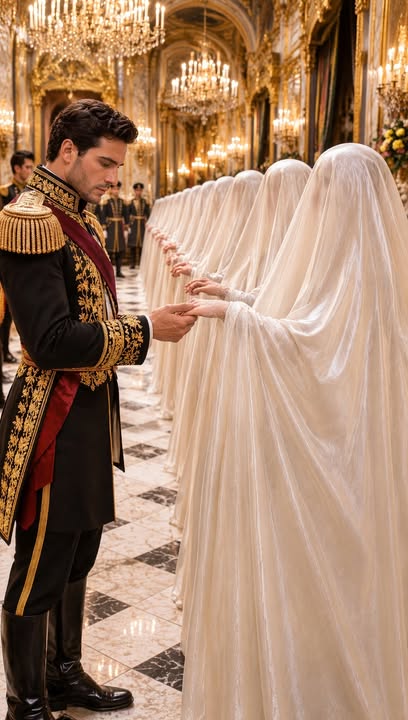
Part 6 – A Family Made of Truth
Alexander looked at the unfamiliar handwriting beneath his mother’s signature.
“She was not meant to be found.”
For a moment, the sentence seemed to darken the room around him.
Lena stood beside the archivist, her face composed, though one hand had closed around the other.
“Do you recognize the writing?” she asked.
Michael leaned toward the page but did not touch it.
“No,” he said. “It does not look like your uncle’s hand.”
“Could it belong to the physician?” Alexander asked.
“The writing is too brief to compare,” the archivist replied. “I can ask Dr. Rowan to examine it, but he may not recognize it either.”
Alexander returned his eyes to his mother’s letter.
The words she had written to Evelyn were tender, and the last line sounded like hope.
The sentence beneath them sounded like someone else trying to make hope impossible.
“Perhaps it was a note added later,” Lena said. “We shouldn’t decide who wrote it until we have more evidence.”
“No,” Alexander replied. “We shouldn’t.”
He looked at the archivist.
“Can you examine the ink and paper?”
“I can arrange it.”
“And send Elise the letter from my mother, if she agrees to receive it.”
The archivist nodded.
“I’ll ask the advocate to explain that we found it, and that she can choose whether to see a copy.”
“Not the original,” Lena said gently. “It belongs in the archive.”
“Of course,” Alexander replied. “A copy, with the rest of the record carefully explained.”
The archivist took the letter to be documented.
Alexander remained where he was, unable to escape the thought that his mother had believed she would one day explain her choice to him.
He had spent years thinking she left him with no questions worth asking.
Now he understood that she had left him with a question she had not lived long enough to answer.
“Do you wish you had known sooner?” Lena asked.
“Yes,” he said. “But I wish Elise had been allowed to know who she was even more.”
Lena’s gaze softened.
“That sounds like the right order of wishes.”
It was not comfort exactly.
It was the kind of honesty that made comfort possible.
The medical advocate carried the copy of Margaret’s letter to Elise.
The palace made no announcement, and Alexander did not ask when she might answer.
He returned to his work, though every ordinary duty felt newly measured against the decision he had made not to let the old silence continue.
Michael helped the archivist gather the remaining household records.
He no longer treated caution as a reason to avoid difficult questions.
When he did not know something, he said so.
When he found a record that might matter, he brought it forward without waiting to be asked.
Several days later, he placed a small file on Alexander’s desk.
“The note beneath your mother’s letter has been examined,” he said.
Alexander looked up.
“What did they find?”
“The paper was part of the household office stationery, but the ink is from a later year. The conservator believes it was added several months after the letter was written.”
“Can it be linked to anyone?”
“Not conclusively. The writing does not match your uncle’s known signatures, Dr. Rowan’s notes, or the archivists’ records.”
“So the author remains unknown.”
“Yes.”
Michael sat down across from him.
“The sentence may have been intended to discourage Evelyn from returning with Elise,” he continued. “It may have been a warning from someone who believed they were protecting the family. We do not know.”
“Will we ever?”
“Perhaps not.”
Alexander looked at the copy of his mother’s letter.
“Then we’ll say we don’t know.”
Michael nodded.
“That may be the most difficult sentence for the palace to learn.”
“And the most useful.”
The hospital advocate called the following afternoon.
Elise had read the copy of Margaret’s letter.
She had asked for time.
Then she had asked whether Alexander would be willing to meet somewhere away from the palace, with no photographers, officials, or household representatives present.
Alexander told the advocate that he would.
He asked whether Lena might come too, but made clear that Elise could decide.
The reply came the next morning.
Elise wanted Lena there.
“She wants to meet you both at the old botanical gardens near the hospital,” the advocate said. “A public place, but quiet. She has asked that the meeting remain private.”
“Of course,” Alexander replied.
When he told Lena, she listened without moving.
“She wants us both there?”
“She does.”
“Are you ready?”
“No,” he admitted. “But I will go.”
Lena gave him a small, affectionate look.
“That may be as ready as anyone gets.”
The gardens were beginning to turn gold with the approach of autumn.
Their paths wound between glasshouses, low stone walls, and beds of late-blooming flowers.
The air carried the clean smell of damp leaves and soil.
Alexander arrived early, but he did not pace.
He sat on a bench beneath a broad-limbed tree and tried to remember how to breathe without turning every thought into a plan.
Lena sat beside him.
“You don’t have to make the first words perfect,” she said.
“What if I say the wrong thing?”
“You probably will.”
He looked at her.
“That is reassuring.”
“It is honest.”
He laughed softly, and some of the tension loosened from his shoulders.
A woman approached along the gravel path, accompanied at a respectful distance by the medical advocate.
She was close to Alexander’s age, perhaps a little younger.
Her dark hair was streaked with silver, and her coat was plain and practical.
She carried no sign of royalty, no visible reminder of the palace, and no expectation that the people waiting on the bench would recognize her.
Yet Alexander saw something familiar in the shape of her eyes.
He stood.
The woman stopped several steps away.
“My name is Elise Wren,” she said.
Alexander felt the name settle in him with the solemnity of a door opening.
“I’m Alexander.”
“I know.”
He gestured toward Lena.
“This is Lena Vale.”
Elise looked at her for a long moment.
“You were there that night,” she said.
“I was a child,” Lena replied. “I remember the fire, but I don’t remember you.”
“I don’t remember it either.”
“That makes sense.”
The three of them stood beneath the tree while the advocate waited farther down the path.
Alexander fought the instinct to reach for Elise’s hand.
She was not his to claim, even now.
“Thank you for agreeing to meet us,” he said.
“I wanted to see you before deciding what I thought.”
“That is fair.”
Elise looked at him directly.
“The records say I may be your sister.”
“They do,” Alexander replied. “They also say you were removed from the palace during the fire, placed in private care, and later declared dead.”
“Did you know about me?”
“No. I was a child when it happened. The records were hidden from me too, but that does not change the fact that I should have asked more questions as I grew older.”
“You were not responsible for what they did.”
“I know I did not make the decision. I still inherited a silence that helped keep it in place.”
Elise considered that answer.
Lena watched them without interrupting.
“Did you come here hoping I would join the family?” Elise asked.
“I came hoping you would have the truth,” Alexander said. “What you do with it is yours.”
“And if I decide I don’t want the palace?”
“Then the palace stays where it is.”
A flicker of surprise crossed Elise’s face.
“You make that sound simple.”
“It isn’t. But it is still your choice.”
Elise turned toward the garden beds, where small yellow flowers trembled in the breeze.
“My adoptive parents told me I had a medical history that might matter, but they didn’t know much beyond that. They were kind. They never made me feel like I owed them an explanation for being alive.”
“I’m glad,” Alexander said.
“They told me the name Elise had been given to me before I came to them. I chose Wren when I was old enough to decide what name I wanted.”
“Then Wren is the name I’ll use.”
“Good.”
The word held a small measure of approval.
Elise’s gaze moved to Lena.
“Did your mother know where I was?”
“We believe she helped take you from the palace and cared for you at the clinic,” Lena said. “We haven’t found a record proving she knew where you went afterward.”
“Did she ever tell you about me?”
“No. She told me she left the palace with me. She never told me she had carried anyone else.”
“Do you resent her for that?”
Lena thought carefully before answering.
“I wish she had trusted me with more of the story. But I understand that she may have believed secrecy was the only way to keep us safe.”
“Do you think she was right?”
“I think she did what she thought she had to do. I also think fear took things from all of us.”
Elise nodded slowly.
“That sounds more honest than deciding she was either a hero or a coward.”
“She was my mother,” Lena said. “She was human before she was anything else.”
For the first time, a gentle smile touched Elise’s face.
“She sounds like someone I might have loved.”
“I think you would have.”
The quiet that followed was no longer empty.
It held grief, but also the beginning of something neither woman had expected.
Elise looked back at Alexander.
“I don’t know what I want from this.”
“You don’t have to know today.”
“I may never want to live at the palace.”
“You don’t have to.”
“I may not want a public announcement.”
“You won’t have one unless you choose it.”
“And if I decide I want no contact at all?”
“Then I will respect that.”
Elise studied him, perhaps waiting for the hidden cost.
There was none.
At last, she sat on the bench.
The gesture was small, but Alexander understood it as an invitation.
He sat at the far end, leaving space between them.
Lena joined them, and the three of them watched a gardener move slowly through the glasshouse path beyond the trees.
After a while, Elise asked Alexander what their mother had been like.
He told her about Margaret’s habit of carrying books through the gardens, about the way she remembered every servant’s birthday, and how she would pause in the middle of formal dinners to ask whether the kitchen staff had eaten.
He did not make her flawless.
He told Elise that their mother could be stubborn, that she sometimes mistook silence for patience, and that she had carried too much fear without explaining it.
Lena told Elise how Evelyn had read aloud to them in the country house and how she used to leave warm rolls on the servants’ table for anyone who had missed supper.
They did not attempt to fill the years they had lost.
They simply let one story lead to another.
When the meeting ended, Elise did not agree to return to the palace.
She did agree to meet again.
The next time, she brought a photograph of the family who had raised her.
Alexander brought a copy of the medical notes and the letter from Margaret.
Lena brought a small photograph of Evelyn, taken in a garden many years after the fire.
Elise studied it for a long time.
“She looks kind,” she said.
“She was,” Lena replied.
“I would like to know more about her.”
“I’d like to tell you.”
They began with short visits, then longer ones.
Elise chose to keep her home and her name.
She did not want the title the palace offered her, and Alexander did not ask her to accept it.
The palace’s public acknowledgment came only after Elise had read every document and given her consent.
Alexander stood before the assembled press with Lena beside him and Michael at his other shoulder.
He did not speak of a scandal or a lost heir.
He spoke of a woman who had been born into his family, removed from it under the false belief that secrecy was protection, and given the right to decide what happened next.
He acknowledged that the palace had altered records and withheld the truth.
He did not blame a single person to make the institution look innocent.
He promised to open the household archive to independent review, preserve the surviving documents, and establish a process so that no person’s identity or history could be quietly erased again.
Some officials resigned.
Others stayed and helped rebuild the archive.
Michael gave a full account of his role in sealing the fire records and accepted that his apology could not substitute for accountability.
He remained Alexander’s adviser, but their trust was different now.
It was no longer based on the hope that neither man would ever be afraid.
It was based on the understanding that fear had to be named before it could be allowed to make decisions for them.
Months passed.
Elise returned to the palace only when she chose, first for an afternoon in the gardens, then for a quiet dinner in the family dining room.
She and Alexander learned each other by patient degrees.
They did not try to become the brother and sister they might have been.
They built a relationship from the people they were now.
Lena stayed close, but never as a messenger between them.
She had her own life, her own work, and her own decisions.
Alexander learned not to mistake her presence for forgiveness, or affection for a promise.
He learned to ask instead of assume, to listen without trying to turn every answer into a solution.
One spring evening, he invited Lena to walk with him through the palace gardens.
The old stone paths were bright with new blossoms, and the air carried the scent of rain-soaked leaves.
He stopped beside the orchard wall where, as children, Lena had once dared him to climb.
“I remember falling from there,” he said.
“You slipped because you were wearing polished shoes.”
“I had been told not to get them muddy.”
“You were a prince. I assumed someone would find you a new pair.”
He smiled.
“You always had more confidence in the palace’s resources than I did.”
“I had confidence in your ability to survive a little mud.”
They continued walking until they reached the bench beneath the old pear tree.
Alexander stopped there.
“I’ve been thinking about what you told me in the ballroom,” he said. “That I needed to ask who you were now, not who I remembered.”
“I remember.”
“I still want to know.”
“And I still want you to ask.”
He took a slow breath.
“I love the woman who came back to ask for the truth. I love the woman who wouldn’t let me turn her into a duty or a symbol. I love the person you are now, not just the girl I lost.”
Lena’s eyes grew bright, but she did not look away.
“Are you asking me to marry you because you love me,” she said, “or because the palace wants a story with a happy ending?”
“Because I love you,” he replied. “The palace can wait for its story.”
“And if I say I need more time?”
“Then I will wait.”
“And if I say no?”
“Then I will still want the rest of my life to include you, in whatever way you choose.”
She searched his face for the prince who might have demanded certainty.
He was not there.
Only Alexander remained, imperfect and hopeful, willing to let her answer belong to her.
Lena took his hand.
“Then yes,” she said. “But I want a life built on questions we can ask each other, not secrets we’re expected to carry.”
“That is the only kind of life I want.”
She kissed him beneath the pear tree, while the first leaves stirred above them.
They did not announce an engagement that night.
They told Elise first.
She listened to their news over dinner, then raised her glass.
“To choosing one another,” she said. “And to not making the rest of us attend a veiled competition to prove it.”
Alexander laughed.
“I make no promises about the next family gathering.”
“You should,” Lena said. “I have seen what happens when you are allowed to plan one.”
The room filled with laughter, warm and unforced.
Later, as the three of them stood together beneath the garden lights, Elise took Lena’s hand and then Alexander’s.
The gesture was tentative, but it was hers.
The palace still held its old rooms, its locked cabinets, and the records of choices made in fear.
It could not return the years that had been lost, or offer a perfect answer for every silence.
But the truth was no longer buried.
And the family they made from it did not ask anyone to surrender a name, a home, or a choice in order to belong.
**–THE END–PLEASE
Share your thoughts or feedback to motivate us to create more stories ♥️
* * *
[PREVIOUS: PART 5](https://storyly.idolsgift.com/blog/part-5-the-girl-he-thought-the-fire-had-taken-052)
✓ Lynn R. Adams
Part 6 – A Family Made of Truth Alexander looked at the unfamiliar handwriting beneath his mother’s signature. “She was not meant to be found.” For a moment, the sentence seemed to darken the room …