PART 6 (THE END): The Girl Behind the Smoke 058
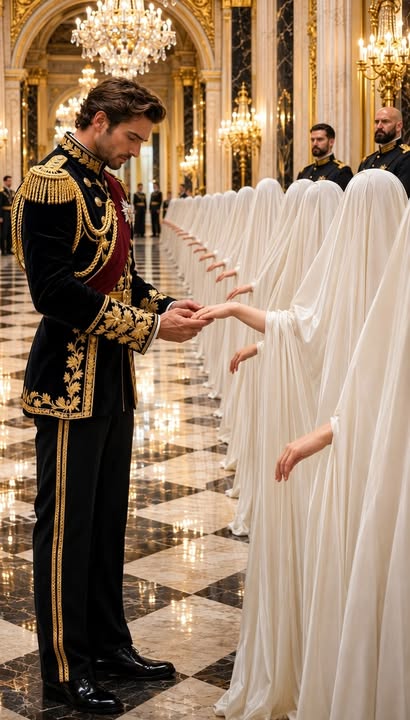
Part 6 – A Door Left Open
“Ask what the guard was told before the fire.”
The words on the note seemed to darken as Alexander read them again.
Around him, the corridor had gone quiet.
Michael stared at the name written beneath the message, his face pale, while Elena’s hand rested on the folded letter from the archive.
“Who was the guard?” Alexander asked.
Michael drew a slow breath.
“His name was Tomas Bell. He died many years ago.”
“Did you know him?”
“I knew of him. He was a senior palace guard, trusted by the household.”
“Was he the one assigned to the west-wing door?”
“I believe so.”
The records keeper looked from the note to Michael.
“Your Highness, should we summon the household officers?”
“Not yet,” Alexander said. “First, we must find out whether there is anything more than this note.”
He turned to the keeper.
“Have you seen the wooden box?”
“No, Your Highness.”
“Was anything else taken from the archive?”
“I don’t believe so. The papers we brought up are accounted for.”
Alexander checked the documents in his case once more: his father’s letter, the original incident report, and the physician’s note.
Everything they had found was there.
The box had held no further papers, only the materials they had already examined.
“It seems someone took the box to make us think there was more to discover,” Elena said.
“Or to make us doubt what we did find,” Michael replied.
The keeper’s brow furrowed.
“I should correct my statement to the council.”
“You will,” Alexander said. “Tell them precisely what you have told us now, and nothing you cannot confirm.”
The keeper bowed.
When he and the clerks had left, the corridor seemed larger and colder than before.
Michael looked at the message again.
“I cannot tell you what the guard was instructed to do.”
“Could my father have ordered him to keep the door shut?” Alexander asked.
“I don’t know.”
“You have served this family since you were young. Did you ever hear that?”
“No.”
“Did your father?”
Michael’s eyes flickered at the mention of him.
“My father worked with the old household records, but he did not discuss the guard’s orders with me. He died before I became your adviser.”
Elena glanced down at the words.
“Someone wants us to ask the question.”
“That does not make the answer false,” Alexander said. “But it does mean we must be careful.”
The message could be a warning.
It could be a trick.
It could be the last scrap of a story that had been bent too many times by people who preferred a convenient answer.
Alexander looked toward the council chamber.
“We’ll ask the former captain of the guard,” he said. “Quietly, and with the records in front of us.”
Michael nodded.
“I know where he lives. His name is Peter Hales. He served with Tomas Bell and retired to the northern estate.”
“Can he be reached today?”
“Not today. But I can send for him.”
“Then we wait for him to choose whether he will come.”
Michael’s attention lifted.
“Yes,” he said. “That is fair.”
Elena gave a small nod.
No one was going to be summoned as if the palace still believed it had the right to command the past.
Alexander handed the note to the keeper when he returned, instructing him to seal it with the other documents and record the time it had been found.
Only then did they leave the corridor.
The council was still gathered in its chamber, waiting for Alexander to return.
He stood before them with the note in his hand and explained that the records keeper had corrected his account: the person seen carrying a dark coat and a small wooden box might not have been Michael, and the keeper had never seen the brass key itself.
He also told them that someone had left a message asking them to question the guard’s instructions.
“I will not treat an unsigned note as proof,” he said. “But neither will I allow it to erase the records already before us.”
Lord Vey folded his hands.
“And what will you do?”
“Ask those who may know what was said that night. Then I will release the verified account.”
Lady Corinne glanced at the original report.
“Until then, you intend to delay the public statement?”
“I intend to make no statement that pretends uncertainty is certainty.”
The councilors exchanged looks.
No one appeared pleased.
But no one objected.
When the meeting ended, Alexander returned to his father’s study and wrote to Peter Hales himself.
He explained what the documents said, enclosed a copy of the note, and asked the former captain to share anything he remembered about Tomas Bell’s instructions on the night of the fire.
He also made clear that Hales was under no obligation to come to court.
The reply arrived three days later.
Hales would meet with them in the palace library.
On the morning he arrived, Alexander, Elena, and Michael waited at a small table near the library’s tall windows.
The former captain was a dignified old man with a silver beard and careful movements.
He greeted Alexander with a bow, then looked at Michael.
“I heard you had opened the west-wing archive,” he said.
“We did,” Alexander replied. “And we found records that raise questions about the night of the fire.”
Hales listened as Alexander described the original report and his father’s letter.
When Alexander finished, the former captain looked down at the papers.
“Tomas was on duty at the west passage,” he said.
“Do you remember what he was told?”
“I remember the instruction given to the guards on that side of the palace.”
He rested both hands on his cane.
“Keep the west-wing doors closed after the evening bell. The rooms were being aired, and drafts could upset the lamps.”
“Was that unusual?” Elena asked.
“No. The palace was old, and the west passage had been under repair. The instruction was meant to keep people out of the work area.”
“Was Tomas told to lock the door?” Michael asked.
Hales shook his head.
“Not by me. We were told to keep it closed, not to lock it. The latch was old. It could catch if the door settled into its frame, but we had no order to prevent anyone from opening it.”
Alexander felt the note’s accusation loosen, though it did not disappear.
“Did Tomas misunderstand the instruction?”
“I cannot say. He was diligent, perhaps too diligent. I remember telling him to check the door before the evening bell. I did not tell him to secure it with a key.”
“Did he have a key?” Elena asked.
“He carried the usual ring for his post, but the west-wing door was not meant to be locked.”
Hales paused, then continued.
“When the fire began, he ran for help. He told me afterward that he had tried to open the door but it had swollen in the frame.”
“Did he know a child was trapped inside?”
“He knew once he heard the coughing. He tried to force it, but it would not give.”
Elena’s gaze lowered to the scar on her hand.
“Did he see me?”
“I don’t know. He told me a girl had opened the door before he could.”
Michael looked at the former captain.
“Did Tomas ever say that he had been ordered to keep it locked?”
“No.”
“Did anyone else say so?”
“Not to me.”
Hales’s expression was troubled.
“Afterward, the king asked me for a report. I told him Tomas had been instructed to keep the passage closed, not locked, and that the swollen door had prevented him from reaching the room in time.”
“Did the king accept that?”
“He listened. He did not argue with me. Later I heard that Tomas’s conduct had been described as a failure to secure the area properly.”
“Was he dismissed?”
“No. He remained in service until he retired.”
Hales looked at the pages before him.
“I never thought of that description as a public accusation. But I can see now how people might have understood it.”
“Did you know the record had been altered?” Alexander asked.
“I knew the report I signed was not the same as the version later used in the household file.”
The words fell softly, but the room seemed to draw closer around them.
“Why didn’t you object?” Michael asked.
“I did. I was told the change was a matter of wording, and that the king wanted a single account for the household.”
“Did you believe that?” Elena asked.
“I wanted to believe that making a simpler account would prevent rumors from harming the family.” Hales looked at her with quiet regret. “I did not ask who would be harmed instead.”
Elena listened without moving.
“Did you know my mother was sent away?”
“I heard that the laundry assistant had accepted a new position outside the capital.”
“Did you know she had been blamed?”
“No. I’m sorry.”
She accepted the apology with a slight nod, but said nothing more.
Alexander gathered the documents.
“Thank you for telling us what you remember.”
“I should have spoken earlier,” Hales said.
“Perhaps,” Alexander replied. “But you have spoken now.”
Hales rose with care.
Before he left, he looked once more at Elena.
“You were the girl at the door.”
“I was.”
“I have remembered that night many times,” he said. “I did not know who opened it.”
“You could not have known.”
“It still matters that I know now.”
After he had gone, Michael remained seated, studying the old report.
“The door was not deliberately locked,” he said. “But the instruction was not handled well, and the king chose to hide the guard’s failure to explain what happened.”
“The record made a mistake sound like blame,” Elena said.
“And the story told afterward placed that blame closer to your mother,” Alexander added.
She looked at him.
“The truth is not one clean thing, is it?”
“No,” he said. “But it can still be told honestly.”
For the rest of that day, the council reviewed the documents alongside Hales’s written account.
The altered copy had left out the guard’s testimony that the latch had caught.
It had also changed the description of the west-wing door from “kept closed” to “secured,” a word that implied a lock where none had been ordered.
No record showed that the king had instructed Tomas to lock the door.
No record showed that the fire had been deliberately set.
The mystery was not that someone had tried to harm Alexander.
The mystery was how many people had allowed a small failure, then a protective decision, then a silence to become a story that burdened a family who had done nothing wrong.
The altered date beside Marta Varga’s relocation payment was traced to a later household clerk.
The clerk had died years earlier, but the council found that the date had been changed to match a revised account of the family’s departure.
There was no evidence of a larger scheme.
The alteration had been made to make the records agree with the story already being told.
When the facts had been gathered, Alexander stood before the court once more.
This time, he did not carry only the letter from his father.
He carried the original report, Hales’s account, the corrected ledger entry, and Michael’s signed statement of his own part.
Elena sat beside her mother in the front row.
Marta Varga had arrived at the palace the day before, after reading the letter Alexander had sent and speaking privately with her daughter.
She was a small, silver-haired woman with calm eyes, and she held Elena’s hand as though the years between them had made that simple gesture all the more precious.
“I wanted to see the place once more,” she had told Elena. “Not because I miss it, but because I want to know that I can leave it without carrying it.”
Alexander had not asked her to forgive him or the crown.
He had asked whether she wished to hear the account before it was read aloud.
She had said yes.
Now the court listened as Alexander described the fire, the jammed door, Elena’s actions, the failed latch, and the choices made afterward.
He stated plainly that Marta had not caused the fire.
He stated that she had not been formally accused of starting it, but that the palace’s altered records and silence had allowed suspicion to settle around her family.
He acknowledged that she had been moved without being told the complete reason, and that Michael had carried out the order.
Then he read his father’s letter.
The room remained quiet until he reached its final lines.
“I hope you will be braver than I was.”
Alexander lowered the page.
“I will not call my father a cruel man,” he said. “The documents do not describe cruelty. They describe fear, pride, and a choice that protected the palace’s reputation more than it protected the people affected by it.”
He looked toward Marta.
“She and her daughter should never have borne the cost of that choice.”
Marta’s hands rested together in her lap.
She did not look at Alexander as a subject looking at her prince.
She looked at him as a mother listening to the person who had once been a frightened boy behind a door.
“The court will amend its records,” Alexander continued. “Marta Varga’s name will be cleared in every household account that repeated the implication against her. Elena Varga’s actions will be recorded accurately, without turning her courage into a debt owed to the crown.”
Michael stood.
“I arranged the family’s departure and kept silent about what I knew,” he said. “I believed I was carrying out a necessary instruction. I was wrong to accept that belief without asking what it cost them.”
He did not ask the court to absolve him.
He did not look toward Elena for comfort.
He placed his signed statement beside the amended report and stepped back.
When the court session ended, Marta rose slowly.
“Your Highness,” she said.
Alexander bowed his head.
“Marta.”
“You have told the truth.”
“I should have made sure it was told sooner.”
“Yes,” she said.
Her voice held neither anger nor sweetness, only the plainness of a woman who had waited a long time for others to stop speaking around the truth.
“But it has been told now.”
Alexander accepted that as more than forgiveness could have been.
Michael approached her after the chamber had emptied.
“I am sorry for the part I played,” he said.
Marta studied him.
“Did you think you were helping me?”
“I did.”
“Then you should have asked me what would help.”
“Yes.”
She nodded.
“That is what you can do differently now.”
Michael bowed his head.
“I will.”
When she turned away, she did not reach for his hand or offer him an easy pardon.
But she had spoken to him, and he had listened without defending himself.
For Michael, that became the beginning of making amends.
He worked with the household clerks to correct the records, and he wrote to the former servants whose accounts of the fire had been dismissed.
He also requested to be relieved of some of his advisory duties until the review was complete.
Alexander refused to let him disappear into private shame.
“Your part must be recorded,” he told him. “So must the years you spent trying to preserve the original report.”
“That does not balance the two,” Michael said.
“No,” Alexander replied. “It doesn’t.”
Michael remained at court, but their relationship changed.
Alexander no longer relied on him to decide which truths were convenient enough to hear.
Michael, in turn, stopped shielding the prince from every difficult consequence.
They began speaking more plainly, even when the conversation was uncomfortable.
The royal selection ceremony was never resumed.
The other nineteen women were offered a choice: to return home with full expenses covered, or to remain at court as guests until they made their decision.
Some left within days.
Others stayed long enough to see the palace gardens and laugh among themselves about the strange afternoon that had brought them there.
Alexander met each of them privately, apologized for the abrupt end to the ceremony, and thanked them for their patience.
When the last carriage departed, Elena stood with him on the steps.
“You never did see anyone’s face until the end,” she said.
“No.”
“And you chose me before I had a chance to refuse.”
“I did.”
“Would you do it again?”
“No,” Alexander said. “I would ask first.”
She looked at him, and warmth reached her eyes.
“That is a better answer.”
The months that followed brought no sudden transformation, though the court had hoped for one.
The old west wing remained closed while its doors and lamps were repaired.
The records were copied and placed in the public archive, with the king’s letter preserved beside the corrected account.
The court did not collapse.
Some families disapproved of Alexander’s decision.
Others quietly admitted that they had expected him to protect his inheritance and were surprised when he chose the harder path.
His claim was weakened in the council, just as he had been warned.
He lost the easy support of several houses, and his future authority became something he would have to earn.
Yet outside the palace, people spoke of his decision with a different kind of respect.
He had not tried to make himself the hero.
He had named what had happened, named who had paid for it, and accepted that the truth would change how people saw his family.
Elena returned to the village with her mother for a time.
She did not stay at the palace because Alexander had asked her to.
She stayed away long enough to remember that her life belonged to her.
They wrote to one another.
At first, the letters were careful and practical.
Alexander told her about the repairs to the west wing and the council’s arguments over the household archives.
Elena wrote about her patients, her mother’s garden, and a child who had tried to convince her that a fever could be cured by wearing two mismatched socks.
Over time, the letters grew warmer.
He told her that the palace felt quieter without her.
She replied that quiet did not always mean peace.
He began to understand that the gentlest affection was not a demand for someone to remain.
When spring came, Alexander traveled to the village without a royal procession.
He arrived with one companion and no formal announcement, carrying a small basket of white roses from the palace gardens.
Elena was outside the clinic, washing a bowl in a basin.
She looked up as he approached.
“You’re a long way from your council table,” she said.
“I’ve been told it will survive without me for an afternoon.”
“Have you been told correctly?”
“I hope so.”
She set the bowl aside.
“My mother is inside.”
“May I speak with her?”
“You may ask.”
Marta joined them a few minutes later.
Alexander greeted her with respect, and she invited him to walk with them through the garden behind the house.
He did not ask her to forget the past.
He did not ask her blessing on behalf of the crown.
Instead, he told her what had changed in the palace, what records had been corrected, and what he still intended to do.
Marta listened.
When he finished, she said, “You are learning that duty is not the same as obedience.”
“I am.”
“And that an apology is not a gift you give someone so they will feel better about you.”
“I’m learning that too.”
She nodded, then glanced toward Elena.
“Good. She has always been impatient with people who pretend to understand.”
“I remember.”
Elena’s eyes brightened.
“Do you remember, or did I tell you?”
“I remember the laundry courtyard,” he said. “You hiding me behind the baskets when my tutor came looking.”
“You were meant to stay quiet.”
“I was quiet.”
“You sneezed.”
“It was dusty.”
“You ruined the entire escape.”
They laughed, and for a moment the years seemed to fold gently around them rather than divide them.
When evening approached, Marta left them alone beside the garden wall.
Alexander did not kneel or offer a ring.
He stood beside Elena beneath the blossoming branches, where no courtier could mistake his words for an announcement.
“I want to ask you something,” he said. “But I want you to know there is no answer you owe me.”
“Then ask.”
“Would you consider building a life with me?”
Elena did not answer at once.
“Not a life where I become a story the palace tells about itself,” she said.
“No.”
“Not a life where I am expected to stand beside you merely because my hand once reached through smoke.”
“No.”
“Not a life where you decide what is best for me and call it protection.”
“No,” Alexander said. “I would like to build a life where we ask each other what we want, even when the answer is difficult.”
“And if the court dislikes me?”
“Then the court will have to learn to know you.”
“And if I want to return to the village sometimes?”
“Then we will come here.”
“And if I refuse?”
“Then I will be grateful you told me the truth.”
Elena watched him, searching for the part of him that might be speaking from fear or loneliness.
Whatever she found, it did not turn her away.
“I would consider it,” she said.
“Thank you.”
“I am not finished.”
“I know.”
“I will not marry the crown.”
“I would not ask you to.”
“And if one day the crown asks you to choose between appearing honorable and acting honestly, you must remember that those are not always the same thing.”
“I will try.”
“Trying is not a promise.”
“No,” he said. “It’s the only honest beginning I can offer.”
She looked at the white roses in the basket he had brought.
“Then we can begin there.”
They were married the following autumn in a small chapel near the palace gardens.
There were no jeweled veils or rows of waiting candidates.
Marta sat in the front beside Michael, who had come to her before the wedding and asked whether she would allow him to make amends in whatever ways she found useful.
She had told him that he could begin by helping ensure the household records were never again kept only for the comfort of powerful people.
He had accepted the work.
He sat quietly through the ceremony, neither claiming forgiveness nor asking for it.
When Alexander and Elena stood before one another, he did not announce that he had chosen her.
He asked whether she chose him.
“I do,” she said.
The words were spoken softly, but Alexander heard them more clearly than any command he had ever given.
She wore a simple dress with no veil.
Her hands were bare, the old scar near her thumb visible in the morning light.
After the ceremony, they walked through the gardens with their families and a small circle of friends.
The palace gates stood open.
Villagers from the surrounding streets had gathered beyond them, some curious, some carrying flowers, some simply glad to see the doors unbarred.
Alexander paused at the entrance and looked back at Elena.
For years, he had thought a palace was made safe by keeping people out.
Now he understood that a palace could only be worthy of its people if it was willing to let them speak.
Elena took his hand.
Not as the girl who had reached for him through the smoke.
Not as a debt returned or a secret repaired.
As the woman who had chosen to stand beside him, free to turn away and still choosing to remain.
Together, they stepped through the open gates.
And behind them, for the first time in many years, no one hurried to close the door.
**–THE END–PLEASE
Share your thoughts or feedback to motivate us to create more stories ♥️
* * *
[PREVIOUS: PART 5](https://storyly.idolsgift.com/blog/part-5-the-girl-behind-the-smoke-058)
✓ Lynn R. Adams
Part 6 – A Door Left Open “Ask what the guard was told before the fire.” The words on the note seemed to darken as Alexander read them again. Around him, the corridor had gone quiet. Michael stare…