PART 6 (THE END): The Flame That Wouldn’t Bend 069
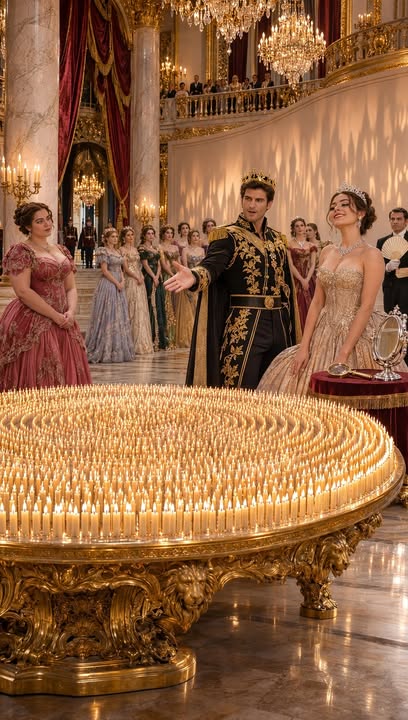
Part 6 – The Light They Chose
The queen’s wishes were not the last.
Elara read the words again, her mother’s careful handwriting seeming to gather the lamplight around it.
“What do you think she meant?” Adrian asked.
“I don’t know,” Elara said.
“But I think we should find out before anyone decides what the words mean for us.”
King Rowan had joined them in the gallery.
He looked from the note to Elara, and then to the old brass holder beneath the queen’s drawing.
“Your mother’s papers may tell us more,” he said.
“Master Fenwick has searched them,” Adrian replied.
“He has searched the papers that were filed together,” Elara said.
“That isn’t necessarily the same as searching everything she left behind.”
The next morning, Elara went to the archive with Adrian and Master Fenwick.
King Rowan came as well, though he did not take the chair at the head of the table.
The change was small, but Elara noticed it.
He had come to listen rather than to direct.
Master Fenwick brought out the bundle of Marian’s letters, the queen’s drawing, and the newly discovered note.
Then he searched the shelves for household records from the years after the queen’s death.
“If something was moved, there may be a note of transfer,” he explained.
“People in the palace have always believed the archive remembers everything.”
“It remembers what someone thought to write down,” Elara said.
Master Fenwick smiled.
“That is a better description.”
They read through old lists of boxes, letters, and household effects.
Adrian took one set of papers, while Elara and the records keeper examined another.
The king stood by the window, reading each label before returning it carefully to its place.
An hour passed, then another.
At last, Elara found a thin record book tucked behind a stack of household accounts.
Its pages listed items sent to the late queen’s former rooms after her death.
She ran a finger down the narrow columns.
“Here,” she said.
“Several private papers were returned to Marian Vale for safekeeping.”
“Is there a date?” Adrian asked.
“Three months after the queen died.”
“Would your mother have kept them at home?” he asked.
“She kept very little,” Elara replied.
“But she saved letters and things she believed might matter later.”
King Rowan moved closer.
“Do you know where they are?”
“My mother’s sewing box is with me.”
Elara had brought it to the palace years before, a small wooden box lined with faded green cloth.
It held old needles, a thimble, several mended buttons, and a handful of letters she had never been able to part with.
She had thought of them as keepsakes, not as pieces of a history still waiting to be understood.
“I’ll look,” she said.
Adrian did not ask to come with her.
Instead, he said, “Would you like me to wait here?”
“I think I’d like to look alone first.”
“Of course.”
The sewing box rested in Elara’s room beneath a shelf of folded linens.
She placed it on the bed and lifted the lid.
The familiar scent of cedar and old thread rose from within.
For a moment, she simply looked at the worn objects her mother had touched.
A brass thimble.
A needle case made from blue cloth.
A narrow ribbon that Marian had once used to tie Elara’s hair away from a lamp flame.
At the bottom, beneath a folded square of linen, lay a small envelope.
Elara recognized her mother’s handwriting at once.
For Elara, when the lesson is ready.
Her hands trembled as she opened it.
Inside was a single page, written several years after the queen’s death.
My dear Elara, the letter began.
There are stories that belong first to the people who lived them, and stories that must be told when others begin to use them as answers.
I promised Queen Isolde I would protect the purpose of her lesson.
I did not promise that its meaning could never change.
The words on the page blurred, and Elara blinked until they came clear again.
Her mother continued.
The queen believed a ruler must learn to notice the quiet people in a room, not only the ones whose names are announced.
She wanted Adrian to understand that good judgment begins when a person asks what may be missing from the story.
I thought that if he grew up surrounded by those who listened carefully, he would learn it without needing me to tell him.
Perhaps I was too hopeful.
Elara pressed her fingers to the edge of the letter.
Her mother had not hidden the truth because she believed it should remain hidden forever.
She had waited, unsure when the right moment would come.
The letter went on.
If the lesson is used to decide someone’s worth, tell the truth.
If it is used to teach someone how to listen, let the lesson do its work.
And if the person who asks the question is willing to hear an answer they did not expect, then perhaps the time has come.
At the bottom, Marian had written one more line.
The queen’s wishes were not the last, because love does not end with a person’s final request; those who remain must choose what to do with what they have been given.
Elara held the letter close to her chest.
Her mother had not been speaking of another secret demand or an unfinished command.
She had been speaking of choice.
The queen had offered a lesson.
Marian had preserved it.
Now Elara, Adrian, and the king had to decide how to carry it forward.
When Elara returned to the archive, Adrian was waiting by the table.
The king and Master Fenwick had stepped into the adjoining room to check a shelf label.
“You found something,” Adrian said.
“I found my mother’s letter to me.”
She handed it to him.
He read it silently, then returned it with care.
“What do you think she wanted you to do?”
“I think she wanted me to decide when I was ready.”
“And are you?”
Elara looked at the old drawing and the brass holder.
“I’m ready to speak about what it means.”
“That is not the same as knowing what to do next.”
“No,” she said.
“But it is a beginning.”
Adrian’s eyes held hers.
“I’ve been thinking about what I said yesterday.”
“Which part?”
“That I wanted you in my life.”
“You still do?”
“Yes.”
He spoke without ceremony, and without reaching for her hand.
“But I don’t want that wish to become another expectation you have to carry.”
Elara heard in his words the work he had done since the first challenge.
He was learning to leave room for an answer.
“I want you in my life too,” she said.
“Not because the queen wrote my name beside yours, and not because the court has decided it would make a useful story.”
“Because you keep asking what I think, and you try to hear the answer.”
Adrian’s expression softened.
“I will keep trying.”
“Then we can begin by helping the palace hear more people.”
Before he could answer, King Rowan returned with Master Fenwick.
Elara placed Marian’s letter on the table and explained what it said.
The king read the final lines twice.
“Your mother understood the queen better than I did,” he said.
“She understood that honoring someone is not the same as repeating their wishes forever.”
“No,” Elara replied.
“It means living by the best of what they taught us.”
Rowan looked at the letter.
“Then I would like your help.”
Elara waited.
“I want the queen’s lesson kept in the east gallery, where the staff and the court can both learn from it.”
“And I want the records to include your mother’s name, not in a footnote, but beside the queen’s.”
“That sounds right,” Elara said.
“But a display is not enough.”
The king nodded.
“What else do you suggest?”
“Let people who understand the work of the palace help shape its decisions.”
“Lamp keepers know about light and drafts.”
“Kitchen staff know how food reaches the people who need it.”
“Clerks know what is missing from a record.”
“Those kinds of knowledge should not have to wait until someone in a fine coat asks for them.”
The king listened without interrupting.
Adrian moved to the table.
“Then we should begin with a council that includes people from beyond the court.”
“A palace council,” Celestine said from the doorway.
They turned.
She stood there with a slim portfolio under her arm.
“I hope I’m not intruding.”
“Not at all,” Elara said.
Celestine came to the table.
“I heard that the king was asking how the lesson could be carried forward.”
“I have a proposal,” she said.
She opened her portfolio and laid out several pages.
“An advisory council made up of people with different kinds of experience.”
“Some would come from the court, but others would be chosen from the palace staff, the guilds, and the towns.”
“Each member would be asked to bring forward a question from the people they represent, not simply to defend their own interests.”
The king read the first page.
“You have thought this through.”
“I have been thinking about what I failed to notice,” Celestine replied.
“I would like to help make sure that other people are not dismissed before they have been heard.”
Elara looked at the proposal.
“It should have a clear way for people to raise concerns without needing to know someone powerful.”
Celestine nodded.
“Yes.”
“And the council should explain what it decides,” Adrian added.
“So listening does not become a performance.”
“Agreed,” Celestine said.
King Rowan set the papers down.
“It will take time to build something fair.”
“Then we should take the time,” Elara said.
A year passed before the palace council held its first full meeting.
Its members included a lamp keeper, a head cook, a village teacher, two guild representatives, a palace clerk, and several people chosen by the towns around the capital.
Celestine helped organize its meetings and made certain that no one’s contribution could be dismissed simply because of the work they did or the family into which they were born.
Adrian attended often, but he did not sit at the head of the table unless the members asked him to.
He learned to wait through a silence without filling it.
King Rowan kept his promise to tell the story of the candle lesson truthfully.
He spoke of Queen Isolde, who had devised the first exercise for children and apprentices.
He spoke of Marian Vale, who had preserved the glass guard and helped the queen shape the lesson.
He spoke, too, of his own mistake in turning it into a test of betrothal.
The palace records were amended.
Marian’s name appeared beside the queen’s on the display in the east gallery, where the brass holder stood beneath the simple drawing.
Visitors often paused there.
Some came expecting the famous challenge of ten thousand candles.
Instead, they found a smaller picture, a careful explanation, and a question written in both women’s hands:
Before deciding what you see, ask what you have not yet noticed.
The first year the new council met, the palace held a candle lesson for the household children.
They gathered in the east gallery around a table bearing a dozen candles.
Elara showed them how to move air gently with a paper fan.
The flames leaned.
Their shadows trembled.
One flame stayed upright behind its little glass guard.
A young girl pointed to it, then hesitated.
“Is that the answer?” she asked.
“What do you think the question is?” Elara replied.
The girl looked at the candles again.
“Maybe why it doesn’t move.”
Elara smiled.
“That is a very good question.”
Across the room, Adrian watched the children lean together over the table, taking turns to make the shadows dance.
He wore no crown, and no one had asked him to announce a future queen.
When the lesson ended, he joined Elara beneath the window.
“They’re better at asking questions than I was,” he said.
“They have the advantage of being taught before anyone tells them the answer.”
He laughed softly.
“I’m glad the lesson belongs to them now.”
“It belonged to them from the beginning.”
He looked out at the garden paths, now bright with summer sunlight.
“So much has changed.”
“Yes.”
“Are you content with what we have made?”
Elara considered the council, the gallery, and the people who now came to speak where once they might have waited unseen.
“I’m proud of what we have begun.”
“And us?”
There was no court watching.
No official waiting with a document.
No challenge set out beneath chandeliers.
Only Adrian, looking at her with the patience he had learned to practice.
“I’m glad we did not hurry,” she said.
“Me too.”
He offered his hand, palm open, asking without assuming.
Elara placed her hand in his.
They stood quietly for a moment, while the children’s laughter drifted from the gallery.
Their affection had grown through ordinary days: long conversations over council papers, walks through the gardens, disagreements that neither tried to win by rank, and the steady discovery that trust was made of small promises kept.
They did not announce a betrothal.
They did not ask the kingdom to bless a choice they had not yet made for themselves.
In time, Adrian and Elara chose one another.
They chose it after the council had become part of palace life, after the queen’s lesson had been taught to children for several years, and after Elara had helped make the kingdom’s decisions more open to the people who lived with them.
When Adrian asked her to marry him, he did so in the east gallery beneath the queen’s drawing.
There were no ten thousand candles.
There was only the old brass holder, the clear glass guard, and a single flame that remained steady while a soft breeze entered through the open window.
“I love the way you see the things others overlook,” he said.
“But I love even more that you never let me mistake seeing for understanding.”
Elara smiled.
“And I love that you learned to ask before deciding.”
“Then will you choose this with me?”
“Yes,” she said.
“Freely, and in our own time.”
They married in the palace garden the following spring, beneath flowering branches and strings of small lanterns.
Lady Celestine stood beside Elara as one of her attendants, no longer the woman who had laughed from behind a jeweled magnifying glass, but a friend who had learned to make room for a person’s answer.
King Rowan walked with Adrian to the garden steps, then stepped aside before the vows were spoken.
He had finally understood that love could not be made more secure by controlling what it became.
After the ceremony, the children from the palace household were invited to see the candle lesson.
They took turns making the flames bend and the shadows shift.
The smallest among them watched the glass guard closely, then looked up at Elara.
“Why does that one stay still?” he asked.
Elara knelt beside him.
“Because the air cannot reach it in the same way.”
The child considered this.
“So it isn’t better?”
“No,” Elara said.
“It is simply different.”
The child nodded, satisfied, and ran back to the others.
Adrian came to stand beside her.
Beyond them, people from the court, the palace, and the nearby towns shared food and conversation beneath the lanterns.
The old lesson had become what the queen and Marian had hoped: not a test to separate the worthy from the unworthy, but an invitation to look again.
The candle that would not bend no longer stood alone as a secret to be solved.
It stood as a reminder that appearances could mislead, that quiet work could change the shape of a kingdom, and that listening was often the first act of leadership.
Elara watched the flames shine against the evening sky.
Then she took Adrian’s hand, and together they turned toward the people gathered around them.
**–THE END–PLEASE
Share your thoughts or feedback to motivate us to create more stories ♥️
* * *
[PREVIOUS: PART 5](https://storyly.idolsgift.com/blog/part-5-the-flame-that-wouldn-t-bend-069)
✓ Lynn R. Adams
Part 6 – The Light They Chose The queen’s wishes were not the last. Elara read the words again, her mother’s careful handwriting seeming to gather the lamplight around it. “What do you think she me…