PART 6 (THE END): The First Step Wasn’t What Anyone Expected 047
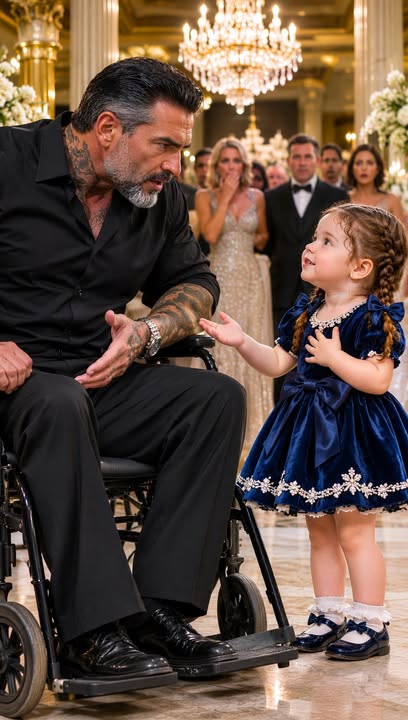
Part 6 – The Steps We Choose
Elena’s words settled over the room, and for a moment I could hear only the faint hum of the camera and the uneven beat of my own heart.
Claire’s hand tightened around mine.
Maya moved closer, ready to steady me, but she did not take hold until I nodded.
I lowered myself carefully into the chair beside the lectern.
The step I had taken still mattered, even though I had stopped.
Especially because I had stopped when my body asked me to.
“May I see it?” I asked Elena.
She crossed the room, holding the document in both hands.
The paper was yellowed and creased, its edges soft from years in a drawer.
“I found it tucked inside Daniel’s old tool case,” she said. “I’d never opened the lining before. It must have been there since he left the company.”
She placed the document on the table between us.
The note was brief, written in blue ink beneath a typed heading.
It said that Daniel Ruiz had declined the continuing payment, preferring to return to work as soon as he was able.
At the bottom was a signature that looked like Daniel’s handwriting.
I read it once, then again.
For a moment, relief came first.
Perhaps Daniel had refused the money.
Perhaps he had chosen his own pride and independence, and the company had simply followed his wishes.
Then I looked more closely at the date.
The note had been written almost a year after the accident.
The original support file, the one we had found in the archive, had been placed on hold months before that, and no record showed that the company had ever contacted Daniel or Elena to explain the assistance that had been approved.
“Did he ever tell you he declined the money?” I asked.
Elena shook her head.
“He told me he was going back to work because he didn’t want to be a burden. He never said anyone had offered us continuing help.”
“Could he have signed something without understanding what it meant?” Claire asked gently.
“I don’t know,” Elena said. “It doesn’t sound like Daniel. But I can’t say what happened in a conversation I wasn’t part of.”
She looked down at the paper.
“I found it because I was searching for his old insurance papers. I brought it here because I thought it might answer your question.”
“It answers some of it,” I said. “It doesn’t answer enough.”
The document had arrived like the final piece of a puzzle, but it did not complete the picture.
It made the story more human, not less complicated.
Daniel might have refused the assistance because he wanted to stand on his own again.
He might have believed the support was temporary and chosen to return to work.
Or someone might have presented the form to him without telling him what my promise had been.
We could not claim to know.
“What do you want to do?” Claire asked.
I looked at the camera, still waiting to record my statement.
“I want to tell the truth as far as we know it.”
Elena watched me closely.
“Even if it makes the story less simple?”
“Especially then.”
I asked the camera operator to pause the recording.
The company’s counsel came over to the table, and I explained the new document.
We agreed the statement should include that Daniel appeared to have signed a note declining further assistance, but that we could not establish when the offer was properly explained or whether it matched the support I had promised.
We would not describe him as having been deprived of money he had knowingly refused.
We would not describe the company as having fulfilled its duty either.
The failure had begun before the signature: we had not confirmed that Daniel understood what was available, and we had not followed through to ensure that the family’s needs were met.
The revised statement took longer.
It also felt truer.
When the camera light came on again, I read it without looking down at the page.
I said that I had made a promise to Daniel after he was injured while protecting me.
I said that I had trusted a process to carry that promise forward, but neither the company nor I had ensured that it happened.
I said that the records showed Daniel may have declined the continuing support, but they did not show whether he understood the full offer or knew that his family remained eligible for help.
What was certain, I said, was that we had allowed an important commitment to disappear into paperwork.
For that failure, I was sorry.
I announced an independent review of the old support files and a new program offering long-term assistance to families affected by company mistakes.
The program would be governed separately from the teams whose decisions it reviewed.
Elena had agreed to advise its designers, but she would not be asked to share her family’s story publicly or serve as a symbol of anyone else’s forgiveness.
Then I turned from the prepared statement.
“There is no sentence that can tell you exactly what Daniel would have chosen,” I said. “He is not here to answer for himself. So we will not invent certainty where we don’t have it. We can honor him by listening more carefully to the people affected by our decisions, by keeping our promises in ways they can see, and by admitting when we fail.”
The room remained quiet.
Not frozen, as it had been when I first rose at my birthday party, but attentive.
I looked toward Elena.
She gave the smallest nod.
It was not absolution.
It was permission to continue.
The recording ended without applause.
I was grateful.
For once, the moment did not need a crowd to tell me whether it mattered.
Maya helped me shift back into my chair, while Claire stayed beside me and Elena gathered the old document into its sleeve.
The independent review took several months.
It found other incomplete files, though none involved the same circumstances as Daniel’s.
Some families had received what had been promised.
Others had been offered help but never contacted again.
The company made no attempt to hide the results.
It published the review, explained what had gone wrong, and opened a process for former employees and their families to ask questions about old support cases.
We did not discover a hidden fortune owed to Elena.
We did not uncover a single villain whose name could make the story easy.
Instead, we found what had happened to many promises: someone made one, someone else assumed it had been kept, and a family was left to manage without knowing what help they might have had.
The new program began with independent case workers and a simple rule that had been absent from the old system.
No case could be marked complete until the person affected confirmed that the support had reached them and understood what choices were available.
Elena helped shape that process.
She asked the team to use clear language, to let families ask questions without feeling indebted, and to make sure support did not depend on telling a painful story in public.
When the program opened, she chose to attend the small launch meeting.
She did not stand beside me for photographs.
She sat at the same table as the program staff, reading each page and asking practical questions.
Lily came too, carrying the drawing she had made at the café.
It still showed a tall figure in a chair, a little girl beside him, and Claire holding my hand.
I had placed it in a frame in my study.
Elena’s own family received the support they needed through a private, carefully reviewed arrangement that did not require her to make any public statement.
She accepted it because Daniel had believed our family would be supported, and because she could use it to secure a little more stability for Lily.
She did not accept it as payment for forgiveness.
I did not ask her to.
Months after the recording, she told me she still wished Daniel had been there to hear the truth.
“I wish he’d known you remembered,” she said.
“I wish I had remembered sooner.”
She looked through the window, where Lily was chasing a paper airplane across the garden.
“Maybe he knew enough,” she said. “He knew you were trying. He kept your letter.”
I had no answer for that.
So I let the words stay with me, as they were.
The work with Maya continued in measured steps.
Some mornings my muscles answered more easily.
On others, I could manage only the exercises we had practiced a hundred times.
We celebrated neither every small movement nor only the large ones.
Maya taught me that improvement was not a performance, and that a hard day did not erase what I had achieved before it.
I learned to listen when she told me to rest.
I learned to ask for help before fear turned into stubbornness.
Most of all, I learned that hope did not require me to predict how my body would recover.
It required me to show up for the next session.
Claire stayed through the weeks before her departure.
We had dinners without discussing work.
We went through old photographs and remembered things we had thought the other had forgotten.
Sometimes our conversations were warm.
Sometimes they caught on old hurts, and we had to begin again.
I apologized for the ways I had pushed her away, especially when she offered help and I called it pity.
She told me she was sorry she had sometimes taken my silence as proof that I did not want her there, rather than asking what I needed.
We did not pretend that one conversation repaired seven years.
But we kept having conversations.
The day Claire’s flight was scheduled, she came to the mansion with her suitcase and a small overnight bag.
I had imagined that morning would feel like a goodbye.
Instead, it felt like a doorway neither of us was afraid to walk through.
Maya met me in the garden before Claire left.
The path from the house to the gate was short, level, and familiar.
I had practiced it with the support frame twice a week.
Today, Maya stood beside me, watching my balance.
Claire waited a few paces ahead.
“I don’t want you to walk just because I’m leaving,” she said.
“I’m not.”
“Good.”
“I’m walking because I want to reach you.”
Her face softened.
I rested both hands on the frame and rose.
My knees trembled, but they held.
Maya stayed close enough to help without taking over.
I took one careful step.
Then another.
The morning was bright, and a breeze moved through the trees along the path.
Nothing about the moment was effortless.
Nothing about it was magic.
My body was still limited, and the distance in front of me was still short.
But I had chosen each step.
When I reached Claire, she did not throw her arms around me or ask if I could go farther.
She simply placed her hand in mine.
“I’m going to miss you,” I said.
“I’m going to miss you too.”
“I don’t want you to feel guilty for going.”
“I won’t,” she said. “Not if you promise you’ll call.”
“I promise.”
“And not just when you have news about the company.”
“I’ll tell you about my terrible meals and Maya’s strict exercise schedule.”
“She’s not strict,” Maya said.
“She is when I try to do too much.”
“That is not the same thing.”
Claire laughed, and the sound eased something in me.
We walked slowly back toward the house, with Maya close by and my frame between each of us.
At the airport, Claire hugged me before she left.
“I’m proud of you, Dad.”
“I’m proud of you too.”
She looked as though she wanted to say something more, but the words did not come.
Neither of us forced them.
She stepped away, then turned back once before joining the line for security.
I watched until I could no longer see her.
This time, I did not mistake her leaving for abandonment.
She was going toward a life she had chosen, and I was learning how to love her without asking her to make that choice smaller.
The months that followed brought their own ordinary difficulties.
There were medical appointments, long calls across time zones, and the occasional bad connection that made us laugh instead of hang up.
Claire sent photographs of narrow streets, unfamiliar cafés, and the view from her new office.
I sent her pictures from the garden and updates about the company’s review.
We began speaking more often than we had when she lived nearby.
When she visited New York, she joined me at Maya’s session, not as a nurse or supervisor, but as my daughter.
Elena remained involved with the support program, careful and direct.
She became the person who reminded the company that a form could be correct and still make no sense to the person asked to sign it.
Lily grew taller.
Her pigtails changed, her shoes got scuffed in new places, and she stopped sitting alone as often at preschool.
She still noticed people on the edges of a room.
When she came to visit, she always looked first to see who might need a chair, a conversation, or someone willing to play the game they had invented in their head.
One afternoon, a year after my birthday, she visited with Elena.
I was in the garden with Maya, practicing a short walk between two benches.
I managed the distance with a cane, Maya close by.
There was no audience, no orchestra, and no camera.
When I reached the second bench, I sat down, tired but pleased.
Lily ran up and stopped in front of me.
“Do you remember what I told you?”
“I remember.”
“I said God wanted you to stand.”
“You did.”
“Did I make your legs better?”
Maya glanced at me, ready to help me choose my words.
I looked at Lily’s serious face.
“No, sweetheart. You didn’t cure me.”
Lily’s shoulders dipped a little, so I reached out and offered her my hand.
“But you helped me remember that I wasn’t alone,” I said. “You helped me try again. And trying again helped me find my way back to people I love.”
She looked at Elena, then at Claire, who was standing behind her with a visitor’s badge still clipped to her coat.
Claire had flown in for the weekend.
Lily smiled.
“So you can still thank me.”
“I can.”
“Good.”
I held her little hand between both of mine.
“Thank you, Lily.”
She leaned her shoulder against my arm.
The garden was quiet except for leaves shifting above us and the faint sound of the city beyond the walls.
I thought of the ballroom, the trembling in my legs, and the strangers who had watched me struggle to stand.
I thought of Daniel, whose name had waited in a photograph until Elena recognized it.
I thought of the promise that had been lost, and the people who had helped bring it back into the light.
I thought of my daughter, no longer standing at the edge of my life because I had mistaken her love for pity.
I could not return to the life I had lived before the accident.
I could not repair every part of what had gone wrong.
But I could keep the promises I made now.
I could ask for help without calling it weakness.
I could let Claire leave without making love into a chain.
And when Maya asked whether I wanted to practice another short walk, I could answer honestly.
“Yes,” I said. “But slowly.”
Maya smiled.
Claire took my other hand.
Together, with Lily beside me and Elena watching from the garden path, we began again.
**–THE END–PLEASE
Share your thoughts or feedback to motivate us to create more stories ♥️
* * *
[PREVIOUS: PART 5](https://echoesofstories.idolsgift.com/blog/part-5-the-first-step-wasn-t-what-anyone-expected-047)
✓ Lynn R. Adams
Part 6 – The Steps We Choose Elena’s words settled over the room, and for a moment I could hear only the faint hum of the camera and the uneven beat of my own heart. Claire’s hand tightened around m…