PART 6 (THE END): The Face in the Photograph 061
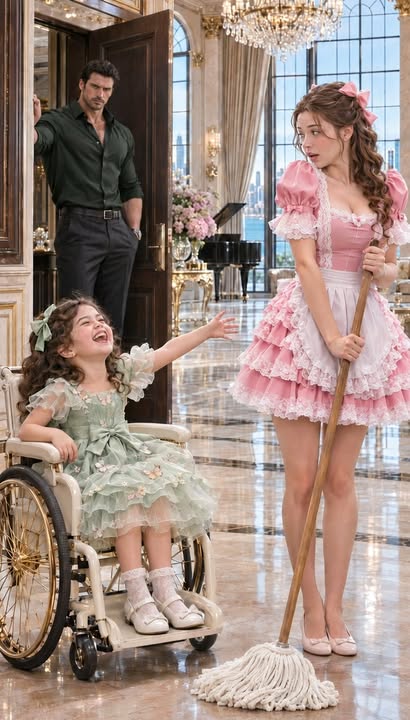
Part 6 – A Dance of Their Own
The name on the paper was mine.
For a heartbeat, the music room seemed to lose all its sound.
Elena stared at Roman’s face, searching for an answer he did not yet have.
“Maya Turner,” she said. “That’s you.”
“Yes,” I whispered.
Roman turned the note over again, as if the ink might rearrange itself into something less impossible.
The paper was old, its edges worn soft, but the writing was unmistakably Elena’s mother’s.
“If she trusted you,” Elena said, “why did she write your name?”
“I don’t know,” I replied.
Roman looked at me, not with suspicion this time, but with the dawning recognition of a question too strange to dismiss.
“Did you ever meet my wife?” he asked.
“Not that I remember. I was a child when she died.”
“How old?”
“About ten.”
“What was your mother’s name?”
“Rose.”
The name struck something in Roman’s expression.
He glanced down at the letter, then back at me.
“Elena’s mother knew someone named Rose Turner,” he said. “She mentioned her once.”
My breath caught.
“What did she say?”
“That Rose had helped her when she first moved to Chicago.” His eyes narrowed slightly, not in distrust, but in concentration. “I thought she meant a neighbor. Your mother?”
“I don’t know. My mother worked as a nurse at a clinic near the river. She never told me she knew the DeLucas.”
Elena looked from him to me.
“Could Maya’s mother have helped Mama?”
“Maybe,” Roman said. “We need to find out.”
The officials had already left, but the sealed papers and the note were still evidence. Roman called Samuel and asked him to arrange for the letter to be examined and copied before anyone handled it further.
Then he sat with Elena and me in the music room, the blue music box between us.
“I’m sorry,” he said. “I don’t want to turn this into another mystery you have to carry.”
Elena’s fingers rested on the faded lid.
“It’s already a mystery.”
“I know.”
“Then we find out,” she said. “But no more keeping things from me.”
Roman nodded.
“No more keeping things from you.”
I stared at my name on the paper.
The thought of my mother’s life before I was born, of all the stories she had left untold, seemed suddenly larger than the little room where I had spent so many nights counting bills and worrying about debt.
“I’ll call her sister,” I said. “She may know whether my mother met Elena’s mother.”
“Would you like me to help?” Roman asked.
“I’d like to make the call myself.”
“All right.”
Elena reached for my hand.
“Will you come back?”
“I’m not leaving.”
The certainty in my voice surprised even me.
I called my aunt from the guest room.
She listened while I explained the letter, the name, and the blue music box, then grew very quiet.
“I wondered when someone would ask,” she finally said.
I sat on the edge of the bed.
“You knew about Elena’s mother?”
“Not much. Your mother worked with her at a neighborhood clinic for a while. They became close after your mother helped her find a safe place to stay when she first came to Chicago.”
“Why didn’t Mom tell me?”
“She did, once, but you were little. She called Elena’s mother a brave woman with a laugh that filled a room.”
My hand tightened around the phone.
“Did she ever mention the music box?”
“No. But she kept an old envelope in her dresser with Elena’s mother’s name on it. After your mother died, I couldn’t find it.”
I looked toward the little room’s window, where the afternoon light had turned pale gold.
“Do you remember anything else?”
“Your mother used to say that people who were frightened needed someone who would listen without deciding their story for them.”
I closed my eyes.
That sounded exactly like her.
When I returned to the music room, Roman and Elena were waiting.
I told them what my aunt had said.
Elena’s eyes widened.
“So Mama knew your mother.”
“It seems they did.”
“Maybe that’s why she wrote your name.”
“Maybe,” Roman said. “But we shouldn’t guess when we can look for the letter your aunt remembers.”
Samuel helped us locate the remaining family records, and my aunt found the envelope in a box she had kept after my mother died.
Inside was a brief note from Elena’s mother to mine, written before the accident.
It thanked Rose for her kindness and said that if anything ever happened, she trusted her to keep a small piece of the truth safe until it could be given to Elena.
The note did not explain what the truth was.
But tucked behind it was a tiny brass key.
Roman examined it carefully.
“It may fit the music box,” he said.
The key turned in a narrow lock beneath the lid.
A false bottom lifted, revealing a folded sheet of paper and a small memory card sealed in waxed cloth.
Elena leaned close, her breath quickening.
“Is that the missing money?”
“No,” Roman said gently. “It looks like a list of account numbers and dates.”
Samuel was called back to review the document.
The dates matched transfers from Elena’s trust, along with one notation beside a series of payments Daniel had routed through the account in my name.
The final line was written in Elena’s mother’s hand:
“If Roman doubts what he sees, ask Arthur Bell about the brake line and the car he was told not to release.”
The note did not prove Daniel had caused the crash.
It did prove that Elena’s mother had been trying to preserve evidence, and that Daniel had known she was close to exposing his theft.
The memory card held another recording.
This one was longer, though portions had been damaged.
Elena’s mother spoke quietly, explaining that she had found missing trust money and discovered Daniel had used false paperwork to conceal it.
She said he had taken control of several accounts and had begun using other people’s names to hide the transfers.
One of those names was mine.
She did not know whether I had been told anything.
She said Daniel had once asked her to pass an envelope to a young woman named Maya, but she had refused because she believed the money was stolen.
“I don’t know how he might use her name,” she said on the recording. “But Rose would never knowingly help him. If Maya is involved, she may be another person he’s trying to hide behind.”
I listened with my hands clasped together, the words bringing both relief and sorrow.
My mother had understood what Daniel was doing before I did.
Elena listened beside me, holding Roman’s hand.
The recording continued.
Her mother said she had planned to meet Roman and show him the records, but she was afraid Daniel might learn she had copied them.
She never said what she believed he intended.
She never claimed to know what had happened to the brakes.
The truth was still incomplete, but it was no longer shapeless.
Daniel had stolen from Elena’s trust.
He had forged my name and used the anonymous payments to make me appear connected to the money.
He had known Elena’s mother had discovered the theft.
He had tampered with a vehicle before the crash and then tried to conceal the repair records.
Those facts were enough for the authorities to continue their investigation.
They were not enough to tell us exactly what Daniel had intended that night.
Roman did not invent certainty to ease his guilt.
Elena did not demand an answer no one could honestly give.
For the first time, the unanswered part belonged to the truth rather than to a secret someone had chosen to hide.
Samuel’s records helped the authorities locate Daniel in another state, where he had been living under a false name.
He was arrested without a public spectacle, and the investigation continued through lawyers, documents, and careful interviews.
Roman gave the authorities every company record they requested.
He acknowledged that his family’s business had allowed Daniel access without proper oversight, and that his own habit of handling matters privately had made the theft easier to conceal.
The case took months.
The evidence from the trust accounts, the forged applications, the storage locker, Arthur’s testimony, and the recordings established that Daniel had taken the money and falsified records to hide it.
The evidence concerning the crash remained complicated.
Arthur confirmed that the brake line had been deliberately damaged before he repaired it, and that Daniel later tried to retrieve the service paperwork.
The investigators could not prove whether Daniel had deliberately caused the accident.
They could prove he had hidden financial crimes and put others at risk by tampering with a car.
Daniel was convicted of fraud, forgery, and related offenses.
The stolen trust funds were restored.
The forged debts in my name were cleared after the records and handwriting examinations confirmed that I had not signed the loans.
When the final notice arrived, I read it twice before I could make myself believe the words.
No balance owed.
No collection claim.
No shadow of Daniel’s handwriting waiting to ruin another month of my life.
I sat at the kitchen table with the letter in my hands.
Roman found me there and stopped in the doorway.
“Is it settled?” he asked.
“It’s settled.”
He didn’t reach for the paper or tell me how I should feel.
He waited.
“I thought I’d be happier,” I said.
“You can be relieved and still be tired.”
I looked up at him.
“That sounds like something Elena would say.”
“She’s taught me a few things.”
“I’m going to keep the letter.”
“You should.”
“Not because I need to prove anything anymore. Just because I want to remember this day.”
Roman nodded.
“I’m glad you get to keep it for that reason.”
The criminal operation that had once made Daniel’s access possible did not vanish overnight, but Roman began dismantling the parts he had allowed to grow in secrecy.
He closed shell companies used to hide transactions, brought in independent auditors, and cooperated with investigators examining the family’s old books.
Some people left when they learned he would no longer protect the business at any cost.
Others stayed and helped rebuild it into something smaller, more transparent, and less dependent on fear.
Roman did not call the changes redemption.
He called them necessary.
When I asked whether he missed the power he had given up, he answered honestly.
“Sometimes I miss thinking I could solve everything by deciding who was allowed to know.”
“And now?”
“Now I know that silence can make a room look peaceful while everyone inside is afraid.”
I had to admit that the answer stayed with me.
Elena began therapy with a counselor who understood trauma and childhood grief.
She returned to physical rehabilitation at a pace she helped set herself.
Some days she worked hard and celebrated a small improvement in balance or strength.
Other days she asked to stop early, and the therapist listened.
Roman learned not to treat each difficult day as a failure.
I learned not to turn every good day into a promise about what came next.
Elena’s body did not change all at once.
Neither did her memories.
She still used her wheelchair most of the time, but she became stronger in ways that mattered beyond measurements.
She asked more questions.
She told Roman when she was angry.
She began speaking about her mother without watching every adult’s face to see whether the subject had become too painful.
Sometimes she laughed.
The first time she did it while Roman was in the room, he looked as if he had heard a rare song and was afraid to move in case it stopped.
Elena caught his expression.
“Daddy, you’re doing that face again.”
“What face?”
“The one where you’re trying not to smile.”
“I’m not trying.”
“You are.”
He let the smile appear.
She laughed again.
I stayed in the mansion, but the work between Elena and me changed.
At first, I had been there because I was paid to clean and because she had asked me to stay.
Over time, the cleaning became only one small part of my life there.
I helped Elena practice her music, read aloud when she wanted company, and learned which silences she preferred to leave unfilled.
When Roman asked what I wanted my role to be, I told him I did not want to become another person whose place depended on being useful.
He listened.
Then he offered me a paid position as Elena’s companion and household coordinator, with clear hours, clear boundaries, and the freedom to leave whenever I chose.
I accepted because I wanted the work, not because I was afraid of what would happen if I said no.
Our relationship changed more slowly than either of us expected.
Roman did not ask for trust as if the case had earned it for him.
He offered honesty in small, ordinary ways.
He told me when a meeting ran late.
He asked before making plans that involved me.
When he was worried, he said he was worried instead of turning his worry into an order.
I told him when his old instincts returned.
Sometimes he thanked me.
Sometimes we argued.
Once, when I told him he was using the word “protect” to avoid admitting he was afraid, he sat quietly for a long time before answering.
“You’re right,” he said.
It was not a grand confession.
It was better.
Months after Daniel’s conviction, the house held a small gathering to mark Elena’s first recital of the season.
Only a few people came: her therapist, Samuel, Arthur Bell, my aunt, and two friends from the household.
Arthur had given a statement to the authorities and apologized to Elena in person, without asking her to reassure him.
She listened, then told him she was glad he had finally told the truth.
He accepted that with tears in his eyes.
After everyone left, Elena wheeled herself into the music room.
The blue music box sat on the piano, its hidden papers now stored safely with the case records.
She opened the lid.
Her mother’s restored song began to play.
The room filled with the soft, slightly wavering melody.
Roman stood near the doorway, hands at his sides.
I recognized the look in his eyes: the same fear of disturbing a fragile moment that had once kept him outside his daughter’s life.
Elena noticed him.
“Come in, Daddy.”
He stepped into the room.
She held out one hand to me and the other toward him.
“Dance with me.”
I looked at the mop resting beside the supply closet.
“Does the distinguished gentleman have competition?” I asked.
“The mop can join too,” Elena said.
Roman glanced at it.
“I don’t know the steps.”
“Neither does Maya,” Elena replied. “That’s why it’s funny.”
I took the mop and offered it my arm.
Elena smiled.
The music began again, and I started the old, ridiculous ballroom routine, turning too quickly and nearly catching the edge of the rug.
“Your footwork is worse than his,” Elena said.
“I’ve worked very hard at that.”
Roman approached with all the caution of a man crossing a room he had once believed he could not enter.
“May I?” he asked her.
Elena nodded.
He took her hand and joined my clumsy circling, trying to follow the mop’s imaginary lead.
He stepped left when the music called for right, apologized to the mop, and nearly collided with the piano bench.
Elena laughed.
This time, the sound did not surprise Roman into stillness.
He laughed with her.
I spun beneath his raised hand, the mop sweeping wide, and Elena clapped along to the song.
The room was full of memory, but it was no longer held captive by it.
Her mother’s voice rose from the little blue box, warm and imperfect.
Elena kept laughing.
And when the music ended, none of us hurried to fill the silence.
**–THE END–PLEASE
Share your thoughts or feedback to motivate us to create more stories ♥️
* * *
[PREVIOUS: PART 5](https://storyly.idolsgift.com/blog/part-5-the-face-in-the-photograph-061)
✓ Lynn R. Adams
Part 6 – A Dance of Their Own The name on the paper was mine. For a heartbeat, the music room seemed to lose all its sound. Elena stared at Roman’s face, searching for an answer he did not yet have…