PART 6 (THE END): The Envelope Noah Left Behind 046
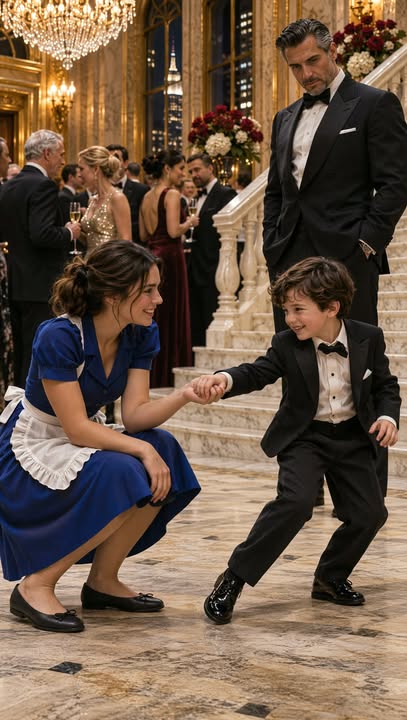
Part 6 – The Rhythm We Keep
“It says Noah Carter.”
For a moment, I heard only the air vent above Dominic’s desk and the faint, restless hum of the city beyond the windows.
I looked from the name on the screen to Dominic’s face.
“That’s impossible,” I said.
“I know.”
“Noah was dead before that entry was made.”
“The investigator said the log was altered after his death.”
I stared at the image.
The writing beside the vehicle was neat, almost careful, but the name seemed to swim before my eyes.
“What does the original show?” I asked.
“A different driver’s name. The investigator is checking the handwriting and the alteration.”
“Who changed it?”
“They don’t know yet.”
The name on the screen was an answer designed to create another question, a false trail laid over the one Noah had left.
Dominic set the phone down.
“I’m not going to guess.”
“Good.”
“I know what you’re thinking.”
“Do you?”
“You’re wondering whether someone wanted the record to point toward Noah.”
“I’m wondering why they thought that would help them.”
He nodded, and for a moment neither of us tried to fill the silence with certainty.
The investigator called back later that afternoon.
The altered line had been added after the garage logs were copied for the internal review, but before the records had been archived.
It appeared to have been written in a different pen, by someone who had access to the office files.
The original entry named a driver from the security team, a man who had since moved out of state.
He had confirmed that Martin Shaw assigned him the vehicle that night and told him to follow Noah for a short distance, then return to the garage.
The driver had not known Noah would panic or that the car would crash.
He had stopped when he saw the collision ahead, called emergency services, and remained at the scene until another vehicle arrived.
He had never been interviewed as a witness because the altered log placed Noah himself behind the wheel of the company car, making the record appear irrelevant.
The investigator did not accuse anyone of changing it until they could establish who had handled the file.
But Dominic understood what the record meant.
“Someone tried to make the trail look like Noah was part of the car’s movements,” I said.
“Yes.”
“Not to blame him for his own death, necessarily.”
“No.”
“To make the car disappear into the paperwork.”
He nodded.
The false entry had made the company vehicle look like an ordinary record, not a car following my brother home.
The first question, the one Noah had written on the envelope, finally had an answer.
Ask why she came back.
Vivian had returned because she had found the original ledger and wanted the truth preserved.
She had kept silent because she was afraid of the people around Dominic.
Martin had arranged the chase to frighten Noah into stopping his questions.
The driver had followed him, and the pursuit had ended in a crash.
The records had been altered afterward to bury the connection.
Noah had not died because of some carefully planned plot, but his death had not been an accident untouched by human choices.
That truth was painful.
It was also real.
The investigators gathered statements from the driver, Vivian, and several former employees.
Martin admitted that he had authorized the follow, though he denied ordering anyone to cause harm.
He also acknowledged that he had directed the internal team to close the financial review before the missing payments were traced.
The altered line in the log had been added by a former records clerk acting under his instruction.
The clerk cooperated with the inquiry and identified the original file.
Martin was charged with offenses related to the cover-up, the misuse of company records, and the intimidation that had led to the chase.
The driver was treated as a witness, not as the person who had caused the crash.
He met with the investigators and later sent me a letter through the attorney.
He did not ask me to absolve him.
He wrote that he had believed following Noah would amount to nothing more than a warning, and that he had understood too late that a frightened person could make a dangerous choice while trying to escape.
I read his letter twice.
Then I put it away.
I did not have to decide what I felt about him in a single afternoon.
Neither did he get to decide for me.
The investigation into Bright Steps took longer.
Lila’s review established that the charity had received only part of the money reported in its filings.
Some funds had been diverted through accounts connected to former vendors and shell service agreements.
The records did not show that Dominic had known where the money went, but they showed that his company had approved grants without adequate checks and had allowed the charity to use children’s names in reports without clear consent.
The original Bright Steps program had helped some families.
It had also become a cover for dishonest accounting, and children who had never received services had appeared on its lists.
Dominic’s company agreed to restore the missing funds through an independently supervised trust for the families and programs affected.
The money was not presented as a gift or a gesture of goodwill.
It was restitution, recorded openly and overseen by people outside the Moretti organization.
Dominic cooperated with the inquiry and accepted public responsibility for the failures in his company’s oversight.
He spoke briefly at a press conference, with his attorney beside him and no family photographs on the table.
He did not mention Leo’s diagnosis.
He said that the company had failed to verify how charitable funds were used, that records had been manipulated by senior personnel, and that the organization would cooperate with the investigation and support the independent restitution process.
When a reporter asked whether he had known that a child’s name had been used in the charity’s reports, he said he had not known at the time.
Then he added, “That does not excuse our failure to check.”
He did not blame Vivian for leaving.
He did not blame the garage manager for keeping the records.
He did not present himself as the victim of a trusted employee’s betrayal.
He accepted the part that belonged to him.
Afterward, the company changed its grant procedures, hired independent auditors, and removed the family office’s authority to approve payments without outside review.
Dominic dismissed the rest of Martin’s old security chain from financial oversight.
He also invited an independent child privacy advocate to review every record in which Leo’s name appeared.
The review found one draft list, but no medical report and no diagnosis.
Even so, the company agreed to remove the information from its public and promotional files.
Dominic did not announce that decision.
He simply made sure it was done.
When the inquiry became public, Leo’s name was not released.
His diagnosis remained private, known only to the people who needed to understand how to support him.
Dominic’s statement never included it, and when reporters tried to connect his son to the story, his attorney asked the court to restrict identifying details.
The request was granted.
For the first time, Dominic learned that protecting Leo’s privacy did not have to mean hiding the truth about everything around him.
It could mean drawing a careful boundary, then allowing the truth to remain on the other side of it.
Vivian testified about the records, the grant reports, and Martin’s warning.
She also gave the investigators every copy she had kept.
The work was difficult for her.
More than once, she told me that she wished she had spoken sooner.
I told her I wished Noah had found a way to reach me before the crash.
Neither of us said those wishes were enough to change what had happened.
But we stopped using them to punish ourselves.
Months later, Vivian came by my apartment with a box of papers from her storage unit.
Among them were the drafts Noah had given her and the copies he had tried to send me.
Some were blurred from age.
Others were marked with his small, exact notes.
She handed them over without asking me to forgive her.
I took them without pretending that all the hurt had disappeared.
We were two people who had failed to act when we had still believed there would be time.
It mattered that we could say so plainly.
It mattered even more that we had stopped hiding behind the reasons.
One afternoon, Dominic came to my apartment without the car waiting at the curb.
He had no guards with him.
He carried a small paper bag from the bakery downstairs and waited while I decided whether to let him in.
I did.
Inside was Noah’s final note, the one we had found among our father’s belongings after the investigation began.
I had read it so often I could remember every crease.
I wanted her to keep helping people feel safe enough to choose.
Dominic had not touched it.
He had not asked to keep a copy.
“I thought you should have it here,” he said.
“It belongs with my family’s papers.”
“Yes.”
I looked at him over the top of the page.
“That wasn’t a reason for you to keep it.”
“No.”
The old locked cabinet was gone from his office.
He had not replaced it with another.
He had arranged for the remaining company records to be catalogued by an outside team, and the documents that belonged to me were in my hands.
“I’m sorry,” he said.
The words were quiet, but there was no plea in them.
“I know.”
“I won’t ask you to decide that everything is repaired.”
“Good.”
“I want to keep earning the chance to be in your life.”
The honesty of it landed more gently than a promise of forever.
I lowered the note.
“You can start by not turning every bad day into a problem you have to solve.”
He considered that.
“I’ll try.”
“You can ask what I need.”
“I can.”
“And if I say I don’t know?”
“I’ll wait.”
“Then you’ve learned something.”
“I hope so.”
He stayed for tea.
Afterward, he helped me sort the papers into folders, but only after asking whether I wanted help.
He did not touch the photographs.
He did not tell me how to organize them.
When he left, he asked whether I wanted to see him again the following week.
I said yes.
It was not forgiveness arriving all at once.
It was a small choice made freely, and that made it worth more.
Leo began asking for me by tapping the rhythm against his father’s hand.
Sometimes he tapped two beats, paused, then tapped two more.
Sometimes he changed it, adding an extra beat or leaving out the pause.
I learned not to treat the pattern as a code I had to solve.
I answered it.
If he wanted me to come closer, he offered his hand.
If he wanted to keep playing alone, he turned back to his blocks.
Dominic began to understand that the same gesture could mean something different on a different day.
He stopped asking me to translate every silence.
Instead, he asked Leo, then waited for the answer, even when it came slowly or in a way he did not expect.
He made mistakes.
He apologized.
He tried again.
That, more than any promise, was what made Leo begin to trust him differently.
At first, the three of us met at the hotel café because it was a place we already knew.
Later, we found a small park where the paths were quiet in the mornings and the benches stood far enough apart that Leo could choose where to sit.
Dominic learned to bring a second jacket without insisting Leo wear it.
He learned to bring food Leo would eat without treating it as a negotiation.
He learned that a plan could have room in it for a change of mind.
The first time Leo asked to leave before they had finished lunch, Dominic paid the bill and stood up without asking why.
That evening, he told me, “I thought I would feel as if I had failed to make the day work.”
“Did you?”
“No.”
“What did you feel?”
“Relieved that he told me.”
I smiled.
“That’s a better feeling.”
“Yes.”
We began to build a partnership from the ordinary things.
A call about a school meeting.
A shared list of foods Leo liked.
A conversation about when a gathering was too loud and how to leave without making it a lesson.
Dominic stopped treating my understanding of Noah’s rhythm as a mystery he needed to possess.
I stopped treating every kindness from him as a debt I would have to pay back.
Trust did not arrive like a door opening.
It came more like light under one.
One afternoon, I found another note from Noah in the box of old papers.
It had been tucked between a faded photograph and a receipt for a record store.
He had written the words on the back of a bus schedule, where he had once drawn the rhythm we used as children.
Two beats, a pause, two more.
Beside it, he had written, If she’s worried, let her take my hand.
I sat on the floor with the paper in my lap and cried for him.
Not because I had discovered another clue.
There was no mystery left in the note.
I cried because I could hear him in it, still trying to make the world easier for someone he loved.
The next small family gathering took place in my apartment.
It was only a few people: my father, who had come early and stayed near the kitchen; Dominic’s sister; Vivian, who arrived with a pie and an apology that no longer asked to be answered; and the three of us.
No orchestra.
No ballroom.
No table set for an audience.
A lamp cast warm light across the living room, and someone had put on an old song from one of my father’s records.
The sound was gentle.
Leo sat on the rug with a stack of colored cards, arranging them in rows.
Dominic sat on the couch, listening rather than trying to draw him into conversation.
I stood by the kitchen doorway with a tray of cups.
Then Leo looked up.
He lifted his hand and tapped two beats against his knee.
I answered with the rhythm against my palm.
Two close beats, a pause, then two more.
Leo tapped it again.
This time, he held out his hand to me.
I set the tray down and crossed the room.
He took my fingers, then turned to his father.
Dominic did not move until Leo reached toward him too.
“Would you like me to join you?” he asked.
Leo nodded.
Dominic rose.
He looked at me, waiting.
I nodded back.
The three of us stood in the small open space between the couch and the table.
Leo tapped the rhythm against my hand.
I followed his count, and Dominic followed mine.
We took two sideways steps, then waited.
Leo dipped his knees.
I dipped mine.
Dominic bent a moment later, a little stiffly, and Leo laughed.
The sound filled the room, light and certain.
Dominic laughed with him.
Then I did.
For a few seconds, the three of us moved without needing to know what came next.
Leo turned in a wobbly half-circle and guided us with his hand.
Dominic followed his son’s lead.
I followed them both.
The rhythm Noah had made as a child had crossed the years, through the places where we had lost one another, through secrets that should never have been kept and truths that had arrived too late to save him.
It could not bring my brother back.
It could not erase what had happened.
But it gave us a way to answer one another now.
When the song ended, Leo kept tapping against Dominic’s palm.
Dominic answered, carefully and a little unevenly.
Leo smiled and tapped again.
This time, his father got the rhythm right.
My father watched from the kitchen with shining eyes, and Vivian lowered her gaze to hide her own.
Noah was not there to see the small dance he had set in motion.
But he was remembered in every careful beat.
Not only for the car that followed him.
Not only for the questions he had been afraid to ask.
For the way he had taught me to wait.
For the way he had left room for someone else to choose.
Leo reached for my hand again, then offered his other hand to Dominic.
Dominic looked at me.
I looked at Leo.
Neither of us answered for him.
We let him lead.
And together, in the soft light of the room, we followed his rhythm.
**–THE END–PLEASE
Share your thoughts or feedback to motivate us to create more stories ♥️
* * *
[PREVIOUS: PART 5](https://echoesofstories.idolsgift.com/blog/part-5-the-envelope-noah-left-behind-046)
✓ Lynn R. Adams
Part 6 – The Rhythm We Keep “It says Noah Carter.” For a moment, I heard only the air vent above Dominic’s desk and the faint, restless hum of the city beyond the windows. I looked from the name on…