PART 6 (THE END): The Envelope No One Was Allowed to Open 069
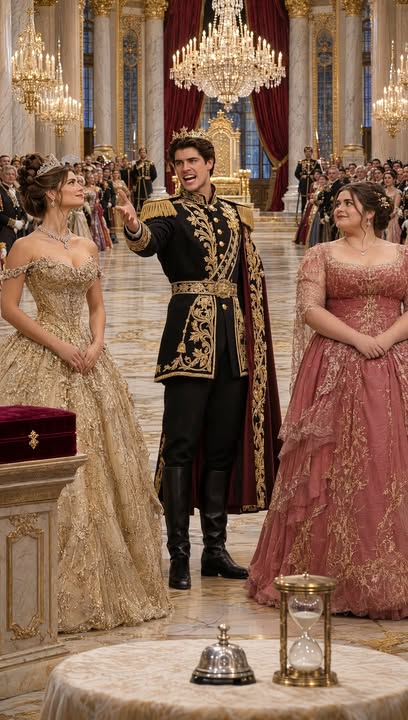
Part 6 – The Truth That Kept the Doors Open
No one spoke as Justice Rowland turned the loose sheet beneath the reading lamp.
The signature at the bottom was unfamiliar to Hannah, but the name above it was not.
“Deputy Registrar Lionel Brooks,” Justice Rowland read. “He was assigned to the succession office at the time.”
Edward’s hand remained beneath the table, holding Hannah’s with careful steadiness.
“Is he still alive?” he asked.
“Yes,” the legal adviser replied. “He retired several years ago. We can ask him to provide an account, but this note alone does not tell us why he canceled the entry.”
The Queen sat again, slowly.
“Did you ask for this?” Edward said to her.
“No,” Margaret answered. “I knew the filing was incomplete. I did not know it had been entered and then canceled.”
“Did you tell the treasurer to hold the succession envelope?”
“No.”
Her voice held no grandeur now, only grief at the distance her silence had created.
“I should have demanded the record be completed,” she said. “I thought the legal office was handling it. I was wrong.”
Justice Rowland raised a hand, inviting the room back to the evidence.
The ledger showed that Edward’s adoption order had been accepted for entry under his royal name, then withdrawn pending the envelope’s delivery to the treasurer.
That established an intentional delay, but not who had requested it, or why.
The envelope itself had remained sealed for years, separated from the registry and eventually placed in a folder with hospital records.
Its connection to the disputed authorization was still unknown.
“We need the deputy registrar’s account and the original routing records,” Justice Rowland said. “We also need the missing attachment referenced in the succession file.”
The council agreed to suspend its decision until those materials were reviewed.
The ministry, meanwhile, could not release the bridge fund without confirmation that Edward’s status allowed him to sign the emergency hospital plan.
The circular uncertainty left the room feeling smaller.
Dr. Cole joined by video once more.
“We can keep essential services running through the end of the week,” she said, “but we cannot meet the next full payroll without the fund.”
The words were measured, but Hannah heard the people behind them: nurses checking their bank balances, families wondering whether appointments would be moved, patients trusting that familiar doors would open.
Edward rose from his chair.
“Could the plan be authorized by the Queen and the acting director while the council completes its review?”
The legal adviser considered the question.
“The Queen can approve a temporary royal reserve contribution, but the ministry is requesting a joint plan with the heir’s authorization. They want clear accountability.”
“Then let the plan be signed by the Queen and Dr. Cole,” Hannah said. “The independent monitor can certify the controls. There is no need to make patient care depend on a succession question that has not yet been resolved.”
The ministry representative on the call looked thoughtful.
“If the council confirms that the Queen’s authority is sufficient for the temporary measure, we can release the bridge funds under her signature.”
“Then do that,” Margaret said. “I will accept responsibility for the interim decision.”
The council members conferred quietly.
Their chair finally addressed the room.
“The Queen’s authority is not in question,” she said. “We can approve a temporary funding measure under her signature while the succession review continues.”
Hannah released a breath she had not realized she was holding.
The decision would not solve every financial problem at St. Anne’s, but it would cover the immediate payroll and essential orders.
Dr. Cole closed her eyes for a moment in relief.
“Thank you,” she said. “Our staff have kept the hospital steady with remarkable care. This will let them focus on the people who need them.”
The Queen signed the temporary authorization before leaving the chamber.
She did not present it as a grand gesture.
She simply read every condition, asked the finance ministry to confirm the monitoring process, and signed her name beneath the promise that funds would be restricted to verified hospital needs.
Hannah watched the ink settle.
This signature, unlike the one at the center of the old mystery, had been made in full view of the people who would be accountable for it.
Justice Rowland arranged an interview with retired Deputy Registrar Lionel Brooks for the following morning.
He arrived at her office with a walking cane, a neat gray suit, and a leather folder he had kept from his years in public service.
“I’m glad someone finally found the ledger,” he said after the introductions. “I wondered what became of that filing.”
“Do you remember canceling Edward’s succession entry?” Justice Rowland asked.
“I remember receiving instructions to pause it,” Brooks replied. “I did not understand the reason at the time.”
“Who gave the instructions?”
“The royal treasurer’s office sent a formal request. The letter said the adoption records needed to be reconciled with a confidential succession document before the entry could be finalized.”
“Did you see the letter?”
“I believe I did, but I cannot be certain without the file.”
“Did Queen Margaret request the delay?”
“No. I never received instructions from Her Majesty.”
The Queen sat quietly across from him.
Brooks opened his leather folder and withdrew a thin, yellowed copy of an old routing slip.
“I kept this because the matter felt unusual,” he said. “I should have made sure it was added to the official ledger.”
The slip recorded the file’s transfer from the succession office to the royal treasury.
It also listed the treasurer as the recipient.
“Was the adoption order valid?” Edward asked.
“On the records I reviewed, yes,” Brooks said. “The court order was complete. The only unresolved step was linking it to the succession register.”
“Could it have been completed later?”
“Certainly. The delay was administrative, not a court ruling against the adoption.”
“Do you know why the treasurer’s office asked for a pause?”
“No. I assumed they needed the envelope they referenced. I regret not asking more questions.”
His admission carried the humility of a person who had made a small decision at work and only later learned how much that silence might matter.
Justice Rowland thanked him and entered the routing slip into the record.
The next step was to determine why the treasurer had wanted the envelope delivered to him and whether the delay was connected to the hospital transfers.
The answer came not from a dramatic confession, but from the records themselves.
The treasurer’s office produced a set of internal correspondence after Justice Rowland issued a preservation order.
Among the documents was a message written by the royal treasurer six years earlier, asking that Edward’s succession entry remain incomplete until he could “confirm the relevant identity and authorization records.”
The message included a copy of the adoption order and a request to retrieve the hospital contract archive.
A later note showed that the treasurer had received both files.
He had used the unsettled succession record to make Edward appear responsible for a hospital authorization he could never have signed.
The original authorization bore the treasurer’s signature.
The altered payment schedule directed money through Meridian Medical Supply and onward to accounts under his control.
The succession envelope had not been hidden because Edward’s adoption made him ineligible.
It had been kept out of the registry because the incomplete record gave the treasurer leverage: he could place Edward’s name beside forged financial documents and make the prince’s claim seem uncertain whenever scrutiny drew too close.
The conclusion was not reached from one note alone.
Justice Rowland’s team matched the payment routes, the handwriting on the altered schedules, the access logs, and the treasurer’s instructions to the registry.
The evidence showed that he had diverted hospital funds and forged Edward’s authorization.
It also showed that the Queen’s original emergency contract had been legitimate.
Her signature had allowed advances so St. Anne’s could receive essential equipment during a crisis, but the contract had been altered afterward without her knowledge.
The treasurer alone had made the later changes and directed the fraudulent payments.
Hannah’s father had not approved the scheme.
His reconciliation report showed that he had identified the discrepancies and refused to authorize an extension until deliveries could be verified.
The report had been routed to the treasurer’s office, where it was set aside.
In a separate case file, an unsigned draft of Hannah’s father’s final audit had been preserved with his notes.
It named Meridian’s missing deliveries, identified the unverified accounts, and recommended a formal inquiry.
He had died before the report could be submitted through the official process.
His work had not been lost, only delayed.
Justice Rowland released the full findings after each document had been independently authenticated.
The treasurer was removed from his position and referred to the appropriate authorities.
The investigation did not turn him into a spectacle.
It did not need to.
The records spoke plainly, and the legal process would determine the consequences.
For Hannah, the most difficult page was her father’s report.
She read it in Justice Rowland’s office with her mother beside her.
The handwriting was steady, the observations patient and exact.
At the bottom, her father had written: “The hospital must not be asked to bear a loss created by records it was not allowed to review.”
Hannah pressed her palm against the page.
“I wish I’d known he wrote this,” she said.
Her mother placed an arm around her shoulders.
“He would be proud you found it.”
“I kept thinking that signature meant he might have failed the same people I wanted to protect.”
“You didn’t turn away from the truth because you were afraid of what it might say.”
Hannah looked at the report again.
“I was afraid.”
“Courage isn’t the absence of fear,” her mother said. “It’s what you choose to do while you’re carrying it.”
The records were formally entered into St. Anne’s archive, along with a copy of the independent findings.
The hospital named its renewed audit program after Hannah’s father, with the family’s permission.
Hannah did not want the honor to be a plaque that turned him into a symbol.
She asked instead that the program train hospital staff to recognize missing records, question unexplained payments, and report concerns without fear of losing their work.
Thomas Vale became one of its first financial officers.
His position was made permanent, and Justice Rowland’s office ensured that his cooperation in the inquiry was documented and protected.
He accepted the role with visible relief.
“I’m not sure I’m the right person to lead it,” he told Hannah.
“You noticed the approval trail when other people had stopped asking,” she replied. “That’s a good place to begin.”
“I was afraid to say what I knew.”
“So was your family, your job, and a whole hospital depending on you. You said it anyway.”
Thomas nodded, holding his new appointment letter as though it weighed more than the paper.
The recovered funds did not appear all at once.
Some accounts were frozen, some assets were returned through legal proceedings, and the remaining losses were calculated carefully.
The palace canceled Meridian’s fraudulent contracts and replaced them with transparent agreements reviewed by the hospital’s purchasing team.
The finance ministry released the bridge fund, then approved a longer-term recovery plan as the independent audits confirmed the hospital’s needs.
The royal reserve supplied the first emergency payment.
Community organizations, former patients, and local businesses contributed to a separate support fund, not because anyone had asked them to replace the stolen money, but because St. Anne’s had been part of their lives for generations.
The fund helped cover equipment and community services while the recovered assets moved through the legal process.
At the hospital, appointment schedules were restored.
The equipment cart in Aisha Patel’s department filled again, item by item, each delivery checked against a signed order.
Mr. Alvarez returned for his regular treatment and found the staff waiting with the tea he liked.
The maintenance wing, closed for years and still costly to restore, remained closed until the hospital could assess it safely.
No one pretended that every problem had vanished.
But the doors remained open, the next payroll was met, and the patients who had been facing sudden relocation could stay with the caregivers they knew.
Months passed before the succession council reached its final decision.
During that time, Edward did not withdraw from public life or hide from the questions about his adoption.
He met with representatives of the council, supplied every requested record, and asked that the legal review be made public when it was complete.
He also met with his birth parents’ surviving relatives.
The aunt named in the adoption record was elderly, but she remembered the infant who had been placed in the Montgomerys’ care.
She spoke of Eleanor and James with tenderness, sharing a handful of family photographs and stories that had been preserved in a small box.
Edward returned from that visit with a photograph tucked inside his coat.
It showed his birth parents standing beside a lake, young and smiling beneath a wide summer sky.
He kept the photograph beside the formal adoption order.
Neither document replaced the other.
Together, they told a fuller story.
The council’s final review confirmed that Edward’s adoption had been lawfully completed and that adoption did not disqualify him from succession.
The missing registry entry was an administrative failure that had later been exploited by the treasurer.
The records had now been corrected, the court order linked to Edward’s royal identity, and the council’s confirmation entered in full.
Edward was legally recognized as heir to the throne.
When the council announced its decision, he listened without triumph.
Afterward, he told the Queen, “I’m grateful they confirmed the law. I’m still not ready to say everything between us is settled.”
Margaret’s eyes shone.
“I would not ask you to pretend it is.”
“I need time.”
“I will give you time,” she said. “And I will answer whatever you ask, even when the answer makes me ashamed.”
Edward studied her face.
“I don’t want an apology that ends the conversation.”
“Then I won’t offer one as an ending.”
He nodded.
It was not forgiveness, not yet.
It was a beginning they had both chosen to keep.
The Queen’s public apology came the following week, delivered in a plain room at St. Anne’s rather than from the palace steps.
She spoke about signing the original emergency contract and about the oversight she should have required.
She made clear that the later alteration and forged authorization had been committed by the treasurer, not by her.
She acknowledged that she had also kept Edward’s adoption from him, believing secrecy would protect him, and that her decision had denied him the truth of his own life.
“I cannot undo that,” she said. “I can only take responsibility for what I failed to do and help repair what can still be repaired.”
Edward stood beside her, not as a prop or a symbol, but as her son.
He did not reach for her hand.
He did not turn away either.
The room understood that the space between them belonged to them alone.
Hannah watched from the back with her mother, Thomas, Aisha, Dr. Cole, and several of the hospital staff.
No one applauded the apology as if words had cured everything.
They listened.
That mattered more.
At the end, Margaret presented the hospital with the first installment of the recovery fund.
Dr. Cole accepted it on behalf of the patients and staff, then turned toward the rows of nurses and administrators who had kept St. Anne’s running through uncertainty.
The applause came from them first.
It was warm, unhurried, and earned.
The Queen later met privately with Hannah.
“I owe you an apology,” she said. “For the money I offered, and for expecting that my power could settle a question that required the truth.”
“You offered me a way out,” Hannah replied. “I needed to decide for myself.”
“And you did.”
“I also need you to know that the hospital can’t rely on generosity from the palace forever. The controls have to stay independent.”
“They will,” Margaret said. “You have my word, and the council’s oversight will be written into the plan.”
Hannah studied her.
The Queen had learned that trust could not be commanded, even when the person asking for it wore a crown.
“Then we can begin there,” Hannah said.
Margaret accepted the modesty of the answer.
The royal marriage competition was never resumed.
Edward announced that it had been wrong to ask women to compete for a life that should belong to two people by choice.
He thanked the contestants and apologized for creating a spectacle in which private hopes had been placed beneath public judgment.
Some of the women accepted his apology warmly.
Others departed without seeking further conversation.
Catherine approached Hannah after the announcement.
“I owe you an apology too,” she said.
“You do.”
Catherine’s face flushed.
“I was cruel about your appearance. I told myself it was a joke, but I knew it was meant to hurt.”
Hannah remembered the laughter, the heat in her cheeks, the moment she had decided not to leave the room.
“Thank you for saying it plainly,” she replied.
“I don’t expect you to forgive me.”
“Then don’t ask me to. Let what you do next be different.”
Catherine nodded, accepting the answer without trying to make it easier.
Hannah did not feel victorious.
She felt free to leave the past where it belonged and choose what happened next for herself.
Edward found her outside the palace conservatory a few days later.
The garden smelled of wet leaves and late roses, and the evening light lay softly across the stone path.
He carried no folder, no official papers, and no carefully prepared statement.
“I’m ending the competition permanently,” he said. “Not because I’ve chosen someone. Because I don’t want to choose a partner through a contest.”
“That seems sensible.”
“I also don’t want you to feel that what happens next is a reward for saving the hospital.”
“Good.”
“Or a duty you owe the crown.”
“Better.”
He gave a small, nervous smile.
“I would like to ask you to build a life with me, if you want one. Not as a princess in a story I wrote for myself, and not as someone expected to agree because I’m a prince.”
Hannah looked at him.
“And what would I be?”
“Yourself,” he said. “My equal. The person whose judgment I trust, even when it unsettles me.”
She thought of the ballroom, the sealed envelope, the patients at St. Anne’s, and the long nights spent trying to keep fear from becoming a conclusion.
She thought of the man who had admitted when he wanted her to slow down, then refused to ask her to distort the evidence.
She thought of the prince who had learned that love could not be proved by a title or secured by a public choice.
“What happens if I disagree with you?” she asked.
“I hope you will.”
“What happens if the palace expects me to be quiet?”
“I will stand beside you while you speak.”
“And if the council disapproves?”
“Then we will hear why. We won’t pretend they are always wrong, and we won’t pretend they are always right.”
Hannah’s smile came slowly.
“That sounds like a life, not a fairy tale.”
“I would rather have the life.”
She let the quiet settle before answering.
“Yes,” she said. “I’ll build it with you.”
Edward’s relief showed first in his eyes, then in the breath he finally released.
He did not kiss her beneath a crowd of waiting cameras.
He took her hand, and they walked the garden path together beneath the trees.
The months that followed brought no sudden transformation into an effortless royal life.
Hannah kept her work as an independent financial investigator and helped design a new accountability program for St. Anne’s.
The palace learned to invite her into decisions not because she was Edward’s fiancée, but because she understood the consequences of numbers that other people preferred not to examine.
Edward continued meeting with the succession council and visiting the hospital.
He went without a royal procession when he could, sitting with staff in the cafeteria and asking what had improved and what had not.
Some days, his mother joined him.
Their conversations remained imperfect, but they became more honest.
The hospital’s grand reopening arrived in the spring, when flowering trees lined the street outside its entrance.
The refurbished wards were bright and warm, the supply rooms fully stocked, and the old stone façade clean beneath the morning sun.
The ceremony was held in the courtyard, where staff, patients, families, and community supporters gathered together.
Mr. Alvarez sat near the front with his daughter.
Aisha stood beside the new equipment cart, looking more rested than the day Hannah had first met her.
Thomas held a copy of the independent audit report, now displayed in a clear case near the entrance to the finance office.
Beside it was a framed copy of Hannah’s father’s note about verifying every delivery.
It was not displayed as a warning against trusting anyone.
It was displayed as an invitation to keep asking careful questions.
Hannah’s mother touched the frame.
“He would have liked that,” she said.
Hannah felt the familiar ache of missing him, but it no longer stood alone.
Pride had found room beside it.
The Queen spoke briefly, thanking the staff who had kept the hospital serving its patients through the crisis.
She apologized again, without asking anyone to comfort her for the apology.
Then she stepped aside so Dr. Cole could lead the reopening.
The doors opened.
People entered slowly, looking at the familiar hall as if seeing it anew.
Some staff cried.
Others laughed.
Mr. Alvarez paused beneath the sign and rested a hand on his daughter’s arm.
“Same place,” he said. “Better promise.”
Hannah felt Edward’s hand brush hers.
He did not pull her toward the photographers or present her as the reason the hospital had survived.
He stood beside her, leaving the moment where it belonged: with the people who had kept St. Anne’s alive.
When the crowd moved toward the courtyard, Margaret approached them.
“I would like to thank you both,” she said.
Edward looked at his mother.
“Thank the people inside first.”
The Queen followed his gaze toward the nurses, patients, and staff.
“You’re right,” she said. “I will.”
Later, after the speeches and the music, the palace gardens filled with guests.
There were no contestants waiting to learn who had been chosen.
There was no prize.
There was only a family learning to speak more honestly, a hospital open to its community, and two people who had decided to make their future without hiding the difficult parts of their past.
Edward turned toward Hannah beneath the garden lanterns.
“Are you ready for all this?”
“Not all at once,” she said.
“Neither am I.”
“Then we’ll do it the way we did the investigation.”
“Carefully?”
“Together.”
He smiled.
“Together, then.”
When Edward asked her to marry him in the quiet garden, there was no audience beyond the people who happened to look their way.
Hannah said yes because she wanted the life they had begun to build, not because a crown had made the question grand.
The announcement came later, after they had told their families and the hospital staff.
The palace celebration was held alongside a gathering for St. Anne’s reopening, with the engagement announced as a promise between equals rather than the ending of a competition.
Hannah stood beside Edward as the courtyard filled with music and the warm voices of people who had once feared their doors would close.
Margaret watched them from nearby, her pride tempered by the humility of knowing that love did not erase the truth.
Edward’s adoption had been honored, his succession claim confirmed, and his birth parents’ names restored to the story of his life.
The treasurer’s fraud had been exposed through evidence rather than rumor.
The Queen had accepted responsibility for the oversight that belonged to her.
Hannah’s father’s work had been found, read, and honored.
And St. Anne’s remained open, its windows lit against the evening sky.
Hannah looked at the people gathered beneath those lights and felt Daniel’s memory beside her—not as a wound demanding that she save every place alone, but as the beginning of a purpose that had brought her here.
Edward offered her his hand.
She took it.
Together, they walked toward the hospital doors, where the patients and staff were waiting, and where the future, at last, had room for them all.
**–THE END–PLEASE
Share your thoughts or feedback to motivate us to create more stories ♥️
* * *
[PREVIOUS: PART 5](https://storyly.idolsgift.com/blog/part-5-the-envelope-no-one-was-allowed-to-open-069)
✓ Lynn R. Adams
Part 6 – The Truth That Kept the Doors Open No one spoke as Justice Rowland turned the loose sheet beneath the reading lamp. The signature at the bottom was unfamiliar to Hannah, but the name above …