PART 6 (THE END): The Door No One Was Watching 061
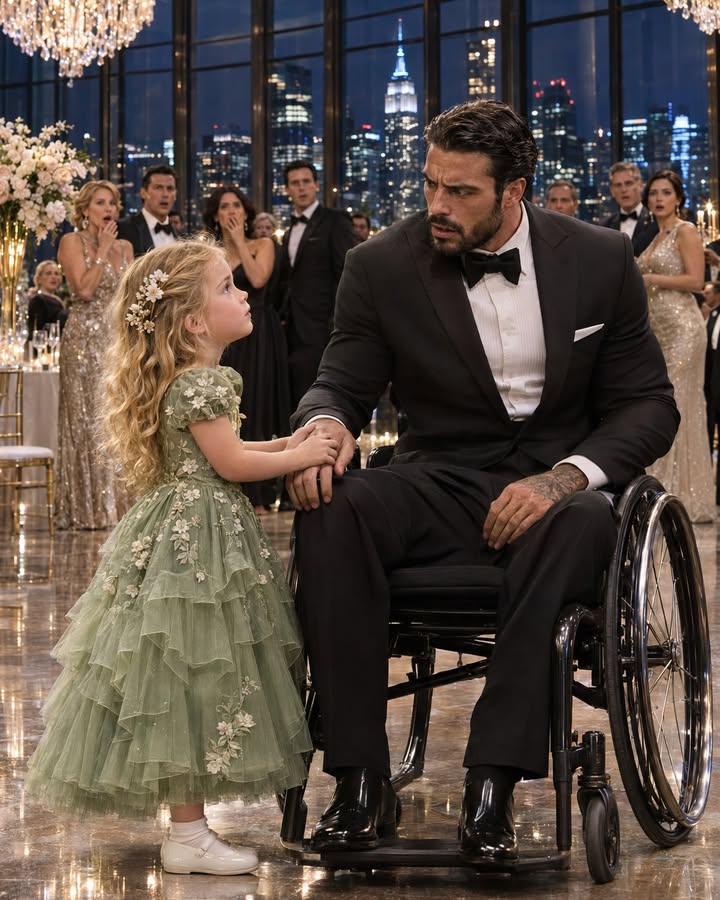
Part 6 – A Home Built Slowly
Lyla’s words stayed between us, small and certain.
I looked again at the note in my hand, then at the watch, whose hidden compartments had held more truth than the people who wore our family name.
“Yes,” I said. “He knew.”
“Why didn’t he tell you?”
“I don’t know.”
“Maybe he thought you already knew.”
The thought was gentle, but it did not make the question easier.
“Maybe,” I said. “Or maybe he was afraid of what would happen if he spoke.”
“Was he afraid of Victor?”
“I think he was afraid of what Victor could do to our family.”
Lyla frowned at the note.
“But the secret hurt your family anyway.”
She had found the plainest way to say what grown people had spent years trying not to see.
“Yes,” I said. “It did.”
I placed the note beside my father’s letter, the two pieces of his handwriting finally meeting after twenty years.
For a while, neither of us spoke.
Then Lyla asked, “Are you going to tell my mother?”
“She deserves to hear it from me.”
“Will it make her sad?”
“Probably.”
“Then tell her gently.”
“I will.”
She considered me, as if weighing whether I had understood the task.
“Can I come with you?”
“If your mother wants you there.”
Lyla nodded and picked up the watch.
We found Eleanor awake in the west apartment, sitting near the window with a cup of tea between her hands.
She had chosen the room because it faced a small garden and had its own entrance, away from the grand front hall.
Her coat hung over a chair, and a spare key lay on the table beside it.
No one had told her she must stay.
No one had told her she must leave.
She had chosen to rest there for one night, and that choice felt more significant than any promise I could have asked her to make.
“What happened?” she asked, noticing the papers.
I sat across from her while Lyla settled on the rug, the watch resting in her lap.
“The investigators found an inventory from the year after the crash,” I said. “It shows that Victor took a letter addressed to me from our father.”
Eleanor lowered her cup.
“What did the letter say?”
“It was a warning about Victor and the company records. Father told me not to sign anything without reading it.”
“And the note?”
I placed it on the table.
“It was hidden in the watch. Father wrote that if Victor told me you were gone, I shouldn’t believe him.”
Eleanor read the sentence twice.
Her expression shifted, and for a moment she looked very young, as though the words had reached the girl who had been waiting for her family to come find her.
“He knew you might be alive,” she said.
“I think he suspected.”
“Did he say anything else?”
“No.”
She touched the edge of the note with one finger.
“My father believed me.”
“I believe he did.”
“Then why didn’t he find me?”
“I don’t know,” I said. “We may never know exactly what he learned or what Victor told him afterward.”
Eleanor’s eyes moved to the window.
“My mother wrote that she had been told you authorized the closure.”
“I saw that too.”
“She may have believed you had made a choice.”
“She may have.”
“Or she may have been afraid to ask.”
“I can’t know.”
She was quiet for a long moment.
“I spent years imagining that our parents had turned away from me,” she said. “I let that thought become a wall because it was easier than imagining they were still looking and couldn’t find me.”
“I’m sorry we weren’t there.”
“You were in a hospital bed.”
“I was still your brother.”
“Yes,” she said. “And I was still your sister.”
Lyla rose and crossed the rug.
She leaned against her mother’s knee, and Eleanor wrapped an arm around her without looking away from the note.
The next morning, the investigators asked Eleanor whether she would give a formal statement.
She agreed, with the condition that Lyla could remain nearby and that she would not be questioned as though she had to prove she deserved to be heard.
The officers agreed.
They asked what she remembered, what she had seen, and what records she believed could confirm it.
Eleanor answered slowly, pausing whenever she needed to gather herself.
No one hurried her.
No one told her what she ought to remember.
The investigation continued through the following weeks.
The old financial records were reviewed by independent accountants.
The document carrying my signature was examined alongside the hospital records, which confirmed that I had been receiving medication after the crash.
Former staff were interviewed, including Victor’s assistant, Lorna, who was found living in another state.
She remembered helping Eleanor leave the city, and she confirmed that Victor had told her the family already knew Eleanor was dead.
She had believed him for years.
The company’s archive revealed the transfers Victor had hidden through a series of legitimate-looking accounts.
The pattern matched the records my father had preserved.
No one explanation solved everything, but the accounts, the old correspondence, the missing filing, and Eleanor’s testimony formed a clear enough picture for the investigators to act.
Victor was arrested on charges connected to the fraud and the concealment of evidence.
His case would take time.
The questions about the crash remained under review, and no one promised an answer before the evidence was examined.
I did not ask the investigators to hurry for the sake of my anger.
Anger could wait.
The truth deserved care.
The company’s board placed an independent group in charge while the financial review continued.
I stepped away from the daily decisions I had once treated as the only firm ground beneath me.
Some shareholders questioned me.
Some employees worried about what the investigation would uncover.
A few business partners ended their agreements.
For the first time in years, I could not arrange events around my own preference, and I learned that uncertainty did not always mean disaster.
It often meant other people were finally allowed to speak.
My physical recovery moved more slowly than the rumors that followed the gala.
Some newspapers still called the moment I stood a miracle.
I understood why they wanted that word.
It was easier than describing months of examination, careful movement, exhaustion, and work.
The doctors told me Lyla’s touch had not repaired the damage in my legs.
The sensation I had felt in the ballroom might have been a sudden return of nerve activity, the beginning of a change no one could confidently predict.
Whatever its cause, the movement was real.
So was the rehabilitation that followed.
I began with brief sessions under a physiotherapist’s supervision.
At first, I learned how to shift my weight without losing balance.
Then I practiced standing beside parallel bars, my hands tight around them, while my legs trembled with the effort.
Progress came unevenly.
Some days I managed a few steps.
Other days I returned to the chair before the session was over, frustrated by the distance between what I wanted and what my body could do.
Lyla sometimes came with Eleanor to the rehabilitation center.
She never asked me to stand.
She never touched my knees as if she were responsible for what happened next.
Instead, she sat in the waiting area with a book or helped Eleanor sort through the papers she had brought from their apartment.
When I finished, Lyla would ask, “How did it go?”
And I learned to answer honestly.
“Hard.”
“Did you do it anyway?”
“Yes.”
“Then it went well enough for today.”
Her certainty never made the work disappear.
It made it easier to return to it.
Eleanor did not become my sister again in a single conversation.
There were days when she wanted to talk about our childhood and days when she could not bear the subject.
There were moments when she laughed at something I said, then seemed surprised by the sound.
There were other moments when an old memory caught between us, and she left the room before either of us could turn it into an argument.
I learned not to follow unless she asked me to.
I learned that an apology was not a key that opened every door.
It was only a way to acknowledge the door had been closed.
One afternoon, she found me in the garden after a therapy session.
I was seated beneath the old maple, my walking cane beside the chair, my legs aching from practice.
Eleanor settled onto the bench across from me.
“I remember when you fell out of this tree,” she said.
“I told you I was climbing down.”
“You told me that after you’d already fallen.”
“I was trying to seem calm.”
“You were crying.”
“I was twelve.”
“You were twelve and convinced I was going to tell Mother.”
“You did tell her.”
“I had to. Your elbow was bleeding.”
I smiled, surprised by how easily the memory came.
For a moment, we were not two adults trying to untangle a ruined history.
We were simply a brother and a sister remembering a summer afternoon.
“Did you ever find the sketchbook I hid?” I asked.
“You put it behind the old piano.”
“I thought I was clever.”
“You were not.”
“I know that now.”
She smiled, and the expression looked so much like the girl I remembered that my chest tightened.
Then the smile faded, but it did not vanish completely.
“I kept expecting you to be exactly the same,” she said. “I don’t know why.”
“Maybe because you had to leave before you could see who I became.”
“Maybe.”
“I’m not the boy you lost.”
“I know.”
“And you’re not the girl I remember.”
“No.”
“Can we still be family?”
She looked at the garden, where Lyla was drawing on the stone path with a piece of chalk.
“I think we already are,” she said. “We just have to learn how to be it again.”
That evening, I asked Eleanor whether she and Lyla wanted to stay at the estate while they decided what came next.
She had been free to leave for weeks.
She knew the apartment’s door opened onto the garden, and she kept the key in her own pocket.
“I don’t want the old rooms,” she said. “And I don’t want to feel as if I’m moving into your life and disappearing into it.”
“Then we’ll make a place that belongs to you.”
“I don’t need a grand house.”
“I know.”
“I need somewhere quiet, with a door I can lock and a garden Lyla can reach without crossing the ballroom.”
“We can find that.”
“Not because you want us close.”
“Because you should have a place where you can decide how close you want to be.”
She watched me for a while.
Then she nodded.
We began with the small carriage house at the edge of the estate, which had been empty for years.
It was simple, with wide windows, a kitchen that opened into a sunny room, and a path leading to the orchard.
Eleanor chose the paint.
Lyla chose where the bookshelves would go.
I hired workers only after Eleanor approved the plans, and she made them remove the heavy front door and replace it with one she could open herself.
The first night they slept there, I stayed in my own house.
The second day, I visited only after asking.
The third, Lyla sent me a message asking if I wanted to help plant herbs beside the kitchen window.
I arrived with a small pot of rosemary and found her waiting with dirt already on her fingers.
Eleanor stood nearby, holding a tin of garden labels.
“You’re late,” Lyla said.
“By four minutes.”
“That’s still late.”
“I’m sorry.”
“You can fix it by digging.”
She handed me a small trowel.
My legs were stronger than they had been, but I still sat on a low stool to work.
Lyla planted the rosemary.
Eleanor pressed the soil around its base.
I watched them, then took the label and wrote the name in careful letters.
“Will it live here?” Lyla asked.
“If we look after it,” I said.
She glanced at her mother.
“That’s not the same as knowing.”
“No,” I said. “It isn’t.”
Eleanor smiled.
“It’s still worth planting.”
So we did.
As winter eased into spring, the garden began to fill with small signs of life.
The rosemary thickened along the wall.
Lyla planted daffodils beneath the orchard trees and insisted on marking each spot with a painted stone so no one would accidentally dig them up.
Eleanor started walking the path each morning, first with a cane and later without one.
I continued my therapy, my progress measured in ordinary things: how long I could stand, how far I could walk, how steady I felt when the ground changed beneath my feet.
One morning, Lyla waited at the garden gate with the gold watch fastened around her wrist by a narrow chain.
“Can I show you something?” she asked.
I put down my cane and followed her along the path.
She led me to the rosemary bush.
A small green sprig had appeared near the base, bright against the old leaves.
“It grew,” she said.
“It did.”
“You thought it might not.”
“I thought it might need time.”
She looked up at me.
“Most things do.”
We stood there quietly, neither of us needing to make the moment bigger than it was.
The investigations took months, and the court proceedings took longer.
Victor eventually admitted that he had concealed company funds and had used his position to shape what the family believed about Eleanor’s disappearance.
He denied arranging the crash.
The evidence concerning it remained part of the case, and the investigators did not treat his admission as a substitute for proof.
They continued to examine the road reports, the old medical records, and the accounts connected to the weeks after the accident.
Our family could not recover every missing answer.
But Victor could no longer decide which questions were permitted.
Eleanor gave her statement without asking me to speak for her.
When she finished, she came home to the carriage house and sat by the window with Lyla.
I stayed on the porch until she invited me inside.
She did not tell me the meeting had been easy.
She did not need to.
I poured tea and left the cup within her reach.
She took it after a moment.
That was how trust returned: not as a single declaration, but as small choices repeated until they began to feel ordinary.
A year after the gala, I stood in the garden without holding my cane.
I could walk slowly across the path, though uneven ground still demanded caution and I still needed rest after long days.
My body had not returned to what it had been.
I had learned not to measure healing by whether I could become my old self.
That evening, Eleanor and Lyla came to the main house for dinner.
The room was smaller than the ballroom where we had first met.
There were no cameras, no crowd, no guests waiting for a spectacle.
There was a bowl of soup, a loaf of bread, and a vase of daffodils Lyla had cut from the orchard.
After dinner, Eleanor and I sat together by the window while Lyla examined the watch.
She had learned where both hidden compartments opened, but she no longer carried the notes inside them.
The originals rested in a protected file with the investigators.
She kept the watch empty, save for the stories it had once held.
“Does it feel strange to have it back?” I asked.
“It never left me,” Lyla said. “But it feels different now that I know what it was carrying.”
“What do you think it carries now?”
She considered the question.
“People who were trying to find each other.”
Eleanor reached across the table and touched Lyla’s shoulder.
“That’s a good answer.”
The child lifted the watch by its chain.
The family crest caught the last light of the day, and the old scratch near the hinge remained exactly where it had always been.
“You know,” I said, “I once tried to polish that scratch away.”
“Did you succeed?” Lyla asked.
“Not even a little.”
“Good,” she said. “Then we’ll know it’s the same one.”
Eleanor laughed softly.
The sound traveled through the room and settled there, warm as lamplight.
Later, when the evening had grown quiet, she walked with me to the garden door.
Lyla had gone ahead, her watch in one hand and a small lantern in the other.
“I used to think coming home would mean forgetting what happened,” Eleanor said.
“I don’t think forgetting is possible.”
“No,” she said. “But living with it is.”
She looked toward the carriage house, where her own door shone softly under the porch light.
“I don’t feel trapped here.”
“I’m glad.”
“I don’t feel ready to call everything forgiven.”
“You don’t have to.”
“But I feel safe enough to stay tonight.”
I took a breath, letting the answer be what it was.
“I’m grateful.”
She touched my arm.
“Don’t turn gratitude into a debt.”
“I won’t.”
“And don’t ask me to trust you because we’re related.”
“I won’t.”
“Let me decide when I do.”
“I will.”
She nodded, and we stood together in the doorway, listening to Lyla’s footsteps on the path.
For twenty years, I had believed my sister was gone.
For a long time, she had believed I had left her.
Neither belief could be undone by the truth, but the truth could give us somewhere new to stand.
Lyla turned back beneath the orchard trees and lifted the lantern to show us the way.
I took one careful step, then another.
Eleanor walked beside me, not holding me up, not asking me to hurry.
And ahead of us, her daughter waited in the warm light, wearing the old gold watch that had carried our family’s hidden words into the open.
No miracle erased the years we had lost.
No single promise made the future certain.
But the garden was alive, the door was open, and we were walking toward one another by choice.
**–THE END–PLEASE
Share your thoughts or feedback to motivate us to create more stories ♥️
* * *
[PREVIOUS: PART 5](https://storyly.idolsgift.com/blog/part-5-the-door-no-one-was-watching-061)
✓ Lynn R. Adams
Part 6 – A Home Built Slowly Lyla’s words stayed between us, small and certain. I looked again at the note in my hand, then at the watch, whose hidden compartments had held more truth than the peopl…