PART 6 (THE END): The Date That Changed Everything 061
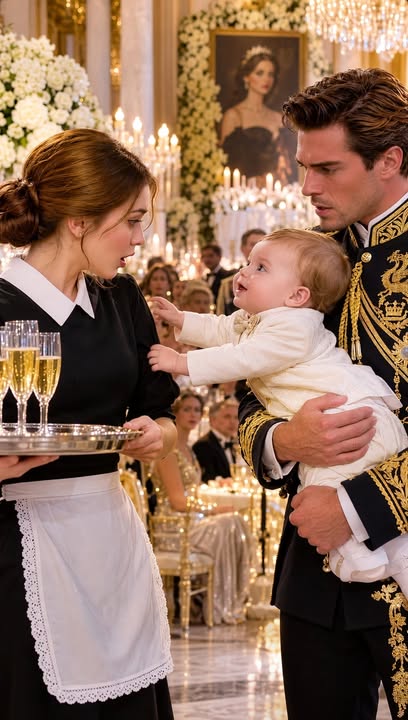
Part 6 – The Doors She Opened
“I never understood.”
Gabriel’s words lingered over the old succession record.
Sofia looked at him, then at the letter bearing his signature.
“Do you remember who showed you the second set of instructions?”
“The royal chancellor,” Gabriel said. “He told me it came from my father, and that signing it would keep you safe.”
“Did you see the instructions yourself?”
“Only once. I was young, and I was told not to keep a copy.”
“Then you signed what someone else said they meant.”
“Yes.”
Sofia did not soften her gaze, but she understood the shape of his answer.
It did not erase his choice; it did explain how fear and trust had guided it.
Elias placed the letter beside the altered record.
“If we can identify the chancellor’s hand, we may learn whether he wrote the instructions or merely delivered them.”
Victor turned to the box he had brought from Alexander’s study.
“There are more papers in the next drawer. I set them aside because I didn’t recognize the seals.”
He opened the drawer and withdrew a slim book bound in brown leather.
A small crown enclosed by three stars had been pressed into its cover.
Madeleine leaned over the table.
“The regency council’s seal.”
Elias studied the binding.
“This may be a record of its proceedings.”
The book was fragile, and he handled it with the care of someone carrying more than paper.
Inside were dated entries in several hands, each noting decisions made during the years surrounding Claire’s disappearance.
Some pages had been removed, but the lines left behind were still legible.
Elias read slowly, pausing at each entry.
Then he stopped.
“What is it?” Sofia asked.
“A record of the council meeting held two days after Claire left the palace.”
He turned the book so the others could read.
The entry stated that the council had rejected Alexander’s request to declare Claire’s unborn child an accomplice.
The members had instead ordered that the child’s identity and rights be preserved until the treason charge could be reviewed.
A line beneath the decision recorded that the original succession volume must remain unchanged.
Sofia looked again at the old seal.
“So the council refused to erase her claim.”
“It appears they did,” Elias said.
“Then who changed the record?”
He turned the page.
The next entry was signed by the royal chancellor, who wrote that Alexander had issued a private order after the council adjourned.
The order authorized a temporary amendment for the child’s protection, to be reviewed once the political danger had passed.
Below it, a note had been added months later, in a different hand.
The amendment was to remain permanent.
The note bore the signature of the chancellor.
Madeleine read it twice.
“The council agreed to protect Claire’s child,” she said. “The chancellor changed that protection into a permanent erasure.”
“And told Gabriel the order came from Alexander,” Victor said.
Gabriel lowered his eyes.
“I should have asked to see it.”
“You were young,” Madeleine said.
“I was old enough to sign.”
Her kindness did not excuse him, and her honesty did not condemn him.
It left room for both.
Sofia looked to Elias.
“Can you prove the chancellor wrote the note?”
“The handwriting matches his signed correspondence,” he replied. “The paper and ink are consistent with the same period. Alongside the council record and the original succession volume, this forms a strong account of what happened.”
“So my grandfather began the deception, but the chancellor made it permanent.”
“Alexander created the false charge and ordered Claire’s renunciation entered as voluntary,” Elias said. “The chancellor used the temporary amendment to remove her name from the public record. Gabriel helped preserve the false date, believing he was preventing the kingdom from splitting apart.”
“And no one knew I had survived,” Sofia said.
Madeleine’s eyes softened.
“No one here did.”
The words were painful, but there was no accusation in them.
Sofia touched the pendant at her throat.
Her mother had kept her away from the palace, Madeleine had believed her dead, Gabriel had followed a story he had never questioned, and the chancellor had made that story into the kingdom’s official memory.
No single answer could return the years they had lost.
But together, the documents finally made the silence legible.
The independent review was called back into session the following morning.
This time, the council chamber was open to witnesses and representatives from the provinces, and Elias presented the evidence in its order.
He showed them the genuine declaration, the private letter from Claire, Alexander’s instruction, the original succession book, and the council’s record.
He explained where the evidence supported a conclusion and where it could not.
No one was asked to take a family member’s word on faith.
When the review was finished, the council issued its finding.
Claire had been falsely accused of treason.
Her renunciation had been signed under pressure to protect Madeleine and her unborn child, and it had never lawfully surrendered her descendants’ rights.
The succession record had been altered after the council ordered Claire’s claim preserved.
Sofia was recognized as Claire’s lawful heir.
The declaration did not make her queen, the council clarified, because the realm’s laws required an open process to determine the future of the crown.
Sofia accepted that distinction.
She had not come seeking a throne, and she would not take one by turning the truth into a private victory.
The council also required Gabriel to give his account publicly, including the part he had played in changing the date.
He stood before the assembled representatives without a speech prepared by advisers.
“My name is Gabriel Valmont,” he began, “and I helped preserve a false account of Princess Claire’s disappearance.”
His voice did not rise, but it carried through the chamber.
“I changed the date on a royal dispatch because I believed it would prevent division. I did not know Claire had been forced to sign away her claim, and I did not know her child had survived. But I knew the date was false, and I chose silence when I should have demanded the truth.”
Sofia listened without looking away.
“I cannot ask anyone to treat my fear as an excuse,” Gabriel continued. “I can only acknowledge that it allowed an injustice to last longer than it should have.”
He spoke of Claire’s innocence, the altered record, and the evidence that had been recovered.
When he finished, he did not turn to Sofia for reassurance.
He took his seat and let the room decide what to do with his confession.
Victor testified after him.
He spoke of his childhood memories of Claire, of the years when questions about her were discouraged, and of the documents he had found in his father’s study.
He did not claim to know what Alexander had intended beyond what the evidence showed.
He did not ask the council to protect the family name.
“My father’s choices are part of my history,” he said. “They are not a measure of what the truth is worth.”
Sofia saw how much it cost him to say it, and how freely he chose to say it anyway.
The council cleared Claire’s name in the official royal records and restored her title as Princess Claire de Valmont.
Her place in the succession was recorded as it had been before the false charge and the altered volume.
When the review concluded, Gabriel addressed the council once more.
“I will step down as king,” he said. “The throne should not be protected by a man who once believed silence was a substitute for justice.”
The chamber stirred, but Sofia rose before the council could answer.
“I will not ask the kingdom to replace one private decision with another,” she said. “Gabriel’s abdication must be considered openly, as must the future of the crown.”
She turned to the gathered representatives.
“I accept that I am my mother’s lawful heir. I do not yet accept that inheritance as a command to rule. The laws governing succession have failed Claire, and the process that allowed them to fail must be changed before anyone asks the realm to trust them again.”
Lord Saye, who had once urged her to choose quickly, looked down at his papers.
“What do you propose?” he asked.
“A constitutional council with representatives chosen by the provinces, legal scholars, and members of the royal household. It should review the succession laws and recommend a process the public can understand and participate in.”
“And if the realm chooses a monarch?”
“Then the realm will have chosen with its eyes open.”
“And if it chooses something else?”
“Then we will have to listen.”
Sofia felt the pendant rest coolly against her skin.
She had arrived at the palace wanting to know who her mother had been.
She had found a claim, a history, and a responsibility she had never asked for.
She would not let that responsibility become another locked room.
The council agreed to establish the reform body and to begin public consultations across the kingdom.
Gabriel’s decision to step down would take effect once the transition was complete.
Until then, he would continue his duties under the council’s oversight and assist with the restoration of Claire’s name.
He accepted those terms without protest.
In the weeks that followed, the palace changed in small, visible ways.
A copy of the review’s findings was placed in the public archive, where anyone could read it.
The records concerning Claire were opened to researchers, and the missing years were marked honestly rather than covered with a polished explanation.
Sofia asked that her mother’s memorial be placed in the gardens near the old north gate, where the path between the palace and the town began.
The stone did not call Claire a traitor, a sacrifice, or a lost heir.
It bore her name, her title, and the simple truth that she had been a daughter, a mother, and a woman whose choices deserved to be remembered in full.
At its unveiling, Madeleine stood beside Sofia.
The queen wore no crown.
Sofia wore the green pendant.
For a while, neither of them spoke.
The garden moved gently around them, leaves stirring in the late afternoon breeze.
“I used to imagine meeting her again,” Madeleine said. “I thought I would tell her everything I had done to find her.”
Sofia looked at the engraved name.
“And now?”
“Now I wish I had found her when she could answer me.”
Sofia understood the ache in the words.
She had wished for the same thing every day since her mother died.
“I wish she had told me more,” Sofia said. “But I think I understand why she didn’t.”
Madeleine turned toward her, careful not to assume that understanding meant forgiveness.
“I would have liked to know her as you knew her.”
“She made ordinary things feel important,” Sofia said. “A mended sleeve. A warm meal. Remembering someone’s name.”
Madeleine smiled through her tears.
“That sounds like Claire.”
Sofia drew the pendant from beneath her collar and held it in her palm.
The green stone caught the afternoon light.
For a moment, she thought of placing it on the memorial, where it could rest beside her mother’s name.
Then she remembered Claire’s words as she had once heard them: one day the truth must be returned to her.
The pendant had not been left to the palace.
It had been given to Sofia.
She closed her fingers around it and left it where it belonged, against her heart.
Madeleine’s hand settled lightly over Sofia’s.
This time, Sofia let it remain there.
“I’m not ready to call everything forgiven,” Sofia said.
“I know.”
“But I don’t want the truth to be the only thing we share.”
Madeleine’s expression trembled.
“Neither do I.”
It was not a promise that grief would disappear or that trust would arrive all at once.
It was a promise to begin.
Victor joined them a little later, carrying the restored copy of Claire’s declaration.
He had spent the morning working with the archivists to prepare it for the public exhibition.
“The original is going into the archive,” he said. “This copy will be displayed beside the council’s decision and Claire’s letter.”
“So people can see the whole story,” Sofia said.
“That was the idea.”
“Not just the beautiful parts?”
“Especially not just the beautiful parts.”
She looked at him, and a quiet warmth passed between them.
They had not become family simply because the records said they were.
They were becoming it through the smaller work of listening, showing up, and telling the truth even when it was difficult.
Gabriel came to the memorial last.
He stopped several paces away, giving Sofia the space to decide whether he could approach.
She looked at him for a long moment.
Then she stepped aside enough to let him stand beside the others.
He did not touch the stone.
“I’m sorry,” he said.
“I know you are.”
“I won’t ask you to forgive me.”
“Good.”
His eyes lowered.
“I hope one day I can do more than regret what I did.”
“You can start by helping us build something that doesn’t require people to stay silent.”
“I will.”
There was no easy absolution in the exchange.
There was, however, a path forward.
The following morning, Sofia entered the palace through the main doors.
For two years, she had come through the servants’ entrance with a tray in her hands and her gaze lowered.
This time she carried no tray.
The doors opened onto the broad courtyard, where townspeople had gathered to hear the first announcement of the reform council.
Sofia stood with Victor near the front steps.
Madeleine waited beside them, and Gabriel stood a little behind, no longer at the center of the gathering.
Sofia looked out at the people beyond the gates.
Some had come because they believed in the crown.
Others had come because they wanted it changed.
Many had come simply to hear whether anyone in the palace would finally speak plainly.
She began with her mother’s name.
“Claire de Valmont was falsely accused, and her claim was hidden by a record that should have been preserved. The evidence has been reviewed, and her name has been cleared.”
The crowd listened.
Sofia did not tell them what they must think of Gabriel, Alexander, or the royal family.
She told them what had been found, what remained uncertain, and what would happen next.
Then she told them that the palace would open its records, its council chambers, and its doors to those who wished to take part in shaping the laws that governed them.
When she finished, no crown had been placed on her head.
No one had promised that the future would be easy.
But the gates stood open, and the people were invited inside.
Sofia felt the pendant warm in the morning sun.
For the first time, the palace did not feel like a place where her mother’s past had been buried.
It felt like a place where her mother’s courage might finally lead them somewhere new.
**–THE END–PLEASE
Share your thoughts or feedback to motivate us to create more stories ♥️
* * *
[PREVIOUS: PART 5](https://storyly.idolsgift.com/blog/part-5-the-date-that-changed-everything-061-1)
✓ Lynn R. Adams
Part 6 – The Doors She Opened “I never understood.” Gabriel’s words lingered over the old succession record. Sofia looked at him, then at the letter bearing his signature. “Do you remember who sho…