PART 6 (THE END): The Date on the Card 046
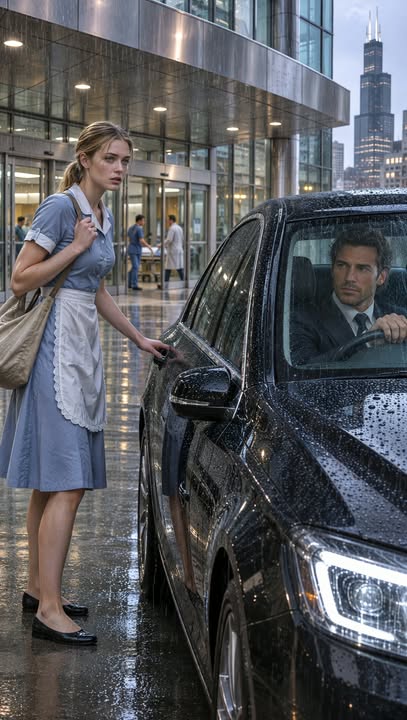
Part 6 – What the Records Remembered
“It was authorized by my father.”
For a moment, the words seemed to take up all the air beneath the staff entrance awning.
I looked from Adrian to the image on his phone.
The note above my mother’s signature was still there, plain and unremarkable, as if it had not just opened another door into the past.
“Does that mean he knew someone would use her signature?” I asked.
“I don’t know,” Adrian said. “It means he authorized the file to be copied. We have to find out why.”
His voice carried something I had not heard before—not suspicion, exactly, but the effort of holding two truths at once: that his father had cared about the fund, and that his father might have made a choice with consequences he had never explained.
Luca had joined the call from the security office.
“The scan was uploaded as part of the same archive batch,” he said. “We’re asking the investigator to compare the original file history with the old legal records.”
“Can we see the original?” I asked.
“Not yet,” Adrian said. “It’s in off-site storage. The investigator has requested it, and the storage company has confirmed the box is intact.”
I glanced toward the house.
“So we wait.”
“We verify,” he said. “I don’t want you or your mother to have to answer for a conclusion the paper hasn’t earned.”
That was the difference between us now.
At the beginning, I had been a name beside an access log, a card in someone else’s car, and a question Adrian needed answered.
Now he was reminding me that evidence had to be treated carefully even when it might point toward someone he loved.
I nodded.
“Tell us as soon as you know.”
“I will.”
My mother was waiting at home when I returned.
She had set out two cups of tea and left the envelope containing her old letter between them.
I told her what the new document said.
She listened with her hands resting quietly in her lap.
“Did your father ever ask me for a signature sample?” she asked when I finished.
“No,” I said.
“Did he ask you?”
Adrian’s father had been gone for years, and I had never known him well enough to remember anything beyond the photographs in the house.
“No.”
My mother looked at the copied page.
“Perhaps he needed the file for the independent review.”
“Perhaps,” I said.
“Or perhaps he thought it would help someone verify old records.”
“Could be.”
She leaned back and closed her eyes for a moment.
“I don’t want to make him a villain just because we don’t understand the note.”
“Neither do I.”
“But I don’t want to excuse him because he was kind to me once.”
I sat beside her.
“We can wait for the original.”
She opened her eyes and gave me a small, tired smile.
“You’ve become better at that than I was.”
“Waiting?”
“Not filling in the parts you don’t know with the story you fear most.”
The kindness in her voice made my throat tighten.
“I learned it the hard way.”
“So did I.”
We waited through the next day.
The independent investigator obtained the original file and checked its paper, stamps, and attachments against the archive index.
Adrian called that evening and asked whether my mother and I would come to the estate the following morning.
He said Ms. Chen had a verified update, and that he wanted Ruth to hear it from the investigator herself.
We arrived together.
My mother wore her gray cardigan and the small silver earrings she saved for appointments that mattered.
She had chosen them without saying why, but I knew she wanted to walk into Whitmore as herself, not as the frightened young woman who had once left without a clear answer.
Ms. Chen had arranged the relevant documents on the table.
Luca sat nearby with a separate access report.
Adrian waited until my mother had taken her seat before he spoke.
“Thank you for coming.”
“I’m here for the truth,” she said. “Not for another apology made on my behalf.”
He accepted that with a quiet nod.
Ms. Chen began with the file history.
“The original record confirms that the signature sample was copied from Ruth’s personnel file,” she said. “The handwritten note identifying it as a source sample was added after the request itself.”
My mother leaned forward.
“By whom?”
“The handwriting has been compared with Mr. Harlan’s administrative notes and the closure record from the earlier review,” Ms. Chen said. “The forms are consistent with his.”
Adrian rested his hands on the back of a chair.
“What about the authorization?”
“Your father approved the copying of the file for the independent review,” Ms. Chen replied. “His note instructs the reviewer to use the old account documents to verify Ruth’s warning and to keep her personnel information separate from the financial inquiry.”
My mother’s face changed.
“He wasn’t asking for my signature so someone could use it.”
“No,” Ms. Chen said. “He was asking for a copy of the file so the independent reviewer could compare the accounts and determine whether your report had been accurate.”
“Then why was the sample label added?”
“The archive shows that Mr. Harlan altered the file after your father’s authorization. The original purpose was to preserve material for the review. Mr. Harlan added the instruction to retain the signature sample for future access requests.”
My mother turned to the copied page.
The faded writing seemed to hold a different meaning now.
Her signature had been preserved not because she had asked for a card, but because someone had taken a useful part of her identity from a file her employer had been meant to protect.
“Did my father know?” Adrian asked.
“There’s no evidence that he did,” Ms. Chen said. “The review was never completed. The file was returned to storage with Mr. Harlan’s added note, and the supporting ledger pages remained missing.”
Adrian looked down at the documents.
“So my father approved copying the record to protect her account of what happened, and Mr. Harlan turned the copy into a source for impersonation.”
“That is what the evidence supports,” Ms. Chen replied.
My mother sat very still.
For years, she had thought Adrian’s father might have decided she was careless or untrustworthy.
The records showed that he had tried to preserve her warning.
They also showed that his effort had failed to reach her, and that the person who managed the review had used the failure to his own advantage.
“Why did my father’s review stop?” Adrian asked.
“Mr. Harlan filed a closure summary saying the discrepancy had been resolved,” Ms. Chen said. “The supporting records do not substantiate that conclusion. The review was closed before the independent examiner completed the work.”
“Did my father sign the closure?”
“No,” she said. “The summary was entered under the general administrative account. His initials appear only on the instruction to retain the original evidence and complete the review.”
Adrian released a breath he seemed to have held for several years.
It did not look like relief so much as a burden becoming more clearly defined.
“My father believed her,” he said.
“His written instruction supports that,” Ms. Chen replied.
My mother lowered her eyes.
“He was trying to do something right.”
“He was,” Adrian said.
“But he didn’t finish it.”
“No.”
The answer was tender, and honest.
My mother reached for the copy of the instruction and read it once more.
She did not forgive the years in a single breath.
She did not need to.
But for the first time, the story of her leaving had room for something other than shame.
Ms. Chen moved to the current investigation.
“The recent card request was created from the archived identity files by Mr. Harlan,” she said. “The access system records show that the request was entered under a general administrative account connected to his work.”
“And the card was used at the records room?” I asked.
“Yes. The door camera does not show a clear face, but the entry log, the card’s use history, and the records removed from the room are consistent with one of the contractor’s scheduled visits.”
“Can the visit be matched to Mr. Harlan?”
“The contractor’s sign-in log places him on site that evening,” she said. “He initially reported that he had left before the records-room access. His own archived work schedule and the building entry record show otherwise.”
Luca slid the access report onto the table.
“The room was entered with the false card at 10:42,” he said. “The records taken were copies of the fund’s transaction summaries and the old identity file. The originals were not removed.”
“Why would he take copies?” my mother asked.
“To conceal the altered transfers and preserve leverage over the old records,” Ms. Chen said. “The current evidence suggests he planned to make the false card appear connected to Emma, while the presence of Ruth’s signature made the request look as though it came from within the family.”
I pictured the card on Adrian’s passenger seat, my face beneath the crest, and the black stripe that had carried it through a door I had never entered.
“Was the card placed in Adrian’s car so we would find it?” I asked.
“The garage camera shows Mr. Harlan entering the private parking level during a contractor visit,” Luca said. “He left the card in the vehicle. We can’t establish whether he meant for Adrian to find it immediately or whether he expected the discovery later, but its placement was deliberate.”
Adrian looked at me.
“I’m sorry that our first meeting became part of his plan.”
“It wasn’t your fault I got into the wrong car.”
“No,” he said. “But the card put you in danger of being blamed, and I could have explained more carefully.”
“You did eventually.”
“Eventually isn’t the same as immediately.”
I understood what he meant.
It was one thing to be grateful for the person he had become during the investigation.
It was another to pretend the beginning had been easy.
“Then remember that next time,” I said.
“I will.”
Luca explained the transfer trail.
The administrator had used the contractor’s access to alter the fund’s records, creating entries that looked like ordinary assistance payments while diverting money through accounts under the company’s control.
He had used Luca’s saved credentials from a contractor terminal, then buried the approvals among legitimate entries.
His access to the old records and the current contractor system had allowed him to make the present theft resemble the earlier bookkeeping dispute.
“The false card connected Emma to the room,” Luca said. “The copied signature connected Ruth to the request. My credentials connected the approval to security. Each of us appeared to be part of a different piece of the same wrongdoing.”
“And the missing pages from the old ledger?” my mother asked.
“Mr. Harlan removed them during the earlier review,” Ms. Chen said. “They were found with the contractor’s archived papers. They show that you identified a transfer to an account that was not part of the relief fund.”
My mother pressed her palm to the edge of the table.
“After all these years.”
“The records also show that your note was accurate,” Ms. Chen said. “There is no evidence that you made an accounting error or authorized the transfer.”
My mother’s eyes filled, though she did not let the tears fall.
“I kept telling myself I should have fought harder.”
“You should not have had to prove your innocence without the documents that were taken from you,” Adrian said.
She looked at him.
“I know your father didn’t take them.”
“No,” he said. “But the estate failed to find them when it mattered.”
He did not offer the family name as a shield.
That mattered to me.
The investigation did not end with the meeting.
The contractor’s records were handed to the authorities, and the administrator’s work was suspended while the legal process continued.
The bank released the funds that had been frozen, and the remaining transfers were recovered through the contractor’s insurance and the administrator’s accounts.
The money returned to the staff relief fund in stages, with every deposit verified by the independent trustee.
Luca’s credential history, the security footage, and the desk logs established that he had not approved the transfers.
The outside reviewer issued a report confirming that the false card had been ordered using records copied from my hiring packet and my mother’s old personnel file.
I was formally cleared of entering the records room or taking part in the theft.
The card was deactivated and retained as evidence.
My blue card was reissued with a new number, and the access system was rebuilt so that no single administrator could request, approve, and activate a card without independent confirmation.
Adrian made sure the changes were announced to the staff in plain language.
There were no grand speeches about restoring his family’s honor.
There were records, new safeguards, an independent trustee, and a promise that workers seeking help would not have to expose more of their private lives than the fund required.
When the review concluded, Adrian asked my mother whether she wanted to receive a formal letter clearing her name.
She said yes.
The letter arrived two weeks later, sealed in a plain envelope addressed to Ruth Reed.
It stated that the old discrepancy had been real, that her report had been accurate, and that no evidence supported the accusation that she had mishandled the fund.
It also acknowledged that the review had been closed prematurely and that records essential to the inquiry had been removed.
My mother read it at the kitchen table.
Then she folded the pages and held them against her chest.
“I used to think I needed them to say I was a good person,” she said.
“You’ve always been a good person.”
“I know that now.” She looked down at the letter. “Still, it helps to have the truth written where someone else can see it.”
She chose to keep the letter in the wooden sewing box, beside the old copy she had written years earlier.
The box no longer held only the things she had hidden away.
Some of the papers inside were painful, but they no longer had to remain secret.
A week later, she returned to Whitmore for the first time in years.
She did not go alone.
I walked beside her through the staff entrance, and Adrian met us at the small meeting room near the gardens.
The old photograph had been moved from the security office to a display of the fund’s history.
My mother stopped in front of it.
The younger version of her stood beside Adrian’s father, one hand resting on the original guidelines.
She looked serious in the picture, but no longer to me.
She looked intent, as if she had found a problem worth solving and believed the work might help someone.
“They put it back on the table,” she said.
“They should have done that before,” Adrian replied.
She glanced at him.
“Your father asked me to make sure no one had to beg for help.”
“I know.”
“I hope you keep that part of him alive.”
“I will.”
My mother took her time looking at the photograph.
Then she turned to me.
“Would you take one of us together?”
I lifted my phone.
She stood beside the framed image while I moved close to her, and Adrian waited a few steps away until she beckoned him over.
The three of us stood beneath the photograph.
In the picture, my mother had been a young employee trying to build a fund that would give people dignity during a frightening time.
In the new photograph on my phone, she was older, steadier, and no longer alone with the story.
Adrian did not stand in the center.
He stood beside us.
Several days later, he sent me the written description of the new role he had mentioned.
The title was Staff Support and Fund Oversight Coordinator.
The position was paid, independent of security, and supervised by the trustee.
It included access to the fund’s procedures, input into policy, and the authority to raise concerns without seeking permission from estate management.
I read every line before I answered.
I asked how applications would be protected, who would review my work, and whether the role could be changed without my agreement.
The trustee answered each question in writing.
Adrian did not hurry me.
I accepted when the terms felt clear and the work felt like mine to choose.
On my first morning in the role, I arrived with a notebook, a fresh blue access card, and a cup of tea I had nearly spilled on the stairs.
Luca met me outside the office.
“I’ve made sure your credentials can’t open the records room,” he said.
“I appreciate the confidence.”
He smiled, more easily than he had when we first met.
“Only the doors you need.”
“That’s how it should have been from the beginning.”
“Yes,” he said. “It is.”
The new fund procedures were less elegant than the old ones, but they were stronger.
Applications could be reviewed without unnecessary medical details.
Emergency support had a clear path.
Every transfer required more than one person’s approval, and every change left a record that could not be quietly erased.
The first week, I sat with the trustee and reviewed a request from a groundskeeper whose child needed urgent treatment.
The paperwork was simple.
The family’s dignity remained intact.
When I called to tell him the request had been approved, he went silent for a moment.
Then he said, “Thank you. I didn’t know who else to ask.”
I carried that sentence with me after the call ended.
My mother received the care she had been postponing.
With the fund restored and my hours more predictable, I no longer had to choose between attending her appointments and earning enough to help with them.
She still had difficult days, but there were fewer nights when she tried to hide how much pain she was in so I would not worry.
One evening, after her follow-up visit, we sat together at the kitchen table.
She had a blanket over her knees and a warm mug between her hands.
“You’re not working tonight?” she asked.
“I promised Adrian I’d look at the new application forms tomorrow.”
“And you can say no?”
“Yes.”
“Even to him?”
“Especially to him, if he’s wrong.”
She smiled.
“Good.”
I reached across the table for her hand.
She squeezed mine, and in that small gesture I felt the years between us begin to loosen.
Not disappear.
Just loosen enough for us to hold each other without gripping the old hurt.
A few days later, Adrian asked whether I would walk with him along the edge of the grounds after work.
The autumn air was cool, carrying the smell of damp leaves and the faint sweetness of the garden beds.
He had left his coat open, and the cuffs of his shirt were no longer perfectly straight.
“I’m learning that the estate can survive without every decision being made in the security office,” he said.
“That’s a promising discovery.”
“I’m also learning that you notice when someone gives you a polished answer instead of a true one.”
“I noticed that before I met you.”
He smiled.
We walked in silence for a while, past the windows where warm light gathered against the approaching evening.
“I wanted to ask you something,” he said.
“You can ask.”
“I know the way we met was strange, and then everything that followed became tied to the investigation. I don’t want you to feel that any kindness I showed you was a way to make you stay involved.”
“I don’t.”
“Do you feel free to say no to me?”
I stopped walking.
The question was so careful that I could hear how much it mattered to him.
“Yes,” I said. “I do.”
He let his shoulders ease.
“Then would you have dinner with me? Not to discuss the fund, or the card, or the estate.”
“What would we talk about?”
“Anything you want.”
“Would there be a chance I’d get into the wrong car again?”
“I can’t rule it out.”
I laughed, and the sound came more easily than it had the first night.
“I’ll come,” I said. “But I’m choosing the place.”
“Of course.”
“And I’m taking my own ride.”
“That seems wise.”
We did not rush toward anything.
Trust had been built in small repairs: the truth told sooner, the question asked instead of assumed, the silence left open for an answer.
Our first dinner was simple.
He told me about his father as a person rather than a name attached to the estate, and I told him about my mother’s determination to keep every receipt in a labeled envelope.
We disagreed about whether hospital tea could fairly be called tea.
He listened when I talked about the work, and I listened when he admitted how often he had mistaken control for responsibility.
When he walked me to my ride, he did not reach for my hand until I offered mine.
His palm was warm against the cool evening air.
At St. Catherine, the hospital canopy had been repaired, its glass clean and bright under the entrance lights.
The next time I stood beneath it, I had my phone charged, my mother’s appointment slip safely tucked in my bag, and no false card waiting to tell a story about me.
The night I had opened the wrong car had not made me someone else.
It had revealed how easily a person could be written into a story she had not chosen—and how much courage it took to step out of it without letting the truth disappear behind her.
At Whitmore, the staff relief fund helped people before they had to ask twice.
My mother’s name was restored in the records.
Luca’s was cleared.
Adrian learned to share the truth before he tried to manage its consequences.
And I kept the blue access card in my pocket, not as proof that I belonged to the estate, but as a reminder that my name was mine to carry, my choices were mine to make, and the life ahead of me was finally something I could enter by my own door.
**–THE END–PLEASE
Share your thoughts or feedback to motivate us to create more stories ♥️
* * *
[PREVIOUS: PART 5](https://echoesofstories.idolsgift.com/blog/part-5-the-date-on-the-card-046)
✓ Lynn R. Adams
Part 6 – What the Records Remembered “It was authorized by my father.” For a moment, the words seemed to take up all the air beneath the staff entrance awning. I looked from Adrian to the image on …