PART 6 (THE END): The Date Inside the Locket 046
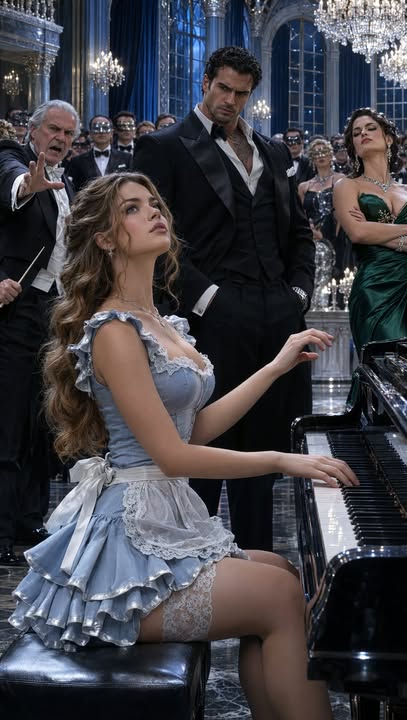
Part 6 – The Music We Choose
Vincent looked at me, the question in his eyes more difficult than any answer he could have given.
I understood what he was asking without needing him to say it.
“Go,” I told him.
His fingers tightened around the ticket.
“You don’t have to come with me,” he said.
“I know.”
“I don’t want you to feel you’re being asked to.”
“I don’t.”
I looked at the line Lucia had written, then at the man holding it.
“She asked to see her son,” I said. “You should have the first moment with her.”
Something in his expression eased, though sadness remained.
“Will you wait?”
“If you want me to.”
“I do.”
He folded the note carefully and slipped it into his coat.
Mara reached across the small table and touched his sleeve.
“She may be afraid,” she said. “Not of you, but of what the years have made of both of you.”
“I’m afraid too.”
“That doesn’t mean you shouldn’t go.”
Vincent nodded.
The train ticket trembled slightly in his hand.
The next morning, he left before sunrise.
I stayed with Aunt Mara while the archive release went forward, not because Vincent had asked me to, but because she had spent so many years guarding a secret alone.
We sat in her kitchen with the radio turned low and the spring rain whispering against the windows.
She told me about my father’s sister, the one I had never known.
Mara had been young when Daniel began working with Lucia and had only understood the danger after the fire.
“Your father asked me to keep you safe,” she said.
“Did he know he might not come home?”
“He knew the papers were dangerous.”
She folded her hands around her tea.
“But he still believed he would see you again.”
I let the words settle, painful and tender together.
All my childhood, I had imagined my father’s last days as ordinary because that was what I had been told.
Now I understood that he had carried fear and hope in equal measure, and still found time to teach me music.
“I’m sorry I kept so much from you,” Mara said.
“I’m sorry I didn’t know how to tell you.”
I reached across the table and covered her hand.
“You were trying to protect me.”
“I was.”
“And I’m glad you did.”
Her eyes shone, though she did not look away.
“But I’m glad we can talk now,” I added.
“So am I.”
By noon, the independent report had been released.
It did not call anyone guilty where the evidence could not support that conclusion.
It did establish that the concerto had been falsely attributed, that records had been altered, and that Daniel Marlow had been wrongly accused of stealing the work.
It also identified the financial irregularities that had helped conceal the truth.
Falk’s name appeared in the report, along with the names of patrons and family members whose accounts had been used.
The report made careful distinctions between what was proven and what remained uncertain.
That care did not prevent the news from spreading, but it gave the story a foundation sturdier than rumor.
Vincent’s relatives were given the same report at the same time as the press.
He had insisted on it.
Some were angry.
Some were frightened.
One called him to say the family would never be the same.
Vincent listened without interrupting, then answered that the truth had already changed them.
He did not ask anyone to forgive him.
He did not ask them to agree with him.
He let the consequences be theirs to face, just as he had accepted that they were his to face.
Maestro Falk released a statement through his attorney the following afternoon.
He acknowledged that the records showed he had knowingly presented music that was not his, and that he had helped obscure the payments connected to the compositions.
He did not confess to starting the fire.
The report could not establish who had caused it, and no one pretended otherwise.
That uncertainty remained painful, but it no longer held the power to erase what the records did prove.
Daniel’s name was cleared.
The story of Lucia and Daniel was corrected, too.
They had been trusted friends who worked together to protect evidence and a child.
They had not betrayed anyone, and they had not plotted against the families connected to the opera house.
They had simply tried to keep the truth alive long enough for someone else to find it.
Late that afternoon, Vincent called.
I stepped outside onto Mara’s small back porch to hear him better.
“She came,” he said.
The breath left me.
“Lucia?”
“Yes.”
His voice was unsteady, but there was a warmth in it I had never heard before.
“She was there when the train arrived.”
“Are you with her now?”
“We’re sitting in a little café near the station.”
I closed my eyes against the damp wind.
“What is she like?”
He gave a soft, disbelieving laugh.
“She looks like the photograph.”
“Does she sound like you remember?”
“I don’t know.”
He paused.
“I thought I remembered her voice perfectly. I don’t. But when she said my name, I knew it was her.”
I pictured them facing one another after all those years, with the sound of a small café around them and no one else able to understand the distance between a mother and the boy she had left behind.
“What did you say?”
“Nothing at first.”
His voice dropped.
“Neither did she.”
“That sounds about right.”
“Yes.”
I heard him breathe.
“Then she reached for my hand, and I let her.”
My eyes filled.
I turned toward the yard so Mara would not see me crying, though she had known me long enough to recognize it anyway.
“Did she explain everything?”
“She did.”
“Do you want to tell me?”
“Not yet.”
The answer held no secrecy, only tenderness.
“I need to hear it from her without trying to fit every word into the records.”
“Of course.”
“She wants to meet you when I’m ready to bring you.”
“I’d like that.”
“I told her about the archive.”
“And what did she say?”
“That Daniel would have been proud of you.”
I pressed my palm to the porch railing.
“I don’t know what to say.”
“You don’t have to say anything.”
His voice softened.
“She asked me to thank you for remembering the melody.”
“I only played what my father taught me.”
“That was enough.”
When Vincent returned two days later, Lucia came with him.
She had silver threaded through her dark hair and carried herself with a quiet grace that seemed to belong equally to the old photograph and the living woman standing before us.
For a moment, the three of us were silent in Mara’s front room.
Then Lucia looked at me.
“You have Daniel’s eyes,” she said.
“And his hands,” Vincent added.
I glanced down at my fingers.
“I never thought of that.”
“He used to tap rhythms against the table when he was thinking,” Lucia said.
“So do you.”
I looked at Vincent.
He had been tapping one finger against his knee.
He stopped, then smiled at himself.
Mara served tea, though no one seemed able to drink it.
Lucia sat beside her son, not touching him until he moved his hand toward hers.
Then she took it.
The years between them did not disappear.
They could not.
But for the first time, they had the chance to speak across them.
Lucia told us that she and Daniel had met through the opera house years earlier.
She had been helping her family with the institution’s accounts, while Daniel repaired its instruments and occasionally copied music for performers.
They had become friends through long conversations after rehearsals.
Daniel loved the way an old piano could keep its history in the wood.
Lucia loved the way he heard what other people overlooked.
The concerto had belonged to a composer who had trusted Maestro Falk to arrange a performance.
Falk had gradually taken credit for the work, first in small programs and then in the official record.
At the same time, he used his position to help conceal payments from wealthy patrons who wanted their influence kept out of public accounts.
Lucia had found the altered ledgers.
Daniel had understood that the music itself could preserve a record of what the papers did not.
“He believed the last movement could carry more than one kind of map,” Lucia said.
“The notes led to the archive, but they also told us where the missing pages belonged.”
“Why the locket?” I asked.
“It was something I wore every day.”
She touched the silver case resting in Vincent’s palm.
“Daniel made the hidden compartment with the piano technician. He thought the locket would be overlooked because it seemed sentimental.”
“It was,” Vincent said.
“I never knew it existed.”
“You weren’t supposed to find it until you were old enough to choose what to do with the truth.”
His face changed at that.
“You left me without telling me.”
“I did.”
“You let them say you were dead.”
“I did.”
“Why?”
Lucia did not offer an easy answer.
“Because after the fire, I learned that the people searching for the archive had begun asking questions about you.”
She lowered her eyes.
“I believed that if I stayed, they would use you to make me return the papers.”
“You could have taken me with you.”
“I thought about it every day.”
Her voice was quiet, but it did not shake.
“Daniel’s death had made everything uncertain. I was afraid that taking you would draw attention to you, and afraid that leaving you would break something in you that I could never mend.”
Vincent looked at their joined hands.
“It did break something.”
“I know.”
The honesty of her answer made the room still.
“I am sorry,” she said.
“I wish I had trusted you with the truth when you were old enough.”
“Why didn’t you come back?”
“I tried.”
She explained that the first letters she sent had never reached him.
The Moretti family’s household changed hands, and the few people she had trusted to carry messages became afraid.
She had lived under another name and worked quietly, waiting until she could be sure the archive had been found and the evidence could no longer be used to pull Vincent into the conflict.
“I thought Daniel’s sister would know when the time was right,” she said.
“She did,” I replied.
Lucia turned toward Mara.
“You kept your promise.”
“I did.”
“And I’m sorry it cost you so many years of silence.”
Mara shook her head.
“We all carried what we thought we had to carry.”
For a while, no one spoke.
Then Vincent asked the question I knew he had been holding back.
“Were you ever going to come home?”
“Yes.”
“Even if I didn’t find the locket?”
“I hoped the truth would become safe enough that I could.”
“Would you have come back for me?”
“Always.”
His face tightened, and Lucia lifted their joined hands to her cheek.
“I wanted you every day,” she said.
That did not return his childhood.
It did not undo the long years in which he had believed himself abandoned.
But it gave the loss a different meaning, and he let himself lean into that meaning without pretending it made everything easy.
When Lucia and Vincent left Mara’s house that evening, they walked slowly to the car.
At the door, Vincent turned back to me.
“Thank you for telling me to go.”
“You didn’t need my permission.”
“I know.”
He glanced at his mother.
“But I needed to know I wasn’t leaving you behind.”
“You aren’t.”
His hand found mine.
For a brief moment, the three of us stood together beneath the porch light, not yet a family, but no longer strangers connected only by a secret.
In the months that followed, the opera house reopened its lower level as a historical archive.
The documents were preserved by independent curators, and the evidence about Daniel’s work became part of the public record.
The institutions that had benefited from the old deception issued a formal correction.
Falk’s name was removed from the concerto’s authorship, though his career was already over.
The surviving records could not identify the composer who had first written the work.
That absence remained.
But the music was no longer credited to the wrong man, and Daniel was no longer remembered as a thief.
Vincent kept his word about leaving violence and coercion behind.
He did not transform overnight, and he did not pretend that one decision could undo a lifetime of habits.
Instead, he began stepping away from the family’s operations one obligation at a time, turning over control of businesses that had depended on secrecy and refusing to use his name to silence people.
Some relatives followed him.
Others did not.
He grieved the distance, but he did not force anyone to close it.
When he spoke about the future, he spoke less about what the Moretti name required and more about what he could build without fear.
Lucia chose to remain in New York.
She and Vincent were learning one another again in small ways: what he liked for breakfast, which songs she remembered, how much of his childhood he wanted to discuss in a single afternoon.
Sometimes they sat together without talking.
Sometimes they did not know what to say.
They kept meeting anyway.
Vivian stepped away from the expected marriage with relief and sadness, as she had promised herself she would.
She remained in Vincent’s life as a friend, never as a symbol of what his family thought he should become.
When the opera house announced plans for a music program for young people, Vivian became one of its first organizers.
She persuaded donors to support lessons, instrument repairs, and scholarships without attaching their names to every success.
“I know how useful it is to be treated like a person instead of a public statement,” she told me.
The restored opera house opened its new program on a bright evening in early spring.
The audience filled the old red seats, not with the polished guests of the masquerade gala, but with children, families, teachers, and musicians carrying their own stories into the room.
The piano stood at the center of the stage.
Its black surface had been restored, though the tiny marks beneath its music rack remained untouched.
Vincent sat in the front row beside Lucia.
Mara was on his other side, with Vivian seated just behind them.
I walked onto the stage carrying my father’s complete score.
It was not truly complete, of course.
Some pages were missing, and some passages had been reconstructed from his notes and the archive.
But the music had returned to the place where it belonged.
Before I sat down, I looked at Lucia.
She smiled through tears.
Vincent gave me a small nod.
For the first time, the locket was not hidden in a pocket or a piano.
It rested in Lucia’s hand, open to the faded photograph of her standing beside Daniel.
I placed my fingers on the keys.
The first movement began gently.
The music rose into the hall, moving from note to note like a story that had waited too long to be heard.
When I reached the last movement, I saw the three unusual marks in the score.
My father had drawn them in the margin.
They no longer looked like a secret.
They looked like a signature.
I played the melody as he had taught it to me, remembering his hands guiding mine when I was small and the warmth of his shoulder beside the piano.
The final passage descended softly, then lifted again.
I let the last note ring.
The hall held the sound without rushing to fill it.
In that stillness, I felt my father near—not as a wound or a question, but as the person who had trusted me with music and believed I would one day know what to do with it.
Then the audience rose.
Lucia was crying openly.
Vincent stood beside her, one hand resting gently against her shoulder.
When I left the stage, he met me near the piano.
“You brought it home,” he said.
“We all did.”
His gaze settled on mine.
There was no audience left for him to impress, no arrangement waiting to be honored, and no secret he needed to use as a shield.
Only a man who had chosen to begin again and a woman who would not ask him to be perfect, only honest.
“I don’t want to promise you a life without difficulty,” he said.
“I wouldn’t believe you.”
“I want to promise you a life where I don’t hide from it.”
“That sounds better.”
“And I want to ask if you’ll build it with me.”
I took his hand.
“I will, if we keep choosing it together.”
“We will.”
Lucia joined us, still holding the open locket.
For years, its photograph had seemed to contain only a question.
Now Daniel’s young face and Lucia’s quiet smile seemed less like proof of a sorrowful past than a reminder of what the two of them had protected: the chance for their children to choose a different life.
The orchestra began packing away their instruments.
The children from the program crowded around the piano, curious about its polished keys and its hidden history.
One of them asked whether the notes could open another compartment.
I laughed.
“Not this time.”
The child looked disappointed.
“Then what do they open?”
I glanced toward Vincent, then toward Lucia and Vivian, and finally at the piano beneath my hands.
“Whatever you’re ready to hear.”
The child considered that answer and nodded, satisfied.
Outside, the evening settled over the waterfront, soft and clear.
The old opera house glowed behind us, no longer a place where the truth had been buried but a place where it could be heard.
Vincent walked beside me into the night, his hand warm in mine.
We had found no perfect ending in the archive, and none had been waiting inside the locket.
We had found something more difficult and more precious: the freedom to tell the truth, to choose whom we loved, and to begin again without being commanded by the past.
And as the final notes of my father’s concerto seemed to linger in the open doors behind us, I understood that the music had never been only a map to a hidden room.
It had been a way home.
**–THE END–PLEASE
Share your thoughts or feedback to motivate us to create more stories ♥️
* * *
[PREVIOUS: PART 5](https://echoesofstories.idolsgift.com/blog/part-5-the-date-inside-the-locket-046)
✓ Lynn R. Adams
Part 6 – The Music We Choose Vincent looked at me, the question in his eyes more difficult than any answer he could have given. I understood what he was asking without needing him to say it. “Go,” …