PART 6 (THE END): The Dance That Remembered 069
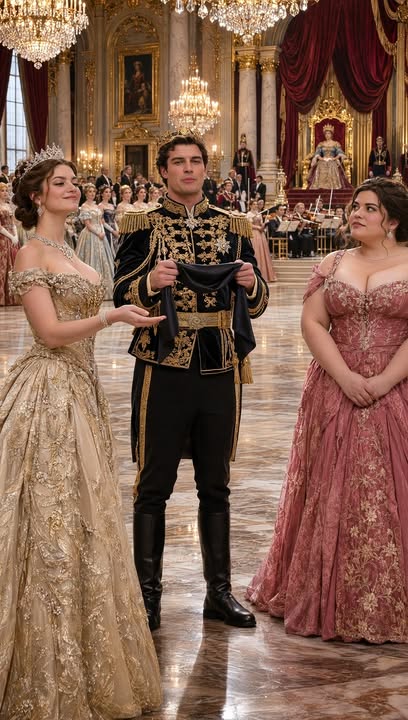
Part 6 – The Step They Chose
Isolde held the paper beneath the chandelier, but for a moment she seemed unable to read it aloud.
The music box had fallen silent in Master Vale’s hands.
Across the ballroom, guests stood motionless, the last note of the Royal Measure trembling in the air between them.
Adrian came to his aunt’s side.
“What does it say?”
Isolde drew a careful breath and turned the paper so he could see.
The handwriting was delicate, familiar from the ledger and the letter.
It read: Amara asked me to keep the dance until her son could choose it for himself.
Below the sentence, in a different hand, was a date from the winter of Amara’s final illness.
Adrian looked at Elara.
“My mother’s?”
Elara had come closer, though she kept a respectful distance from the queen.
“The first line is Mara’s,” she said. “The words beneath it are in the hand of the person who added the date.”
Master Vale stepped forward, still holding the open music box.
“I found it in the gallery after Her Majesty asked me to bring it here,” he said. “There was no paper inside when I lifted the lid.”
“Perhaps it had caught beneath the mechanism,” Isolde said.
Her eyes remained on the note.
“Or perhaps it had been folded behind the lining.”
Adrian watched her face.
“Did you know it was there?”
“No.”
For a moment, the queen looked more bewildered than frightened.
Then she looked at Elara.
“I remember the day Mara wrote this.”
Elara’s expression tightened, not with suspicion now, but with the ache of hearing her mother’s name spoken by someone who had known her.
“What happened?” she asked.
Isolde kept the note in both hands.
“After Amara’s funeral, Mara came to me in the music room. She was carrying this little box. She told me your mother had asked her to keep the dance alive until Adrian was old enough to choose its final step.”
Adrian looked down at the note.
“And you promised?”
“I promised I would see that it was kept.”
The queen’s voice was quiet, but the words did not falter.
“I thought I understood what she meant. I thought keeping the dance meant protecting it from gossip, from the court, from every careless retelling of Amara’s illness.”
“But you kept it from me too,” Adrian said.
“Yes.”
Isolde did not lower her eyes or reach for an excuse.
“I did not understand that I was making the dance smaller each time I kept it silent.”
Elara looked at the note.
“My mother wrote that she was keeping it for him.”
“She was,” Isolde said. “And she was asking me not to let fear decide what the dance should become.”
The queen’s fingers trembled slightly.
“I heard only the part of the promise I could bear. I thought if I preserved the score, the music, and the memory, I had done what Mara asked.”
“But she wanted you to let it live,” Elara said.
“Yes.”
Isolde looked at the open music box.
“I should have told Mara that I could not listen to the melody yet. I should have asked her to teach Adrian when he was ready. Instead, I sent her away, and then I held on to the promise as if keeping it private were the same as keeping it.”
Elara’s eyes shone.
“She never told me she had asked you to preserve the dance.”
“Perhaps she hoped I would.”
“Perhaps she stopped hoping.”
The words were gentle, but they carried years.
Isolde received them without looking away.
“That may be true.”
Adrian glanced at the assembled court.
They had heard enough to know that the discovery mattered, but he would not let the moment become a spectacle of grief or blame.
He stepped toward the music stand.
“Master Vale, may I see the box?”
The secretary offered it to him.
The silver lid rested open in Adrian’s palm.
Beneath the small brass cylinder, a thin piece of paper had been caught against the inner lining.
Adrian eased it free.
It was a short strip, no wider than his thumb, and its edges had softened with age.
The first line bore Mara’s handwriting.
If the melody is found before the dance, let the dance go first.
Adrian read it aloud.
Elara’s breath caught.
The words seemed to release something in the room.
Not a secret this time, but the tension that had gathered around the old music, the unfinished score, and the long silence of the palace.
Adrian understood why the music box had played.
Its mechanism had been wound, perhaps when Master Vale lifted the lid, and the hidden slip had shaken loose.
There was no magic in it.
Only paper, age, and a melody waiting to be heard.
And yet the timing felt like the kind of grace that could make ordinary things seem touched by a hand from the past.
“Then let the dance go first,” Adrian said.
He turned toward the musicians.
“Would you play the Royal Measure again?”
The orchestra leader glanced at the incomplete score.
“We can play what is written, Your Highness.”
“That is enough.”
Adrian looked back at Elara.
The dance had stopped at the place where his choice had waited.
He had stepped away to read the note, and the moment had been interrupted.
Now the ballroom held its breath again, but the stillness felt different.
It was not a demand.
It was room.
Adrian approached Elara, no longer mindful of the watching court.
“May I ask you to finish the dance with me?”
“You already asked me once tonight,” she said.
“And you said yes.”
“I did.”
“Then I am asking again, not as a prince who expects an answer, but as the person standing here.”
Elara searched his face.
“Do you know what final step you want?”
“Not yet.”
“Then perhaps you should find it while we dance.”
She placed her hand in his.
The orchestra began the opening phrase once more.
This time, Isolde stood beside the portrait, not upon her throne or behind the shelter of a courtier.
She held Mara’s note against her heart.
Adrian and Elara began with the measured turn and the gliding step.
The rhythm moved through the ballroom as if it had never left, only waited for the right people to remember it.
Elara offered each movement lightly, and Adrian answered without trying to anticipate her.
He listened to the music.
He listened to the pressure of her hand.
Most of all, he listened to the small space between one step and the next, where the dance asked him to choose.
They crossed the room beneath the chandeliers.
Their steps were not perfect.
Once, Adrian turned a little too soon, and Elara’s sleeve brushed his coat.
Her quiet laugh reached him over the music.
He smiled and found his balance again.
The warmth of that brief mistake did more to free him than all the years of lessons he had taken.
The old waltz had never asked for perfection.
It had asked for attention, trust, and the willingness to meet another person halfway.
As the final phrase began, the musicians softened their playing.
The melody opened into the pause written into the score.
Elara’s hand remained in his.
She gave him no instruction.
Adrian felt the old habit rise in him: the wish to do what was expected, to make the ending beautiful enough that no one could question it.
Then he looked at Elara.
She was waiting, not directing.
Beneath the staircase, Isolde stood beside Amara’s portrait.
Near the musicians’ balcony, Master Vale held the little silver box, its lid still open.
The court had become a quiet circle around them, but for the first time Adrian did not feel that he was dancing for its approval.
He felt his mother’s words against his heart, folded carefully inside his coat.
He felt Mara’s lesson in the patience of Elara’s hand.
And he felt that the choice belonged to him precisely because no one was trying to take it.
Adrian stepped toward Elara.
Not into the final turn that the old score might have required, but into a small, unhurried movement that drew them side by side.
He lifted their joined hands, and together they turned beneath the portrait.
Then he let the movement settle into stillness, their hands still linked, their shoulders turned toward the ballroom and their faces toward each other.
It was not a flourish.
It was an answer.
The orchestra held the final note.
For one breath, nobody applauded.
Then Isolde began.
Her hands came together softly, and the sound traveled through the room.
Elara’s eyes glistened.
Adrian squeezed her hand once before releasing it.
The court followed the queen’s applause, not with the clatter of a performance judged successful, but with a warmth that seemed to welcome the dance back into the palace.
Isolde crossed the floor.
She stopped before Elara, and the space between them was no longer filled with the old accusation.
“I owe you an apology,” she said. “Not only for what happened to Mara, but for the years in which I let you carry the wrong story about her.”
Elara’s chin trembled.
“I thought she had been forgotten because she did not matter.”
“She mattered,” Isolde said. “She mattered to Amara, and she should have mattered to me.”
Elara looked at the note in the queen’s hand.
“My mother loved this dance.”
“She loved your mother.”
The answer came quietly, with no courtly polish.
Elara blinked away a tear.
“She never said that.”
“I wish I had told her.”
“So do I.”
Isolde offered the note.
Elara took it carefully, smoothing its worn edge with her thumb.
For a while, they stood together without speaking.
No promise could return the years when Mara had wondered why she had been sent away.
No apology could give Elara the childhood answer she should have had.
But Isolde had stopped asking silence to pretend it was kindness, and Elara had stopped seeing her mother’s departure as proof that Mara had failed.
That was not the same as undoing the hurt.
It was a beginning made honestly.
The next morning, Adrian asked for a small gathering in the portrait gallery.
He invited Isolde, Elara, Master Vale, and the members of the household who had helped prepare the remembrance ball.
No herald announced the meeting, and no formal speech was planned.
Adrian placed the ledger on a table beneath the portrait, beside Amara’s letter and the music box.
The three objects seemed modest together.
A worn book, a folded page, and a silver box scarcely larger than his hand.
Yet they held the choices of three lives.
“The letter will remain in the royal archive,” he said. “But a copy will be kept with the music and the dance, where it can be read by anyone who wants to understand why the Royal Measure was made.”
Isolde nodded.
“I will see that Mara’s name is recorded beside Amara’s as one of its creators.”
“Not only as an instructor,” Elara said.
Adrian turned to her.
“What would you prefer?”
“Write that they made it together.”
“Then that is what we will write.”
Elara looked down at the ledger.
“My mother did not create it alone, and the queen did not create it alone. It should say what happened.”
“It will.”
Isolde touched the edge of the book.
“I would like to help restore Mara’s place in the palace records.”
Elara’s expression grew cautious.
“Not to erase what happened?”
“No,” Isolde said. “To tell it accurately.”
She looked at Elara, speaking with the plainness the younger woman had once feared would never come.
“Mara was asked to leave after Amara died. I believed I was protecting her from the court, but I did not explain my reason or ask what she wanted. She had done nothing wrong, and she was never responsible for Amara’s illness or death.”
Elara listened without looking away.
“I would like those words recorded,” Isolde continued. “If you think it is right.”
Elara studied the queen’s face.
“Add that she kept teaching after she left.”
“We will.”
“And that she taught me.”
“Yes.”
“And that the dance belongs to both of them.”
“Yes.”
The answer came without hesitation.
Elara’s shoulders lowered.
“Then I think she would have wanted that.”
Isolde reached across the table but stopped before touching Elara’s hand.
“I will not ask you to forgive me quickly.”
“You should not.”
“I will ask only that you let me try to know you, if you are willing.”
Elara considered the request.
Her mother’s memory seemed to stand between them, not as a barrier now, but as the reason they might find a way forward.
“I am willing to try,” she said.
It was not a promise of closeness.
It was something more believable, and perhaps more valuable: a door left open.
The palace changed slowly after that.
Mara’s name entered the music records beside Amara’s, written in the same careful hand as the dates of royal celebrations.
The ledger was restored and displayed for a time in the archive reading room, where visitors could see the diagrams and the empty space that had once held the final page.
The original letter remained protected, though Adrian kept a copy in his rooms.
The Royal Measure returned to the palace’s repertoire.
At first, only a few people learned it.
Then more came: musicians, household staff, courtiers curious about the dance that had once been hidden, and children who liked the turning steps better than the formal lessons they were expected to practice.
Elara began teaching them in the old ballroom.
She did not start by correcting their posture.
She began by asking them to listen.
“Do not watch only the feet,” she told them. “Notice when the other person is ready to move.”
Some of the children laughed when they made mistakes.
Others became solemn with concentration, determined to understand the pauses.
Elara let them try again until they discovered that the waltz did not punish a missed step.
It simply waited for them to find one another.
Isolde came to the first lesson and stood near the doorway, uncertain whether she was welcome.
Elara saw her.
“Your Majesty, would you like to join us?”
Isolde looked almost startled.
“I have not danced in years.”
“Neither have some of these children.”
A little boy near the piano grinned.
“I have never danced before at all.”
Isolde’s laugh was soft, surprised out of her.
“Then I may be in good company.”
Elara showed her the opening measure.
The queen moved carefully at first, afraid of doing something wrong.
When she turned too early, she stopped, embarrassed.
Elara offered her hand again.
“Listen for the pause.”
Isolde listened.
The next time, she waited.
Her step met the music.
She looked up at Elara, and the two women shared a small smile that belonged to neither the court nor the past.
Adrian watched from the edge of the room.
He had seen his guardian try to protect him with silence, and he had seen that silence become something neither of them could carry alone.
Now he saw her accept a hand offered without command.
That mattered more than any formal declaration of reconciliation.
Later, when the lesson was over and the children had gone to find refreshments, Adrian remained in the ballroom.
Elara was stacking the music sheets.
“Will you dance with me?” he asked.
She looked toward the empty floor.
“Are you asking for practice?”
“No.”
“For a lesson?”
“No.”
“Then what are you asking for?”
He came closer, but stopped before reaching for her hand.
“I am asking because I want to be with you, whether we dance well or not.”
Elara studied him.
“And if I say I would rather not?”
“Then I will help you stack the music.”
A smile touched her face.
“That is a much less romantic offer.”
“It is also sincere.”
She set the last sheet down.
“Then yes.”
He offered his hand, and she took it.
The musicians had left the room, so there was no orchestra to announce them.
Adrian began to hum the Royal Measure.
His voice was not a musician’s voice, but he remembered the melody well enough.
Elara raised an eyebrow.
“Are you certain you wish to sing?”
“No.”
“Good. Then you may still improve.”
He laughed.
They moved through the first steps, slow and close, letting the familiar rhythm carry them.
The palace around them was no longer silent about the dance.
Still, the quiet in the ballroom felt precious.
At the place where the final figure opened, Adrian stopped.
He looked at Elara.
“Do you remember how we ended it?”
“I remember how you ended it at the ball.”
“I chose that step because I thought it was right for that moment.”
“And now?”
“Now I want to choose another.”
She waited.
Adrian placed one hand at her shoulder and offered his other hand.
“Come with me,” he said.
Elara’s gaze warmed.
“Where?”
“Anywhere the dance can take us.”
She set her hand in his.
They turned slowly beneath the portrait.
This time, when the final phrase came, Adrian did not step aside or bring them to a formal stillness.
He led them into a gentle, unhurried turn, then let it carry them forward together.
The last step was not hidden in the score.
It was not written in the ledger or left in a letter.
He chose it in the moment, and Elara chose to meet him there.
When the music of his humming faded, they remained close, their hands still joined.
Elara rested her forehead lightly against his.
“You chose.”
“I did.”
“And you listened.”
“I tried.”
She smiled.
“That is a beginning.”
He remembered the first night of the dance, when those words had seemed to belong only to the past.
Now they sounded like a promise neither of them had to make alone.
Above them, Amara’s portrait held its gentle gaze.
Below it, the old waltz moved on in the lives of those who had learned it, changed it, and chosen it anew.
And the palace, at last, remembered not only the loss that had silenced the music, but the love that had made it.
**–THE END–PLEASE
Share your thoughts or feedback to motivate us to create more stories ♥️
* * *
[PREVIOUS: PART 5](https://storyly.idolsgift.com/blog/part-5-the-dance-that-remembered-069-1)
✓ Lynn R. Adams
Part 6 – The Step They Chose Isolde held the paper beneath the chandelier, but for a moment she seemed unable to read it aloud. The music box had fallen silent in Master Vale’s hands. Across the ba…