PART 6 (THE END): The Cufflink in Bethany’s Hand 027
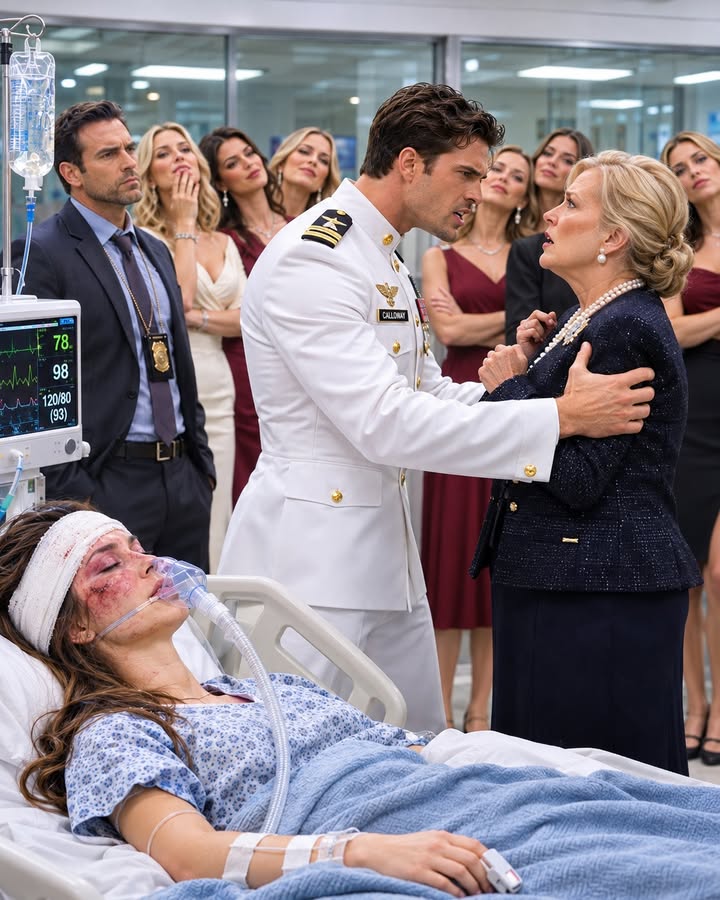
Part 6 – The Tree We Chose
I read the notice twice, then looked up at Agent Cole.
“Has anyone entered the house?”
“Not according to the county dispatch records,” she said. “We’ve asked the company team to stand down while we verify the request.”
Constance had come closer, her attention fixed on the paper.
“I authorized no such entry,” she said.
The handwritten instruction was beneath her name.
No one answered her at once.
Granger examined the notice without touching it. “Who filed the request?”
“The company’s facilities office,” Cole said. “The authorization appears to have come through an account used by the family’s security department.”
Constance’s composure held, but her face had gone pale.
“I’ll contact our counsel and find out how this was submitted.”
“Please do,” Cole said. “And don’t contact anyone who may be involved in the recovery request until we’ve documented the record.”
Constance took out her phone, then paused.
For the first time since I had met her, she seemed unsure whether the next step was hers to choose.
“Understood,” she said, and put the phone away.
The federal agent turned to Vale. “You said the ledger is secured in a company storage room.”
“The copy is,” he replied. “The original is at the Calloway home.”
“Do you know where?”
“I don’t.”
I remembered Adeline’s slow blink, the certainty in it.
“She does,” I said. “But she can’t tell us yet.”
Cole nodded. “Then we’ll secure the house without searching beyond the scope of the evidence order. Detective Granger, I’ll need your dispatch records and the hospital access log.”
“I have the certified copy of the access log,” Granger said. “The original system record is preserved.”
“And the dispatch record?”
“I’ve requested it from the county communications center. They haven’t produced the original yet.”
Cole’s expression sharpened. “Then we’ll request it directly and preserve the system data.”
Granger’s shoulders eased slightly, though his eyes remained tired.
“I’ve been trying to get that record for days.”
“You shouldn’t have had to,” Cole said.
There was no triumph in her voice, only recognition.
The words seemed to steady him more than praise would have.
“I’ll send you everything I have,” he said.
Cole turned to me. “We’ll need you to come with us to the house in the morning. We’ll photograph the rooms and document anything that may be relevant. You won’t be asked to search alone.”
“I’ll be there.”
“Not tonight,” she added. “You should remain here with your wife.”
“I intend to.”
Bethany had been listening from the chair near the ICU doors.
She stood now, her cardigan folded over one arm, and looked from the notice to Constance.
“Did you ask someone to take the ledger?”
“No,” Constance said.
“Did you know anyone at the company was planning to enter the house?”
“No.”
Bethany’s face tightened with a sadness more complicated than mistrust.
“I want to believe you.”
Constance lowered her eyes.
“I know.”
It was not an apology, but it was the first time I had heard her admit that Bethany’s belief was hers to give, not something Constance could demand.
The next hours passed in cautious conversations and measured steps.
Agent Cole arranged for a federal investigator to remain near the house through the night.
Granger gave her the records he had gathered, including Bethany’s statement and the details of the cufflink.
Vale confirmed that the company’s storage room contained a secured copy of the ledger and agreed to help locate its access records.
Nobody pretended we had solved everything.
We had found the direction in which the truth pointed, but truth still needed to be carried carefully, verified, and kept from becoming another instrument in someone else’s hands.
Near dawn, Dr. Pike came out of Adeline’s room.
“She’s awake,” he said. “She’s tired, but alert enough for a short visit.”
I went in alone, as before.
Adeline’s gaze followed me.
The tube was gone, though her voice was barely more than a whisper.
“Wesley,” she said.
I took the chair beside her.
“I’m here.”
Her fingers moved beneath the blanket until I found her hand.
“Did they get it?”
“Not yet.”
She closed her eyes briefly, gathering strength.
“The ledger?”
“We’re going to the house with Agent Cole and Detective Granger. No one will enter without them.”
A little of the tension left her face.
“Good.”
“Someone filed a request for the company to recover it. Constance says she didn’t authorize it.”
Adeline’s expression changed, though not with surprise.
“Martin,” she whispered.
“Martin Hales?”
She blinked once.
“Was he the one who came to the house that night?”
Another blink.
“Did he enter the hospital room before the ambulance arrived?”
One blink.
I felt the answer settle heavily inside me.
“Did he act on his own?”
She watched my face for a long moment.
Then she blinked twice.
“No?”
Two blinks.
“No, he didn’t?”
One blink.
I leaned closer.
“Who gave him instructions?”
Adeline’s breathing became uneven, and the nurse moved to her other side.
“Don’t push her,” she said gently.
I stopped.
Adeline held my gaze.
“Mother,” she whispered.
The nurse adjusted her pillow, and I let the silence return.
“I’m sorry,” Adeline said.
“For what?”
“For hiding it.”
“Was it because you didn’t trust me?”
Her eyes filled.
She shook her head as much as her injuries allowed.
“No,” she whispered. “Because I thought I could keep you safe.”
I bowed my head over our joined hands.
“I know now.”
“I should have told you.”
“Maybe. And I should have asked again when you said you were fine.”
She moved her thumb against my palm.
“We were both trying to protect each other,” I said. “We just didn’t do it together.”
Her eyes softened.
“Together,” she repeated.
“That’s what I want.”
She closed her eyes, exhausted, but her hand stayed in mine.
When I left the room, Bethany was waiting.
“She said Martin was involved,” I told Granger, who had returned to the corridor. “She believes he acted under someone else’s instructions.”
“Did she identify who?”
“Constance.”
Granger nodded slowly. “We’ll need to take her statement when she’s stronger. We’ll corroborate it with the access records, company communications, and the house evidence.”
“Don’t rush her.”
“I won’t.”
Adeline’s identification was not the end of the investigation.
It was the beginning of one that would have to stand without relying on her pain alone.
At the house, Agent Cole led the entry team through each room, photographing the doorways, the study, and the hall where Bethany had found the cufflink.
I walked behind them, hands clasped, seeing the home as both the place where Adeline and I had built a life and the setting of the night I had not been there to protect her.
The study smelled faintly of cedar and paper.
Books lined the wall, and a narrow writing desk stood beneath the window.
Nothing looked disturbed now, but the careful arrangement could not erase Bethany’s memory of the crash or Adeline’s injuries.
Cole asked me not to touch anything.
I kept my hands at my sides.
“Where might Adeline have hidden something?” she asked.
I looked around the room.
“She kept important things close to the places she used every day. Not hidden in a safe, usually. She’d rather know where something was than wonder who had the key.”
I thought of the photographs Bethany had described, the ones Adeline had kept from her mother’s plans to throw them away.
“Would she have left the ledger in the study?”
“I don’t know.”
Agent Cole gave me time to consider the room.
My eyes moved from the desk to the shelves, then to a low cabinet beside the window.
A framed photograph rested on it: Adeline and Bethany as children at an airfield, both squinting into the sun.
The picture had been among Adeline’s belongings for years.
I had seen it often without knowing its history.
A narrow wooden frame surrounded it, its backing secured by small metal tabs.
I pointed it out to Cole.
“Please photograph that before you move it,” I said.
She signaled to the evidence technician, who documented the frame from every angle.
Only after the room had been fully recorded did Cole ask me to remove the photograph.
The back panel was thicker than it needed to be.
The technician examined it, then carefully lifted the loose inner board.
A slim envelope rested inside, its edges worn but dry.
Adeline had written my name on the front.
For a moment, I forgot the people around me.
Cole gave me a pair of gloves before allowing me to open it.
Inside was a short note and a small brass key.
The note read: If this is being opened, it means I couldn’t keep the whole truth in one place. The original is in the cabinet behind the furnace filters. Please don’t let the names become another reason to hurt the people who helped me.
I closed my eyes.
Even at the center of everything, Adeline had been thinking about other people.
The team documented the note and the key before moving to the utility closet.
Behind the cabinet that held the furnace filters was a narrow compartment, too shallow for ordinary storage.
The key opened it.
Inside lay a sealed ledger wrapped in a canvas cover, along with a small packet of original safety reports.
Agent Cole photographed each item before placing them in separate evidence containers.
Nothing was rushed.
Nothing was hidden from the record.
By midday, the ledger was in federal custody, and the company’s copy had been secured under a separate chain of evidence.
Cole confirmed that the names would be restricted while investigators assessed the safety claims and contacted the people whose cooperation might put them at risk.
She could not promise that the review would be painless.
She could promise that the records would not be handed to the press or circulated casually.
When we returned to the hospital, Adeline had fallen asleep.
I left the note in the care of Agent Cole and told her I wanted Adeline to read it herself when she was ready.
A week later, the federal investigation moved beyond the county.
The dispatch records arrived from the state communications archive, where an unaltered copy had been retained.
They confirmed that the original emergency call had come from Martin Hales, not an unidentified neighbor.
Hospital camera footage showed him entering the unit before the ambulance arrived.
Company security logs placed him at the Voss property that evening, and messages recovered from his work account showed that he had been told to retrieve the ledger and keep the family’s response under control.
The cufflink’s blood matched Adeline’s, while the engraving and purchase records linked the set to Colonel Vale.
That evidence placed him at the house, but it did not prove he had carried out the assault.
Vale’s later cooperation helped clarify what his part had been.
He admitted that he had withheld the ledger and failed to report the earlier falsified safety records when he first learned of them.
He also gave investigators the records he had kept, which helped establish how the documents had been altered.
His choices had cost him his reputation and led to charges for his role in the cover-up.
He did not ask Adeline to forgive him.
He testified, answered every question, and accepted the consequences.
The security chief, Marcus Rourke, was identified through the company’s staffing records and the radio logs Bethany had described.
He had entered the house with Vivian, assisted in searching the study, and helped stage the scene to look like a burglary.
Evidence from the house, the company records, and Adeline’s testimony established that Vivian had attacked her while Rourke restrained her.
Constance had ordered the ledger recovered and instructed Martin to manage the response, believing that control over the story could keep the family and the company from facing scrutiny.
She had not struck Adeline herself, but her decisions had set the assault in motion and her actions afterward had helped conceal what happened.
The authorities filed charges against Constance, Vivian, Rourke, and Vale according to the evidence each had left behind.
The investigation also confirmed that falsified safety reports had hidden a defect connected to the fatal crash of the test aircraft.
Federal safety investigators reviewed the ledger under seal, protected the people who had helped Adeline, and pursued the company officials responsible for altering the reports.
Voss Aeronautics lost major contracts and underwent a court-supervised restructuring.
The legal process took months.
It was slow, difficult, and often quieter than I had expected justice to be.
There were interviews, hearings, and long days when the truth seemed to move only by a page or a signature.
But it moved.
And as it did, Adeline recovered.
At first, recovery meant sitting upright for a few minutes.
Then it meant taking a few steps between parallel bars, her hands trembling around the support rail while I walked beside her.
I never carried her when she could stand.
I never mistook her strength for proof that she did not need help.
Some days she asked me to steady her.
Some days she wanted me to step back.
I learned to ask.
Bethany visited often, at first sitting quietly by the window, then bringing books, photographs, and stories from the childhood she and Adeline had shared.
She moved out of Constance’s house and into a modest apartment near the hospital.
The family’s money had once seemed like the only safe place she could stand.
Now she began building a life that belonged to her, piece by piece: a job at a community aviation museum, a small kitchen table, a set of keys no one else controlled.
She and Adeline rebuilt their relationship without pretending the years of silence had not happened.
They talked about what they remembered, what they had mistaken, and what they could no longer make right.
They did not forgive each other all at once.
They did not need to.
Their closeness returned through ordinary things: a shared cup of tea, a photograph placed where both could see it, Bethany reading aloud while Adeline rested.
Constance wrote to Adeline from the court’s temporary residence.
The first letter was formal and full of explanations.
Adeline read it, then set it aside.
The second was shorter.
It said only that Constance had begun to understand that concern was not the same as control, and that she was sorry she had made her daughters afraid to disagree with her.
Adeline did not answer immediately.
When she did, she wrote that she was willing to speak with her mother someday, but only when she felt ready and only with the truth left intact.
That was not reconciliation.
It was a door unlocked from Adeline’s side.
Vivian’s apology came through her attorney before trial.
Adeline read it once.
“I don’t know what I feel,” she told me.
“You don’t have to decide today.”
“I used to believe that if I understood someone’s reasons, I had to forgive them.”
“You don’t owe anyone that.”
She folded the letter and placed it in a drawer.
Some weeks later, she told me she might read it again.
That was all.
I knew better than to ask for more.
By the time the first spring warmed the ground, Adeline could walk the length of our small garden with a cane.
She still tired easily, and her left leg ached when the weather changed, but she insisted on choosing the plant for the yard.
Bethany joined us on a bright morning in April.
She carried a young maple sapling, its roots wrapped in burlap.
Adeline studied it from her seat on the garden bench.
“Why a maple?” I asked.
“Because it was the first tree outside the old airfield hangar,” she said. “Bethany and I used to wait beneath it while Father worked.”
Bethany smiled.
“We thought the planes belonged to us.”
“You did,” Adeline said. “You had names for all of them.”
We dug the hole together.
I worked the spade into the soil while Adeline guided the placement, telling me when to shift the tree a little to the left.
Bethany loosened the burlap around the roots and held the trunk steady.
The afternoon smelled of turned earth and new leaves.
When the sapling stood upright, we filled the hole and pressed the soil around it.
Adeline rested her palm against the slender trunk.
“I thought I might never come home,” she said.
I stood beside her.
“I know.”
“I thought the truth would take everything from us.”
“It took some things.”
She looked toward Bethany, who was brushing soil from her hands.
“But not this,” she said.
“No,” I replied. “Not this.”
We poured water at the base of the tree.
It ran dark through the soil and gathered briefly in a shallow ring before sinking from sight.
Bethany touched the little branch nearest her shoulder.
“Do you think it will grow?”
“Yes,” Adeline said.
The answer held no promise that the road ahead would be easy.
It held the quieter confidence of someone who had learned that a life could continue after being changed.
I took Adeline’s hand.
She leaned against me, not because she was fragile, but because she wanted to.
For years, each of us had tried to protect the other by carrying the truth alone.
Now we stood together in our own yard, beside a tree none of us could have planted without the others.
The wind moved through its leaves, barely loud enough to hear.
And for the first time since my flight home, the future did not feel like a warning.
It felt like a place we were choosing, together, one honest day at a time.
**–THE END–PLEASE
Share your thoughts or feedback to motivate us to create more stories ♥️
* * *
[PREVIOUS: PART 5](https://puretales.idolsgift.com/blog/part-5-the-cufflink-in-bethany-s-hand-027)
✓ Lynn R. Adams
Part 6 – The Tree We Chose I read the notice twice, then looked up at Agent Cole. “Has anyone entered the house?” “Not according to the county dispatch records,” she said. “We’ve asked the company …