PART 6 (THE END): The Clearance That Shouldn’t Exist 029
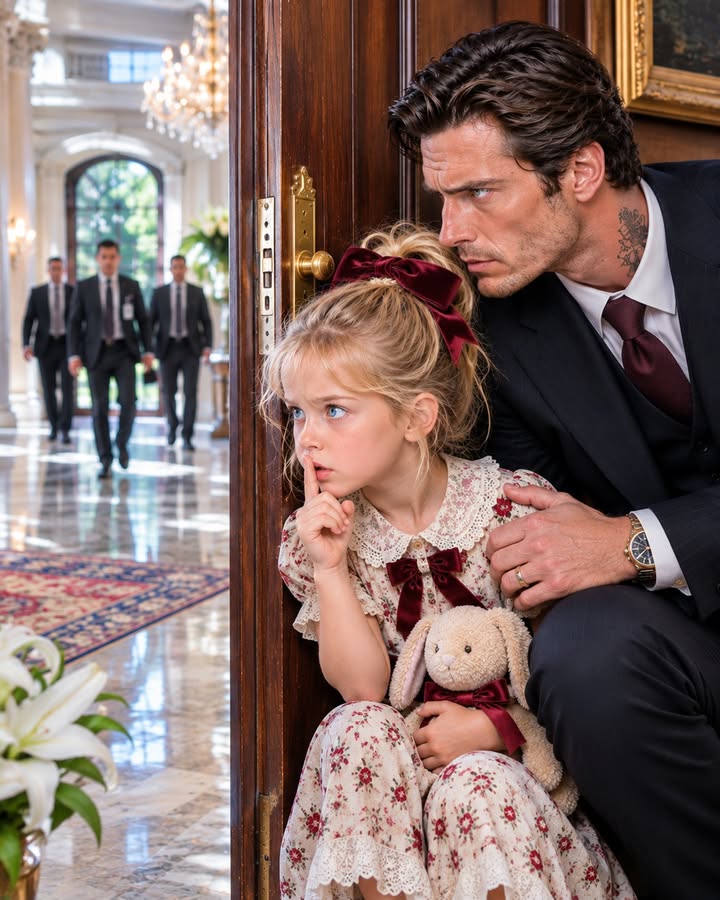
Part 6 – The Fox in the Library
For several seconds, Lorenzo could only look at the signature.
The handwriting was undeniably his, the long, looping L followed by the sharp downward stroke he had used on contracts, receipts, and countless pages he had barely read.
But a signature could establish who had signed a page, not what the page had said when it reached him.
“Send the photograph to Vance,” he told Marianne.
“Already done.”
“And ask the sender where the original is.”
“I’ll have the investigator do that.”
Marianne returned his phone to the table, leaving the image open.
Luca studied the message without touching it.
“Do you remember signing that document?”
“No.”
“Do you remember anything about payment authorization?”
“I approved routine expenses for the restaurant. I don’t remember approving an insurance payment.”
“Then we wait for the original.”
Lorenzo looked again at the crease running through the typed sentence.
The page offered a new way to doubt himself, and he knew how easily doubt could become certainty when a person was frightened enough.
For once, he did not reach for an answer simply because he wanted one.
He let the uncertainty stand.
By morning, Rhea Vance’s office had arranged to receive the original document from its sender, who identified himself as an archivist helping the insurance company locate missing files.
The page was delivered through the company’s legal department, recorded and sealed before Marianne was permitted to review it.
Its paper and type matched the insurer’s archive.
The handwriting at the bottom did not.
The signature resembled Lorenzo’s, but the lettering had been traced from an authentic document signed months earlier.
More importantly, the line authorizing payment had never appeared on the page when Lorenzo signed it.
The original sheet was a routine approval for a repair estimate at Bellini’s.
Someone had attached a copied signature to a false insurance instruction after the fire.
The altered page was not proof that Lorenzo had agreed to leave the storeroom empty.
It was proof that someone had wanted the records to say he had.
Vance explained the finding in a small office at the federal building, with Marianne and Luca present.
“The insurer’s files contain other discrepancies,” she said.
“Victor Sayegh had access to the restaurant’s financial paperwork and submitted the claim after the fire.”
“Can you prove he started it?” Lorenzo asked.
“We can establish that he arranged for an ignition device to be placed near the rear storeroom, then used forged documents to support an insurance claim.”
She paused, allowing the words to settle before she continued.
“We also found correspondence in which he discussed the restaurant’s debt and the possibility of collecting the policy after the business closed.”
Lorenzo remembered the man in the dim corridor, a face he had never quite seen clearly.
“Why did he come to the estate that night?”
“Mr. Bell’s account matches the old access record,” Vance said.
“He brought Sayegh there because he suspected him and thought a private conversation might prevent matters from escalating.”
Adrian sat beside Marianne, his expression drawn but steady.
“He wanted to know what Lorenzo had told the police,” Adrian said.
“I told him Lorenzo had described what he saw.”
“And the anniversary entry?” Lorenzo asked.
“Several months ago, Sayegh obtained a copy of an old access credential through a former estate contractor,” Vance replied.
“He used it to enter the property on the anniversary of the fire.”
The old record had been misleading in a different way.
The first entry under Lorenzo’s profile belonged to the night of the fire, when Adrian had brought Victor to the estate.
The later access, years afterward, had been made with a copied credential based on Lorenzo’s authorization profile.
The date had been chosen to unsettle him, the false approval designed to make it seem as if he had invited the intrusion.
“Why return on the anniversary?” Luca asked.
“We believe Sayegh was looking for a box of restaurant records that Mr. Bell had kept after the fire,” Vance said.
“He may also have wanted to see whether anyone had discovered the original insurance files.”
Adrian’s gaze lowered.
“I kept the box in storage,” he said.
“I didn’t know he had found out.”
“What was in it?” Lorenzo asked.
“Copies of the fire report, Mateo’s statement, and a letter I received from the restaurant’s owner.”
“Why didn’t you tell me about the box?”
“Because I was afraid it would lead you back to Victor before I knew what the evidence showed.”
Lorenzo looked at him, holding the hurt alongside the understanding rather than allowing either one to erase the other.
“You were trying to keep me from doing something dangerous.”
“Yes.”
“And in doing so, you left me with a story that made me feel responsible for Mateo’s fate.”
Adrian’s eyes shone with regret.
“I did.”
“I wish you had trusted me with the truth.”
“So do I.”
Vance folded her hands over the open file.
“Mr. Bell’s statement helped us establish how the records were kept and why Sayegh was asking questions, but his earlier omissions are part of the review.”
Adrian nodded.
“I understand.”
“I can’t promise you any particular outcome,” she continued.
“Your cooperation is being considered alongside the evidence, including the fact that you kept relevant records from investigators for years.”
“I understand that too.”
Lorenzo wanted to offer a solution, to make one call and smooth the road in front of his friend.
The old version of him would have called that loyalty.
Now he understood that a consequence avoided was not always a kindness.
Adrian had chosen to tell the truth, and Lorenzo would not take that choice away by hiding what it cost.
“I’ll be available to confirm anything I remember,” Lorenzo told Vance.
“But I won’t interfere with your decision about Adrian.”
Adrian turned toward him.
“Thank you.”
“It isn’t a favor,” Lorenzo said, gently.
“It’s the right thing.”
The public meeting Victor had requested never took place.
Once the insurance company confirmed the records’ authenticity and Vance’s office obtained the original correspondence, there was no need to ask Lorenzo to sit across from the man who had turned an old business failure into a long-running deception.
Victor Sayegh was arrested at his office, where investigators recovered additional records connecting him to the fire and the false insurance claim.
The counterfeit credentials had been arranged through a former associate who had helped him obtain the copied estate access information.
The visitor at the door had never been a federal agent.
He had been sent to frighten Lorenzo and make him believe the legitimate inquiry could be manipulated by anyone with a convincing badge.
The facts did not erase the damage.
They did, however, take the shape of the threat away.
Weeks later, Rhea Vance met Lorenzo and Adrian again to explain the status of the inquiry.
The evidence showed that Adrian had rescued Mateo, concealed important information from investigators, and kept records that should have been disclosed sooner.
His cooperation and testimony were considered, but they did not buy him immunity.
He accepted a formal resolution that required him to continue assisting the inquiry and acknowledge his role in withholding evidence.
It was not a clean escape, nor a punishment arranged to satisfy anyone’s anger.
It was a fair consequence, reached through the same lawful process Lorenzo had chosen to trust.
When the meeting ended, Adrian waited with Lorenzo in the corridor.
“I don’t know what happens now,” Adrian said.
“Neither do I.”
“I should have told you about Mateo the next morning.”
“Yes.”
“I should have told you about Victor.”
“Yes.”
“I kept calling it protection.”
Lorenzo looked toward the windows at the end of the hall, where the afternoon light rested on the glass.
“Sometimes it was fear,” he said.
“Fear that you would take revenge, and fear that I’d have to admit I had stayed silent.”
Adrian nodded.
“I think you’re right.”
“I was afraid too.”
“Of Victor?”
“Of what I might learn, and of what people would do with it.”
They stood quietly, neither asking the other for a quick return to the way things had been.
Their friendship had survived years of loyalty, but loyalty alone could not repair what secrecy had done.
It would have to be rebuilt through smaller things: questions asked plainly, answers given fully, and the willingness to let the other person choose.
“I’m not ready to pretend nothing happened,” Lorenzo said.
“I wouldn’t ask you to.”
“But I don’t want this to be the last time we speak.”
Adrian’s breath caught, and he looked down.
“Neither do I.”
Lorenzo placed a hand briefly on his shoulder.
It was not absolution.
It was a beginning.
After the inquiry concluded, Lorenzo gave Marianne a list of the people he had once considered business associates, along with the names of those he knew might have been harmed by his decisions.
He did not ask her to make the list disappear.
He asked her to help him find a lawful way to offer restitution where it was appropriate.
Some people accepted his calls.
Others did not.
One former employee returned a letter unopened.
Lorenzo did not send another.
He learned that making amends was not a transaction in which remorse purchased forgiveness.
It was work done without a guarantee of being welcomed.
He also began stepping away from the criminal network that had kept his name powerful and his house quiet.
The change was neither sudden nor simple.
It involved legal scrutiny, difficult conversations, and the loss of privileges he had once treated as ordinary.
When people asked why he was changing course, he said only that it was time to stop making other people carry the weight of his choices.
Mia heard none of the details.
She knew that the false agents had not come back, that the real investigators had spoken with Lorenzo, and that Adrian had told the truth about the old fire.
Elena heard more.
She knew Lorenzo had given up the protections and influence that had once made him seem untouchable, and she knew he no longer promised that he could keep every danger from reaching their door.
Instead, he promised to be honest about what he could and could not do.
One evening, after several months had passed, Elena joined him in the garden while Mia chased fallen leaves along the path.
“She asks about you when you’re away,” Elena said.
“I ask about her too.”
“She trusts you.”
Lorenzo watched Mia stop to inspect a leaf shaped like a small green hand.
“I don’t want her to trust me because she thinks I can protect everyone.”
“What would you rather she trust?”
“That I’ll tell her the truth, and that I’ll keep showing up.”
Elena looked at him with the warmth that had once been guarded behind caution.
“That sounds like enough to build a life on.”
“I hope it is.”
“It is,” she said.
Then, after a moment, “I’m staying.”
Lorenzo turned toward her.
“You don’t have to decide that because of me.”
“I know.”
“Or because you feel safe here.”
“I know that too.”
Elena’s gaze followed Mia across the garden.
“I’m staying because this has become our home, and because you have made room for us without asking us to be grateful for every kindness.”
The words touched a place in him that success, fear, and control had never reached.
“I’m glad,” he said.
Elena smiled.
“So am I.”
Mia came running back, holding the leaf carefully between both hands.
“Look,” she said.
“It has a tiny road in the middle.”
Lorenzo crouched to see.
“It does.”
“Maybe it’s a map.”
“Where does it go?”
Mia turned the leaf around, studying it with grave attention.
“To the library.”
That winter, she brought the cardboard foxes there herself.
The first was the one with the taped leg, brave because somebody was scared.
The second had a blue tail and a bright star on its forehead.
The little captain wore a yellow crown and carried a garden drawn in green crayon.
Lorenzo had placed them on a low shelf in the library, between a row of old family books and the window that looked toward the garden.
Mia inspected their arrangement with the seriousness of a museum curator.
“They should be together,” she said.
“Of course.”
“And the captain should be in front.”
“Why?”
“Because he knows the way.”
Lorenzo moved the fox with the crown to the center.
Mia considered the change, then nodded.
“That’s better.”
She stepped back to admire the shelf.
“Can they stay here?”
“They can stay as long as you like.”
“What if they get old?”
“Then we’ll keep them old.”
“What if they fall apart?”
“We’ll mend them.”
Mia seemed satisfied.
Elena watched from the doorway, one hand resting on the frame.
For a moment, Lorenzo saw again the narrow opening of the library door, Mia’s frightened face, and the small hand pulling him away from danger.
He had thought she was trying to hide him.
In a way, she had been.
But not because she believed he was invulnerable or powerful.
She had hidden him because she was afraid he might be hurt, and because she understood that people were worth protecting even when they were the ones everyone else feared.
That understanding had given him a chance to choose a different kind of strength.
Mia reached for his hand.
“Come on,” she said.
“I want to show you the fox’s new home.”
He let her lead him the few steps to the shelf.
Outside, winter light lay softly over the garden.
Behind them, the house was no longer quiet because everyone was afraid to speak.
It was quiet because no one needed to hide the truth.
Lorenzo stood beside Mia and the little paper foxes, not as a man who could command every door to open, but as someone willing at last to leave one open for the people he loved.
**–THE END–PLEASE
Share your thoughts or feedback to motivate us to create more stories ♥️
* * *
[PREVIOUS: PART 5](https://puretales.idolsgift.com/blog/part-5-the-clearance-that-shouldn-t-exist-029)
✓ Lynn R. Adams
Part 6 – The Fox in the Library For several seconds, Lorenzo could only look at the signature. The handwriting was undeniably his, the long, looping L followed by the sharp downward stroke he had us…