PART 6 (THE END): The Camera That Went Dark 034
Part 6 – The Home We Chose
I read Bethany’s message twice, then lowered the phone and looked at the twins sleeping in their bassinets.
Joanna rested against the pillows, pale with exhaustion but alert.
“Whatever the letter says,” she murmured, “it can’t change what happened.”
“No,” I said.
“But it might tell us why.”
She nodded, and I felt the difference between wanting an answer and needing one.
We had spent days collecting facts, trying not to let suspicion become certainty before the evidence arrived.
Now, as the boys slept beneath their soft hospital blankets, I knew I could wait a little longer.
I told Bethany not to ask our mother to bring the letter to the hospital.
If Margaret wanted it reviewed, she could give it to Elena, who could make a copy and confirm where it had come from.
Bethany replied that she would pass the message along.
An hour later, Elena called.
Margaret had contacted her directly and agreed to meet at Elena’s office with the letter and the remaining account records.
She had also said she would cooperate with the police inquiry and repay the money she could.
“She may be ready to talk,” Elena told me.
“But you don’t have to be present if you don’t feel up to it.”
“I want to be there,” I said.
“Joanna is still in the hospital, and the boys are here,” Elena reminded me.
“We can set another time.”
I looked at Joanna.
She had heard enough to understand.
“Go,” she said.
“I’ll be with the nurses and the babies.”
“I don’t want you to feel alone.”
“I won’t.”
Her hand found mine.
“Go because you want the truth, not because anyone is making you prove something.”
I kissed her forehead and promised I would return as soon as I could.
At Elena’s office, Margaret sat at a small conference table with her hands folded over a brown envelope.
She looked smaller than I remembered, though perhaps that was only because I had spent so long mistaking her confidence for certainty.
Her coat was buttoned to the throat.
Beside her sat Bethany, who had come at Margaret’s request but had made clear that she would not speak for her.
Elena greeted me and explained that she would examine the document first.
Margaret pushed the envelope across the table.
“I found it in the box where I keep your father’s letters,” she said.
“I should have looked sooner.”
Elena opened the envelope, removed a single folded page, and inspected the signature and date.
The paper was old, its edges softened from years of being handled.
She read it silently, then turned it toward me.
It was addressed to Margaret and signed by my father less than a month before he died.
He had written that the remaining funds he set aside were intended to help her and Bethany rebuild their household after his illness.
He wanted the support to continue while she made a budget and found a steadier footing.
The final paragraph was underlined.
*The money is yours to manage, not a claim on Gavin’s future earnings.*
I read the line once.
Then again.
The letter did not say my father had left her a secret fortune or that the money I sent belonged to her.
It said nearly the opposite.
“He wanted me to be secure,” Margaret said.
Her voice was low.
“He did.”
“And he wanted you to have the chance to stand on your own.”
She pressed her lips together.
“I thought that was what I was doing.”
“Did you know the fund had been used up before you began asking me for money?”
“I knew it was almost gone.”
“That isn’t the same as telling me.”
“No.”
She looked down at her hands.
“I was ashamed.”
I did not interrupt.
“I had been widowed, and Bethany had two children, and I kept telling myself I only needed help for a little while,” she said.
“Then the little while became years.”
She raised her eyes to mine.
“Whenever you sent money, I told myself I would explain later.”
“And each time I asked again, the explanation became harder.”
Bethany sat very still beside her.
“You told me Dad left you with almost nothing,” I said.
“I know.”
“You told me the emergencies were the only reason you called.”
“I know.”
“Why didn’t you tell me what the money was for?”
Margaret’s gaze moved to the window.
“Because I thought you would see me as a burden.”
The honesty in her answer did not soften what she had done, but it gave the silence a different shape.
“I thought I could keep my place in your life if I kept making you feel needed,” she continued.
“I was afraid you would build your life with Joanna and the boys and discover you didn’t need me anymore.”
“I never wanted you to disappear from my life.”
“I know that now.”
She shook her head.
“Or perhaps I knew it then and didn’t trust it.”
Elena reminded us gently that the letter would be copied and added to the records.
Margaret agreed.
She also signed a statement acknowledging that the fourteen thousand dollars had been sent for Joanna’s recovery and the twins’ needs, and that she had used part of it for other purposes.
She did not describe the use as a misunderstanding.
She did not ask Elena to make it sound better.
The debt payment, she said, had been for a personal loan she had concealed from me.
Some of the remaining money had covered her household expenses.
The Miami trip had been paid for through a mix of saved funds and the money she had diverted from the account.
She had not taken every dollar of the fourteen thousand for the vacation, as I had feared, but the groceries and formula had been placed in the car for the trip, and the hidden debt had been paid with money meant for my wife and sons.
“I thought I could replace it before you came home,” she said.
“I thought Joanna would have enough until then.”
“Was that why you unplugged the camera?” I asked.
Margaret flinched slightly.
“I didn’t want you to see us carrying things out and think the worst.”
“You knew it would look wrong.”
“I knew you would ask questions.”
“And you wanted to avoid them.”
“Yes.”
She lowered her eyes again.
“I did not think about how it would look to Joanna.”
The sentence mattered because it did not ask me to excuse her.
It also mattered because the camera’s dark screen had not been part of a grand plan.
It had been a frightened, deliberate attempt to avoid being observed.
That was not innocent.
But it was human, and I could see the fear underneath without confusing fear with innocence.
“I’m not asking you to forget,” Margaret said.
“I don’t expect you to.”
“I’ll repay what I can.”
“I’ve already spoken with the bank and Elena about a repayment schedule.”
“Whatever I can sell or set aside, I’ll put toward it.”
Elena explained that Margaret would be responsible for working with the authorities and that repayment would not guarantee any particular legal outcome.
Margaret listened and agreed.
There would be consequences.
They might include restitution and other legal requirements, depending on what the investigators concluded.
I did not try to negotiate them away.
When the meeting ended, Margaret stood but did not come toward me.
“I want to see the boys,” she said.
“Not today,” I replied.
She nodded, disappointment passing across her face.
“All right.”
“Joanna needs quiet, and the boys need a calm homecoming.”
“I understand.”
“If you want to see them later, we can talk about it after Joanna is ready.”
“I understand that too.”
She gathered her coat and left with Elena, who would walk her through the next steps.
Bethany remained behind.
“I’m not going to ask you to forgive me,” she said.
“Good,” I replied.
She accepted the bluntness without looking wounded.
“I can tell the officer what I know, and I will.”
“Thank you.”
“I also want to help with Joanna and the babies, if she’ll let me.”
“That’s for her to decide.”
“I know.”
“And helping doesn’t mean dropping by whenever you want.”
“I know that too.”
Bethany paused by the door.
“I used to think agreeing with Mom was the same as keeping the family together.”
“So did I,” I said.
“Turns out we were asking Joanna to do all the holding.”
Her eyes filled, but she did not make me comfort her.
“I’m sorry,” she said.
Then she left.
The next week was measured in small steps.
Joanna came home with a visiting nurse scheduled for the mornings and follow-up appointments already on the calendar.
The boys were discharged a day later, after the doctors confirmed they were warm, feeding well, and gaining strength.
I carried each of them through the apartment door as Joanna waited by the window, wrapped in a soft cardigan that belonged to her.
The living room had been rearranged to make space for their bassinets.
A new refrigerator stood in the kitchen, stocked with food chosen by Joanna and delivered directly to our home.
Beside it, I had placed the hospital’s written instructions, the clinic number, and a list of meals we had planned together.
Joanna noticed the list and smiled.
“You made a schedule.”
“We made a schedule.”
She read the first page.
“Breakfast, lunch, dinner, snacks, and water.”
“I thought it might be useful.”
“It is.”
She looked at me.
“And you don’t have to prove you’re sorry by doing everything.”
“I know.”
“Do you?”
“I’m learning.”
She leaned into me, and I held her carefully while the boys slept.
For a while, our world became the quiet rhythm of feeds, naps, medicine, and short walks from one room to another.
I took leave from work.
The visiting nurse helped us with Joanna’s recovery and showed me how to support the incision while she moved.
A neighbor brought soup and left it on the doorstep without asking to come in.
Friends offered to shop, do laundry, or sit with the twins so we could sleep.
We accepted help that felt safe and manageable.
No one needed to be related to us to care.
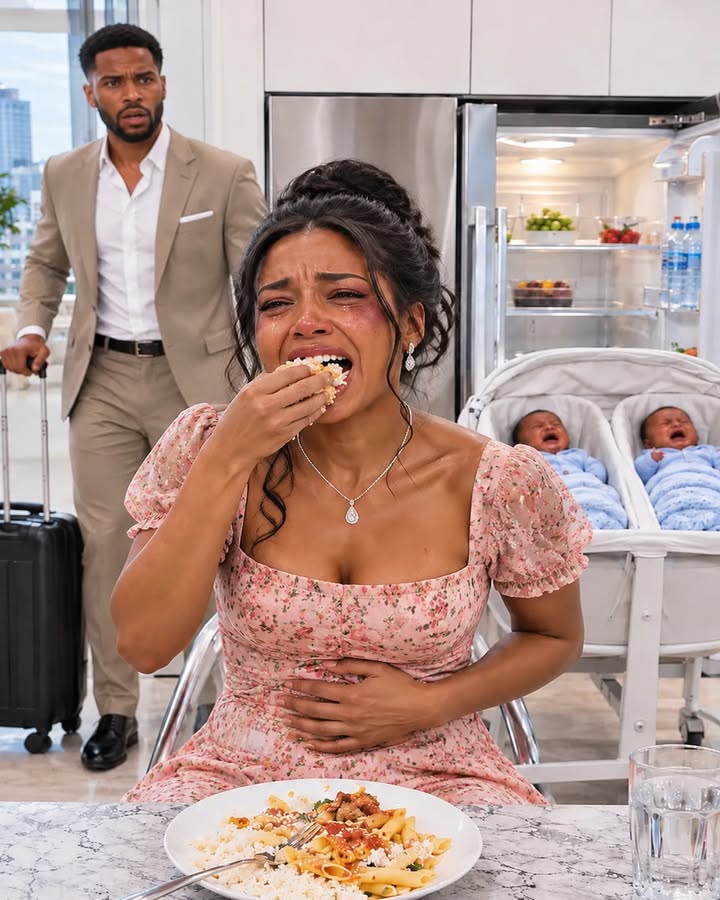
The first time Joanna ate a full meal at the kitchen table, she stopped halfway through and looked down at the plate.
I sat across from her, holding Hudson against my shoulder.
“What is it?” I asked.
She shook her head, eyes bright.
“I didn’t realize how scared I was of sitting here.”
I put Hudson into his bassinet and reached across the table.
“You’re safe here.”
She covered my hand with hers.
“I know.”
Then she took another bite.
Bethany’s first visit happened three weeks later, after Joanna agreed to see her for a short time.
Bethany arrived with a casserole and a handwritten note that explained the ingredients.
She asked where to put it, offered to wash her hands before holding the twins, and waited for Joanna to decide whether that was all right.
Joanna let her hold Wyatt for a few minutes.
Bethany did not turn the moment into an apology or a request.
She spoke softly to him, then placed him back in Joanna’s arms when he began to fuss.
Before leaving, she asked whether there was anything useful she could do next time.
“Text first,” Joanna said.
“And if I don’t answer, assume we’re resting.”
“I will.”
Bethany followed that boundary.
She came when invited, brought practical help, and never asked Joanna to make her feel better about what had happened.
Trust did not return all at once.
It grew quietly, through the small consistency of doing what she said she would do.
Margaret’s repayment began the following month.
She sold a piece of jewelry, adjusted her budget, and arranged a monthly payment through Elena.
The investigation continued, and Margaret cooperated with requests for records and statements.
She accepted legal consequences determined by the authorities, including restitution and a period of supervision.
I did not attend every meeting.
I did not ask for the matter to be made harsher or easier.
I gave accurate information when asked, then went home to my wife and sons.
The family’s access to our money ended.
There were no shared cards, no informal accounts, and no last-minute transfers made out of guilt.
If Margaret needed help, she had to ask clearly.
If we chose to help, Joanna and I discussed it privately and decided together.
For a while, Margaret did not ask for anything.
She sent short messages that did not demand an answer.
She asked how the boys were doing and accepted the photographs we chose to share.
When she finally asked to see them, Joanna said she was not ready.
Margaret replied, *I understand. I’ll wait.*
That mattered more than an apology offered too soon.
Months passed.
Joanna’s strength returned steadily, and her incision healed.
The twins grew rounder and louder, their cries filling the apartment with a confidence they had not had when I first found them.
Wyatt developed a habit of gripping my finger with astonishing determination.
Hudson preferred being carried against Joanna’s shoulder, where he settled whenever she hummed.
We began taking short walks around the block.
The first day Joanna made it all the way to the corner and back, she stood in the hallway afterward and laughed at herself for feeling proud.
“I am proud,” I told her.
“So am I.”
She leaned against my shoulder, breathing evenly.
“I used to think getting through something meant pretending it hadn’t hurt.”
“What do you think now?”
“That it means telling the truth about the hurt and still making room for good things afterward.”
I kissed the top of her head.
The good things were everywhere.
They were in the sun warming the twins’ blankets, in the stack of clean bottles drying beside the sink, in the way Joanna asked me to sit down when I tried to do three chores at once.
They were in my learning to answer her honestly when she asked how I was, instead of saying fine because it seemed simpler.
They were in quiet evenings when the boys slept and we talked about something other than what had happened.
Almost four months after the night I came home, Margaret asked if she could meet us at a small park near our building.
Joanna thought for a day before agreeing.
She said we could leave whenever she wanted.
Margaret arrived without a gift, without a speech, and without anyone else.
She stood when she saw us, then stopped a few steps away.
“Thank you for coming,” she said.
“We’ll stay for a little while,” Joanna answered.
Margaret nodded.
She looked at the twins in their stroller, then at Joanna.
“You look well.”
“I’m getting stronger.”
“I’m glad.”
Margaret did not reach for the stroller.
She waited.
Joanna noticed and after a moment said, “You can look closer.”
Margaret bent slightly, her face softening as she studied the boys.
“They’re beautiful,” she whispered.
“They’re thriving,” I said.
“Yes,” she replied.
“I’m grateful they had good care.”
The words were careful, but she did not turn them toward herself.
She did not say she had always loved them.
She did not say the family should move on.
She simply stood beside us and let the moment be what it was.
Joanna watched her for a long time.
“I’m not ready to pretend everything is normal,” she said.
“I know.”
“I may never feel exactly the way I did before.”
Margaret swallowed.
“I know that too.”
“But I’m willing to see whether we can build something different.”
Margaret’s eyes glistened.
“I would like that.”
“Slowly,” Joanna said.
“Slowly,” Margaret agreed.
She did not ask to hold the boys.
Instead, she asked if she could walk beside the stroller for a little while.
Joanna looked at me, then nodded.
We walked along the path together, leaving enough space between us that no one had to pretend closeness was effortless.
When Wyatt began fussing, Joanna lifted him from the stroller and held him against her chest.
Margaret watched with tenderness and sorrow in her expression.
“You were the one who knew what he needed first,” she said.
Joanna looked down at their son.
“I was his mother.”
“Yes,” Margaret replied.
“And I should have listened to you.”
It was the first apology that did not ask for a softer version of the truth.
Joanna did not answer immediately.
Then she said, “Thank you.”
It was not forgiveness.
It was not nothing.
As the months continued, the apartment changed with us.
A sturdy table replaced the little plastic chair where Joanna had sat alone.
The nursery camera was reconnected with a new password that only Joanna and I knew.
We decided together who could visit, what help we would accept, and when we needed the door closed.
No one called those boundaries a punishment.
They were simply how we kept our home safe.
Sometimes, when the twins were asleep, I still thought of the night I had found the empty refrigerator.
I remembered the cold air, the weak cries, the note in my mother’s handwriting, and the fear in Joanna’s eyes when she asked me not to confront anyone.
I also remembered the hours that followed: the hospital staff who treated her with care, the nurses who warmed our boys, and the first time Joanna woke and saw that I was still beside her.
I used to think family meant staying loyal no matter what.
Now I understood that loyalty without honesty could become another kind of abandonment.
It meant listening when someone said they were afraid.
It meant refusing to make love conditional on silence.
It meant allowing people to face what they had done without pretending that consequences were the same as hatred.
One evening, nearly six months after that New Year’s Eve, Joanna stood by the kitchen window while I held the twins after their bath.
Outside, the Brooklyn street was gold with late sunlight.
Wyatt’s cheek rested against my shirt.
Hudson had a damp curl stuck to his forehead.
Joanna turned from the window and watched us.
“Do you ever think about the question you asked yourself that night?” she said.
“What had they really done while I was gone?”
“Yes.”
“And what do you think now?”
I looked at the boys, then at the woman who had survived more than she should have had to endure.
“I think I spent years believing I could keep everyone safe by giving them what they asked for.”
Joanna came closer and touched Hudson’s small hand.
“And now?”
“Now I know keeping a family safe means choosing honesty, even when it costs us the version of the family we thought we had.”
She leaned her head against my shoulder.
The twins stirred, then settled again between us.
We were not perfect.
My mother was not suddenly free of the fear that had shaped her choices.
Bethany had not earned back every piece of trust simply by apologizing.
Joanna and I still had hard conversations ahead, and there would be days when old pain returned without warning.
But the truth was no longer hidden in an empty chat or a dark camera feed.
It was in the open, where we could face it together.
And our home, once made cold by silence, was warm with the ordinary sounds of the family we had chosen to become.
**–THE END–PLEASE
Share your thoughts or feedback to motivate us to create more stories ♥️
* * *
[PREVIOUS: PART 5](https://puretales.idolsgift.com/blog/part-5-the-camera-that-went-dark-034)
✓ Lynn R. Adams
Part 6 – The Home We Chose I read Bethany’s message twice, then lowered the phone and looked at the twins sleeping in their bassinets. Joanna rested against the pillows, pale with exhaustion but ale…