PART 6 (THE END): The Bell That Moved on Its Own 070
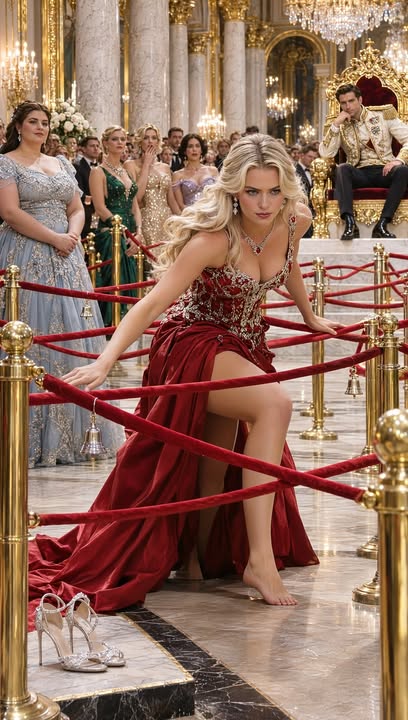
Part 6 – A Fair Beginning
The old register lay open beneath the ballroom lights, its faded ink turning the room’s silence into something almost tangible.
Mara stared at the notation beside her mother’s name, trying to understand how a rejected instruction from years ago had found its way into the present challenge.
Adrian did not look toward the watching guests.
He looked at Bell.
“Can we trace who handled the register and the equipment forms recently?”
“We can check the office records,” Bell replied. “The forms are kept in a locked cabinet, but several people have access to that room.”
Vane stood beside the judges’ table, his expression troubled rather than offended.
“I want that review,” he said. “My initials were used to make the paper appear current, and I have no wish to leave the matter unresolved.”
Adrian studied him for a moment.
“Then we will review it together, with the records preserved and the process witnessed.”
Vane bowed.
“That is fair.”
The words did not settle everything, but they made room for the truth to be found without turning suspicion into a verdict.
Adrian asked the official to suspend the selection until the course could be examined by an independent team.
He also ordered that the original diagram, the current setup plan, and the maintenance records be copied and secured.
No candidate would be asked to continue through the maze while its design remained uncertain.
The announcement reached the waiting contestants before the ballroom emptied.
Some received it with disappointment, others with relief.
Mara watched their faces as the official explained that the pause was meant to ensure every candidate would face the same fair challenge.
No one was named as responsible.
No one was asked to leave.
For the first time since the bell had moved, the court seemed to understand that fairness was not a decoration to be displayed after the decision.
It was part of the decision itself.
Vanessa came to stand beside Mara.
“I’m glad they’re stopping it,” she said.
“So am I.”
“I used to think fairness meant everyone got the same rules.”
Mara looked at her.
“And now?”
“Now I think it means checking whether the rules are actually the same for everyone.”
Mara gave a small smile.
Vanessa returned it, then glanced toward the emptying ballroom.
“I’m sorry for what I said before you entered the maze.”
“You apologized.”
“I know. I wanted to say it again when the room wasn’t full of people listening.”
Mara considered her carefully.
“Thank you.”
Vanessa’s shoulders loosened.
“I don’t expect you to forget it.”
“I won’t,” Mara said. “But I don’t need you to stay the person who said it.”
Vanessa’s eyes brightened, though she quickly looked away.
“I’ll try not to.”
The first review took several days.
The palace hired an independent safety and design team, whose members had not worked on the challenge or advised the Selection Office.
They compared the ropes in the ballroom with the archived diagrams, examined the knots, and checked the records of who had entered the equipment room.
The findings were delivered to Adrian in a sealed report.
He asked Mara, Vanessa, Bell, and the judges to join him in a small conference room before the report was shared with the wider court.
The steward, Silas Vane, was present as well.
Mara took a seat near the end of the table.
She felt no triumph in being asked to attend.
She felt the weight of what had happened and the quiet hope that the answer would be clear enough to guide what came next.
Adrian opened the report.
“The independent team found that several ropes were set at different tensions from the approved diagram,” he said. “One bell attachment had also been altered.”
Bell nodded.
“That matches what we observed.”
“The changes made the center passage narrower and caused the bell to carry movement along the rope,” Adrian continued. “They did not make the course impossible, but they made it less consistent.”
Mara thought of the bell turning in the still air.
“Did they find who made the changes?” Vanessa asked.
“The records do not identify the person who tied the knots,” Adrian said. “But they did identify how the old instruction sheet reached the equipment room.”
Vane folded his hands on the table.
“The review found that the sheet was removed from an archive box during the recent records reorganization,” Adrian said. “It was mistakenly placed with current forms.”
“By whom?” Bell asked.
“The archive transfer log shows that a junior records clerk moved the box,” Finch replied from her seat near the window. “The clerk did not recognize that the paper had been marked rejected.”
Mara looked at the old instruction sheet, now preserved in a clear folder.
“And the initials?”
“The independent reviewer compared the handwriting,” Adrian said. “They were copied from the original proposal, not written by Mr. Vane.”
Vane lowered his gaze.
“I regret that my name was caught up in it.”
“The record does not show that you altered the ropes,” Adrian replied. “Your instruction to retension the central crossing was legitimate, but the adjustments made afterward did not match your request.”
“Who made them?” Mara asked.
“The team found no evidence that a single person altered every section,” Adrian said. “Two temporary setup workers made adjustments after receiving an outdated diagram. They believed they were correcting the course.”
Mara heard the care in his phrasing.
The finding did not turn the workers into villains.
It did not erase their responsibility, either.
“The outdated diagram had already been marked for rejection,” Adrian continued. “Because the records were not clearly separated, it was mistaken for a valid revision.”
“So the old proposal came back into the maze because the palace failed to keep track of its own records,” Vanessa said.
“Yes,” Adrian replied. “And because no one compared the course with the approved design before the ceremony.”
Vane nodded once.
“I should have required that comparison.”
“Responsibility for the process belongs to the office, not to one person alone,” Adrian said. “The review will lead to changes in how designs are stored, approved, and checked.”
Mara watched the steward absorb the words.
He had not been cleared of every mistake.
But the investigation had found no proof that he had tried to manipulate the challenge, and Adrian did not treat uncertainty as guilt.
“What will happen to the two workers?” she asked.
“They have been removed from setup duties while they complete additional training,” Adrian said. “They will be allowed to respond to the findings and return to their work if the review supports it.”
Mara nodded.
The answer felt measured.
It left room for accountability without making a spectacle of anyone.
“And the selection?” Vanessa asked.
“It will remain paused until a new course is built and independently approved,” Adrian said. “Every candidate will have the option to compete under the revised rules, including those who already attempted the earlier course.”
Vanessa looked at Mara.
“That means I can try again.”
“If you wish,” Adrian said.
Vanessa thought for a moment.
“I do,” she replied. “But not because I want to erase what happened. I want to know how I do when I’m paying attention to more than whether I look as though I belong here.”
Mara felt a quiet warmth at the honesty of it.
The revised challenge took shape over the following weeks.
The independent team consulted designers, accessibility advisers, and several candidates, including Mara and Vanessa.
They kept the bells, but placed them where they measured contact rather than reacted unpredictably to air currents.
They added clear markings to the approved diagrams and required two people to verify each section before a challenge began.
The course remained difficult.
It still asked its contestants to pause, observe, and choose.
It simply no longer depended on hidden adjustments or an uncertain breeze.
At Adrian’s request, the palace also released a brief public account of the review.
It explained that the first course had not matched its approved plan and that the selection had been paused so every candidate could compete under consistent conditions.
The statement named Elena Williams as the original designer.
It described her intention to reward patience and ingenuity rather than appearance or status.
It did not publish her private letters.
The final paragraph announced that the palace would establish a design credit in the workshop archive and revise its selection procedures to include independent review.
When Mara read the announcement, she held the page for a long time.
Her mother’s name looked simple in print.
It seemed impossible that something so small could carry so much of what had been withheld.
She wondered whether her mother would have wanted the recognition.
She also knew she could no longer ask.
Instead, she folded the announcement and placed it beside the old sewing basket she had kept since childhood.
The basket still held a few pieces of fabric, a blunt pair of scissors, and a paper pattern marked with her mother’s familiar little loop.
Mara touched the edge of the pattern.
For years, she had thought keeping those things private was the best way to protect them.
Now she understood that privacy and remembrance could live beside each other.
The palace could know what her mother had made without owning every story she had chosen not to tell.
The new challenge was held at the beginning of spring.
The ballroom had been opened to the public, but the crowded spectacle of the first ceremony was gone.
The candidates gathered in smaller groups, and the judges explained the revised rules before anyone approached the course.
Mara stood near the starting platform in her pale-blue dress.
Her worn shoes rested beside her, just as they had the first time.
Vanessa stood a few places behind her.
When the official called Vanessa’s name, she stepped forward without the bright certainty she had worn before.
She studied the first crossing, lowered her shoulders, and waited until she understood the route.
She moved more slowly than before.
At the narrow opening where her gown had caught on the earlier course, she stopped and adjusted the fabric herself.
A bell stayed silent.
Vanessa passed through.
When she reached the far side, she let out a breath that seemed to carry more than relief.
She turned to Mara and smiled.
Mara applauded with the others.
Vanessa had not finished first.
She had finished honestly, and she looked more pleased by that than she had ever looked in the ballroom before.
The candidates continued one by one, each facing the same carefully checked maze.
Some advanced.
Some did not.
The bells rang only when a rope was touched, and the officials recorded each result without argument.
When Mara’s turn came, she paused at the platform.
The court was watching, but the silence no longer felt like a test of whether her body could fit into someone else’s expectation.
It felt like room to think.
She looked across the ropes.
The lines did not form a perfect passage.
They were still narrow in places and awkward in others.
But the approved diagram matched the course, and the bells rested without trembling.
Mara stepped beneath the first rope.
She moved carefully, as before, but she no longer felt she had to prove that she deserved to be there.
She had already earned that truth by entering.
At the central crossing, she waited for a candidate ahead of her to finish and watched the last bell settle.
Then she moved through the passage with patience.
The court did not laugh.
It did not gasp in disbelief.
It watched her as a person completing a challenge, not as a surprise arranged for its amusement.
Mara reached the far side without touching a rope.
The applause rose warmly around her.
She smiled this time.
It was not a victory over the people who had once doubted her.
It was a quiet acknowledgment of the girl who had been laughed at and had still chosen to step forward.
Adrian approached when the judges had recorded her result.
“Congratulations,” he said.
“Thank you.”
“You made the course look thoughtful.”
“It is thoughtful now.”
He smiled.
“It should have been from the beginning.”
Mara looked toward the judges, where Vanessa was speaking with Bell and the independent reviewer.
“Will the candidates continue?”
“Yes. No one will be asked to accept a result from the earlier course as final. The selection will proceed only under the revised rules.”
“And if the court dislikes who wins?”
Adrian’s smile faded into something more serious.
“Then the court will have to learn to live with a fair result.”
Mara searched his face.
“You sound more comfortable with that than you did before.”
“I may have been comfortable with the idea of fairness before,” he said. “I’m learning that comfort is not the same as making room for it.”
She felt a quiet affection stir in her.
It was not the dazzling feeling of a storybook promise.
It was steadier than that, built from the moments when he had listened, when he had waited, and when he had been willing to let an uncomfortable truth remain visible.
The selection continued over the following days.
Mara took part in each round.
She met the other candidates, learned which of them loved gardens, which enjoyed music, and which had entered because their families expected it.
She and Vanessa grew closer, though neither pretended the first day had vanished.
Vanessa began volunteering with the palace’s new candidate advisory group.
She helped review announcements and challenge instructions, insisting that every woman receive the same information before she decided whether to compete.
The court slowly adjusted to the changes.
Some people praised the new process.
Others missed the old spectacle.
But the selection moved forward without the private arrangements that had once threatened to shape it.
At the final gathering, Adrian spoke before the assembled candidates and court.
“The challenge is not the whole measure of a person,” he said. “It is one opportunity to show how she thinks, how she adapts, and how she treats the people around her. No course should pretend to decide a life by itself.”
His gaze found Mara briefly, then moved across the room.
The selection would continue beyond the evening.
There were interviews and conversations yet to come, and no public announcement of a bride.
Mara was grateful for that.
She did not want to be chosen by a crowd before she had finished choosing for herself.
After the ceremony, Adrian found her in the palace garden.
The evening light lay gold along the stone paths, and the first spring flowers had opened beside the fountain.
Mara stood with her hands resting on the low wall, watching water travel through a narrow channel and spill into the basin.
“May I walk with you?” Adrian asked.
“Yes.”
They followed the path beneath the budding trees.
For a while, neither spoke.
The silence between them felt unlike the one in the ballroom.
This one did not demand an answer.
“I wanted to ask you something,” Adrian said at last. “But I don’t want the position I hold to make it feel like an order.”
Mara turned toward him.
“Then ask me as yourself.”
He considered her words, then nodded.
“I’ve come to care for you,” he said. “Not because you completed the maze, or because the court has found a story in your mother’s past. I care for the way you pay attention, the way you refuse to turn uncertainty into blame, and the way you choose your own words even when silence would be easier.”
Mara listened, feeling her heart grow full without needing to hurry.
“I don’t want you to answer because anyone expects you to,” he continued. “I don’t want an immediate answer at all. I’d like to know whether you might build a future beside me, one in which we keep asking questions and making room for honest answers.”
Mara looked back toward the garden.
At the end of the path, the palace windows reflected the last light of the day.
She had once believed a future in the palace would mean being surrounded by rules she could never change.
Now she saw the possibility of work, conversation, and difficult choices shared with someone willing to listen.
“I don’t want to be selected as though I were the answer to a question the court asked before I arrived,” she said.
“I wouldn’t ask that of you.”
“I want to help change how the court makes its decisions.”
“I hope you will.”
“And I want time to discover who I am here, not only who people think I am.”
Adrian’s expression softened.
“That is more than fair.”
Mara let the words sit between them.
Then she reached for his hand.
“I can’t promise what every part of the future will look like,” she said. “But I would like to begin finding out with you.”
Adrian’s fingers closed gently around hers.
“I would like that too.”
They returned to the palace together, walking at an unhurried pace.
The next day, the textile workshop opened a small exhibition honoring Elena Williams and the designers who had worked with her.
The display included the original challenge diagram, carefully reproduced, and a short account of the course’s purpose.
The private letters remained in the archive.
Mara stood before her mother’s design for a long time.
A group of candidates had gathered nearby, reading the explanation.
One young woman traced the open path through the ropes with her eyes.
“It was made so no one had to change who they were to take part,” she said.
Mara felt her throat tighten.
“Yes,” she replied. “That was the idea.”
Vanessa joined her, carrying a small paper program.
“They put your mother’s name beside the design,” she said.
“They did.”
“I hope she would have liked that.”
Mara looked at the fine lines her mother had drawn.
“I think she would have liked knowing the course was fair again.”
Vanessa nodded.
“Then we should keep it that way.”
Mara placed her hand lightly on the edge of the display case.
The palace had once treated the challenge as a question with an answer already chosen.
Her mother had drawn another kind of question, one that asked what a person might do when given space to think.
Now the court was learning to ask it properly.
Adrian came to stand beside Mara.
He did not take her hand until she offered it.
Together they looked at the old design, where red lines crossed without trapping the path, and where every bell rested quietly until someone chose to move.
For the first time, the palace’s future did not seem like a narrow passage waiting to measure whether Mara could fit.
It seemed like a course she and Adrian could help shape, one honest choice at a time.
**–THE END–PLEASE
Share your thoughts or feedback to motivate us to create more stories ♥️
* * *
[PREVIOUS: PART 5](https://storyly.idolsgift.com/blog/part-5-the-bell-that-moved-on-its-own-070)
✓ Lynn R. Adams
Part 6 – A Fair Beginning The old register lay open beneath the ballroom lights, its faded ink turning the room’s silence into something almost tangible. Mara stared at the notation beside her mothe…