PART 6 (THE END): The Answer I Never Gave 035
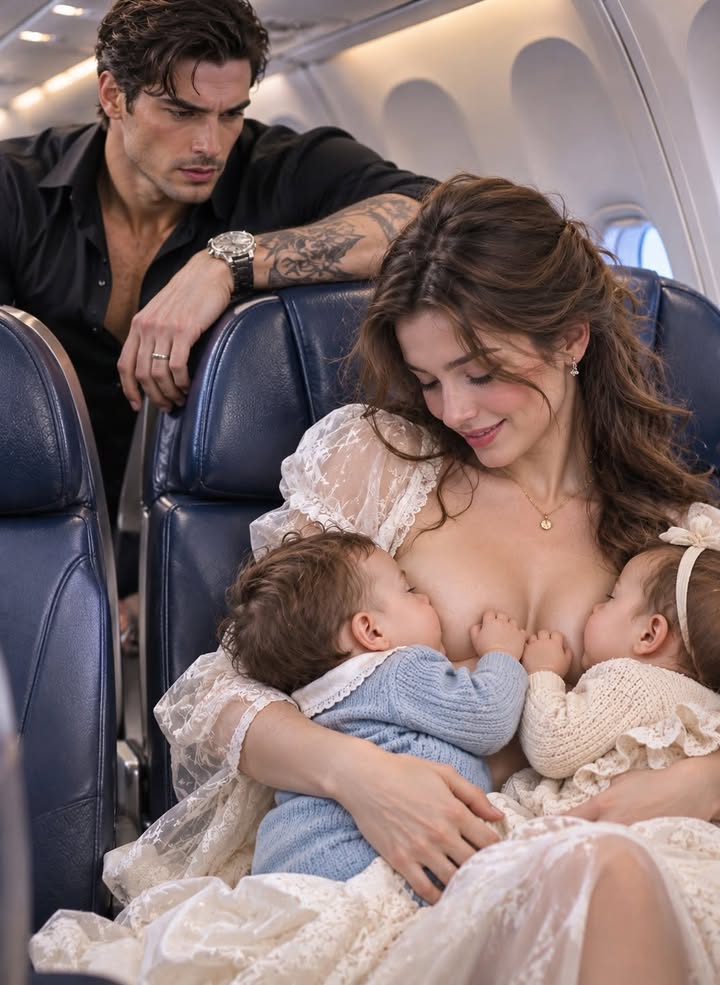
Part 6 – A New Tradition
I read Celia’s message again, then looked at the final line.
I won’t end my relationship to save the deal.
The cabin’s gentle sway seemed to disappear.
For years, I had carried a photograph that told me Lucas had lifted a glass to celebrate the life he wanted without me.
Now, beneath the photograph, I could see a decision he had made in private, one I had never known to look for.
I didn’t feel the past rearrange itself into something painless.
I felt it become more complicated, and more human.
Ivy watched my face from the seat beside me.
“What does it say, Mommy?”
I turned my phone over in my hand.
“Something about when Lucas was working on his company.”
“Is it important?”
“Yes,” I said. “But it’s something I need to talk to him about first.”
She nodded and returned her attention to the window, accepting that some truths took time to understand.
I didn’t answer Celia right away.
Instead, I watched the clouds slide past, white and untroubled above the darkening winter sky.
The note didn’t prove Lucas had been a perfect partner.
It didn’t erase the lonely months when I waited for him to come home, or the fear I felt after learning I was pregnant.
But it did answer one question I had carried for almost three years.
When the choice was placed in front of him, Lucas had not chosen the deal over me.
He had chosen to keep looking for another way.
I sent Celia a brief message thanking her for sharing the note and asking her to preserve the original file.
Then I wrote to Lucas.
Celia found an internal note from the night of the photograph.
His reply came a few minutes later.
I know.
I kept looking at his words.
You knew?
I found the note in my old files a few months ago, he answered. I wasn’t sure whether you’d want to hear about it. I should have told you when we first talked about the photograph.
The engines hummed around us.
Why didn’t you?
I was afraid it would sound like I was trying to use it to cancel what you went through.
I understood the fear in that answer.
I also understood the cost of another truth left unspoken.
It doesn’t cancel anything, I wrote.
I know.
But I want to hear about it.
When we land, he replied, if you still want to.
I looked toward the children.
Theo was drawing a lopsided airplane on the back of a coloring page.
Ivy had tucked her rabbit beneath the seat belt so it could “fly safely.”
The smallness of the moment reminded me that this was what the future would be made of.
Not grand revelations, but ordinary chances to tell the truth before silence could grow around it.
When the plane touched down, Theo woke with a start and declared that he had been dreaming about a dinosaur airport.
Ivy collected the rabbit, then checked that its ears were still in the right place.
Lucas waited near the gate, as he had promised.
He didn’t hurry toward us when he saw the children.
He looked first at me, asking without words whether I still wanted to talk.
I nodded.
We found a quiet corner near the windows, where the twins could sit with their coloring books while Lucas and I stood close enough to hear them.
“The note said the investor wanted you to end our relationship,” I said.
“Yes.”
“And you refused.”
“I did.”
“What happened after that?”
Lucas rested his hands on the rail beside the window.
“The investor had been pressuring me for months. He thought I was distracted, that the company would grow faster if I stopped trying to make room for a life outside it.”
“So he wanted you to choose.”
“He did.”
“And you told him no.”
“I told him I wouldn’t end our relationship to save the deal. I asked my team to find another way to restructure the agreement.”
He glanced out at the runway, where a ground crew was guiding a plane toward its gate.
“We did find another way,” he continued. “It took longer, and I nearly lost the investment, but we made it work.”
“Then you celebrated.”
“Yes.”
“Because you had found a way to keep the company and us.”
“Because I thought the pressure was finally over.”
The words hurt, though not in the way they once had.
I pictured the photograph again: Lucas smiling among the investors, a glass raised beneath bright lights.
Back then, I had seen only the smile.
I had not known there had been a choice before it.
“I wish I’d known,” I said.
“So do I.”
“Why didn’t you tell me about the investor when we were together?”
His face tightened with regret.
“I told myself I was protecting you from the stress. The truth is, I didn’t know how to admit that the company I’d built was putting the people I loved under pressure.”
“You thought keeping it to yourself was kinder.”
“Yes.”
“It wasn’t.”
“No,” he said. “It wasn’t.”
There was no defensiveness in his voice.
Only the recognition of a habit that had hurt both of us: his instinct to carry difficult things alone, and my instinct to take the silence as an answer.
“You were trying to save our relationship,” I said.
“I was trying to find a way not to lose it.”
“And then we broke up anyway.”
“Yes.”
His gaze met mine.
“I don’t want to pretend that one note changes what happened between us. I was absent too often. I let work set the terms of our life, and I didn’t hear how tired you were until you had already decided to leave.”
I felt my eyes sting.
“I was tired of asking you to notice.”
“I know.”
“I wanted you to want to come home without my having to remind you.”
“I should have understood.”
For a moment, I could almost see the old apartment again, the laundry over the radiator, the ruined pancakes, the two of us standing on opposite sides of a kitchen that was too small for the distance between us.
“I’m sorry I believed the photograph told the whole story,” I said.
Lucas shook his head gently.
“You were frightened, and you were alone. You saw what it looked like, and I had given you plenty of reasons to believe I’d put the company first.”
“I still wish I’d tried one more time.”
“So do I.”
Neither of us reached for the other.
We didn’t need to make the moment more dramatic than it was.
The truth had arrived late, carrying grief for what we might have done differently.
It also carried the chance to stop repeating the same mistake.
Theo looked up from his drawing.
“Are we going now?”
“In a minute,” I told him.
“Lucas can come with us,” Ivy said, as if settling a practical question.
Lucas turned toward her.
“Would you like that?”
She considered him with the same careful seriousness she had shown him on the plane nearly three years before.
“Yes,” she said. “But you have to read the fox story later.”
“I’d like to.”
“And Theo has a new airport.”
“I’m looking forward to seeing it.”
Ivy nodded, satisfied for now.
We left the terminal together, not as a family in the complete sense, but as four people moving in the same direction.
Over the next few months, Lucas kept his promise to show up.
He came to Chicago when the plan said he would, and he called when the children asked.
When work delayed him, he told them himself, without asking me to soften the disappointment.
He learned that Theo liked to eat the crusts first and that Ivy wanted her bedtime stories read slowly, especially when the fox was trying to find its way home.
He sat on the floor to build block towers, and when they fell, he let the twins decide whether to rebuild them or turn the pieces into a bridge.
He learned not to bring a present every time he visited.
He learned that helping could mean pouring juice carefully, carrying a backpack, or waiting outside a classroom until Ivy was ready to come out.
Once, Theo fell on the playground and scraped his knee.
Lucas started forward, then stopped when I crouched beside him.
Theo looked from me to Lucas, crying more from surprise than pain.
“Can you stay?” I asked Lucas.
He knelt a few feet away.
“I’m here, buddy.”
Theo reached out.
Lucas held his small hand while I cleaned the scrape.
When the tears subsided, Theo leaned against Lucas’s shoulder for a moment, then asked whether they could go back to the swings.
Lucas did not call the moment a milestone.
He simply walked with him.
Ivy took longer.
She was affectionate in her own careful way, but she did not offer trust just because the adults had decided it would be good for her.
She watched Lucas when plans changed.
She watched him when he had to leave.
She watched how he spoke to me when we disagreed.
He never told her to hurry.
One evening, after a long day at the park, she asked me why I had thought Lucas didn’t want us.
We were sitting on the edge of her bed, her rabbit between us.
“I saw the photograph of him celebrating after I called,” I said. “I thought it meant he was happier without me.”
“Was he?”
“I don’t think he was happy without me. I think he was celebrating a difficult thing at work finally getting easier.”
“Why didn’t he tell you?”
“He didn’t know I’d seen it.”
“Why didn’t you tell him?”
“I thought he already knew I was scared, and that he’d chosen not to answer.”
Ivy turned the rabbit’s ear over in her fingers.
“That was a mistake.”
“Yes,” I said. “It was.”
“His or yours?”
“Both, in different ways.”
She considered this, then leaned against my shoulder.
I let her stay there without asking what the small gesture meant.
By the time the twins turned four, Lucas had become part of the rhythm of their lives.
He came to preschool mornings when he could, and he learned which shoes Theo could put on by himself and which coat Ivy would refuse if the zipper was stiff.
He kept spare mittens in his car, though he asked before adding anything else to the twins’ things.
He never used his money to overrule me.
When he offered help, he listened if I said no.
When I did say yes, he treated it as practical support, not a debt.
The job near his company never became a condition of our arrangement.
I considered a position in Chicago because I wanted it, not because Lucas had offered it.
After several months, I accepted a role with a design firm that let me work between Chicago and my home.
The decision was mine.
Lucas supported it without asking what it meant for us.
He helped make the move manageable for the children, then stepped back while I arranged their new school and settled them into a home with a familiar bedtime routine.
We were still learning how to speak to each other.
Sometimes, I felt the old hurt rise when Lucas took a call during dinner or answered a message too quickly.
Sometimes, he would go quiet when I corrected him, the silence of a man afraid he had already failed.
We learned to name those moments.
“I need you to put the phone away,” I told him one evening when Theo was telling a story about his classroom.
Lucas set it facedown on the table.
“I’m sorry. I’m listening.”
And when I saw him go still after I questioned whether he could make a visit, I reminded myself to ask rather than assume.
“Are you upset with me?” I asked.
“No,” he said. “I’m disappointed I may miss seeing them, but I’m not upset with you.”
That distinction became part of what we built.
Not the certainty that we would never misunderstand each other, but the willingness to ask before silence filled in the answer.
Celia came to visit once, bringing no grand explanation, only an apology and a tin of the small butter cookies the twins liked.
She told Lucas she had been wrong to dismiss an unknown call without following up.
He thanked her for admitting it, then told her he should have created a better system so one missed message could not disappear into the machinery of his life.
Celia listened, then said, “I think we both learned that being busy is not the same as being careful.”
I kept the voicemail.
Not as proof that everything had been forgiven, and not as a relic of the person I had been when I left the message.
I kept it because it reminded me that I had tried to reach Lucas before fear persuaded me to stop.
Lucas never asked to hear it again.
Years passed in small, ordinary pieces.
The twins started school.
Theo grew taller and continued to draw dinosaurs with improbable wings.
Ivy became more talkative, though she never lost her habit of watching a room before deciding where she wanted to sit.
Lucas was there for scraped knees, library books, school plays, and the first time Theo lost a tooth.
He was there for the mornings when Ivy woke from a bad dream and wanted her mother, and for the days when she came running to him because she had found a new kind of shell at the park.
He did not become their father through one conversation.
He became their father by showing up again and again, until they no longer needed to wonder whether he would.
One evening, when Ivy was nearly six, I was making tea while she and Lucas sat at the kitchen table working on a puzzle.
She lifted a piece, looked at it, and set it into the center of the picture.
“Dad,” she said, “does this go here?”
The word passed through the room so quietly that I almost missed it.
Lucas did not move.
He looked at the puzzle, then at her.
“I think it does,” he said.
Ivy pressed the piece into place.
Theo glanced up from his drawing.
“My dad says the dinosaur one is next,” he announced.
Lucas smiled, but he did not turn the word into a celebration.
He let it belong to them.
I stood at the counter with the kettle in my hand, feeling something inside me loosen.
Later that night, after the children were asleep, Lucas and I sat together on the front steps.
The air was mild, carrying the faint scent of rain from the garden.
“I thought I would feel different when Ivy called me Dad,” he said.
“How do you feel?”
“Grateful,” he replied. “And careful not to make it about what I want.”
“That sounds like you.”
“Is that good?”
“It’s honest.”
He looked down at his hands.
“I used to think if I could solve the biggest problem in front of me, everything else would fall into place.”
“And now?”
“Now I think most of the important things happen when you keep showing up for the small problems.”
I leaned my shoulder against his.
For a while, we listened to the soft sounds of the neighborhood settling for the night.
The love between us did not return all at once.
It came back through conversation, through patient mornings, through apologies that were followed by changed behavior.
We learned who we were after the people we had been.
We chose each other again, not because the past had been erased, but because we could finally speak honestly about it.
Years after the first flight, another Christmas Eve found the four of us at an airport.
This time, there was no delayed introduction, no secret waiting between the rows.
Theo sat by the window with his dinosaur backpack open, explaining that the plane would need a co-pilot.
Ivy kept her rabbit tucked under one arm and checked that all four boarding passes were together in my bag.
Lucas stood beside us, carrying the children’s coats.
I looked at him.
He smiled, and the familiar lines around his eyes had softened with time.
“Ready?” he asked.
“We’re ready,” I said.
The boarding line began to move.
Theo took Lucas’s hand.
Ivy took mine.
Then, after a moment, she reached across and held Lucas’s free hand too.
We stepped forward together.
When the plane lifted through the winter clouds, the children leaned toward the windows, pointing out the lights below.
Lucas sat beside me, close enough that our shoulders touched.
I rested my hand in his.
We were not leaving our old story behind.
We were carrying what it had taught us into a new one, with the people we had chosen, the truth we had finally shared, and a Christmas tradition that belonged to all four of us.
**–THE END–PLEASE
Share your thoughts or feedback to motivate us to create more stories ♥️
* * *
[PREVIOUS: PART 5](https://puretales.idolsgift.com/blog/part-5-the-answer-i-never-gave-035)
✓ Lynn R. Adams
Part 6 – A New Tradition I read Celia’s message again, then looked at the final line. I won’t end my relationship to save the deal. The cabin’s gentle sway seemed to disappear. For years, I had ca…