PART 6 (THE END): Ten Minutes to Tell the Truth 046
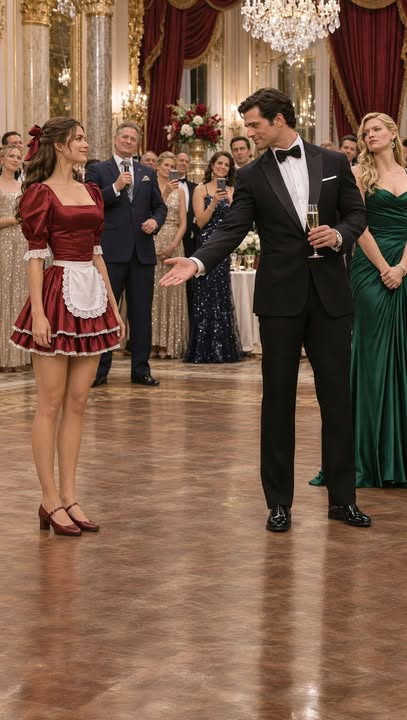
Part 6 – A Dance Freely Chosen
“Will you tell Claire the rest of what happened?” I asked.
Alex glanced back through the center’s open door, where Mr. Patel was already speaking with the board about the work ahead.
“Yes,” he said. “And I’ll tell the people at the office what the deal would have cost the center.”
“You don’t have to make yourself the hero of the story.”
“I know.”
“You don’t have to make yourself the villain, either.”
His expression softened.
“I’m still learning how to tell the truth without turning it into a performance.”
“Then start with the people who were there.”
He nodded.
“I will.”
He walked toward the street, then stopped beside the old maple that shaded the center’s front steps.
For a moment, he looked as though he might turn back.
Instead, he lifted one hand in a quiet goodbye and continued on.
I watched until he disappeared around the corner.
Then I returned to the office, where Mr. Patel had spread the grant papers across the table.
The board members were already planning the repairs, arguing gently over whether the heating system or the rehearsal-room floor should come first.
Their voices filled the room with something that felt more enduring than relief.
It sounded like people making plans for a place they believed would still be theirs.
Over the next several weeks, the center’s future took shape.
The roof was repaired first, before the winter rains could find their way inside.
The heating system followed, along with a new floor for the rehearsal room, its pale boards bright beneath the old windows.
The foundation’s grant was divided into stages, with the board approving each budget and the staff retaining control over the programs.
I attended those meetings, but I did not sit at their head.
Mr. Patel made sure of that.
“You’re welcome here as a partner,” he told me one afternoon, “but this is our house.”
“Then I’ll sit where you tell me.”
He pointed to a folding chair beside the window.
I took it.
The work was not glamorous.
There were invoices to check, contractors to call, and several afternoons when the only thing accomplished was finding the right person to answer a question.
I liked that about it.
No one needed me to arrive in a gown.
No one asked me to make a speech.
Some days, I carried boxes.
Other days, I listened while Tessa explained that the new floor changed the way her turns felt beneath her shoes.
I learned which doors stuck in damp weather and which volunteers took their tea without sugar.
I learned that the quiet parts of helping were often the parts that lasted.
Alex kept coming.
At first, he came to finish the work he had promised the center.
Then he came because the center still needed hands.
He fixed a loose cabinet hinge, helped inventory the donated costumes, and spent one long Saturday assembling shelves while Tessa and another dancer debated where the music room should keep its old trophies.
He never asked to be thanked.
When Mr. Patel thanked him anyway, Alex simply said, “You’re welcome,” and went back to work.
The first time he arrived after the investors withdrew, he looked worn around the edges.
He had come directly from the office, still wearing his suit, his tie loosened and his coat folded over one arm.
“Long day?” I asked.
“Long week.”
“Is the company all right?”
“We’re making a plan.”
“What kind?”
“A smaller one.”
He placed his coat over the back of a chair.
“We’re reviewing the parts of the business that can keep running without the deal. Claire has been helping untangle the partnership, and I’m working with our staff on what we can preserve.”
“Will everyone keep their jobs?”
“I don’t know.”
He did not soften the answer or turn it into a promise.
“We’re looking for ways to avoid cuts,” he said. “But some decisions won’t be mine alone.”
“I’m sorry.”
“So am I.”
He looked toward the rehearsal room, where music had begun to drift into the hall.
“I used to think the most important thing was keeping the company impressive,” he said. “Now I’m trying to understand what it means for it to be useful.”
“That sounds like a better question.”
“It’s also harder.”
“Most useful questions are.”
He smiled faintly, then rolled up his sleeves.
That evening, Claire came to the center with a box of old files.
She and Alex stood together at the office desk, going through documents and separating the ones that belonged to the partnership from the ones that belonged to their individual businesses.
They spoke calmly, sometimes disagreeing, but neither of them used the conversation to reopen what they had already decided.
When the last file had been sorted, Claire closed the box.
“I think that’s everything for today.”
“Thank you,” Alex said.
“You’re welcome.”
He hesitated.
“I’m sorry I made you do so much explaining for me.”
Claire rested one hand on the box.
“I know.”
“I should have listened sooner.”
“Yes.”
“I don’t expect you to forgive me because I finally understand that.”
“Good.”
Her voice was gentle, but certain.
“Alex, I care about you,” she said. “That doesn’t mean we should stay together.”
“I know.”
“I want us to be able to work together without pretending we’re still in love.”
“I want that too.”
“Then we’ll make it possible.”
They stood in the quiet office, two people grieving something that had mattered without trying to make its ending cruel.
Claire glanced at me.
“Are you staying for the rehearsal?”
“I think so.”
“I’ll be in touch about the partnership papers.”
“I’ll read them when they’re ready.”
She turned back to Alex.
“Take care of yourself.”
“You too.”
Claire left with the box in her arms.
Alex watched her cross the hall, but he did not follow.
He remained where he was until the door closed behind her.
“You did the right thing,” I said.
“I don’t know if there was a right thing.”
“There was an honest one.”
“I wish I’d learned the difference sooner.”
“So do I.”
He breathed out slowly.
“I’m going to miss her.”
“You’re allowed to.”
“I know.”
The conversation ended there, not because there was nothing more to say, but because neither of us needed to use the moment to ask for anything.
Months passed.
Trust did not return in a single conversation.
It came in small, unremarkable pieces.
Alex did what he said he would do.
When he could not, he told people before they had to discover it themselves.
At the center, he took direction without trying to turn every suggestion into a debate.
At work, he made the company’s financial situation plain to his employees, including what was uncertain and what could be saved.
Some positions had to be reduced.
He worked with Claire to provide fair notice, help people find new roles, and give the remaining staff a clearer share in the decisions that affected them.
It did not make the losses painless.
It did make the choices less lonely.
Claire and Alex completed the separation of their business interests with the help of an adviser.
They remained professional with one another, and, in time, their conversations began to sound less like careful negotiations and more like two people who had once loved each other and still wished each other well.
She visited the center occasionally, sometimes to discuss business and sometimes to see a performance.
She and I grew into a quiet friendship, the kind built not from perfect agreement but from respect for one another’s boundaries.
I learned that Claire had always been brave.
She had simply been spending too much of that courage protecting someone else from the consequences of his choices.
The center began to flourish.
The repaired roof held through the first autumn storm.
The new heating system warmed the upstairs rooms, where families now gathered for after-school programs.
Tessa’s dance class grew, and the center started a small scholarship fund for students who needed shoes, lessons, or a safe place to practice.
The staff chose the scholarship’s name themselves.
They called it the Open Door Fund.
When Mr. Patel asked me whether the foundation could match the first year’s donations, I agreed.
I asked that the center’s board remain in charge of distributing the money.
“That is the point,” I told him.
He nodded, satisfied.
One bright Saturday, I found Alex on the floor of the rehearsal room, helping Tessa measure fabric for a costume.
A paper pattern lay across his knees.
He was concentrating so hard that he did not see me at first.
Tessa held up a strip of blue cloth.
“Does this look like enough?”
“Enough for what?”
“For the sleeves.”
“I’m not qualified to answer that.”
“You said you could follow instructions.”
“I can.”
“Then follow the instructions.”
He leaned closer to the pattern.
“I think the seam needs another inch.”
Tessa studied it, then nodded.
“You might be right.”
“I’ll try to remember this day.”
“Why?”
“Because you admitted I was right.”
She gave him a teasing look.
“Don’t get used to it.”
I smiled from the doorway.
When Alex finally noticed me, he straightened.
“We’re attempting a costume.”
“So I see.”
“Tessa is in charge.”
“As she should be.”
Tessa lifted the fabric.
“He’s getting better at listening.”
“I’m glad.”
Alex looked at her.
“Does that count as a review?”
“It counts as a fact.”
He accepted that with a small nod.
I sat beside them and helped match the pieces.
The afternoon passed in the easy company of thread, music, and conversation.
No one asked who owned the building.
No one asked who had once paid for the roof.
The past was there, but it no longer demanded to be the most important thing in the room.
In the spring, the center held its first full performance since the repairs.
The program was Tessa’s idea.
She had designed the posters herself, using the same gold stage and blue figures that had hung in the hallway the night we first found my mother’s letter.
This time, she painted the paper stars by hand.
Mr. Patel placed my mother’s old photograph in a small display near the entrance, beside a short note about the Ashford Foundation’s early support for the center.
The note said nothing about the private loan.
That part of the history belonged to the families involved, and it had never been my mother’s wish to turn it into a public debt.
Alex stood with me before the photograph.
He had brought a copy of his father’s letter, the one acknowledging the help he had received, and asked whether it should be kept with the foundation papers.
I told him it was his to decide.
“I think I’ll keep it,” he said. “Not as proof that I owe anyone. Just as something my father wanted to protect.”
“That sounds right.”
He looked at the photograph of our parents’ generation, at my mother’s hand resting lightly on the shoulder of a boy who had been afraid of losing his home.
“I used to think that being helped meant I had to become someone no one could doubt,” he said.
“Did that work?”
“No.”
“What do you think now?”
“That being helped means I was given room to choose what I did next.”
He glanced at me.
“I’m still trying to choose well.”
“That’s all anyone can do.”
“I’m not asking you to trust me because of that.”
“Good.”
“I just wanted you to know.”
“I’m glad you told me.”
The hall began to fill with families.
Tessa came through the doors in her costume, her hair pinned in a neat braid.
She stopped beside the photograph.
“Is that your mother?” she asked me.
“Yes.”
“And is that Mr. Alex?”
“He was about your age.”
Tessa looked from the old picture to the man beside me.
“You had a lot more hair then,” she told him.
Alex laughed.
“I did.”
“Do you still remember the center?”
“More than I thought.”
She studied the photograph again.
“I’m glad she let you stay here.”
“So am I.”
Tessa’s instructor called for the dancers, and she hurried backstage.
The room settled into its seats.
The lights dimmed.
The performance began with a row of blue figures moving beneath a painted sky of gold and white.
The music rose gently, and the dancers crossed the floor as if they were following paths only they could see.
Tessa held her final turn.
This time she did not hold it for one beat longer than the music expected.
She held it because she knew exactly how long she wanted to stay there.
The applause filled the center.
Alex clapped beside me, his eyes bright.
Tessa came out afterward to find us.
“Did you see the last turn?”
“I did,” Alex said.
“Was it better?”
“It was yours.”
She considered that.
“I think that means yes.”
“It means it was yours.”
She smiled, then threw her arms around him.
Alex hugged her carefully, as though grateful for the trust and aware that it was hers to offer.
When she hurried away to join the others, he turned to me.
“Thank you for helping keep this place open.”
“The staff kept it open.”
“You made the space for them to do it.”
“We all did what we could.”
He looked around the room at the families talking, the dancers laughing, and the old walls warmed by new light.
“I used to think a room belonged to whoever could make everyone look at him.”
“And now?”
“Now I think it belongs to the people who help one another feel at home.”
The sentence was simple.
He did not say it as though he expected praise.
I believed him.
After the guests had begun to leave, I stepped into the quiet hallway.
The display case stood beneath the old photograph, its glass reflecting the soft lamps overhead.
A small card beside it carried my mother’s words, copied from the letter she had written years ago.
A place like this should not ask a child to prove he deserved to be there.
I touched the edge of the case.
“Do you think she would have liked the center tonight?” Alex asked behind me.
“She would have loved the dancers.”
“And the grant?”
“She would have liked that the staff chose what to do with it.”
He stood beside me, leaving enough room that his shoulder did not brush mine.
“I have something to ask you,” he said.
I turned toward him.
“Is it about the business?”
“No.”
“Is it about the letter?”
“No.”
“Then ask.”
He looked briefly toward the open doors, where the last of the families were saying goodbye.
“I was going to ask whether you’d like to dance with me,” he said. “But I want to be clear that you can say no, and nothing changes here if you do.”
I searched his face.
There was no crowd gathered behind him.
No phone held up.
No audience waiting to decide whether he had won.
There was only the quiet hall, the sound of chairs being folded in the main room, and a man asking without trying to make my answer his reward.
“Why tonight?” I asked.
“Because I wanted to ask for a long time, and I finally understood that wanting something doesn’t mean I’m entitled to it.”
“That’s a better reason.”
“I’m glad.”
“And there’s no money involved?”
“No.”
“No promise to marry me by morning?”
“Absolutely not.”
“Good.”
His smile was careful, almost shy.
“Would you like to dance?”
I looked through the doorway at the cleared floor.
The same room where I had once danced to stop a crowd from laughing now waited in the hush after the celebration.
“Just us?” I asked.
“Just us.”
I set my hand in his.
He led me onto the floor, moving slowly enough that I could choose each step.
The musicians were packing away their instruments, but the pianist remained at the keys.
Mr. Patel called across the room and asked whether we wanted one last song.
I glanced at Alex.
He did not answer for me.
“Yes,” I said.
The pianist began a soft melody.
Alex offered his hand again, and I placed mine in it.
We danced without cameras, without promises, and without anyone needing to be impressed.
He watched where I stepped.
I watched him learn to move with me rather than lead me toward the place he wanted us to be seen.
When the music ended, he did not ask what it meant.
He simply rested his forehead briefly against mine, then stepped back.
“I’m glad you said yes,” he said.
“So am I.”
We did not become a story of forgiveness completed in one evening.
We became two people who kept choosing to be honest, then choosing again.
Over the months that followed, we went to the center together, but never as a performance.
Alex continued his work with the staff.
I continued mine with the foundation.
When our lives began to touch beyond the building, they did so slowly, through conversations that did not require an audience and silences that no longer needed to be filled.
Claire built a business life of her own, one that gave her room to make choices without asking anyone’s permission.
She remained welcome at the center.
When she and Alex met there, they spoke with kindness and without pretending the past had been simple.
The center’s opening-night celebration returned each year, growing a little larger as the programs expanded.
The old photograph stayed near the entrance.
The donor records were kept in the archive, not as a ledger of who owed whom, but as a record of people who had made room for one another.
At the next opening, the dance floor filled with students, parents, teachers, and neighbors.
Tessa, now taller and more sure of herself, led the first performance beneath a sky of gold paper stars.
When she invited the audience to join the final dance, Alex looked at me.
There was a question in his eyes, but no expectation.
I took his hand.
Together we stepped into the circle, not as heirs to an old debt or strangers caught in a story someone else had written, but as two people who had found their way toward each other one honest choice at a time.
The music rose.
The dancers turned.
Around us, the center’s doors stood open, holding the warmth of every person who had helped keep them that way.
**–THE END–PLEASE
Share your thoughts or feedback to motivate us to create more stories ♥️
* * *
[PREVIOUS: PART 5](https://echoesofstories.idolsgift.com/blog/part-5-ten-minutes-to-tell-the-truth-046)
✓ Lynn R. Adams
Part 6 – A Dance Freely Chosen “Will you tell Claire the rest of what happened?” I asked. Alex glanced back through the center’s open door, where Mr. Patel was already speaking with the board about …