Part 6 – The Crown Beneath the Roses-068
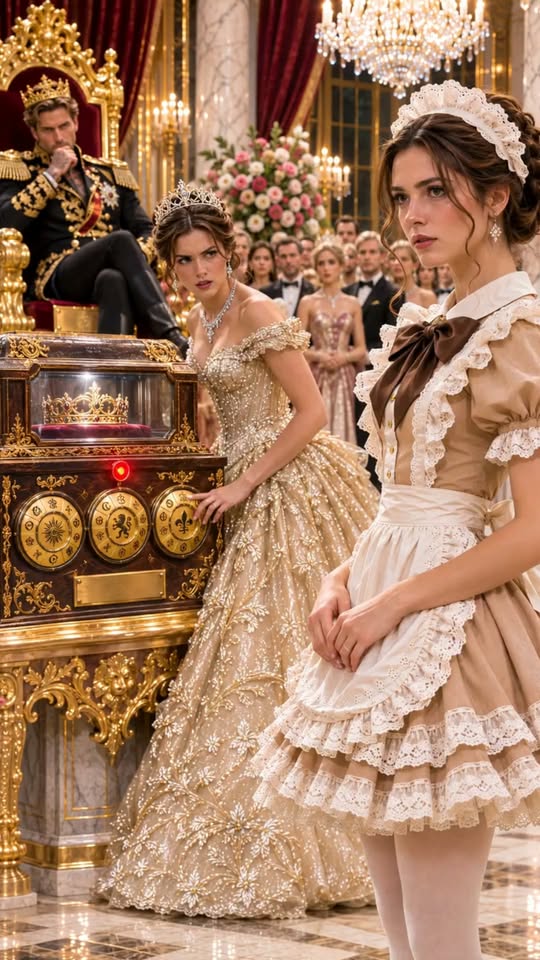
## END – The Crown They Chose Not to Wear
**Part 6**
Thomas Elias Carter had never wanted anyone to remember his name.
That, Emma discovered, was precisely why Eleanor had insisted that someday someone should.
His notebooks were found at Rosehill Cottage behind a false panel in the glasshouse workshop.
Unlike Eleanor’s elegant journals, Thomas’s pages were crowded with measurements, diagrams, botanical sketches, grocery lists, unfinished thoughts, and occasional remarks that made Emma laugh aloud.
Beside an extremely complicated drawing of the crown mechanism, he had written:
**Eleanor says this should be symbolic. I say symbolic things should still function properly.**
Alexander leaned over Emma’s shoulder.
“I like him.”
“So do I.”
Another note read:
**Wheel keeps sticking. Her Royal Highness believes determination is a substitute for lubrication. It is not.**
Emma laughed so hard she had to put down the page.
“He definitely loved her.”
“How can you tell?”
“Only someone deeply in love would dare write that.”
Together, Thomas and Eleanor had designed the original Crown Chest not as a marriage test but as a lesson.
The first wheel represented inherited responsibility.
The second represented ordinary citizenship.
The third represented truth.
Neither the royal heir nor Eleanor’s descendants were meant to solve it alone.
The mechanism required cooperation.
Thomas had written:
**A crown viewed from above looks like authority. Viewed from below, it is simply weight. Any honest system should require both perspectives.**
That sentence eventually appeared in the museum exhibit Emma designed.
A year after the referendum, the palace opened the Eleanor and Thomas Gallery.
Visitors could see reproductions of the journals, the silver rose, the original constitution, and the crown chest.
The crown itself remained in royal custody, though Alexander insisted it no longer be displayed as a mystical symbol of destiny.
“It is an object,” he told the museum committee. “A beautiful one. A historic one. But still an object.”
Emma, seated beside him, smiled.
“You’ve learned.”
“I had an excellent teacher.”
Their wedding took place in May.
Not in the enormous cathedral traditionally used for royal ceremonies.
They chose the old palace garden where Eleanor had first met Thomas.
The guest list mixed worlds that once would never have occupied the same rows.
Foreign dignitaries sat beside palace gardeners.
Members of Parliament spoke with Emma’s former coworkers.
Victoria stood beside Emma as her chief attendant.
“You realize,” Victoria said while helping arrange Emma’s veil, “that I once intended to stand where you are.”
Emma met her eyes in the mirror.
“Do you regret that you aren’t?”
Victoria considered.
“No.”
Then she smiled.
“I regret spending twelve years learning ceremonial fan etiquette.”
Emma laughed.
“Surely it will become useful eventually.”
“It has not yet.”
Victoria’s life had changed too.
She had discovered that diplomatic law suited her far better than royal matchmaking ever had.
She was preparing for a two-year posting to an international court abroad.
The newspapers had begun describing her as brilliant rather than eligible.
She preferred it.
Before the ceremony began, she took Emma’s hands.
“I was awful to you that first night.”
“You were.”
Victoria stared.
“You could pretend not to remember.”
“I could.”
“And yet?”
Emma smiled.
“I prefer accurate history.”
Victoria laughed.
“Eleanor would approve.”
Emma wore no tiara.
No hereditary jewels.
Only the restored silver rose medallion that had belonged to her mother.
When she reached the garden aisle, Alexander waited beneath an arch covered in climbing roses.
There was no throne behind him.
The vows were simple.
When it was Emma’s turn, she looked at Alexander and remembered the terrified prince who had shouted across the ballroom for her not to turn the second wheel.
She remembered the man who admitted he did not know whether he wanted to be king.
She remembered burned risotto, late-night archive discussions, disagreements, apologies, laughter, and quiet walks.
“I promise,” she told him, “to never confuse loving you with agreeing with you.”
Laughter rippled through the guests.
Alexander smiled.
“I was warned this might happen.”
Emma continued.
“I promise to make a home with you where truth is welcome even when it is inconvenient, where neither of us needs to become smaller for the other, and where whatever titles come and go, we remember who we are without them.”
Alexander’s eyes shone.
When his turn came, he said:
“I spent most of my life believing I would recognize my future because someone had already written it for me. Then you walked into a ballroom and read the instructions more carefully.”
Emma laughed.
“I promise to keep reading carefully with you.”
After the ceremony, Alexander’s new official style remained Crown Prince until the eventual succession.
Emma accepted no royal title.
The decision confused some observers.
But within months the novelty faded.
People got used to it.
That, Emma discovered, was how many traditions changed.
First they seemed impossible.
Then controversial.
Then unfamiliar.
And eventually ordinary.
Three years passed.
Alexander became king after his mother, Queen Catherine, formally retired from public life under the newly revised constitutional framework.
The transition was quiet.
There was no enormous coronation.
Instead, Parliament held a civic inauguration during which Alexander pledged to uphold the constitution.
Emma sat in the front row.
She still did not become queen.
Her official designation remained Dr. Emma Carter after she completed her postgraduate work in architectural conservation.
Alexander once joked that she possessed the more impressive title.
She agreed.
Their marriage became known less for glamour than for the projects they supported.
Emma established restoration apprenticeships for young people who could not afford university.
Alexander expanded public access to palace collections.
Victoria, returning from abroad, became one of Rosehaven’s most respected constitutional attorneys.
Lord Montgomery retired to the countryside and began writing extremely dull memoirs.
Victoria claimed this was his most dangerous contribution to history.
Lord Pembroke remained archivist until the age of seventy-eight.
On his final working day, Emma found him in the hidden west chamber.
The shelves had been cleaned and preserved.
Eleanor’s portrait hung beneath museum-quality protective glass.
Pembroke stood before it.
“She caused a great deal of trouble,” he said.
Emma smiled.
“You sound pleased.”
“I am an archivist. Trouble creates documentation.”
Emma laughed.
Pembroke became thoughtful.
“I spent years believing my job was to protect the royal family’s history.”
“It was.”
“No.”
He shook his head.
“My job was to protect history from the royal family.”
Emma considered that.
“Perhaps both.”
Pembroke smiled.
“Perhaps.”
Before leaving, he handed her a small envelope.
“What is this?”
“Something I found in Thomas’s workshop.”
Emma opened it.
Inside was an unfinished sketch.
It showed the crown chest.
But beside it Thomas had drawn two figures holding hands.
One wore a crown.
The other did not.
Beneath them he had written:
**The point was never that one should become the other.**
Emma felt her throat tighten.
Pembroke looked toward Eleanor’s portrait.
“I think they would have liked you.”
“I wish I could have met them.”
“In a way, you did.”
Years later, Emma would still sometimes walk alone through the ballroom.
The chest remained there.
But the old brass plaque had been replaced.
The new one contained no promise of marriage.
No test for a future queen.
It read:
**THE CROWN CHEST**
**Designed by Eleanor Rosehaven and Thomas Elias Carter, 1932.**
**Created as a reminder that institutions endure best when power and ordinary life remain in conversation.**
Children visiting the palace loved the three wheels.
The original mechanism had been disabled for preservation, but a replica nearby allowed visitors to solve the puzzle themselves.
Emma once watched a little girl study it.
The child’s father said, “Try the crown first.”
The girl shook her head.
“No. You have to read the clue.”
Emma smiled.
Some lessons survived.
Others had to be rediscovered.
One autumn evening, long after the tourists had departed, Alexander found Emma standing beside the chest.
“Thinking?”
“Remembering.”
He joined her.
They were older now.
Not old.
But old enough that the frightened young people in the photographs from that first evening seemed almost like strangers.
Alexander touched the edge of the chest.
“I nearly stopped you.”
“You did stop me.”
“You ignored me.”
“I paused.”
“For approximately four seconds.”
“That counts.”
He smiled.
“What do you think would have happened if you hadn’t turned the wheel?”
Emma considered.
“I would have gone back to work.”
“And me?”
“You probably would have held another ridiculous bride competition.”
“I object to the word ridiculous.”
“You made twelve women turn golden wheels in front of five hundred guests.”
“Fair.”
She leaned her head against his shoulder.
Outside, evening settled over Rosehaven.
The kingdom had changed gradually.
The palace remained.
Parliament grew stronger.
Elections became more competitive.
Royal ceremonies became smaller.
Some traditions disappeared.
Others acquired new meanings.
The world did not collapse.
That had surprised many people.
Alexander looked toward Eleanor’s portrait displayed beyond the archway.
“Do you ever wish you’d accepted a title?”
“No.”
“Never?”
Emma thought.
“No.”
“Why?”
“Because Eleanor spent her life proving she could leave one behind. It would be strange if honoring her required me to pick it up again.”
Alexander smiled.
“That sounds like you.”
“It sounds like her too.”
They stood quietly.
Eventually Emma said, “There is something I’ve never asked.”
“What?”
“When you first saw me in the ballroom, before the chest opened—what did you think?”
Alexander looked thoughtful.
“I noticed you.”
“That isn’t an answer.”
“I thought you looked like someone trying very hard not to laugh.”
Emma stared.
“I was.”
“At what?”
“You.”
He looked offended.
“Me?”
“You were giving that dramatic speech about one attempt and eternal elimination.”
“I did not say eternal.”
“It was implied.”
Alexander laughed.
“And what did you think when I asked to try?”
“That you were either very clever or completely reckless.”
“And now?”
He took her hand.
“Both.”
She smiled.
“Acceptable.”
They began walking toward the doors.
Halfway there, Alexander stopped.
“Emma.”
“Hm?”
“Was there actually a marking beside the middle wheel that night?”
She turned.
“Of course.”
“I’ve sometimes wondered.”
“Why?”
“Because Pembroke examined the chest later. He said the marking was almost impossible to notice unless someone already knew what to look for.”
Emma smiled mysteriously.
“I had seen Eleanor’s symbol before.”
“Yes, but choosing it was still a remarkable guess.”
“Not entirely.”
Alexander narrowed his eyes.
“What aren’t you telling me?”
Emma laughed.
“After all these years, you still think every mystery requires an immediate answer.”
“Emma.”
She walked backward toward the doorway.
He followed.
“Tell me.”
“No.”
“That seems unfair.”
“History requires patience.”
“You have become intolerable since earning that doctorate.”
“Probably.”
He caught up with her beneath the chandelier.
Emma finally relented.
“My mother once taught me a little puzzle when I was a child.”
Alexander waited.
“Three choices,” Emma continued. “Power, belonging, and truth.”
His expression changed.
“What did she say?”
“She said if I was ever unsure which door to open, begin with the one everyone else is afraid to choose.”
Alexander stared toward the chest.
“The forbidden symbol.”
Emma nodded.
“So Margaret knew you might face the puzzle.”
“Perhaps.”
“And she prepared you.”
“Perhaps.”
Alexander smiled slowly.
“Your family is exhausting.”
“You’re part of it now.”
“An alarming thought.”
Together they left the ballroom.
The lights dimmed behind them.
The crown remained inside its chest.
Not forgotten.
Not worshiped.
Simply understood.
And that was perhaps the greatest change of all.
For generations, Rosehaven had treated the crown as though it possessed answers.
Who should rule.
Who should marry.
Who belonged.
Who mattered.
But Eleanor and Thomas had hidden another possibility inside it.
A question.
And nearly a century later, a palace maid in a rose-colored gown had been curious enough to ask what everyone else had overlooked.
Emma did not become important because royal blood had secretly flowed through her family.
She had always mattered.
Alexander did not become worthy because he eventually wore a crown.
His worth had never depended upon it.
Victoria did not lose because she failed to become queen.
She discovered a future she had never previously been allowed to imagine.
And Eleanor had not vanished.
Her story had merely waited for someone willing to read beyond the official version.
Years afterward, schoolchildren studying Rosehaven’s history often asked Emma what she had felt when the crown chest first opened.
They expected her to say destiny.
Magic.
Love at first sight.
She always gave them the same answer.
“Curiosity.”
Sometimes a child looked disappointed.
Emma understood.
Fairy tales preferred destiny.
Real life was usually quieter.
One question.
One choice.
One person willing to notice what others ignored.
But Emma had come to believe that quiet things could change entire kingdoms.
A hidden symbol.
A mother’s letter.
A prince admitting he did not know what he wanted.
A proud young woman discovering she could choose another path.
A princess from long ago refusing to let other people decide what her life must mean.
And a crown designed not to command the future—
but to remind the future that it was free.
On the fiftieth anniversary of Eleanor’s constitutional proposal becoming public, an inscription was placed in the palace garden beside the roses.
Emma, now silver-haired, attended the ceremony with Alexander.
Victoria stood nearby, still elegant, still incapable of tolerating poorly drafted legal language.
Children gathered around the monument as its covering was removed.
The inscription contained a sentence from Eleanor’s final journal:
**A tradition deserves gratitude for bringing us here, but it does not deserve ownership of where we go next.**
Emma read it twice.
Alexander slipped his hand into hers.
“You all right?”
“Yes.”
She looked toward Rosehill Cottage in the distant hills.
Her mother’s grave lay among the roses.
Eleanor’s journals rested safely in the archive.
Thomas’s name stood beside hers in the history books.
Nothing had been erased.
Instead, the story had grown large enough to contain everyone.
Alexander squeezed her hand.
“Ready?”
Emma smiled.
“Always.”
They walked together beneath the flowering arch.
No one followed carrying a crown.
No one needed to.
Behind them, the bells of Rosehaven began to ring—not for a coronation, not for a royal wedding, and not for the triumph of one family over another.
They rang simply because the city had reached another spring.
Emma paused beneath the roses and listened.
Once, she had entered the palace through servants’ doors.
Once, Alexander had believed the future waited inside an ancient chest.
Once, Victoria had thought losing a contest meant losing her purpose.
They had all been wrong.
And fortunately, they had been given enough time to discover it.
Emma looked at Alexander.
“Do you remember what you said to me that night?”
He smiled.
“Which part?”
“‘One wrong move will end your chance forever.'”
He groaned.
“I was very dramatic.”
“Extremely.”
“I was twenty-eight.”
“Ancient enough to know better.”
Alexander laughed.
Emma looked toward the palace shimmering in the afternoon light.
“Turns out one wrong move didn’t end anything.”
“No.”
He squeezed her hand.
“It opened everything.”
Emma smiled.
And beneath the roses planted by people whose names history had nearly forgotten, they continued walking toward the life they had chosen for themselves.
**–THE END–PLEASE
Share your thoughts or feedback to motivate us to create more stories ♥️**
✓ Lynn R. Adams
## END – The Crown They Chose Not to Wear **Part 6** Thomas Elias Carter had never wanted anyone to remember his name. That, Emma discovered, was precisely why Eleanor had insisted that someday som…