Part 6: The Broke Widow They Never Knew 039
The H. Mercer Community Fund turned out not to be another inheritance.
That was the first surprise.
The second was that Harold had never told me about it.
Eleven years earlier, he had placed a small amount of money into an independent charitable foundation administered by three local trustees.
He had no power to reclaim it.
Neither did I.
The foundation supported practical home modifications for older adults, caregivers, and people rebuilding their lives after financial hardship.
Harold had funded the first grants quietly.
Other donors had added to them over time.
By the year I discovered it, the foundation was supporting projects across three counties.
I sat in Rachel Moreno’s office reading the original mission statement.
At the bottom was a paragraph in Harold’s handwriting.
A good house is not the biggest house a person can afford.
It is the place where dignity survives ordinary life.
I pressed my fingers against my lips.
That sounded exactly like him.
Then Rachel showed me one final document.
Harold had written it a few months before his death.
Eileene will assume this is another gift for her.
It is not.
I laughed through my tears.
“He really did know me.”
Rachel smiled.
The note continued.
If she ever finds the fund, tell her I wanted one thing that neither of us owned.
Something useful that could continue without asking our permission.
That sentence changed something in me.
For years, I had treated security as the ability to control outcomes.
Harold had created something valuable precisely by giving up control.
I thought about Darren.
I thought about Thalia.
I thought about the house I had bought for them and the apartment I had hidden inside.
I thought about all the ways love becomes complicated when people try to manage one another’s fear.
The nonprofit that contacted Mercer Home Services had learned about us through one of the fund’s trustees.
They did not know I was Harold’s widow.
They had seen our proposal materials online and thought our work matched the foundation’s purpose.
That mattered to me.
I did not want another test.
I did not want another secret advantage.
So we competed for the contract normally.
Three weeks later, we won it.
Not because Harold had arranged it from beyond the grave.
Not because I was wealthy.
Not because Darren was my son.
We won because Thalia’s design plan was excellent, Darren’s cost model was realistic, and our occupational-therapy consultant understood what homeowners actually needed.
When I told Thalia, she screamed so loudly through the phone that I had to move it away from my ear.
Then she cried.
Then I cried.
Then Darren called and pretended he had not been crying.
Our family was still improving at honesty.
Nine months passed.
Mercer Design survived.
It became smaller.
It also became healthier.
Darren stopped measuring success by the number of employees he could claim to have.
He learned cash flow.
He learned restraint.
Most importantly, he learned to come home and say, “Today was bad,” without treating the sentence as a confession of personal failure.
Thalia became director of residential design for both companies under a formal consulting arrangement.
She was exceptional.
Clients trusted her because she listened before trying to impress them.
I sometimes wondered how much energy she had once spent trying to look like a woman who had everything together.
Perhaps that had been her own version of my thrift-store cardigan.
A costume.
Just in the opposite direction.
She still liked beautiful clothes.
She still liked expensive furniture.
But she stopped needing those things to explain her worth.
As for me, I worked four mornings a week.
On Wednesdays, I refused meetings.
At sixty-four, I had finally learned that a calendar could contain empty space without representing failure.
I also stopped pretending I was poor.
That did not mean I became extravagant.
I bought a small hybrid car.
I replaced my worn winter coat.
I kept the apartment.
Darren complained.
“You own five million dollars and still live in seven hundred square feet.”
“Seven hundred and twelve.”
“That does not help your argument.”
“I’m not arguing.”
“You could buy a larger place.”
“I could.”
“You could buy a lake house.”
“I could.”
“You could travel.”
“I do.”
“You went to Milwaukee.”
“There was a conference.”
He shook his head.
“You are impossible.”
“Genetics are unfortunate, aren’t they?”
He laughed.
The house became a different subject too.
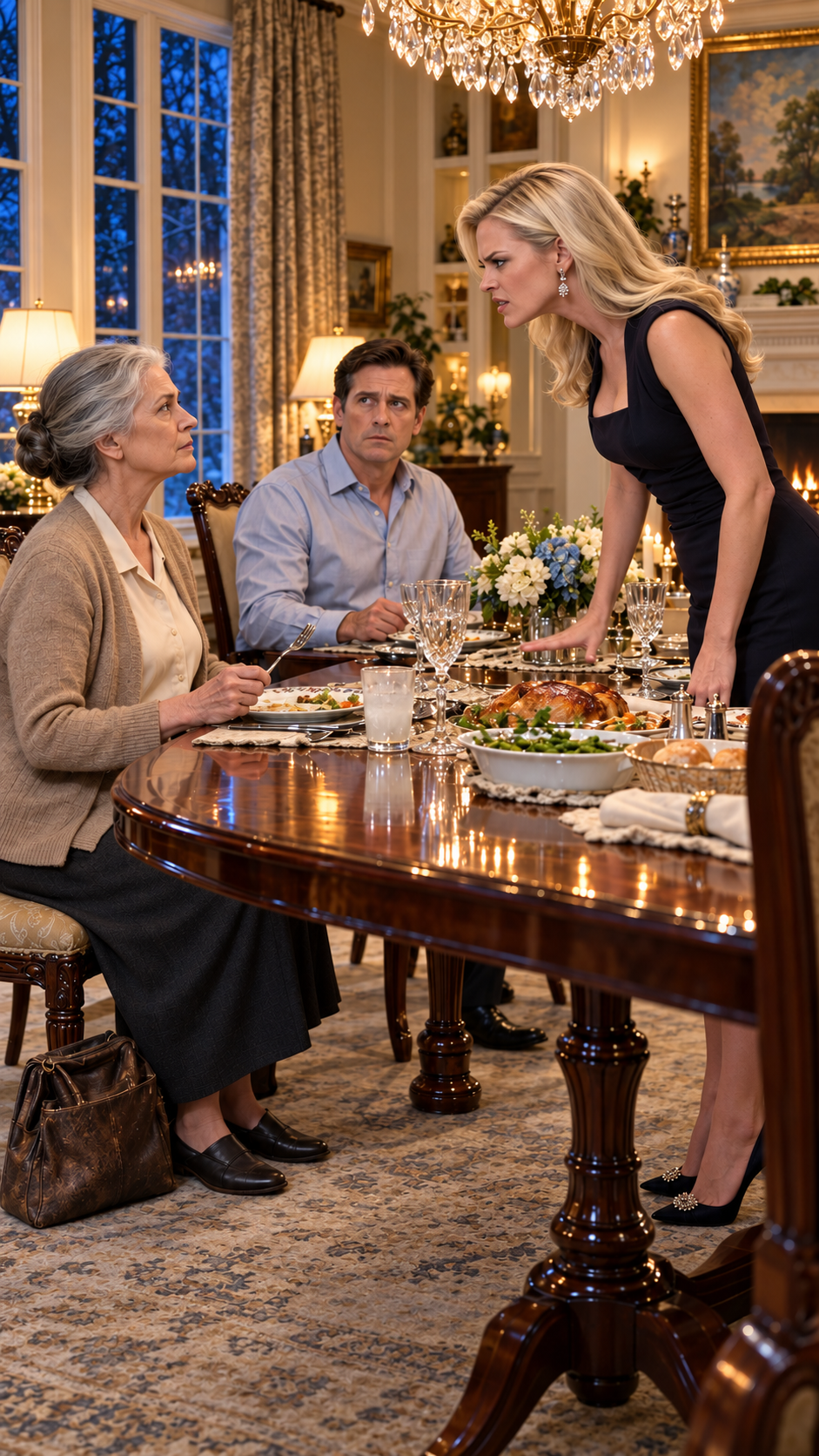
One Sunday afternoon, I gathered Darren and Thalia at the dining table.
The same table.
The same room.
A completely different family.
I brought new documents.
Thalia eyed the envelope suspiciously.
“Should I be worried?”
“Probably not.”
“That is not reassuring.”
Darren smiled.
“What is it?”
“The trust.”
I placed the papers before them.
The house had always been intended as their wedding gift.
There had never been secret conditions.
I explained that the property would now be transferred fully into their names.
Darren stared at me.
“Mom.”
“No tests.”
He looked at the papers.
“No strings?”
“No strings.”
Thalia was quiet.
Then she said something I did not expect.
“We might sell it.”
I looked at her.
Darren nodded.
“We’ve talked about it.”
“Why?”
Thalia glanced around the dining room.
“For years I thought this house proved we were doing well.”
She touched the edge of the table.
“Now it mostly proves we have too many rooms.”
Darren smiled.
“We want something smaller.”
“Where?”
“Closer to the office.”
“With a garden,” Thalia added.
“And a workshop.”
“And no chandelier.”
I looked upward.
“That part I support.”
Six months later, they sold the house.
They bought a smaller craftsman-style home fifteen minutes away.
The remaining money went into savings and a conservative investment account after taxes and transaction costs.
For once, everyone understood exactly where every dollar went.
On the anniversary of the dinner that had started everything, Darren invited me over.
“It’s just dinner,” he said.
“No envelopes?”
“No promises.”
“No financial revelations?”
“I am actively requesting that nobody reveal hidden corporations.”
I agreed.
When I arrived, Thalia opened the door.
She was wearing jeans.
No designer dress.
No careful inspection of my clothes.
She hugged me.
The dining table in their new house was old oak.
The plates matched.
The glasses were clear.
I sat down.
Then I noticed my fork.
One tine was bent.
I looked at Thalia.
She looked back at me with an entirely innocent expression.
“Really?”
Darren started laughing before she could answer.
“I saved it,” she admitted.
“You saved the fork?”
“It seemed historically important.”
“Historically embarrassing.”
“That too.”
I laughed.
It began quietly.
Then harder.
Exactly as I had laughed one year earlier.
But this time nobody looked frightened.
Nobody wondered what secret I was about to reveal.
Nobody needed to win.
After dinner, Thalia disappeared into the next room.
She returned carrying a cream-colored envelope.
I groaned.
“Absolutely not.”
Darren smiled.
“Open it.”
“I have had enough life-changing experiences involving stationery.”
“Open it, Mom.”
I did.
Inside was a contract.
I put on my reading glasses.
Mercer Home Services.
Senior Founding Consultant.
Two mornings per week.
No administrative responsibilities.
No weekend calls.
No working for free.
I stared at them.
Thalia folded her arms.
“Well?”
“You’re offering me a job?”
“Yes.”
Darren grinned.
“Apparently you’ve been sponging off the company by giving us free advice.”
I looked at my daughter-in-law.
Her eyes were shining.
A year earlier, she had told me to get a job because she believed work was proof that I deserved not to be a burden.
Now she was asking me to work because she understood that I still had something valuable to give.
The difference was everything.
“How much does it pay?”
Thalia named a number.
I raised an eyebrow.
“That’s insulting.”
Darren laughed.
“I told her you’d negotiate.”
“I taught you better than this.”
“See?”
Thalia picked up a pen.
“Fine.”
We negotiated for ten minutes.
I won an extra week of vacation.
They won the right to call me only twice a week outside office hours.
Then I signed.
Afterward, we carried coffee onto the porch.
The evening was cool.
Lights glowed behind neighboring windows.
Somewhere down the block, a child was learning to ride a bicycle while a patient father jogged beside her.
Ordinary life.
Harold would have liked it.
I still missed him.
I probably always would.
But grief no longer felt like a room with the door locked.
It felt more like an empty chair at a table where conversation continued.
Darren sat beside me.
“Can I ask you something?”
“Yes.”
“Did you really plan to tell us about the five million that night?”
“Yes.”
“And the house?”
“Yes.”
“What were you going to do after?”
I thought about it.
The woman I had been one year earlier would have had an answer.
She would have had a plan.
Possibly a folder.
Probably duplicates.
Now I simply smiled.
“I don’t know.”
Darren looked surprised.
“That may be the healthiest thing you’ve ever said.”
“Don’t get used to it.”
Thalia came outside carrying a small wooden sign.
She placed it in my lap.
I recognized it immediately.
MERCER HOME SERVICES.
The original storefront sign.
Restored.
Cleaned.
Still carrying the tiny scratches from thirty years of storage.
I ran my fingertips across the letters.
“Where did you find this?”
“Old warehouse.”
Thalia sat beside me.
“We thought your new office needed something.”
I could not speak for a moment.
The young woman in the photograph had disappeared for decades.
Not because anyone had stolen her.
Not because motherhood had ruined her.
Not because Harold had held her back.
She had simply become one piece of a much larger life.
Now she had returned.
Older.
Wiser.
Still curious.
I looked at Darren.
Then Thalia.
Then the restored sign in my lap.
The strangest thing about money, I had discovered, was that it could reveal almost nothing about the people around you if you used it as a test.
Truth worked better.
So did humility.
So did conversation.
So did sitting at a table long enough to discover that everyone had been afraid of something.
I had wanted to know whether my family loved me without my money.
Instead, I learned something more useful.
Love was never proven by pretending not to have anything.
It was proven when people finally stopped pretending with one another.
Thalia lifted her coffee.
“To the employed woman.”
I lifted mine.
“To the woman who finally learned how to offer a job properly.”
Darren groaned.
“You two are never letting that go, are you?”
“No,” we said together.
Then I laughed.
Thalia laughed.
Darren joined us.
And for the first time since Harold died, I did not wonder what anyone at that table wanted from me.
I already knew.
They wanted me there.
That was enough.
Share your thoughts or feedback to motivate us to create more stories ♥️
**–THE END–PLEASE
✓ Lynn R. Adams
The H. Mercer Community Fund turned out not to be another inheritance. That was the first surprise. The second was that Harold had never told me about it. Eleven years earlier, he had placed a smal…