PART 6: She Beat the Prince’s Impossible Dance, Then Discovered Why He Chose Her-060.12
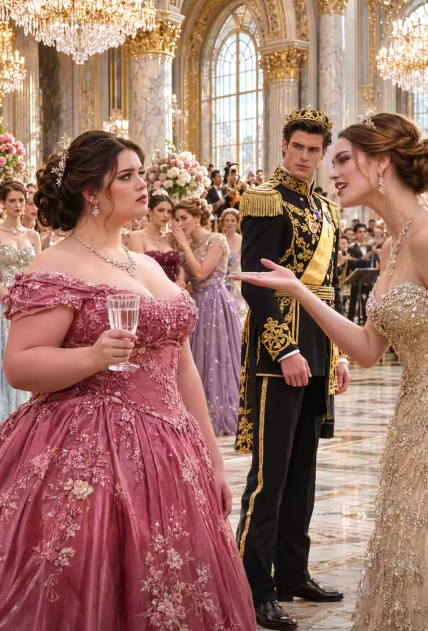
PART 6 – THE LIFE THEY CHOSE
King Frederick placed the envelope on a table beneath the ballroom windows.
For several seconds, neither he nor Alexander touched it.
Emily stood several feet away.
She wanted to leave.
The letter was addressed to father and son.
Whatever it contained belonged first to them.
Yet when she quietly stepped backward, Alexander looked toward her.
“Stay.”
Emily hesitated.
“Are you sure?”
“Yes.”
King Frederick nodded.
“She should stay.”
Alexander broke the seal.
Inside were six pages written in Queen Margaret’s unmistakable hand.
The first paragraph was personal.
Alexander read it silently.
His expression softened.
Then his brow furrowed.
“What does she say?” Frederick asked.
Alexander continued reading.
“She says this letter is not about removing me from the succession.”
The king exhaled.
Emily had not realized how much tension he was carrying until that moment.
Alexander read further.
Then he stopped.
“What?”
Frederick stepped closer.
Alexander handed him the page.
The king read.
His face changed.
Not with shock.
With recognition.
“I had forgotten this.”
Alexander stared at him.
“Forgotten what?”
Frederick sat slowly.
“Your mother wanted the succession rules reviewed.”
Alexander frowned.
“Why?”
“Because you were sixteen when she first raised it.”
“That does not answer the question.”
Frederick looked at his son.
“She believed no heir should reach adulthood without being given a genuine opportunity to decide whether to accept the role.”
Emily watched Alexander become completely still.
“The role is hereditary.”
“The line is hereditary.”
Frederick spoke carefully.
“Acceptance is another matter.”
Alexander looked down at the letter.
The distinction sounded almost impossible.
Princes did not choose whether to be princes.
At least that was what everyone assumed.
King Frederick continued.
“Your mother believed duty chosen freely was stronger than duty imposed by fear of disappointing generations of dead relatives.”
Emily almost smiled.
“That sounds like her.”
Frederick did too.
“It does.”
Alexander returned to the letter.
Queen Margaret had proposed a formal process for the heir to confirm, after reaching thirty, whether he intended to remain in the line of succession.
If he declined, the position would pass according to existing constitutional law to the next eligible royal relative.
She had not sought to abolish monarchy.
She had sought to remove the assumption that one person’s entire future could be settled at birth without ever asking him.
Alexander sank into a chair.
“I’m twenty-eight.”
“Yes,” Frederick said.
“So this was supposed to happen in two years.”
“Yes.”
“Why didn’t you tell me?”
The king looked ashamed.
“Because after your mother died, everything changed.”
“That is not an answer.”
“No.”
Frederick folded his hands.
“I buried myself in keeping the institution stable.”
His voice was quieter now.
“And I told myself you had always understood your duty.”
Alexander laughed once, without humor.
“I understood that everyone expected it.”
Frederick accepted the words.
“Yes.”
Emily saw the pain between them.
It was not anger alone.
It was the grief of two people who had loved the same woman and responded to losing her in opposite ways.
Frederick had tightened his grip on structure.
Alexander had learned to perform certainty.
Queen Margaret, absent from both their lives, had apparently understood the danger before either man did.
Alexander looked at the remaining pages.
“She says I should not decide immediately.”
Frederick nodded.
“She was sensible.”
“She says I should spend time outside the palace.”
Emily felt something stir.
Alexander looked at her.
Then at the train ticket still in her hand.
For the first time that evening, he smiled.
The next morning, two tickets waited on the breakfast table.
Alexander had postponed every engagement that could legally be postponed.
The palace announced only that the prince would spend several days privately considering matters of constitutional responsibility.
Reporters interpreted that sentence in at least seventeen dramatic ways.
Emily refused to read any of them.
They traveled without ceremony.
No royal carriage.
No formal reception.
Only a discreet security officer several rows behind them and two cups of terrible train coffee between them.
Alexander looked out the window as fields and small towns passed.
“No one has asked me where I want to go in years.”
Emily looked at him.
“I asked you yesterday.”
“Yes.”
“And?”
“I wanted to go with you.”
The answer was simple.
Emily turned toward the window before he could see how much it affected her.
The arts center looked almost exactly as she remembered.
The brick façade needed paint.
One gutter leaned slightly away from the roof.
A handmade banner announced auditions for a winter musical.
Ruth Bennett stood on the front steps.
She was seventy now, with silver hair cut short and reading glasses hanging from a chain around her neck.
Emily barely reached the pavement before Ruth wrapped her in a hug.
“You ridiculous child.”
Emily laughed.
“I missed you too.”
Ruth released her and looked toward Alexander.
Her expression became suspicious immediately.
“So.”
Alexander stopped.
“So?”
“You’re the prince.”
“Yes, ma’am.”
Ruth narrowed her eyes.
“I have read three separate accounts of that dance.”
Alexander glanced at Emily.
“None of them were flattering.”
“Good.”
Emily covered her mouth to hide a smile.
Ruth pointed toward the building.
“If you came here expecting anyone to curtsy, you will be disappointed.”
“I was hoping someone might show me the broken gutter.”
Ruth looked at him for several seconds.
Then she nodded.
“You may survive.”
The next three days were unlike anything Alexander had experienced in years.
Children rehearsed lines around him without caring about protocol.
Teenagers asked whether princes paid taxes.
An eight-year-old beat him badly at checkers.
He helped move folding chairs.
He painted a section of hallway badly enough that Ruth made him repaint it.
Emily watched something change in him.
Not disappear.
He was still Alexander.
Still attentive to schedules.
Still aware of security.
Still trained to notice every person entering a room.
But the invisible tension around him loosened.
On the second evening, Emily found him sitting alone on the edge of the small theater stage.
The house lights were dim.
She sat beside him.
“What are you thinking?”
“That your sixteen-year-old self voluntarily gave up a dance trip.”
Emily groaned.
“Ruth told you.”
“She tells everyone everything.”
“It was not heroic.”
“Why did you do it?”
Emily looked toward the empty seats.
“Because I knew I would have other chances.”
“And the other girl wouldn’t.”
Alexander nodded.
After a moment, he said, “My mother wrote your name down because of that.”
“Apparently.”
“She thought you noticed what mattered.”
Emily turned toward him.
“Sometimes.”
“What matters now?”
The question was gentle.
Emily understood what he was asking.
Not about the crown.
About them.
She folded her hands.
“I don’t want to become an answer to your uncertainty.”
Alexander listened.
“If you remain heir, I don’t want you doing it because you think I’m willing to stand beside you.”
She continued.
“And if you leave, I don’t want you doing that because you think I would prefer a simpler life.”
Alexander nodded slowly.
“Then what do you want?”
“I want you to choose your life.”
She met his eyes.
“And afterward, if there is still a place in it where you want me, ask me.”
The stage lights reflected faintly in his eyes.
“That is terrifyingly reasonable.”
“Vivian says reason is dangerous in palaces.”
“She may be right.”
They smiled.
Alexander did not kiss her.
Emily loved him a little for that restraint before she was ready to admit she loved him at all.
On the fourth morning, they returned to the capital.
Alexander requested a private meeting with his father.
It lasted six hours.
Emily did not ask what was said.
When Alexander emerged, his face looked exhausted but peaceful.
That evening, the palace issued a statement.
Prince Alexander intended to remain in the line of succession.
But the statement did not end there.
He also requested formal constitutional adoption of Queen Margaret’s proposal.
Future heirs, once adults, would be given a defined period in which to confirm voluntarily whether they accepted the obligations of succession.
The announcement startled traditionalists.
Some objected.
Others called it long overdue.
Alexander refused to describe his own choice as sacrifice.
In his first public remarks, he said only one thing.
“Duty has greater meaning when consent is part of it.”
Emily watched from the side of the room.
He did not look toward her while he spoke.
He did not need to.
The choice was his.
That was the point.
Weeks passed.
The frenzy faded.
The palace stopped feeling quite so much like a trap.
Emily returned to her work.
She did not move into the palace.
She did not accept a title.
She and Alexander began something far more ordinary and therefore far more difficult.
They dated.
He visited her apartment.
She visited the palace.
They argued about movies.
He learned that she hated being late.
She learned that he rearranged books by subject when nervous.
He met her parents.
Her father called him “Alexander” after accidentally calling him “Your Highness” six times.
Emily attended charity events with him but refused several ceremonial invitations when work required her elsewhere.
The world did not collapse.
The monarchy survived.
So did their relationship.
Vivian became a friend to both of them.
She eventually left her family’s preferred social path and accepted a position with an international arts foundation.
When Emily teased her about failing the dance, Vivian replied that it had been the most useful glass of water in her life.
Dr. Moore catalogued Queen Margaret’s papers properly.
Sir William formally submitted the legal review the queen had once asked him to complete.
The suitable-standing clause was eventually clarified by statute.
Character and service, not ancestry, would determine eligibility.
No one called it Emily’s law.
She was grateful for that.
A year after the impossible dance, Alexander asked Emily to meet him in the ballroom.
She entered cautiously.
“If there is water in here, I’m leaving.”
Alexander stood alone beneath the chandeliers.
There was a small table beside him.
On it sat a crystal glass.
Emily stopped.
“You are unbelievable.”
“It’s empty.”
“That is progress.”
He smiled.
No orchestra waited.
No council.
No spectators.
Only them.
Alexander picked up the glass.
“I kept this one.”
“I know.”
“For a long time, I thought the important thing about that night was that you didn’t spill.”
Emily approached him.
“And now?”
He looked at the glass.
“Now I think the important thing was that you understood you didn’t have to move exactly the way I expected.”
Emily’s eyes softened.
Alexander set the glass down.
Then he reached into his pocket.
Emily’s heart stopped.
He did not kneel immediately.
Instead, he stood before her with a small ring box in his hand.
“I don’t want to surprise you into an answer.”
Emily laughed nervously.
“That is an unusual opening.”
“I practiced several better ones.”
“I’m sure.”
Alexander drew a breath.
“I know you do not owe this institution anything.”
He continued.
“You do not owe my family anything.”
“You do not owe my mother’s memory anything.”
His voice softened.
“And you do not owe me the answer I want simply because I am asking.”
Emily felt tears gather in her eyes.
“But I know you now.”
Alexander looked at her.
“And I love you.”
The words were quiet.
Certain.
“I love the woman who notices the real question.”
“I love the woman who tells me when I am wrong.”
“I love the woman who stayed when staying was her choice and walked away whenever walking away was the honest thing to do.”
He opened the box.
“So I am not asking whether you will become queen.”
Emily’s breath caught.
“I am asking whether you will marry me.”
Only then did Alexander kneel.
Emily looked at him.
At the empty ballroom.
At the glass that no longer contained anything she had to protect.
She remembered the first night.
The sudden turns.
The water trembling beneath the rim.
The fear that one mistake would end everything.
Life had turned out to be nothing like that challenge.
There was no single test.
No flawless performance.
No guarantee that careful people never spilled things.
There were only choices.
Repeated choices.
To listen.
To trust.
To change.
To stay.
Emily smiled through tears.
“Yes.”
Alexander’s expression broke into something so openly joyful that she laughed.
He stood and slipped the ring onto her finger.
Then Emily placed one hand on his shoulder.
“Dance with me.”
Alexander blinked.
“Without water?”
“Especially without water.”
He took her hand.
There was no music.
For several moments they moved in silence across the polished floor.
Alexander began to turn.
Then stopped himself.
Emily looked up.
“What?”
“I was about to lead.”
“You are allowed to lead.”
He smiled.
“Good.”
“But I am allowed to change direction.”
“Also good.”
They began again.
This time neither tried to test the other.
Sometimes Alexander led.
Sometimes Emily did.
Sometimes one missed a step and the other laughed.
Months later, their wedding filled the capital with celebration.
It was grand because royal weddings were grand.
But within the ceremony were small details that belonged only to them.
Ruth Bennett sat near the front.
Vivian stood beside Emily.
Dr. Moore carried Queen Margaret’s letter in a small archival case to be displayed privately at the family reception.
King Frederick cried and denied it afterward.
And during the evening dinner, every guest found a tiny crystal glass at their place.
Not filled to the rim.
Not part of a challenge.
Each contained a single white flower.
Alexander lifted his own glass during his speech.
“My mother once taught me that leadership was like carrying a full glass through a crowded room.”
He looked toward Emily.
“I misunderstood the lesson for a long time.”
The room became quiet.
“I thought strength meant never spilling.”
He smiled.
“Emily taught me something better.”
“She taught me that sometimes wisdom means asking why you are carrying the glass at all.”
Emily felt tears burn behind her eyes.
Alexander lowered the glass.
“And when you are lucky enough to find someone who asks that question, listen.”
The guests applauded.
Emily looked toward the empty chair reserved in Queen Margaret’s memory.
For a fleeting moment, she wished the queen could have seen all of it.
Then she realized something.
Perhaps Queen Margaret had never intended to choose Alexander’s future.
Perhaps all she had wanted was to leave behind enough questions that her son would learn how to choose it himself.
Years later, people continued telling the story of the dance.
Some versions exaggerated Emily’s technique.
Others made Alexander sound more arrogant than he had been.
A few claimed Emily had known the queen’s secret all along.
Emily corrected none of them.
The truth was simpler.
She had entered a ballroom with no special plan.
She had watched carefully.
She had noticed what everyone else was too distracted to see.
And when a prince tried to make the whole room move according to his rhythm, she had remembered that the most important thing was not always keeping up.
Sometimes it was knowing what you were carrying.
Sometimes it was knowing when to put it down.
And sometimes it was finding someone willing to walk beside you after the test was over.
**–THE END–PLEASE COMMENT “”YES,”” AND LIKE AND SHARE THIS POST ON FACEBOOK TO GIVE US THE MOTIVATION TO SHARE EVEN MORE STORIES**
✓ Lynn R. Adams
PART 6 – THE LIFE THEY CHOSE King Frederick placed the envelope on a table beneath the ballroom windows. For several seconds, neither he nor Alexander touched it. Emily stood several feet away. Sh…