PART 6: “Mom Is Too Sick to Work, So I Came Instead…” — A Little Girl’s Words Stunned a Billionaire. 066
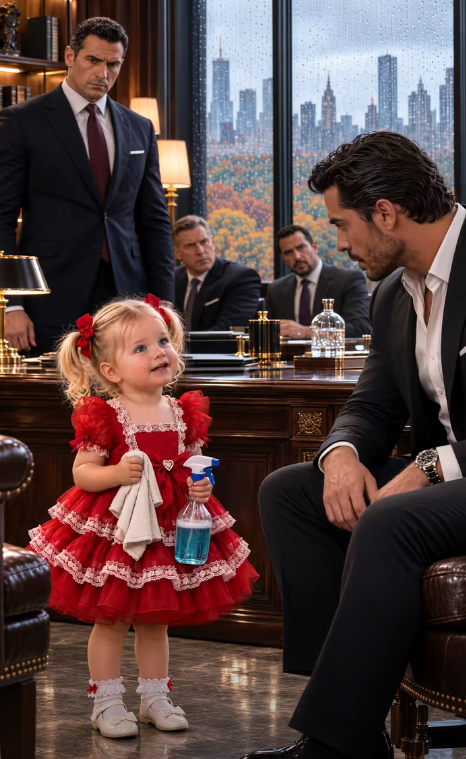
Alessandro did not open the envelope immediately.
For twenty-two years, his mother had existed inside him as a collection of completed memories.
Her perfume.
Her handwriting.
The sound of her shoes crossing the hall.
The way she laughed when she was trying not to.
The final months when adults lowered their voices around him and used words like treatment and response and hope until he began to dislike all three.
Death had given those memories borders.
Nothing new was supposed to arrive.
Yet there he stood with a sealed envelope written three days before Elena died.
Nia did not tell him to open it.
That was one of the things he had come to appreciate about her.
She allowed silence to remain unfinished.
Sofie was less patient.
“What’s inside?”
“I don’t know.”
“Open it.”
“Sofie,” Nia said.
“What?”
“Sometimes people need a minute.”
Sofie thought about this.
Then she sat on the carpet.
“One minute.”
Alessandro laughed softly.
“All right.”
He opened the envelope.
Inside were two pages.
The first was a letter.
The second was a child’s drawing.
His drawing.
He remembered it.
Or perhaps he remembered making hundreds like it.
A square house.
Four windows.
A crooked tree.
Three stick figures holding hands.
His mother had kept it.
The letter began without his name.
To whoever finds this,
If it is Alessandro, then I hope he is older than the frightened boy sleeping down the hall tonight.
If it is Rosa, tell her she was right about the childcare room.
If it is Samuel, tell him the blue door should stay blue.
If it is someone I never met, that may be best of all.
Alessandro stopped.
Nia sat beside him.
He continued.
I have spent much of my life around people who believe permanence is a matter of stone, money, legal documents, and names carved into buildings.
They are wrong.
Nothing we build belongs entirely to us.
We leave before it does.
The best we can hope is that the people who come afterward find enough room to make it useful again.
He turned the page.
There was only one final paragraph.
If my son reads this someday, I hope he has learned that being important is not the same thing as being necessary.
I hope he knows when to lead.
I hope he knows when to follow.
Most of all, I hope he has people around him who are not afraid to tell him which is which.
Open the window.
Love,
Elena
Sofie stood.
“Can I?”
Alessandro looked at the east window.
It had not opened in years.
During renovations, someone had painted over part of the frame.
He reached for the latch.
It resisted.
Marco joined him.
Together they pushed.
The frame moved with a sharp crack of old paint.
Cool autumn air entered the study.
Curtains lifted.
City noise rose faintly from below.
Sofie gasped as though they had opened a portal to another world.
“The window works!”
“Yes,” Alessandro said.
“It was stuck.”
“Yes.”
“Because nobody opened it.”
He looked at Nia.
She smiled.
“Yes,” he said again. “Something like that.”
Six months later, the blue door at 217 West 143rd Street was repainted.
Still blue.
Mrs. Alvarez insisted.
The building reopened floor by floor rather than all at once.
The ground-floor reading room remained almost unchanged.
Upstairs, two classrooms opened.
Then a computer room.
Then a small childcare space with washable walls, low shelves, and a ridiculous number of purple cushions selected by Sofie.
The elevator took longer.
Old buildings did not care about schedules.
Neither did city permits.
Alessandro learned patience through paperwork, which Marco described as overdue cosmic justice.
The community elected its final trustees.
Mrs. Alvarez refused nomination.
“I have spent enough of my life in meetings.”
A public-school teacher named Daniel Cho won one seat.
A home-health aide named Patrice Williams won another.
Rosa remained for a one-year transition term.
Nia continued as Samuel’s successor trustee.
Alessandro attended meetings only when invited.
The first time he sat in the third row instead of at the table, he disliked it intensely.
Nia noticed.
“Everything all right?”
“Perfect.”
“You look offended by the chair.”
“It has poor lumbar support.”
“Of course.”
He lowered his voice.
“I am making progress.”
“You are sitting in a folding chair without purchasing the building. I’m proud of you.”
Sofie climbed into the empty chair beside him.
“I have a meeting.”
“You do?”
“Yes.”
“What are you responsible for?”
“Snacks.”
“A powerful office.”
“I know.”
Nia returned to her preservation program.
The Open Window education fund was restarted for Moretti household employees, but the structure was different.
Applications were reviewed by an independent committee.
Funds could be used for classes, certification fees, childcare, transportation, or other documented barriers to professional development.
The first year, fourteen people applied.
Eleven received grants.
Nia was one.
When the acceptance email arrived, she showed Alessandro.
“You didn’t interfere?”
“No.”
“You swear?”
“I asked Marco to physically prevent me from interfering.”
Marco, nearby, nodded.
“He was difficult.”
Nia laughed.
She completed the certificate the following spring.
She did not quit housekeeping immediately.
That surprised Alessandro.
“You expected me to disappear the day I graduated?” she asked.
“No.”
“Yes, you did.”
“Maybe.”
“I like parts of my job.”
He considered that.
“The schedule?”
“Good.”
“The pay?”
“Better since your new policy.”
“The windows?”
“Hate them.”
He smiled.
Nia continued part-time at the residence while taking contract work with a small preservation firm.
Eventually she reduced her hours.
Then left housekeeping altogether.
On her final official day, Rosa baked a cake.
Marco bought champagne, then remembered Sofie would be present and added sparkling cider.
Alessandro gave Nia no enormous gift.
No car.
No check.
No dramatic offer.
He gave her Samuel’s restored drafting box.
Inside was a new set of technical pencils.
Nia ran her fingers across them.
“This is suspiciously thoughtful.”
“I had assistance.”
“Rosa?”
“Sofie.”
Sofie shook her head.
“I picked purple.”
One pencil was, inexplicably, purple.
Nia hugged her.
Then she looked at Alessandro.
“Thank you.”
He nodded.
Something had changed between them over the months.
Neither rushed to name it.
It was friendship first.
Respect.
Familiarity.
An ease built from disagreements survived rather than avoided.
Nia had learned that Alessandro’s silences did not always mean disapproval.
Sometimes he was reconsidering.
Alessandro had learned that Nia’s refusal did not require negotiation.
Sometimes no was simply a complete sentence.
He also learned that Sofie cheated at Go Fish.
This discovery nearly ended their relationship.
“You had two queens.”
“No.”
“I saw them.”
“You saw wrong.”
“Sofie.”
“Maybe Marco has queen.”
Marco immediately said, “Do not involve me in this criminal enterprise.”
One Saturday afternoon, nearly a year after Sofie first arrived carrying a spray bottle, the Open Window building held its official community day.
There was no ribbon-cutting.
Mrs. Alvarez called ribbons “wasteful theater.”
Instead, everyone brought food.
Children drew on the sidewalk with chalk.
A retired electrician taught teenagers how to wire a basic lamp.
A language exchange met in one classroom.
Upstairs, in the room behind the blue door, Samuel’s original model stood inside a glass case.
Not as a monument.
As a beginning.
Beside it, visitors could see copies of Elena’s notes and Samuel’s drawings.
A small card explained the history without turning either person into a hero.
They had started something.
Others had continued it.
That was enough.
Alessandro stood before the blackboard.
The old question remained.
WHAT SHOULD THIS PLACE BECOME?
Answers covered the surrounding wall now.
More languages.
A sewing class.
Tax help.
Saturday science club.
College application workshops.
Senior computer lessons.
One answer was written in purple crayon.
A castle.
Sofie stood beneath it.
“That was me.”
“I suspected.”
Nia walked over carrying two paper cups of coffee.
She handed Alessandro one.
“You look strange.”
“Thank you.”
“I mean thoughtful.”
“More dangerous.”
“Probably.”
He looked around the room.
“My mother believed this place would change people.”
“Did it?”
“She was wrong.”
Nia raised an eyebrow.
Alessandro continued.
“People changed it.”
Nia smiled.
“That sounds less like a billionaire thing.”
“I’m recovering.”
They stood together near the blue door.
Below them came the overlapping sounds of conversation, children, chairs scraping floors, someone laughing too loudly.
A building being used.
Not preserved like a museum.
Not polished into silence.
Used.
“I spent years thinking my mother left unfinished work,” Alessandro said.
“Maybe she did.”
“That doesn’t bother you?”
“No.”
Nia looked through the tall windows.
“Why should one person finish everything?”
Alessandro thought of Samuel.
Elena.
Rosa.
Mrs. Alvarez.
Nia.
Even Sofie.
All of them had touched the same story without owning it.
He smiled.
“You sound like her.”
“I’ll choose to take that as a compliment.”
“It was.”
Later that evening, Alessandro returned home.
The apartment was quiet.
He entered the study.
The east window remained slightly open.
He kept it that way now whenever weather permitted.
His meetings had changed too.
Not dramatically.
Moretti Holdings remained a large company.
Contracts still mattered.
Deadlines still mattered.
Profit still mattered.
But Alessandro had begun asking questions he once considered inefficient.
Who is affected?
Who has been asked?
Who is missing from this meeting?
Occasionally the answers delayed decisions.
Occasionally they improved them.
Sometimes both.
On the desk lay the original cleaning cloth Sofie had used that first afternoon.
Rosa had tried to throw it away.
Alessandro had rescued it.
She teased him mercilessly.
A knock sounded.
Sofie entered without waiting.
Nia followed.
“You know,” Alessandro said, “most people wait after knocking.”
“I knocked.”
“That was not the important part.”
Sofie carried a spray bottle.
Alessandro stared at it.
“No.”
“Yes.”
“No.”
“Window dirty.”
“It is not.”
She walked to the eastern pane.
“There.”
One fingerprint marked the glass.
Alessandro looked at Nia.
“Did you arrange this?”
“I have no control over her.”
“Finally, something we agree on.”
Sofie sprayed the window.
This time she knew how to unlock the trigger.
She wiped in careful circles.
Exactly as she had one year earlier.
Only now she was not trying to save her mother’s job.
She was simply helping because she wanted to.
The difference was invisible.
And enormous.
When she finished, she inspected the glass.
“Good.”
“Excellent,” Alessandro said.
She looked up at him.
“Are you still Mommy’s boss?”
“No.”
“Why?”
“Because she has a different job now.”
“Are you sad?”
He considered the question.
“No.”
“You miss her.”
Nia leaned against the desk, suddenly very interested.
Alessandro gave Sofie a warning look.
She was immune.
“You miss Mommy.”
“Sometimes.”
Nia smiled.
“Dangerous territory, Mr. Moretti.”
“Your daughter has no respect for privacy.”
“She gets that from her grandfather.”
Sofie put down the cloth.
Then she asked the question Alessandro remembered better than almost anything else she had ever said.
“Do you own anybody?”
He crouched so they were at eye level, just as he had the first day.
“No.”
“Not even people who work here?”
“No.”
“Not the building?”
“I own part of this building.”
She frowned.
“That’s confusing.”
“It is.”
“Do you own the windows?”
“Technically.”
Sofie shook her head.
“No.”
“No?”
She pointed through the clean glass.
Central Park stretched beyond them, evening light settling over the trees.
“Window is for looking out.”
Alessandro followed her finger.
He understood.
Possession was one kind of relationship.
Purpose was another.
A window might belong to someone on paper.
But the view did not.
Neither did the light.
Neither did the possibility of seeing farther than the room where you stood.
Behind him, Nia opened Elena’s final letter once more.
She had asked Alessandro weeks earlier whether he wanted it framed.
He had said no.
Letters were meant to be read, not displayed.
Sofie pressed her palm against the newly cleaned glass.
A perfect little handprint appeared.
Alessandro stared at it.
“Sofie.”
She gasped.
“Oh.”
Nia began laughing.
“I just cleaned it,” Sofie protested.
“You just dirtied it.”
“It was an accident.”
Marco appeared in the doorway.
“What happened?”
“Sofie attacked the window,” Alessandro said.
“I did not.”
Marco inspected the handprint.
“Severe.”
Sofie crossed her arms.
“You fix it.”
Marco immediately retreated.
“I am head of security.”
“You have hands.”
Nia laughed harder.
Rosa called from the hall that dinner was ready.
Sofie ran toward the sound.
Marco followed, complaining about professional boundaries.
Nia remained.
For a moment, she and Alessandro stood alone.
“Your house is louder now,” she said.
He looked toward the hallway.
“Yes.”
“Do you mind?”
“No.”
She reached for her coat.
Before leaving, she touched the edge of his mother’s letter.
“She would probably be surprised.”
“By what?”
“You.”
Alessandro looked at her.
“That could be an insult.”
“It isn’t.”
He nodded.
“Samuel would be proud of you.”
Nia’s smile faded into something softer.
“I hope so.”
“I think he would.”
She looked toward the open window.
“So what happens now?”
A year earlier, Alessandro would have answered.
He would have offered a plan.
A timeline.
An objective.
Instead he smiled.
“I don’t know.”
Nia seemed pleased.
“Progress.”
From the hallway Sofie shouted, “Mommy!”
“We’re coming,” Nia called.
She started toward the door.
Alessandro followed.
At the threshold, he looked back once.
The study was empty.
The east window was open.
Curtains moved in the evening air.
Sofie’s handprint remained in the center of the glass.
He considered cleaning it.
Then decided against it.
Some marks were not damage.
Some were proof that another person had been there.
Downstairs, Sofie called again.
This time Alessandro answered.
“We’re coming.”
And he left the window open behind him.
Share your thoughts or feedback to motivate us to create more stories ♥️
**–THE END–PLEASE
✓ Lynn R. Adams
Alessandro did not open the envelope immediately. For twenty-two years, his mother had existed inside him as a collection of completed memories. Her perfume. Her handwriting. The sound of her shoe…