PART 5: The Words Emma Left Behind 034
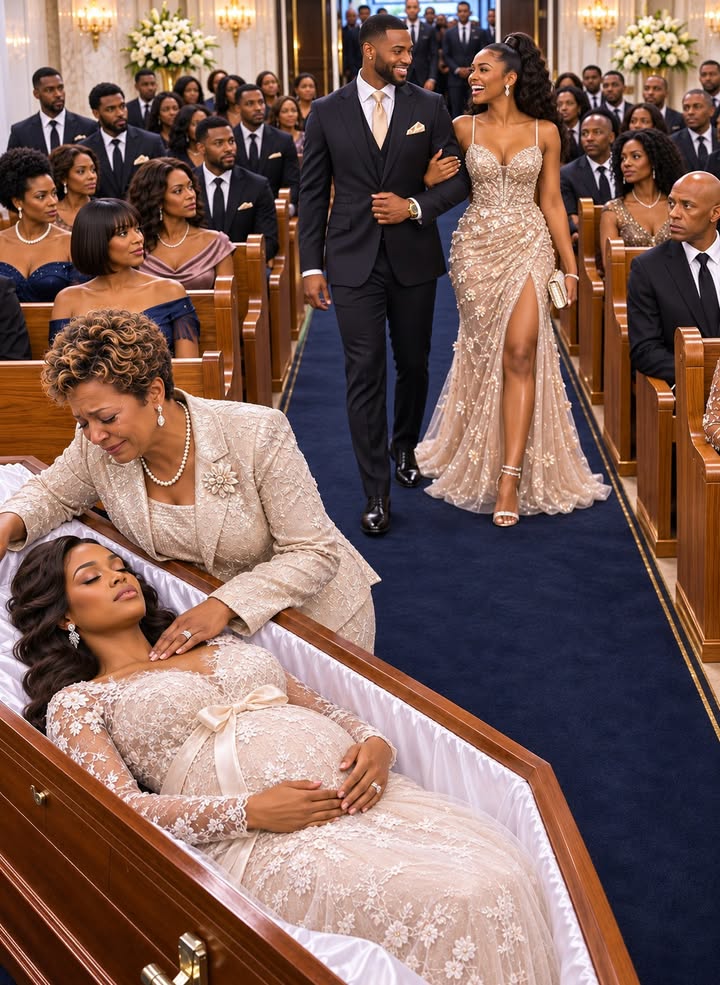
Part 5 – What Love Would Protect
“The name is not Evan’s,” I repeated.
Mr. Halden was quiet on the other end of the line.
“No,” he said. “But I’m not authorized to tell you whose name it is.”
I looked toward Emma’s letter, still open on the kitchen table.
“Is the person alive?”
“I believe so, but I don’t know whether they have been contacted.”
“Can you ask the court to release the name?”
“I can request it,” he said. “The court will want to know why disclosure is necessary and whether it serves the child’s interests.”
I thought of Evan standing in the hospital corridor, saying he should have known.
I thought of Celeste in the church garden, admitting that she had stayed because she did not want to hear what Emma might tell her.
And I thought of Emma, quietly preparing for a future in which she might not be there to explain any of it.
“Then ask,” I said. “Not because I need to know. Because the baby may.”
“I’ll make the request.”
When the call ended, I sat at the kitchen table for a long time.
The house had grown familiar with grief, but it had not grown easier to live in.
Emma’s blue mug stood beside the sink, and her letter rested near my hand, its creases softened from being read again and again.
I kept returning to the same lines.
She had asked me to tell her child about the garden.
She had trusted me to put him first.
She had not asked me to make Evan suffer, or to prove that I had been right about him.
The distinction mattered more than I had understood at first.
The next morning, Evan’s attorney sent Mr. Halden a proposal.
Evan was willing to withdraw his challenge to the will if I agreed to transfer control of Emma’s estate to him.
He described it as a practical arrangement that would allow the child to benefit from his father’s stewardship.
Mr. Halden read the proposal aloud to me in his office.
I listened without interrupting, though each polished phrase seemed to place a new weight on the table between us.
When he finished, he folded the pages and waited.
“What happens if I refuse?” I asked.
“The case proceeds,” he said. “There would be hearings, testimony, and a review of the evidence Emma left behind.”
“Would Celeste be asked to testify?”
“If her account becomes relevant, she may be.”
I rubbed my thumb over the seam of my coat.
“She told me she would be honest.”
“She did.”
“Even if it costs her?”
“She understands that she may have to answer difficult questions.”
I looked out the window at the quiet street below.
A woman was pushing a stroller through the damp morning, one hand resting on its handle, the other holding an umbrella over the child.
For a moment I could see the future Emma had imagined, the small ordinary errands and the blue blankets and a baby growing into a boy who knew the sound of my voice.
“Could I accept the settlement without giving Evan control of the trust?” I asked.
“Yes,” Mr. Halden replied. “We can propose that the will remain intact, that the child’s funds be managed by an independent trustee, and that Evan have no unilateral access to them.”
“And the rest of Emma’s estate?”
“That is yours under the will, subject to the court’s decision. You could agree to use a portion for the child’s care, but no one can require you to surrender the estate simply to end the dispute.”
I closed my eyes.
The offer was not a choice between keeping money and losing it.
It was a choice between pursuing a public legal fight that might establish Evan’s responsibility, and finding a way to protect the child without turning every detail of Emma’s life into evidence.
“I don’t want to reward him,” I said.
“Then don’t,” Mr. Halden replied. “But be careful not to make the case about what he deserves. Emma’s instructions were about what the child needs.”
I knew he was right.
That did not make the decision painless.
Before I could answer, my phone buzzed.
Celeste’s name appeared on the screen.
I excused myself and stepped into the hallway.
“Margaret,” she said when I answered. “I heard Evan’s lawyer sent a proposal.”
“How did you hear?”
“Evan told me.”
“Why?”
“I don’t know,” she said. “Maybe he wanted me to agree that it was reasonable.”
“Do you?”
“No.”
Her reply came quickly, without the hesitation I had once heard in her voice.
“He wants you to hand him control of the estate,” I said.
“He says he wants to protect his child.”
“Those are not the same thing.”
“I know.”
For a few seconds, all I could hear was the faint hum of traffic on her end of the call.
“I need to tell you something,” Celeste said. “Evan has asked me not to testify.”
I looked down at the carpet beneath my shoes.
“What did you say?”
“That I would testify if I’m asked, and I would tell the truth.”
“Even if it ends your relationship?”
“He and I are already ending it.”
The answer was quiet, but it carried a kind of finality.
“I’m sorry,” she said. “Not because I’m losing him. Because I helped make Emma feel alone, and I can’t undo that by leaving him now.”
I did not reassure her.
There was no comfort I could give that would make her choices smaller.
“Why are you telling me?”
“Because if the court asks, I’ll say exactly what happened. Evan told me he and Emma were separated. He said the baby might not be his. I knew he was still living with her, and I stayed anyway.”
“You understand that the truth may not make you look better.”
“I do.”
“And you still want to say it?”
“Yes.”
I leaned against the wall.
“Then tell it because it is true,” I said. “Not because you hope it will repair anything between us.”
“I understand.”
I ended the call with no promise to forgive her and no promise to trust her.
Still, when I returned to Mr. Halden’s office, the decision inside me had begun to take shape.
“I want to make a counteroffer,” I said.
He picked up his pen.
“The will and trust remain as Emma wrote them. An independent trustee manages the child’s funds. Evan can request reasonable support for the baby through that trustee, but he cannot take money out or change the arrangements on his own.”
“That is workable.”
“The house and the rest of Emma’s estate stay with me, as she chose.”
“Yes.”
“And I’ll make sure the baby has what he needs. I don’t want his care delayed because the adults are arguing.”
Mr. Halden wrote as I spoke.
“Would you be willing to consider allowing Evan a relationship with him?”
“I don’t want to be the person who decides whether Evan deserves to be a father.”
“That’s a careful answer.”
“I can’t promise what the court will approve. But I won’t use Emma’s will to shut him out. He can see the child under appropriate safeguards, and the people responsible for the baby can decide what those safeguards should be.”
“Would you agree to that in writing?”
“If it protects the child, yes.”
Mr. Halden set down his pen.
“Then you’ve found the distinction Emma was asking us to make.”
“What distinction?”
“Between holding someone accountable and using the child to do it.”
I turned toward the window again.
“I don’t know if I’m strong enough to keep making that distinction.”
“No one makes it once and is finished,” he said. “You’ll have to keep choosing it.”
When the proposal was sent, Evan requested a meeting.
I agreed to see him at Mr. Halden’s office, with the attorney present.
Evan arrived without Celeste.
He looked as though he had slept little, and there was a faint redness around his eyes that he did not try to hide.
Mr. Halden placed the counteroffer on the table.
Evan read it slowly, his expression tightening as he reached the conditions concerning the trust.
“So I have no control over my own child’s money,” he said.
“You would have access to what the trustee approves for the child’s care,” I replied. “You would not be able to use the trust as your own account.”
“I never said I wanted to use it for myself.”
“You asked me to give you control of Emma’s estate.”
“I thought it was the simplest way to end the dispute.”
“It would have been simple for you.”
He looked down at the pages.
“I’m his father.”
“You are.”
“Then I should be allowed to provide for him.”
“You should be allowed to be part of his life, if you can do that safely and responsibly.”
His jaw shifted.
“You think I’m dangerous?”
“No,” I said. “I think you’ve been absent when Emma needed you, and I think the baby should not have to rely on promises alone.”
He stared at the table.
For a moment, I saw the young man Emma had introduced to me years ago, nervous in my kitchen and trying too hard to make a good impression.
I remembered how she had smiled at him then, as if she had found the person she wanted beside her for every ordinary day.
That memory did not absolve him.
It did remind me that he was more than the worst thing he had done.
“I don’t want to fight you,” he said.
“Then don’t ask me to undo what Emma chose.”
“I’m not asking you to erase her.”
“Your proposal asked me to put her estate under your control.”
He exhaled, then folded his hands.
“I thought if I had control, I could make sure the child never wanted for anything.”
“Emma made the same plan,” I said. “She chose an independent trust so no one person would have unchecked control.”
“I know what the will says.”
“Then listen to what she meant.”
Mr. Halden remained silent.
Evan looked toward the attorney, then back at me.
“I was angry with her,” he said. “I thought she was making decisions without me because she wanted to punish me.”
“Did you ever consider she might have been afraid?”
“Yes.”
“When?”
“After the review.”
He paused.
“Maybe I should have considered it earlier.”
The admission did not repair anything.
It did move the conversation away from the old habit of defending himself.
“I want to see my son,” he said.
“You can ask to see him through the hospital and the court. I won’t oppose it just because you hurt Emma.”
“And if I make mistakes?”
“You will,” I said. “Everyone does. What matters is whether you tell the truth and whether you put him first.”
He looked at me as if he wanted to ask what I thought that would require.
I could not answer for him.
“I’ll consider the counteroffer,” he said.
“Please do.”
Before he left, Evan stopped beside Emma’s photograph on the table.
He did not touch it.
“I should have been there,” he said.
I felt the words strike some old, tender place inside me.
“Yes,” I replied. “You should have.”
He nodded once and walked out.
The legal negotiations continued over the following days.
Mr. Halden sent the terms to both attorneys, and Evan’s lawyer asked for changes that would give him a greater role in decisions about the trust.
We refused those changes, but Mr. Halden kept the discussion measured and focused on the child.
There were no dramatic hearings, no shouting across a courtroom.
There were forms, careful letters, and long stretches of waiting while people with the right expertise decided what could happen next.
The ordinary pace of it sometimes felt cruel.
A child’s life had begun in the shadow of his mother’s death, and the rest of us were asked to be patient with paperwork.
I returned to the hospital twice.
The second time, I was allowed to see my grandson.
A nurse carried him to a small family room, bundled in a pale blanket that seemed too large for his body.
His face was narrow and solemn, his lashes dark against his cheeks.
I did not reach for him until the nurse had settled him safely in my arms.
Then I held him against my chest and felt the whole room disappear.
“Hello, sweetheart,” I whispered. “I’m your grandmother.”
He made a small sound, hardly more than a breath.
I wanted to tell him everything at once: that his mother had loved him before she knew his face, that she had planted crooked rows of beans with me, that the blue blankets had been waiting.
Instead, I held him quietly and let my tears fall into his blanket.
When the nurse came back to take him, my arms felt empty in a way I had never known.
“Will he be able to come home soon?” I asked.
“He is making progress,” she said. “His care team will let you know when they believe the transition is safe.”
I thanked her.
On my way out, I passed Evan in the corridor.
He had been waiting near the family room, his hands clasped in front of him.
“Did you see him?” he asked.
“Yes.”
“What was he like?”
“Small,” I said. “And stubborn enough to keep his eyes closed when I tried to introduce myself.”
A faint smile touched Evan’s face.
“Sounds like Emma.”
“It might.”
He glanced toward the family room.
“Could I go in?”
“You’ll need to ask the nurse.”
“I have.”
He looked nervous now, not like a man preparing to argue his case but like someone standing before a door he knew he should have opened sooner.
“Did you tell him about her?” he asked.
“I told him she loved him.”
Evan lowered his gaze.
“I’ll tell him too.”
“Tell him true things,” I said. “Not the things you wish had been true.”
He nodded.
I left him at the door.
That evening, I went home and unfolded the blue blankets.
I sat in the nursery chair and smoothed the fabric with both hands, imagining the baby beneath it.
For the first time since Emma’s funeral, the room did not feel like a memorial.
It felt like a promise that had not yet been fulfilled.
A knock sounded at my front door.
Mr. Halden stood on the porch, holding a document folder and wearing the weary expression of someone who had been carrying news through too many offices.
“Did the court release the name?” I asked.
“It did,” he said.
My hand tightened on the door.
“Who did Emma choose?”
He looked at me for a long moment.
“It was Celeste.”
I could not speak.
“Emma named her as the second person she trusted to support the baby if needed,” Mr. Halden continued. “The court’s order allows us to share that now.”
“Why Celeste?”
“I don’t know.”
“But she hurt Emma.”
“Yes.”
“Emma knew that?”
“I believe she did.”
The name seemed impossible beside the others: mine, Evan’s, and now Celeste’s.
I thought of Emma in the nursery, writing the note that said the baby deserved the truth.
I thought of Celeste admitting she had stayed with Evan, and of the regret in her voice when she said she could not undo what she had done.
“Does Celeste know Emma chose her?” I asked.
“Not yet.”
“Why would Emma trust her with her child?”
“I can’t answer that for her,” Mr. Halden said. “But there is another sealed note, addressed to Celeste. It was meant to be delivered only if the court approved the release of her name.”
He held out a smaller envelope.
Emma’s handwriting crossed the front.
For Celeste.
I took it carefully.
A final piece of paper.
A final choice Emma had made without me understanding why.
I stared at the envelope, then at the nursery beyond the hall.
“Do you want me to open it?” Mr. Halden asked.
“No,” I whispered. “I think Celeste should read it herself.”
The next morning, I called her.
When I told her Emma had named her as a possible support for the baby, she went silent.
Then, in a voice almost too soft to hear, she asked, “Why would she do that?”
“I don’t know,” I said. “But Emma left you a letter.”
Celeste arrived at my house that afternoon.
She held the envelope in both hands without breaking the seal.
“I don’t deserve this,” she said.
“It isn’t mine to decide.”
“I don’t know what Emma wanted from me.”
“Then read what she wrote.”
Celeste looked down at the blue ink.
Her fingers trembled as she opened the letter.
She read the first line, and her face changed.
Then she read it again, slower, and tears welled in her eyes.
“What does it say?” I asked.
She looked at me, shaken.
“Emma wrote that she didn’t trust me yet,” Celeste whispered. “But she believed I might learn to tell the truth when it cost me something.”
**–END OF PART 5–CLICK “NEXT” AT THE BOTTOM OF THE PAGE TO CONTINUE READING**
* * *
[PREVIOUS: PART 4](https://puretales.idolsgift.com/blog/part-4-the-words-emma-left-behind-034) | [NEXT: PART 6(THE END)](https://puretales.idolsgift.com/blog/part-6-the-end-the-words-emma-left-behind-034)
✓ Lynn R. Adams
Part 5 – What Love Would Protect “The name is not Evan’s,” I repeated. Mr. Halden was quiet on the other end of the line. “No,” he said. “But I’m not authorized to tell you whose name it is.” I lo…