Part 5 – The Winter at Broken Spur-039
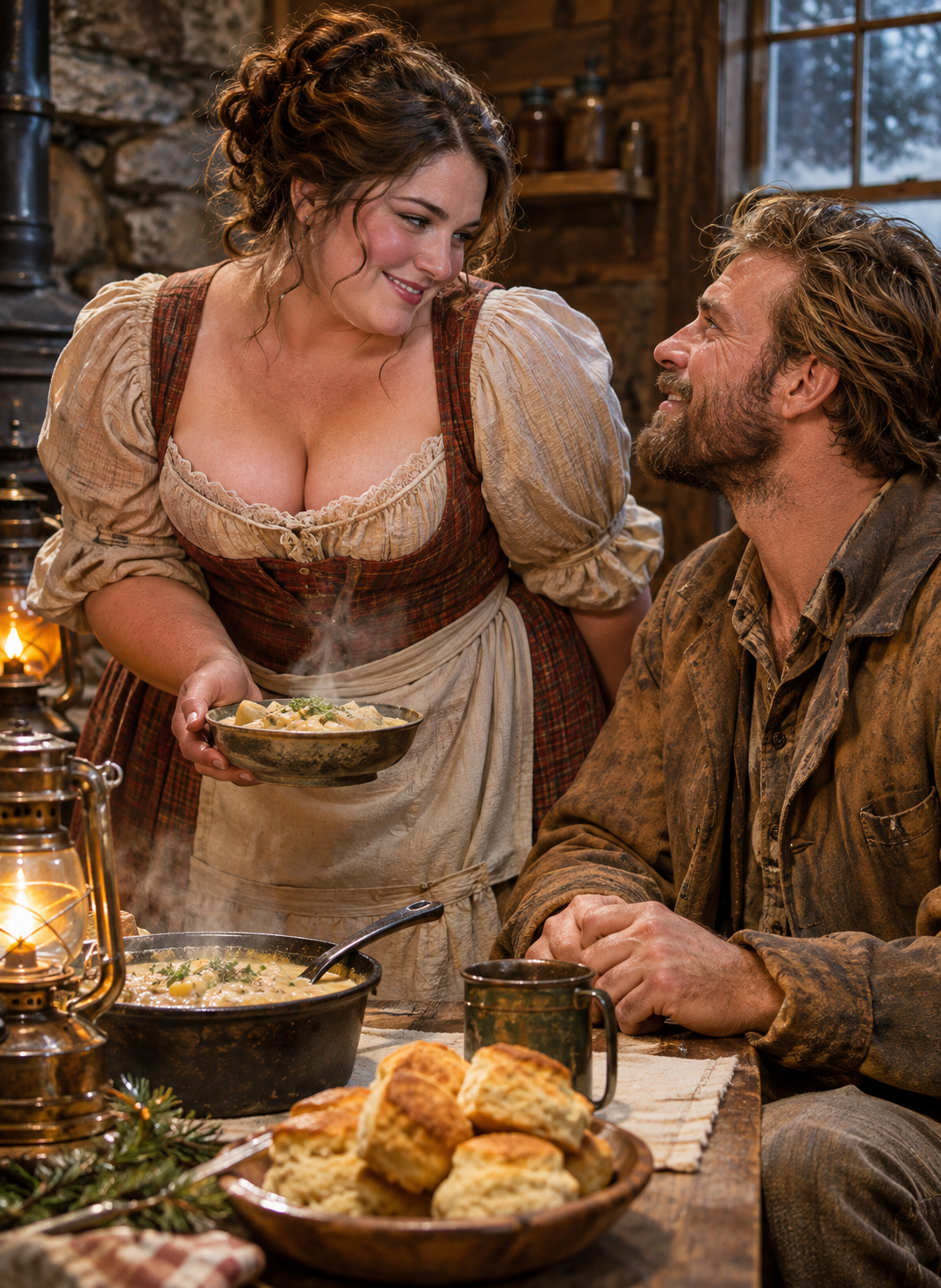
### Part 5 – The Promise Beatrice Carried
I sat down.
There are moments when standing feels too uncertain.
This was one.
Beatrice remained beside the stove, holding the photograph of her mother.
“What promise?” I asked.
She took a slow breath.
“My mother was ill for nearly a year.”
I waited.
“Toward the end, she talked about Wyoming more than she ever had before. Broken Spur. Your father. Your mother.”
“My mother?”
“Anna Hayes.”
Hearing the name spoken by Beatrice startled me.
I had been nine when my mother died.
Most people in Oak Haven had forgotten her.
“What did Margaret know about her?”
“They were friends.”
I stared.
“My mother worked here for nearly five years. She kept the household books, helped with cooking, sometimes assisted your mother with the garden.”
“Why did no one tell me?”
“You were young.”
I searched memory.
A woman laughing beside the kitchen door.
Blue ribbon.
Someone singing while peeling apples.
Had that been Margaret?
The images were too faint to trust.
Beatrice continued.
“After your mother died, things changed. Your father owed wages. There had been two bad winters. My mother wanted to return east to care for her own parents.”
“The forty acres.”
“Yes. Your father gave them to her because he couldn’t pay everything he owed.”
“Why didn’t she sell them?”
“I don’t think she ever believed they were worth much.”
I frowned.
“Then why the key?”
“Because of your mother.”
Beatrice sat opposite me.
“Anna knew your father was proud. She knew he sometimes treated asking for help as failure.”
Despite myself, I almost smiled.
“That sounds familiar.”
“Apparently it runs in the family.”
“Continue.”
“Before my mother left Broken Spur, Anna gave her the key to the springhouse. Your mother had helped keep the water system working. She told Margaret that if the ranch ever truly needed it, someone should remember what was beneath the hill.”
My chest tightened.
“My mother knew about the lower chamber?”
“Yes.”
“Why didn’t my father?”
“Perhaps he did once. Perhaps grief changed what he remembered. Perhaps repairs stopped. Mother wasn’t certain.”
I looked at the fire.
All those years I had thought Broken Spur belonged entirely to my father.
His cattle.
His fences.
His labor.
Yet beneath the visible ranch lay the work of women whose names had disappeared from its story.
My mother.
Margaret.
Now Beatrice.
“What promise did Margaret make you give?”
Beatrice’s fingers tightened around the photograph.
“She told me that if I ever had reason to go west, I should find Broken Spur.”
“That’s all?”
“No.”
Her gaze met mine.
“She said that if the Hayes family was still there, I should return the key.”
I exhaled.
“So you answered my because of a key?”
“Not entirely.”
“What else?”
For once Beatrice looked embarrassed.
“I read your notice several times.”
I remembered it.
**Wyoming rancher, thirty-eight, seeks practical wife accustomed to rural conditions. Honest home. Hard work. No promises of luxury.**
I winced.
“That was terrible.”
“It was truthful.”
“It had the romance of a feed invoice.”
“That was part of its charm.”
“You cannot mean that.”
She smiled.
“The other men promised comfort, wealth, fine houses, easy lives.”
“And I promised none of those things.”
“You promised honesty.”
“I also apparently promised misery.”
“That was implied.”
I laughed.
Then grew serious.
“Why didn’t you tell me when you arrived?”
“Because I saw your face.”
My laughter vanished.
“The depot.”
“Yes.”
I remembered everything.
The workers snickering.
Beatrice standing with quiet dignity.
Me looking at her and thinking only of food.
“I knew what you thought,” she said.
“I’m sorry.”
“I know.”
“No. I need to say it.”
She waited.
“I judged you before you had spoken ten words.”
“Yes.”
“I was ashamed of you.”
The confession hurt.
But Beatrice deserved the truth.
“And now I’m ashamed that I was ashamed.”
She looked down.
Then she said quietly, “I have spent much of my life knowing what people think before they are brave enough to say it.”
I swallowed.
“That must be exhausting.”
“It can be.”
“I can’t undo it.”
“No.”
“But I can be different tomorrow.”
Her eyes returned to mine.
“That is generally how people change, Caleb.”
Not through grand declarations.
Tomorrow.
Then the next tomorrow.
And the next.
January hardened around Broken Spur.
Temperatures fell so low at night that the cabin timbers snapped like distant gunfire.
But the cattle remained healthy.
We rationed hay carefully.
Beatrice’s weekly baking brought steady money.
I repaired harnesses for two neighboring ranchers.
The Larsens traded eggs for milk.
The Walker boys helped clear the water channel in exchange for one of our older saddles.
Small answers gathered.
One evening Mr. Larsen sat at our table eating Beatrice’s biscuits and said, “Hayes, this ranch looks more alive than it did in June.”
I glanced toward Beatrice.
“So do I.”
She pretended not to hear.
But she smiled into her coffee.
Our marriage changed just as quietly.
We developed habits.
She read after supper.
I carved small wooden objects with my pocketknife because my hands disliked idleness.
She hated the way I left boots beside the stove.
I disliked how she moved tools and then called the new location “sensible.”
We argued once about a broken gate.
Twice about money.
Three times about whether I should climb onto the roof during snow.
None of the disagreements frightened me.
That was new.
I had once believed peace meant never having anything worth arguing about.
Beatrice taught me that trust meant being able to disagree and still place two coffee cups on the table the next morning.
By February, she had learned the ranch well enough to notice things I missed.
“Daisy is going dry.”
“She’s old.”
“We should buy another cow.”
“We can’t afford one.”
“We might in spring.”
“Maybe.”
“And hens.”
“Foxes will get them.”
“Then build a better coop.”
“You’ve become demanding.”
“I married a carpenter.”
“I’m a rancher.”
“Then stop making shelves so well.”
I shook my head.
She smiled.
There were moments when I could barely remember the woman who had stepped off the stagecoach.
Not because she seemed different.
Because I finally saw how much of her had been there from the beginning.
February also brought trouble.
Not catastrophe.
Just arithmetic.
We had enough hay if winter ended near its usual time.
Then came two weeks of snow.
The cattle couldn’t graze at all.
Our haystack shrank.
One morning I stood in the barn counting bales.
Beatrice appeared in the doorway.
“How bad?”
“Not good.”
“How many days?”
“Maybe twenty-two.”
“And how long until grass?”
“Could be thirty-five.”
She absorbed that.
“What can we do?”
“I don’t know.”
It was the first time since her arrival I had said those words without shame.
She came beside me.
“We’ll ask.”
I looked at her.
“Who?”
“Everyone.”
Years earlier, I would rather have lost cattle than admit I needed help.
That afternoon we rode to the Larsens.
Then the Walkers.
Then the Cooper place.
Nobody had much hay to spare.
But each had a little.
Ten bales here.
Six there.
Fourteen at another ranch.
Not charity.
We traded labor.
Bread.
Repairs.
A young steer promised after spring calving.
By the end of the week, Broken Spur had enough.
As we drove the final load home, I looked across at Beatrice.
“You were right.”
“About?”
“Asking.”
She tucked the blanket around her knees.
“Try not to sound so astonished.”
“I’ve spent most of my life believing a man survives by standing alone.”
“How has that gone?”
I looked at my broken fences.
She followed my gaze.
“Fair point,” I said.
That night, I opened my father’s old ledger.
For years, I had viewed its numbers as proof of his strength.
Now I saw something else.
Names.
Neighbors.
People paid.
People owed.
People who had helped.
No ranch had ever been one man.
I had simply mistaken loneliness for independence.
March came softly.
One morning, water dripped from the cabin roof.
By noon, brown grass appeared along the south-facing slope.
Beatrice stood on the porch with her face turned toward sunlight.
“Spring,” she said.
“Don’t trust it.”
“You’re cheerful.”
“Wyoming teaches caution.”
Three days later, snow returned.
But it didn’t last.
The cattle began pawing through the thinning white crust.
The lower spring ran stronger.
We walked there one afternoon.
Beatrice carried Margaret’s photograph.
I carried no tools.
For once, we were not going somewhere to repair anything.
We sat beside the springhouse.
“I’ve been thinking about the name,” Beatrice said.
“What name?”
“Broken Spur.”
“What’s wrong with it?”
“It sounds defeated.”
“It’s had the name forty years.”
“So had Old Man Wheeler, and everyone still started calling him Stinky Pete.”
I stared.
“What?”
“Boardinghouse story.”
“I don’t want to know.”
“Wise.”
She leaned against the stone wall.
“Do you know why your father called it Broken Spur?”
“He found a broken riding spur near the creek when he first camped here.”
“So it never meant the ranch was broken.”
“No.”
She smiled.
“I like that.”
“What?”
“Something broken led him here.”
The sentence stayed with me.
We sat in silence.
Then I said, “What do you want?”
Beatrice turned.
“About what?”
“Everything.”
She looked confused.
“Caleb—”
“No. I mean it.”
I gestured toward the meadow.
“The land is yours. Your baking is becoming a business. You’ve spent four months helping me save something that was mine before you arrived.”
“Ours.”
“Maybe.”
She frowned.
I continued.
“But I don’t want you to wake up five years from now and discover you built your entire life around what I wanted.”
Her eyes filled unexpectedly.
“Why are you asking now?”
“Because nobody asked me for years. I forgot it mattered.”
She looked toward the spring.
When she spoke, her voice was low.
“I want a garden.”
I smiled.
“Done.”
“Hens.”
“I knew that was coming.”
“Two milk cows.”
“One.”
“Two.”
“One and a half.”
“How does one purchase half a cow?”
“Carefully.”
She laughed through tears.
Then she grew serious.
“I want a kitchen large enough to work in without bumping your shoulders every time you turn around.”
“Anything else?”
“A guest room.”
“For whom?”
“People.”
“I feared that.”
“And…”
She hesitated.
“And what?”
Beatrice looked at me.
“I want this to be home.”
Something inside my chest tightened.
Not painfully.
The opposite.
I took her hand.
“It is.”
That evening, after supper, she finally showed me the last letter from her mother.
The paper was thin and worn.
Beatrice had read it so often that the folds were nearly transparent.
I didn’t read the whole thing.
It belonged to her.
But she pointed to one paragraph.
Margaret had written:
**If you ever find Broken Spur, do not go because you feel indebted to my memory. Go only if there is something there you can choose for yourself.**
I looked at Beatrice.
“So you didn’t come because of a promise.”
“The promise made me notice your .”
“But you chose me.”
“I chose the possibility.”
“That sounds less flattering.”
She smiled.
“I hadn’t met you.”
“Fair.”
Then I noticed another line at the bottom.
A name.
My name.
Caleb.
I looked closer.
“What is this?”
Beatrice’s face changed.
“What?”
“My name.”
She tried to fold the letter.
I caught the edge.
“Beatrice.”
She closed her eyes.
“There was one more thing.”
I stared.
“How many ‘one more things’ did your mother leave?”
“Apparently several.”
“What did she write about me?”
Beatrice reluctantly opened the letter.
Margaret’s words were faded.
But readable.
**If the little Hayes boy grew into a man anything like his mother hoped, he may need reminding that a home is not measured by how much food is in the pantry, but by who waits at the table.**
I stopped breathing.
“The little Hayes boy?”
Beatrice nodded.
“Your mother and mine were close.”
“Margaret knew me?”
“You were six when she left.”
A memory surfaced.
Blue ribbon.
Apple peels.
A woman’s hands dusted with flour.
I stared at Beatrice.
“You knew about me before I knew you existed.”
“Only a story.”
“What story?”
Her voice softened.
“That you used to sit on the kitchen steps waiting for your mother to finish baking.”
A forgotten image returned so suddenly that I could smell cinnamon.
My mother’s hands.
A wooden spoon.
Warm bread.
A little boy waiting at a table.
I covered my eyes.
Beatrice didn’t speak.
She simply sat beside me.
After a while, I lowered my hands.
“All these years,” I whispered, “I thought I was trying to save my father’s ranch.”
Beatrice took my hand.
“Maybe you’ve been trying to find your mother’s home.”
Outside, water dripped steadily from the roof.
Spring was coming.
And for the first time, I understood that saving Broken Spur might never have been about preserving what the ranch had been.
The real question was what we were willing to let it become.
**–END OF PART 5–CLICK “NEXT” AT THE BOTTOM OF THE PAGE TO CONTINUE READING**
✓ Lynn R. Adams
### Part 5 – The Promise Beatrice Carried I sat down. There are moments when standing feels too uncertain. This was one. Beatrice remained beside the stove, holding the photograph of her mother. …