PART 5: The Truth He Couldn’t Say onstage 035
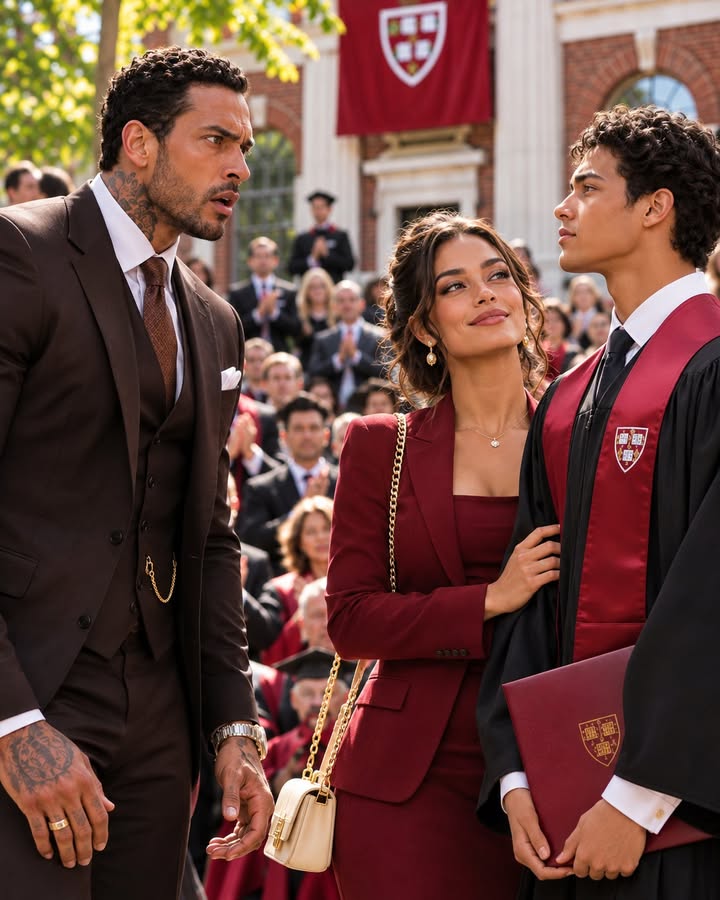
Part 5 – The Truth Daniel Would Allow
“I found it in an old file tonight,” Vincent said.
I held the phone more tightly.
“What does the printout say?”
“It’s a copy of your message.”
My gaze moved to the dark window, where my reflection looked like a woman listening to a voice from eighteen years ago.
“Then you did see it.”
“I thought I had,” he said. “But I don’t remember reading it. I remember seeing paper on my desk and asking Sophia what it was.”
“And what did she tell you?”
“That it was an old message from you, and that you didn’t want me to respond.”
I closed my eyes.
“She said that before the divorce?”
“Yes.”
“Did you read the message?”
“I can’t tell you that I did. I should have.”
“You should have.”
“I know.”
His admission did not soften the truth, but it changed its outline.
Sophia had not only hidden the message from him. She had placed it where he might find it, then given him an explanation that let him avoid looking closely.
Vincent had accepted that explanation because it matched the story he was already afraid to question.
“Why did you keep the printout?” I asked.
“I don’t know. It was in the same folder as the account papers.”
“Can you send it to me?”
“I will.”
“Don’t call Daniel with this yet.”
“I won’t.”
I ended the call and stood still in the dark kitchen, listening to the quiet apartment.
The message had reached Vincent’s office.
A printout had existed.
Sophia had told him not to respond.
And still, he had not asked me.
I could feel the old version of myself reaching for the simplest conclusion, the one I had lived with for years: he knew, and he chose to leave.
But the truth refused to stay simple.
The next morning, Vincent emailed me a scan of the printout.
My words were there, exactly as I remembered them, followed by the date and time they had been sent.
At the top, someone had written, “No response requested,” in small, neat letters.
Below that was Vincent’s name, in his own hand.
The mark beside it looked like an initial.
I stared at the page until Daniel came into the kitchen.
He poured himself coffee and noticed the scan open on my laptop.
“Is that the message?”
“Yes.”
He read it, then studied the handwritten note above it.
“Did he write that?”
“He says he thinks the mark is his.”
“Did he read your message?”
“He doesn’t remember.”
Daniel leaned against the counter.
“How do you forget reading something like that?”
“I don’t know.”
“Could he have seen the words and still chosen not to answer?”
“Yes.”
“Could he have trusted what Sophia told him and never actually read them?”
“Yes.”
Daniel’s jaw tightened.
“So we still don’t know.”
“We know she put the message in front of him and told him not to respond.”
“And we know he didn’t ask you.”
“Yes.”
He lifted his mug but did not drink.
“I hate that every answer makes another question.”
“I do too.”
“Did you want him to answer?”
“Yes.”
“Then you should have called again.”
The words were gentle, but I felt them all the same.
“I should have.”
“And he should have read the message.”
“Yes.”
Daniel sat at the table.
“I’m not trying to make it equal.”
“I know.”
“It isn’t equal. You were carrying me. He was the one who left the marriage.”
“I know.”
“But I don’t want you to take all the blame just because you’re here and he isn’t.”
I looked at my son, and for the first time since the ceremony, I understood that his anger was not simply something to survive.
He was trying to protect the truth from being bent into a shape that made either of us comfortable.
“I won’t,” I said.
He nodded, then finally took a sip of coffee.
Vincent did not contact Daniel that day.
Neither did I.
Three days later, an invitation arrived from Harvard’s alumni office, addressed to Daniel.
The university was hosting a small follow-up reception for the students recognized at the ceremony, along with a brief conversation about family, education, and the different paths that bring students to campus.
The program director had noticed the disruption during the first event and wanted to offer the students a chance to speak in a quieter setting.
There would be no audience beyond the invited families, a few faculty members, and the student panel.
Daniel read the invitation twice.
“Who’s on the panel?” I asked.
“It says they want a few students to talk about the people who helped them get here.”
“Will Vincent be there?”
“He’s listed as one of the guests.”
The invitation included a note from the program director.
Mr. Moretti has asked whether he may briefly correct his earlier statement. He will speak only if Daniel is comfortable with it.
I looked at my son.
“What do you want to do?”
“I don’t know.”
“You don’t have to decide now.”
“He says he wants to correct it.”
“That’s what the note says.”
“After telling an auditorium he had no children.”
“Yes.”
Daniel folded the invitation, then unfolded it.
“Would you want him to speak?”
“I want him to tell the truth.”
“That isn’t the same as wanting him to speak.”
“No.”
He glanced toward the window, where the late autumn light was thinning over the rooftops.
“If he says he has a son, everyone will know who I am.”
“The people in that room may already know.”
“Some of them saw what happened at the ceremony.”
“They may.”
“And then I’ll be the son he didn’t know about.”
“You are not required to let anyone make you a story.”
“How do I stop them?”
“You can decide what you will and won’t share.”
“That doesn’t stop people from talking.”
“No.”
He sat with the invitation in his hands.
“I don’t want to be his redemption.”
“I understand.”
“I don’t want him standing up there and making a speech about how he’s grateful for a second chance.”
“I can tell him that.”
“No,” Daniel said. “I need to tell him.”
I nodded.
He looked down at the paper again.
“I want to meet with him before the event.”
“Would you like me there?”
“No.”
“All right.”
“I want him to answer without you helping him.”
“I understand.”
“And I want to ask him something I couldn’t ask before.”
“What?”
“Whether he wants to know me, or whether he wants people to see him trying.”
I let the question sit between us.
It was not an unkind question.
It was the question of a young man who had watched adults shape their choices into explanations and wanted to know whether this one would be different.
“Then ask him,” I said.
Daniel sent Vincent a message that evening.
I’ll meet you once before the Harvard follow-up event.
I need to talk about what you plan to say.
Vincent replied almost immediately.
I’ll come wherever you choose.
Daniel chose a small study room in the university library.
The next afternoon, I waited outside while they talked.
I could hear no words through the closed door, only the muted movement of chairs and the occasional pause that seemed longer than it should have been.
After forty minutes, Daniel came out alone.
Vincent remained inside.
“How did it go?” I asked.
“I asked him why he wanted to speak.”
“What did he say?”
“He said he wanted to correct the lie.”
“That sounds reasonable.”
“Then I asked if he wanted to do it for me or for himself.”
“What did he say?”
“He didn’t have a good answer right away.”
Daniel adjusted the strap of his bag.
“Then he said he was tired of making choices based on what he could control. He said he wanted me to know that he wasn’t ashamed of me.”
The answer surprised me.
“Did you believe him?”
“I believe he meant it in that moment.”
“That’s something.”
“It’s not everything.”
“No.”
Daniel looked toward the study room door.
“I told him I don’t want him to say I gave him a chance.”
“Did he agree?”
“He said he wouldn’t.”
“And what else?”
“I told him I don’t want to be introduced as a surprise, a miracle, or proof that he’s changed.”
“What did he say?”
“He said he would use my name only if I wanted him to.”
“That sounds like he listened.”
“He did.”
Daniel seemed almost troubled by that.
“Listening is good,” I said. “It doesn’t erase what came before.”
“I know.”
He turned to leave, then glanced back at the closed door.
“He asked if he could see the old message.”
“Did you show him?”
“No. I told him it wasn’t mine to give him.”
I felt a sudden, unexpected rush of pride.
“You were right.”
“He said he understood.”
“Did he ask anything else?”
“He asked if you were willing to talk to him.”
“What did you say?”
“I told him that was for you to decide.”
I placed a hand lightly on his shoulder.
He did not pull away.
The reception was scheduled for the following Friday.
In the days before it, Daniel and I spoke less about Vincent than I expected.
He buried himself in coursework and orientation details, making lists of things he needed for his dorm and checking the weather as though he were preparing to leave for another country.
I watched him move through the apartment with a new carefulness.
He no longer asked me to explain what I thought.
He asked what I remembered.
When I answered, he listened without promising to believe me.
That distinction was painful.
It was also fair.
On Thursday evening, Vincent called me.
“Daniel said he doesn’t want you at the meeting tomorrow,” I said.
“He did.”
“Are you planning to speak?”
“Only if he asks me to.”
“What would you say?”
“The truth.”
“What does that mean to you?”
“I would say I have a son named Daniel. I would say I didn’t know he existed for most of his life, but that ignorance came from choices I made as well as choices someone else made for me. I would say I failed to check whether the support I arranged reached him, and I failed to ask his mother directly what she wanted.”
I listened without interrupting.
“I would say I’m grateful he has allowed me to meet him,” Vincent continued. “But I wouldn’t ask him to forgive me or call me his father.”
“Would you say Sophia intercepted the message and the money?”
“Only if Daniel wanted me to.”
“Would you say she was the reason you were absent?”
“No.”
The answer came without hesitation.
“She interfered,” he said. “That is true. But I was absent in ways that cannot be explained by her.”
I closed my eyes.
For once, he was not asking me to relieve him of responsibility.
“What about the statement you made at the first ceremony?” I asked.
“I would say I was wrong to speak as if the past were simple. I would correct what I can.”
“Do you understand that people may see this as a public confession?”
“Yes.”
“They may ask questions.”
“I won’t answer anything Daniel hasn’t agreed to share.”
“And if they think less of you?”
“I can live with that.”
I believed he meant it.
I did not yet know whether that made me trust him.
“Then wait for Daniel’s decision,” I said.
“I will.”
The next morning, Daniel placed the invitation on the kitchen table.
He had not slept well.
Neither had I.
“What are you going to do?” I asked.
“I’m going to let him speak.”
“You’re sure?”
“I’m sure about the condition.”
“What condition?”
“He has to apologize to me privately first, without saying Sophia made him do it.”
I looked at him carefully.
“Have you told him?”
“Not yet.”
“Do you want to?”
“I want him to understand that this isn’t a performance.”
He picked up his phone, typed a message, then stopped.
“What if he refuses?”
“Then you’ll know.”
“What if he agrees and says the right words?”
“Then you’ll listen and decide what they mean.”
Daniel set the phone down.
“I don’t want to be foolish.”
“Giving someone a chance to tell the truth isn’t foolish.”
“What if it hurts more?”
“It might.”
He looked at me.
“Would you let him speak if you were me?”
“No.”
His eyebrows lifted.
“I wouldn’t make the choice for you,” I said. “I can’t tell you what I would do if I were you, because I’m not.”
He seemed to accept that.
After a moment, he picked up the phone again.
I need you to apologize to me in private before the event, Daniel wrote.
No excuses, and no blaming Sophia for what you chose not to do.
If you can’t do that, don’t speak.
Vincent’s reply came a few minutes later.
I can.
Daniel stared at the words.
“Do you believe him?” I asked.
“I believe he wants to try.”
“That’s not the same as believing he’ll get it right.”
“No.”
He put the phone in his pocket.
“I need to get ready.”
The reception began at four in the afternoon in a smaller hall on campus.
The chairs were arranged in a half circle rather than rows, and the windows looked out on the same brick paths where students hurried between classes.
No cameras were visible.
No stage lights warmed the walls.
It was quieter than the ceremony, but the memory of that day sat in every corner.
Daniel arrived in a dark blue jacket and an expression I could not read.
Vincent was already there, speaking with the program director near the door.
When he saw Daniel, he excused himself and came over.
He did not look at me first.
He looked at our son.
“Can we talk outside for a minute?” Daniel asked.
“Of course.”
They stepped into the corridor.
I watched the door close behind them.
The room filled gradually with students, faculty, and family members.
I tried to focus on the conversations around me, but my attention kept returning to the doorway.
When Daniel and Vincent came back, Daniel’s face was composed, but Vincent looked as though he had been carrying something heavy and had finally set it down.
They took seats on opposite sides of the room.
The program director welcomed everyone and spoke about the different forms of support that make education possible.
She introduced the students, then invited a few of them to share brief remarks.
Daniel spoke about the work that had brought him to Harvard, about long nights with textbooks and a mother who never let him mistake exhaustion for failure.
He did not mention Vincent.
He did not mention the ceremony.
He did not mention the lie.
When he finished, the room applauded warmly.
Then the program director glanced toward Vincent.
“Mr. Moretti asked to say a few words,” she said. “He has agreed to speak only as Daniel has permitted.”
Every face turned toward my son.
Daniel remained seated.
He looked at Vincent, and Vincent waited.
There was no eagerness in his posture, no attempt to seize the moment.
Only patience.
Daniel took a breath.
“You can speak,” he said. “But only the truth.”
Vincent stood.
He walked to the front without asking for a microphone.
“I want to correct something I said at the ceremony,” he began. “When I was asked whether I had children, I said I did not.”
His voice was steady, though his hands were not.
“That was wrong.”
The room grew quiet.
“I have a son named Daniel.”
He did not look toward the audience.
He looked at Daniel.
“I did not know him for most of his life. Some things were hidden from me, but I failed to make sure the truth reached me. I failed to check whether the support I arranged reached his family, and I failed to ask his mother directly what she wanted.”
Claire glanced down at her hands.
No excuse.
No grand declaration.
Vincent continued.
“I am not saying this to ask for forgiveness. I’m saying it because Daniel deserves to exist in the truth, not in my silence.”
He paused.
“I’m grateful he has allowed me to try to know him. I have not earned the word father from him. If I ever do, it will be because of what I do after today.”
For a moment, no one moved.
Then the program director thanked him, and the room responded with a restrained, uncertain applause.
Vincent returned to his seat without looking around for approval.
Daniel watched him, his expression guarded.
The program ended a few minutes later.
People began gathering their coats and speaking in soft voices.
A faculty member approached Daniel to congratulate him.
Someone else asked Vincent whether he would be available for a photograph.
He politely declined.
The room thinned.
When the last of the guests had gone, Daniel remained by the window.
Vincent stood several feet away.
I took a step toward them, then stopped.
This was not mine to settle.
Daniel turned to Vincent.
“You said the right things today.”
“I tried to say the true ones.”
“That’s not the same thing.”
“No.”
“You still didn’t ask me what I want.”
Vincent’s face changed.
“What do you want?”
“I don’t know yet.”
“All right.”
“I don’t want you to call me your son in public again unless I say it’s okay.”
“I won’t.”
“I don’t want you telling people this is a second chance.”
“I won’t.”
“And I don’t want you asking me to forgive you.”
“I won’t.”
Daniel looked toward the empty chairs.
“Can you do that without feeling like I’m punishing you?”
“Yes.”
“Can you keep showing up even if I don’t call you my father?”
“Yes.”
“Even if I’m angry?”
“Yes.”
“Even if I never decide to have a relationship with you?”
Vincent took a breath.
“Yes.”
The answer did not come quickly, but it came without conditions.
Daniel studied him.
“Then we can try one conversation at a time.”
Vincent’s eyes filled, though he did not step closer.
“Thank you.”
“That wasn’t forgiveness.”
“I know.”
“It wasn’t a promise.”
“I know.”
“It’s one conversation at a time.”
“I understand.”
Daniel turned to me.
“Can we go?”
“Of course.”
We walked out together.
Vincent stayed behind.
In the courtyard, Daniel stopped near the low stone wall and looked across the campus.
“You heard him,” he said.
“I did.”
“Did you think he’d say all that?”
“I hoped he would.”
“Did you believe him?”
“I believed he was trying.”
Daniel lowered his gaze.
“That’s all I know how to believe right now.”
“That’s enough for today.”
He leaned his shoulder against mine, and I let the small weight of him remain there.
For several breaths, neither of us spoke.
Then his phone vibrated.
He looked at the screen and frowned.
“What is it?” I asked.
“An email from Vincent’s office.”
He opened it.
The message was brief, sent by Marisol with an attachment.
Vincent had asked her to send Daniel the original file related to the diverted payments and the pregnancy message.
Daniel opened the attachment.
It contained the same printout I had seen, but with the full page visible.
At the bottom, beneath the handwritten line “No response requested,” was an electronic routing stamp showing the message had been opened from Vincent’s office account.
The time stamp was eighteen years old.
Daniel read it once, then again.
“Does that mean he read it?” I asked.
He scrolled to the next page.
A short note appeared beneath the routing information.
Message reviewed by V. Moretti.
Forwarded to S. Reynolds for response.
Daniel went utterly still.
“I thought he said he didn’t remember reading it,” I whispered.
“He said he didn’t remember.”
“Daniel—”
He looked up at me, and the hurt in his eyes had changed into something more uncertain.
“I need to ask him what this means.”
His phone rang before he could call.
Vincent’s name appeared on the screen.
Daniel answered but said nothing.
On the other end, Vincent’s voice sounded shaken.
“Daniel,” he said, “I just saw the full file.”
Daniel stared at the words on the screen.
“So did I.”
There was a long silence.
Then Vincent said, “I think I may have known more than I remembered.”
Daniel’s hand tightened around the phone.
“Then what else don’t you remember?”
**–END OF PART 5–CLICK “NEXT” AT THE BOTTOM OF THE PAGE TO CONTINUE READING**
* * *
[PREVIOUS: PART 4](https://puretales.idolsgift.com/blog/part-4-the-truth-he-couldn-t-say-onstage-035) | [NEXT: PART 6(THE END)](https://puretales.idolsgift.com/blog/part-6-the-end-the-truth-he-couldn-t-say-onstage-035)
✓ Lynn R. Adams
Part 5 – The Truth Daniel Would Allow “I found it in an old file tonight,” Vincent said. I held the phone more tightly. “What does the printout say?” “It’s a copy of your message.” My gaze moved …