PART 5: The Truth He Couldn’t Outrun 056
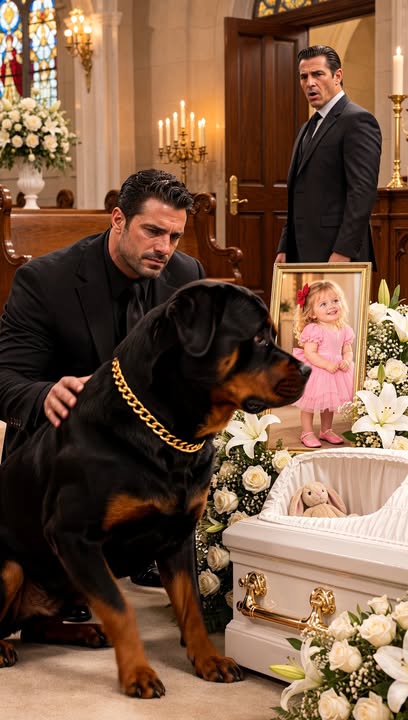
Part 5 – The Cost of the Truth
“What else has he kept from us?”
Tony looked at the folded note in my hand, then toward the closed door of the room where Marco was waiting for his lawyer.
“I don’t know,” he said.
For once, neither of us tried to make uncertainty sound like a plan.
The note was brief, written in Marco’s familiar, slanted hand, and dated months before Elena’s death.
He had recognized her in the drawing of Bruno, he wrote, and remembered her as Luis’s little girl.
He had never told me.
That did not mean he had known where she would be on the night she was struck, or that he had gone looking for her.
It meant he had recognized her before the collision, and that when he saw her lying in the road, he had understood whose child he had left behind.
I folded the note along its old crease.
“Did you show this to the detective?” Tony asked.
“Not yet.”
“Then you should.”
“I will.”
He studied me, as if waiting to see whether I would add something about protecting Marco or protecting the organization.
I had no such thing to say.
The lawyer arrived shortly before noon, carrying a leather briefcase and the careful expression of a man who had spent his morning telling people that honesty could not guarantee mercy.
Marco was in the front room with his wife.
Their son had not come.
His mother had said she wanted to tell him herself, when she could find words that would not make him feel responsible for what his father had done.
I had agreed to keep the boy away from the house and from the men who worked for me.
That was the smallest promise I could make, and the first one I had understood was mine to keep.
Marco’s wife stood when I entered.
Her eyes were swollen, but her voice was steady.
“Has the detective said what happens next?”
“The lawyer will take him in to surrender,” I said. “The police will decide what to charge him with.”
“And the rest?”
“The rest of what?”
“What happens to you when they start looking at your business?”
I glanced at the lawyer.
He did not answer for me.
“I don’t know,” I said.
Her fingers closed around the strap of her handbag.
“Marco says he’ll tell them everything he knows.”
“He should.”
“And you’ll let him?”
The question was not about whether I could stop Marco.
It was about whether I would try.
I looked at the man I had trusted for twelve years, and at the woman who had built a life beside him without knowing the whole of it.
“Yes,” I said.
She searched my face, perhaps for the old confidence that had made people believe I could keep any consequence outside a locked door.
She did not find it.
“I thought you would say you’d protect us,” she said.
“I will protect you from anyone in my organization who tries to frighten or harm you,” I replied. “But I can’t protect your family by hiding what happened.”
Her mouth tightened.
“Those are very different promises.”
“They are.”
“And you only understand the difference now?”
I thought of Luis’s hands folded beneath the funeral lights, of the white coffin, and of Elena’s drawing held inside its clear sleeve.
“Yes,” I said. “I do.”
She looked away.
Marco had been standing near the window, listening without stepping into the conversation.
“I’m sorry,” he said to her.
She shook her head once.
“Don’t apologize to me because he’s here.”
“I’m not.”
“Then don’t use the word as if it can do something.”
Marco’s face changed, but he did not argue.
His wife looked at the lawyer.
“Can I speak with him alone?”
“Of course,” the lawyer said.
She turned to me.
“Please give us a few minutes.”
I left with Tony and waited in the hall.
The door closed behind us.
From inside, I heard no raised voices, only the low murmur of two people trying to speak across a distance they had not known was there.
Tony leaned against the wall.
“Some of the men are asking what happens if Marco talks about collections.”
“They can ask.”
“They’re afraid he’ll give the police names.”
“He may.”
“And if he does, they’ll come to you.”
“I know.”
Tony lowered his voice.
“Some believe the organization is the only thing keeping all of us safe.”
“It has kept us safe from certain things.”
“That’s not nothing.”
“No.”
The hall smelled faintly of coffee and the lemon oil the housekeeper used on the banister.
For years, men had come to me with questions that had answers shaped like orders.
Now the people around me were asking what I would preserve, and the only honest answer was that I had not yet decided what could be preserved without turning the lie into another kind of home.
When Marco’s wife came out, she held herself very still.
“He’s telling our son today,” she said.
I nodded.
“Do you want someone with you?”
“I want to hear him tell the truth without anyone trying to make it sound less terrible.”
“I can arrange that.”
“I didn’t ask you to arrange anything.”
She stepped past us and walked toward the front door.
Before she left, she turned back.
“Keep your men away from my home.”
“They will stay away.”
“If anyone calls, I want to know who it is and why.”
“I’ll make sure you do.”
She watched me for a second longer.
Then she left without thanking me, and I was glad she did not feel obliged to.
The lawyer took Marco to the precinct that afternoon.
Before they went, Marco asked to speak with me in the entryway.
He wore a clean shirt and a dark coat, but his face had not changed since the funeral.
“I’ve written down the collections I handled,” he said. “The accounts I remember. The people I dealt with.”
“Give it to your lawyer.”
“I have.”
“Tell the police what they ask.”
“I will.”
He paused, then continued.
“I don’t want you to think the note means I knew what I was doing that night.”
“I don’t know what it means yet.”
He nodded.
“I saw Elena in that drawing once, at your house. She was with Luis when he came by to speak about the debt. I didn’t meet her properly. I only remembered the shoes and the picture.”
“What picture?”
“The drawing of Bruno. You had it on your desk for a while.”
I looked at him.
“I don’t remember putting it there.”
“You must have brought it back from the restaurant.”
The image stirred faintly: a sheet of paper on my desk, a child’s drawing in bright pencil, the dog surrounded by flowers.
I had assumed it was one of the things Luis had handed me while we discussed the restaurant’s payments.
Marco had seen it, recognized the child later, and kept the knowledge to himself.
“Why did you write the note?”
“I wanted to tell you I’d recognized her. I didn’t know how to bring it up without explaining why I’d been watching your papers.”
“That’s what stopped you?”
“It was part of it.”
“What was the rest?”
He lowered his eyes.
“I was afraid you’d ask why I knew the girl’s face, and then I’d have to admit how often I noticed the things you tried to keep quiet.”
The confession landed strangely.
“I wasn’t hiding anything from you.”
“You thought you weren’t.”
He glanced toward the door, where his lawyer was waiting.
“I knew about the art supplies,” he said. “I knew you had paid Luis’s bills quietly more than once. I knew you’d waived late payments when the restaurant was struggling.”
“That was business.”
“Not all of it.”
I had no answer.
Marco’s eyes had grown wet, but his voice remained level.
“I knew you did things you didn’t want people to thank you for. I used that as a reason to think you’d understand why I kept quiet.”
“You thought I would excuse what you did because you knew I had once done something kind.”
“No. I thought I could hide the truth until I was ready to face it.”
“And were you?”
“No.”
His answer came quickly, and that was the first thing he had said all day that did not seem shaped to help him.
I opened the door for him.
He looked over my shoulder toward the road.
“My wife will tell our boy?”
“She said you would tell him together.”
He nodded.
“I’ll try to deserve that chance.”
“You don’t get to decide what you deserve.”
“No,” he said. “I don’t.”
The lawyer guided him outside.
I watched them get into the car, then stood in the entryway long after it had disappeared down the block.
At the precinct, the detective took Marco’s formal statement with his lawyer beside him.
I was not there, but she called me afterward.
“He has surrendered,” she said. “He’s been charged in connection with Elena’s death and with leaving the scene.”
The words were measured, neither softened nor dramatized.
“Is he cooperating?”
“He has provided an account of the collision and the events afterward. He also gave us records related to his work for you.”
“I understand.”
“There’s more,” she said. “He told us about the page he took from Elena’s sketchbook and gave us the note he had written about recognizing her.”
I closed my eyes.
“I found the note in an old account book. I’ll bring it in.”
“Please do. We’ll document it with the rest of the material.”
“Will that change the investigation?”
“It may help us understand the timeline. It doesn’t tell us why he struck her, and it doesn’t prove he knew she would be on that street.”
“I know.”
“The second vehicle remains unconfirmed. We’re speaking with the shopkeeper again and checking other accounts.”
“If you need anything from me, ask.”
“We will.”
Her voice held no accusation, but no reassurance either.
Before she hung up, she said, “Mr. Moretti, I want to be clear. If you have records relevant to the collections or the organization, you should preserve them and turn them over through your lawyer.”
“I will.”
I called my lawyer next.
He listened while I told him about the note and the detective’s request.
“Do you have records that could expose your operation?” he asked.
“Yes.”
“Do you understand what handing them over may mean?”
“Yes.”
“Criminal charges, financial consequences, people who may decide you’ve betrayed them.”
“I understand.”
“Then I advise you not to make a decision before we review everything.”
“I’m asking you to review it with me.”
“That is not the same as agreeing to surrender it.”
“It is if I decide to.”
He exhaled quietly.
“I’ll come over this evening.”
The afternoon unfolded around a silence that seemed to have entered the house with Marco’s empty chair.
Tony spoke with the men one by one.
Some were angry that I had allowed the police into our affairs.
Others wanted to know whether the organization would continue to operate as before.
No one threatened me, and I issued no threats in return.
I told them that Marco had been arrested, that the police would investigate the collections, and that no one was to contact his wife or son without her permission.
Then I told them that I would not destroy, hide, or alter any records.
A few men left the room before I had finished speaking.
Others stayed, their expressions closed.
“Boss,” one of them said, “if you hand over the books, you hand over all of us.”
“I know.”
“You built this.”
“I helped build it.”
“Then why let it fall?”
I looked at the long table, where the men had once gathered to settle disputes and divide work as though those things were the only measures of a life.
“Because it was built to make people afraid of what would happen if they said no.”
The man shook his head.
“That’s not how it started.”
“No,” I said. “It isn’t.”
The memory of the beginning felt thin against the present.
When the room had emptied, Tony remained behind.
He had stood beside me through two attempts on my life and through years of choices we had called necessary because the alternative seemed inconvenient.
“You’re going to turn over the records,” he said.
“Yes.”
“You’ll be arrested.”
“Possibly.”
“Charged.”
“Possibly.”
“Maybe imprisoned.”
I looked at him.
“I know.”
He lowered himself into a chair.
“And then what?”
“I don’t know.”
“You’ll lose everything you built.”
“Maybe that’s what has to happen.”
He watched me for a long time.
“I used to think the worst thing that could happen to us was losing power.”
“So did I.”
“What do you think now?”
I looked down at the account book on the table.
“I think I’ve spent too long asking how to keep a thing standing when I should have asked what it was standing on.”
Tony’s expression softened by a fraction, though the concern remained.
“Luis won’t see this as a gift.”
“No.”
“Marco’s family won’t be made whole by it.”
“No.”
“Elena won’t come back.”
“No.”
He rested both hands on the table.
“Then what are you hoping for?”
I considered the question.
“For the truth to belong to the people it hurt,” I said. “Not to me.”
That evening, my lawyer arrived with two empty boxes and a stack of legal labels.
He asked me to identify what records I had kept, where they were stored, and whether anyone else held copies.
I took him to the study.
The bookshelves held decades of ledgers, handwritten notes, signed agreements, and calendars with names in the margins.
There were files in the locked cabinet, and more in the safe behind it.
My lawyer examined the first ledger without opening it.
“Once we turn these over, you cannot control how they’re used.”
“I know.”
“Your cooperation may help, but it does not guarantee leniency.”
“I know.”
“Some people in these records are not charged with anything. The investigation will decide whether that changes.”
“I know.”
He looked at me over the file.
“You’ve said that three times.”
“I’ve spent a long time saying I understood things I hadn’t really considered.”
He held my gaze, then nodded.
We began with the accounts connected to the collection routes Marco had handled.
Then we added the records that showed where the money had come from and where it had gone.
The lawyer insisted that we inventory each item before packing it.
I did not object.
Every name on every page seemed to have a life attached to it, even when I had treated it like an entry.
At the bottom of the locked cabinet, I found a small envelope with Luis’s name written across it.
I had put it there months earlier, after deciding to cancel part of his debt without telling him.
The envelope contained a copy of the revised balance and a note to myself: deliver when he is ready to discuss a new payment plan.
I stared at it until the words blurred.
I had thought I was being generous.
I had still framed the gesture as a payment plan.
The lawyer took the envelope from me and placed it in the box with the other records.
“Does that belong with the rest?” he asked.
“Yes,” I said. “It does.”
The detective called shortly after eight.
She had spoken with Luis again and wanted to know whether I would be willing to provide a formal statement about the account book and the art supplies.
“I’ll come in tomorrow.”
“Good. We also need the note in Marco’s handwriting.”
“I’ll bring it.”
“There’s one other matter. Mr. Vasquez asked whether you were going to turn over your records.”
I looked toward the boxes on the study floor.
“What did you tell him?”
“That you had agreed to cooperate regarding Marco’s confession. I didn’t tell him anything about the rest of your business.”
“He didn’t ask me.”
“He wanted to know whether the investigation would reach you.”
“What did you say?”
“That we were following the evidence.”
I let that answer settle.
“Can I speak with him?”
“He said he would call you when he was ready.”
“I won’t ask him to.”
“Good.”
After we hung up, I sat alone in the study.
The room looked smaller with the shelves partly empty.
It was not yet the end of the operation, but I could see the outline of its absence.
The books had always been a kind of map, one that told me who owed me, who relied on me, and how far my influence reached.
Now they looked like evidence of how often I had mistaken being needed for being respected.
I found Bruno asleep near the doorway.
His head rested on his paws, the purple collar turned slightly beneath his jaw.
I sat down beside him.
“You were right to make me look,” I said.
He opened one eye.
Then he stretched, placed his head against my knee, and went back to sleep.
For a moment, I let myself accept the warmth of him without making it mean anything about the case.
The following morning, I went to the precinct with my lawyer and the note from Marco.
Luis was already there.
He stood near the detectives’ offices holding the copy of Elena’s drawing inside a plain folder.
We exchanged a greeting and no more.
The detective asked me to confirm when I had first seen Marco’s note and where I had found it.
I answered carefully, then provided the account book for examination.
She asked whether I had any other relevant records.
“Yes,” I said. “I’m turning them over through my lawyer.”
Luis looked at me.
His face revealed no satisfaction, only a guarded attention.
When the detective had finished, I asked if he would speak with me outside.
He considered the request before answering.
“All right. Briefly.”
We stood beneath the same stone awning where we had spoken the day before.
The morning was cold enough to show our breath.
“I’m giving the police my records,” I said. “All of them that relate to the operation.”
Luis held the folder close against his chest.
“Why?”
“Because they may be relevant to what Marco did and to the work I put him in.”
“Is that all?”
“No.”
I searched for a way to say it without making my choice into a request for approval.
“I spent years believing that I could help people quietly and still avoid answering for the harm around me. I don’t believe that anymore.”
He looked toward the street.
“Will turning over records help Elena?”
“It may help establish what happened. It won’t bring her back.”
“No.”
“I’m not asking you to think it’s enough.”
“Good.”
His reply was quiet, but it held the weight of every careful offer I had made him.
“You told the detective about the debt?” he asked.
“I did.”
“And the payment I was going to bring?”
“I told her about the account, not about what you planned to do.”
He nodded.
“I’ve spent a long time trying not to owe anyone,” he said.
“You don’t owe me.”
“I still don’t know what that means when I’ve been carrying the debt all this time.”
“It means you decide what you want from me, if anything.”
He studied my face.
“And if I want nothing?”
“Then I’ll respect it.”
For a moment, the only sound was traffic moving over wet pavement.
Luis opened the folder and looked at the photograph of Elena’s drawing.
“She wrote that she wanted to make pictures for people who needed something happy.”
“I saw.”
“I don’t know what she would think of all this.”
“I don’t either.”
He closed the folder.
“I have to go back to the restaurant.”
“Are you reopening?”
“I haven’t decided.”
He turned to leave, then stopped.
“I’ll call you when I’m ready to talk about the money.”
“Whenever that is.”
“And don’t send anyone to ask for me.”
“I won’t.”
Luis nodded once and walked away.
I did not follow.
By the time I returned to the house, the boxes had been sealed and labeled by my lawyer.
They were lined up beside the study wall, each one marked for transfer to the investigators.
Tony was waiting in the hall.
“Are you certain?” he asked.
“No.”
He looked at me, surprised.
I took a breath.
“But I’m going ahead.”
The lawyer arrived a few minutes later with two officers.
They made an inventory of the boxes and asked me to sign a receipt.
My hand paused over the paper.
For years, my signature had opened doors.
This one would close them.
I signed.
The officers carried the first box to the car, then returned for the next.
No one raised their voice.
No one made a scene.
Each box left the house in the ordinary way that important things sometimes do, carried through a doorway by people who know their weight but not every life inside it.
When the last one was gone, the study shelves stood bare.
Tony came to the doorway.
“What now?”
I looked at the empty space where the account books had been.
“Now we wait for the truth to catch up.”
My phone rang.
The detective’s name appeared on the screen.
I answered.
“We’ve finished reviewing the note Marco wrote,” she said. “There’s something in it we need to discuss with you.”
“What is it?”
She was quiet for a beat.
“Marco’s first account of the collision was incomplete in another way,” she said. “He wasn’t the only person who stopped after Elena was hit.”
**–END OF PART 5–CLICK “NEXT” AT THE BOTTOM OF THE PAGE TO CONTINUE READING**
* * *
[PREVIOUS: PART 4](https://storyly.idolsgift.com/blog/part-4-the-truth-he-couldn-t-outrun-056) | [NEXT: PART 6(THE END)](https://storyly.idolsgift.com/blog/part-6-the-end-the-truth-he-couldn-t-outrun-056)
✓ Lynn R. Adams
Part 5 – The Cost of the Truth “What else has he kept from us?” Tony looked at the folded note in my hand, then toward the closed door of the room where Marco was waiting for his lawyer. “I don’t k…