PART 5: The Step That Remembered 069
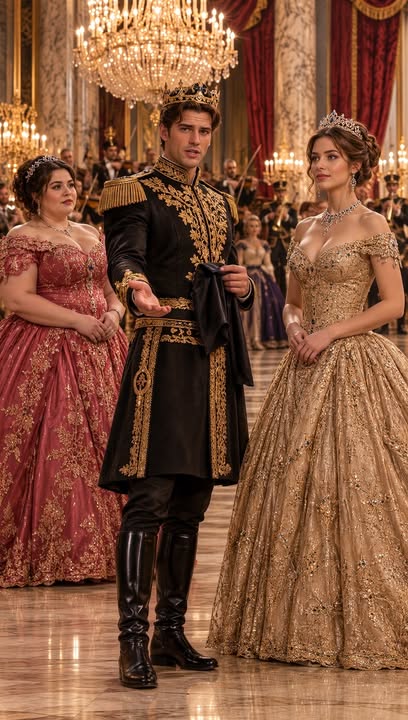
Part 5 – The Price of the Truth
“Ask who sent this letter.”
The words lay between them, stark beneath Marek Voss’s signature.
Adrian read them once more, then lowered the page.
“Someone wants us to believe he is alive,” he said.
“Or wants us to believe the person who sent this is dead,” Elara replied.
Celestine had gone very still beside the table.
“Could the second line be a warning?” she asked. “Or a correction?”
Master Hollis examined the seal without touching it.
“The wax matches the mark on the earlier letter,” he said. “But a seal can be copied.”
“Could the handwriting be compared?” Adrian asked.
“I can ask the palace secretary to examine it. I cannot promise he will recognize it.”
“Do so quietly.”
Master Hollis bowed and left with the letter, while Adrian kept the account book open before him.
Elara watched his face.
The hope that had risen when he read Marek’s name had not disappeared, but now it seemed held beneath a careful, painful restraint.
“You want him to be alive,” she said.
“I want the truth to be possible.”
“That is not quite the same thing.”
“No.” He folded his hands. “But I have spent too long mistaking certainty for safety.”
Celestine closed her folio.
“We should not go to the river crossing because an unsigned message tells us to.”
“I agree,” Adrian said. “But we cannot ignore the reference to the original tally.”
“If it exists, it could confirm the missing jewels and the false accounts,” Elara said.
“And if it does not, the letter may still tell us who is watching the investigation,” Celestine replied.
Adrian looked at her.
“You think the sender expects us to go.”
“I think someone wants us to make a choice before we have time to understand the consequences.”
Elara’s gaze settled on the open account book.
Her father’s name appeared in the last entry, written beside the words that the court had never known.
Tomas was alive when I left him.
For years, she had wondered whether her father’s silence meant shame.
Now she knew it had also meant protection.
But the lie had remained, long after its immediate danger had passed, and it had shaped the lives of people who had never been given the chance to question it.
“We should ask the council to secure the records,” she said.
Adrian’s eyes met hers.
“Once the council knows, the inquiry will become public.”
“It may become public anyway.”
“Lord Rook’s allies could try to discredit the account before the evidence is verified.”
“Then we must verify it.”
Celestine rested one hand on her folio.
“My family’s records are genuine, but they are copies. They show payments and seals, not what those payments purchased.”
“The account book is stronger,” Adrian said.
“Still not conclusive,” Elara replied. “It shows what someone wrote. It does not prove every claim in it.”
“No,” he agreed. “The tally might.”
Celestine’s expression tightened.
“If we ask the council for permission to retrieve it, we alert anyone who still has influence in the palace.”
“And if we go without permission,” Elara said, “we make the investigation harder to defend.”
The room fell quiet.
Adrian looked down at the papers, then toward the tall windows where the afternoon had begun to dim.
“I could keep the matter within the royal household,” he said. “Have the ledger sealed, the letter treated as uncertain, and the old accusation quietly withdrawn.”
Elara felt the words settle heavily in her chest.
“Quietly withdrawn?”
“I would state that there is insufficient evidence to support the claim against your father.”
“That is not the same as clearing him.”
“No.”
“And the missing jewels?”
“We could continue investigating without announcing what we suspect.”
“You could,” Elara said. “As prince, you could decide what the court is allowed to hear.”
“I could.”
“And what would happen to the people who have been living with the truth?”
His jaw tightened.
“I do not know.”
“That is the part you would be choosing.”
He looked at her, his expression weary rather than defensive.
“If I present incomplete evidence to the council, I risk damaging the Crown and failing to prove what happened.”
“If you hide it, the old story remains.”
“Yes.”
“And my father remains the man they accused.”
Adrian lowered his eyes.
“I know.”
Elara’s anger was quiet, but it had grown steady.
She had thought that learning the truth would bring relief.
Instead, it had given her a new responsibility: to decide what to do with a truth that could still be incomplete, dangerous, and costly.
“My father chose silence to protect people,” she said. “I understand why he did it. But that does not mean silence is always the right choice.”
“No,” Adrian said. “It does not.”
“You have spent your life being told that the crown must be protected.”
“It is my duty to protect the crown.”
“From what?”
“From scandal, from instability, from people who would use uncertainty to weaken it.”
“And from the truth?”
His gaze lifted.
“If the truth is known before it is proved, it can be used as a weapon.”
“That is true,” Elara said. “But if you conceal it because it might hurt the crown, you make the crown more important than the people it is meant to serve.”
Celestine looked from one to the other but did not interrupt.
Adrian’s expression changed, a flicker of pain crossing the composure he had worn so easily in the ballroom.
“You think I would choose the throne over your father’s name.”
“I think you are afraid that telling the truth will cost you something you were raised to protect.”
“That is not an answer.”
“It is the answer I have.”
He turned away from the table and walked to the window.
Below, the palace courtyard was filling with the long shadows of evening.
For several moments he said nothing.
Then he spoke without turning.
“I was taught that a future king must never let private feeling cloud judgment.”
“And what do you believe?”
“I believe that private feeling can reveal what judgment has been taught to ignore.”
Elara had not expected the answer.
She moved closer, stopping beside him without touching his arm.
“Then what are you afraid of?”
He looked out toward the courtyard.
“Being wrong in public.”
The honesty of it pierced her more sharply than a grand declaration would have.
“A prince can survive being wrong,” she said.
“A king may not be permitted to.”
“Then perhaps the court should learn to follow a king who admits what he does not know.”
He closed his eyes briefly.
“I cannot ask you to take the risk of going to the river road.”
“You cannot decide the risk for me.”
“I know.”
“Do you?”
He turned to face her.
The question did not anger him.
It made him stop.
For a moment, the old instinct returned to his expression: to take control, to arrange every danger, to decide what another person could bear.
Then he let it pass.
“No,” he said. “Not always.”
Elara studied him.
“Your master’s letter said trust was not a command to follow without question.”
“And I have spent years expecting people to prove they were trustworthy while offering them very little in return.”
“I have noticed.”
“I am sorry.”
This time, the apology did not concern the past alone.
It reached into the space between them, where his questions had sometimes been careful and his silences too well guarded.
Elara’s anger softened, though it did not vanish.
“I do not need you to be certain,” she said. “I need you to let me choose.”
Adrian held her gaze.
“Then choose,” he said.
The words were not a challenge.
They were an opening.
Elara looked back at the account book.
Her father’s decision had once saved Master Vale’s life.
But the cost had been borne by people who did not know why they had been left behind.
She would not pretend that a secret became harmless simply because it began with love.
“I will go to the river crossing,” she said. “Not because the letter tells us to, and not alone. We will take the evidence we have to the council first, and we will ask for a witness who is not tied to your household or mine.”
Celestine nodded slowly.
“My family has a magistrate in the northern district who has no connection to Lord Rook. I can send for him.”
“Not yet,” Adrian said. “If the message was meant to draw us out, we should not create a trail before we know who sent it.”
Elara glanced at him.
“Then what do you suggest?”
“We make a formal record of the account book and the letters. Master Hollis will copy every page and certify what he can. Celestine’s family records will be added as supporting evidence.”
“And the council?”
“I will present the evidence to them tomorrow.”
“Publicly?”
“Before the full council, yes.”
Celestine’s brows lifted.
“That will bring the matter into the open.”
“It will make it harder for any one person to suppress.”
“And if the evidence is challenged?” she asked.
“Then the challenge will be recorded too.”
Elara felt a measure of relief, though it was tempered by dread.
“Will you tell them what you intend to do about the original tally?”
“I will tell them we have reason to believe it exists and propose a supervised search.”
“Would the council agree?”
“Some will. Some will fear the consequences.”
“And if they refuse?”
“I will go to the river crossing anyway.”
The room seemed to grow still around them.
Elara studied Adrian’s face, searching for the prince who had spoken beneath the chandeliers, the man who had built a test around trust and expected the court to applaud his answer.
He was still there.
But something had shifted.
“You would defy the council?” she asked.
“I would take responsibility for the choice. I would not pretend their refusal made the evidence disappear.”
“That could damage your standing.”
“It could.”
“It could complicate your succession.”
“I know.”
Celestine folded her arms, her gaze thoughtful.
“You are willing to risk the stability you mentioned.”
“I am willing to learn whether I have been protecting stability or merely the comfort of people who already possess power.”
Elara looked at the prince’s hands.
The same hands that had once gripped hers beneath the blindfold were now open at his sides.
“You cannot know what this will cost,” she said.
“No.”
“Then do not say it as though the cost is noble.”
“I am not.” His voice softened. “I am saying I will not make the choice for you and call that protection.”
Her eyes stung, but she kept her voice level.
“Thank you.”
A knock sounded at the archive door.
Master Hollis entered, carrying the two letters and the copy of the account book.
“The palace secretary has examined the handwriting,” he said. “He cannot prove who wrote the note, but he recognizes the signature as a close imitation of Marek Voss’s old hand.”
“So the writer knew his letters,” Adrian said.
“Yes. The secretary also found that the seal impression appears on several documents sent from the estate of Lord Rook.”
Elara felt the room tighten around the name.
“Could Lord Rook have sent it?” Celestine asked.
“Possibly,” Master Hollis replied. “The seal itself may have been copied, but the letter was likely written by someone with access to the estate papers.”
Adrian’s face became grave.
“Then someone connected to Rook knows we have found the passage.”
“Or has known for years,” Elara said.
Master Hollis lowered his voice.
“There is another matter. A messenger from the council is waiting outside. Lord Rook has requested an audience with Your Highness tomorrow morning.”
“Did he give a reason?”
“He says he has heard rumors that the royal archives are being searched.”
Adrian’s expression did not change.
“Tell the messenger I will see him.”
“Your Highness, Lord Rook is not on the council now.”
“I know.”
“His influence among the older families remains considerable.”
“I know that too.”
The archivist left.
Celestine gathered her papers.
“If he knows we are looking, he may try to stop us from reaching the tally.”
“Or he may want us to find it,” Adrian said.
Elara studied the unsigned line beneath Marek’s name.
“Why?”
“To control what we find,” Celestine replied. “Or to make us think there is nothing there.”
“Either way,” Elara said, “we cannot let his invitation decide our next move.”
Adrian nodded.
“Tomorrow, I will take the evidence to the council. I will ask them to authorize the search.”
“And if they refuse?” Elara asked.
“I will tell you what they decide, and you will decide whether you still wish to go.”
“That is fair.”
He hesitated.
“And if you choose to go, I will go with you.”
“I did not ask you to.”
“No. But I want to.”
The words were quiet, without the authority of a royal command.
Elara felt the distance between them alter again.
She wanted to say that wanting was not enough.
She wanted to tell him that trust would take more than one honest choice.
Instead, she said, “Then we will decide when we know what we are facing.”
He accepted that, as he had accepted her other boundaries.
That evening, the palace held no dance.
The ballroom was dark, its chandeliers unlit, and the marble floor seemed to have forgotten the applause that had once filled it.
Elara returned to the old musicians’ gallery with a copy of the sheet music.
She needed to hear the rhythm again, not as a performance, but as a map.
The old waltz began in reverse, turning the dancer away from the familiar path.
The third measure opened toward the left.
The next step crossed backward beneath the body.
She remembered the passage’s bend, the scuffed stone, and the words written in her father’s hand: where the old waltz turns backward.
A route, perhaps.
Or an instruction to stop before the point where the dance reversed.
Behind her, the gallery door opened.
Adrian entered alone.
“You are still here.”
“So are you.”
“I thought you might want company.”
“I might.”
He came to stand beside her at the rail.
For a while they looked down at the empty ballroom.
“I will not ask you to marry me tonight,” he said.
Elara turned her head.
“I would not accept a proposal made in the middle of an investigation.”
“I thought you might say that.”
“Then why mention it?”
“Because I do not want the court to mistake your help for a promise to me.”
The care in his voice made her chest tighten.
“I do not want to be the reward for your honesty,” she said.
“You are not.”
“I do not want you to choose the truth because you think it will make me love you.”
“I will not.”
“And I do not want you to choose me because I helped you find your way through a dance.”
“I know.”
She watched him carefully.
“What do you want, Adrian?”
He looked down at the floor.
“I want to know you without turning every conversation into a test.”
“That may take time.”
“I know.”
“I may discover that I do not want what you want.”
“I know.”
“You may discover the same.”
“I know that too.”
The honesty between them did not make the future easy, but it made it possible to imagine.
Elara returned her attention to the ballroom.
“My father gave me the steps before I knew they were a secret.”
“Do you regret dancing them?”
“No.”
“Even now?”
“Especially now.”
Adrian’s hand rested on the rail beside hers.
This time, their fingers touched.
Neither of them moved away.
The contact was slight, but it held no demand.
“I am going to the council tomorrow,” he said. “I will tell them what we have found, including what it may mean for my family and yours.”
“And if they ask you to keep it quiet?”
“I will ask them to give me a reason grounded in evidence, not fear.”
“And if they have none?”
“Then I will publish the records.”
Elara’s throat tightened.
“Even if they accuse your father of failing to protect the court?”
“He did fail to return to me.”
“That is not the same accusation.”
“No,” Adrian said. “It is not.”
He turned his hand slightly beneath hers, offering the choice to withdraw.
Elara kept her fingers where they were.
In the morning, the council gathered in the east chamber.
Its members sat beneath portraits of former rulers, each painted with the calm certainty expected of people who had never been asked to explain their choices.
Lord Rook was not present, but his name seemed to have arrived before them.
Adrian stood at the center of the room, with Master Hollis beside him and Elara and Celestine seated at the witnesses’ table.
The ledgers, account book, letters, and family records lay in careful order.
The prince spoke without ornament.
He described the missing payments, the corridor sealed under Lord Rook’s authority, the letter found in the passage, and the account book recovered beneath the palace.
He did not call the evidence proof.
He did not soften what it suggested.
When he finished, the council chamber remained silent.
A senior minister leaned forward.
“Your Highness, these materials raise troubling questions, but they do not establish that Lord Rook sold royal jewels.”
“I agree.”
“Nor do they prove that Master Vale was innocent of every accusation made against him.”
“They establish that the court’s story was incomplete,” Adrian replied. “They show that the man was injured, that he was helped through a hidden passage, and that the claims against him may have been used to conceal altered accounts.”
Another councilor looked toward Elara.
“Lady Vale, do you understand that publicizing this record may bring renewed scrutiny upon your father?”
“I do.”
“Your family could be accused again.”
“My family has been accused for eleven years without evidence. If the records are false, I want them tested. If they are true, I want them heard.”
The councilor’s expression remained guarded.
“And you, Lady Celestine? Your family’s accounts also appear in this matter.”
Celestine stood.
“I understand that the records may implicate members of my family. I brought them here because I would rather discover what they mean than continue benefiting from their silence.”
A few council members exchanged glances.
The senior minister returned his attention to Adrian.
“The safest course is to seal the documents while the inquiry is conducted privately.”
Elara heard the word safest and looked at the prince.
It was the choice they had discussed the night before, dressed in formal language and offered by people who understood the value of delay.
Adrian looked at the papers.
Then he looked at the council.
“I will not suppress the evidence,” he said. “The original records will remain under seal while copies are made, but the existence of the inquiry will be announced. The council may examine every claim, and the people named in the records may answer it.”
“Your Highness,” another minister warned, “that announcement may cause political confusion.”
“Then we will explain what we know, what we do not know, and what we are still investigating.”
“And if the public concludes that the Crown protected a thief?”
Adrian’s gaze did not waver.
“Then the Crown must answer for having repeated an accusation it could not prove.”
A rustle moved through the chamber.
The senior minister leaned back.
“You understand the consequences.”
“I do not understand all of them,” Adrian replied. “That is why the evidence must be examined openly.”
Elara felt something in her chest ease.
Not because she believed the choice would be simple, but because he had not asked her to carry it for him.
The council agreed to preserve the evidence and appoint an independent examiner from beyond the palace household.
They did not yet authorize the journey to the river crossing.
Adrian requested permission to retrieve the original tally under witness.
The council promised to consider it after the examiner had reviewed the letters.
The meeting ended without a resolution, but the records had been entered into the official register.
They could no longer be quietly erased.
In the corridor outside the chamber, Adrian turned to Elara.
“I did not get permission to go.”
“No.”
“I will wait for the examiner’s first report.”
“You should.”
“And if it confirms the records?”
“Then we decide what comes next.”
Celestine joined them, her expression thoughtful.
“My family’s magistrate can serve as an independent witness if the council asks for one.”
“Thank you,” Adrian said.
She gave a small nod.
“I did not bring those records to be thanked.”
“I know.”
For the first time, Celestine smiled without strain.
“Good. Then perhaps I am learning to do one thing without needing it to earn me something.”
Elara smiled back.
The three of them parted near the archive wing.
Adrian had been called to meet Lord Rook, who had arrived at the palace earlier than expected.
Before he left, he looked at Elara.
“I will tell him only what has been made public.”
“Tell him nothing you do not have to.”
“I will not.”
“And do not decide that silence is the same as caution.”
“I will remember.”
He went toward the council chamber.
Elara returned to the archive with Celestine and Master Hollis.
The records had already been copied and bound for examination.
On top of the stack lay a fresh sheet from the royal secretary.
It contained a transcript of the message sent to Adrian, alongside the secretary’s note about the imitation signature.
Elara read the last line again.
Marek Voss died twelve years ago.
If that was true, the earlier message could not have come from him.
But someone knew the old writing.
Someone knew the hidden passage.
Someone knew they had found the account book.
A messenger entered and spoke quietly to Master Hollis.
The archivist’s face changed.
“Your Highness has requested you in the council chamber,” he said to Elara. “Lord Rook has offered to explain the payments himself.”
Elara glanced toward Celestine.
“What did he say?”
“That the accounts were authorized to protect the royal family from a private scandal.”
“Which scandal?” Celestine asked.
Master Hollis hesitated.
“He says Master Vale’s disappearance was not caused by the jewel accounts.”
Elara’s fingers tightened on the paper.
“Then what does he claim happened?”
The archivist looked toward the council chamber, where Adrian was waiting.
“Lord Rook says the prince’s former dance master was never the only person your father helped escape.”
**–END OF PART 5–CLICK “NEXT” AT THE BOTTOM OF THE PAGE TO CONTINUE READING**
* * *
[PREVIOUS: PART 4](https://storyly.idolsgift.com/blog/part-4-the-step-that-remembered-069) | [NEXT: PART 6(THE END)](https://storyly.idolsgift.com/blog/part-6-the-end-the-step-that-remembered-069)
✓ Lynn R. Adams
Part 5 – The Price of the Truth “Ask who sent this letter.” The words lay between them, stark beneath Marek Voss’s signature. Adrian read them once more, then lowered the page. “Someone wants us t…