PART 5: The Star She Kept 041
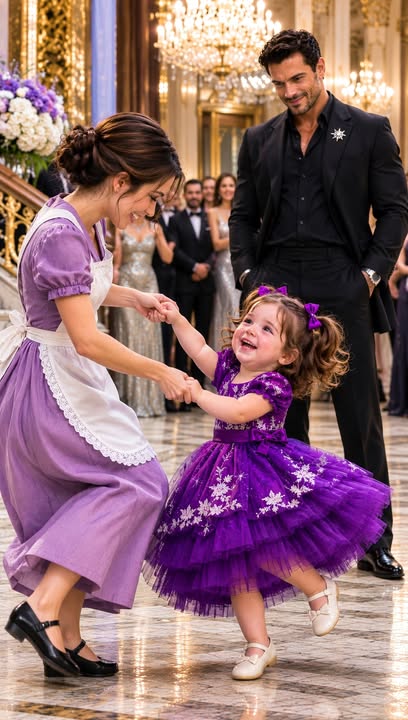
Part 5 – The Words We Choose
My own name sat beneath Elena’s sentence in the same uneven handwriting I had used at fifteen.
Mara asked me not to tell her family until she was ready.
For a moment, I was back in the center’s pale waiting room, though I could not remember the conversation that had brought me there.
I remembered Eli on the floor beside a plastic fish tank, his knees drawn up, his hands pressed over his ears.
I remembered Elena kneeling at a careful distance, speaking so softly that I couldn’t hear what she said.
And I remembered the shameful relief of someone else taking over.
“I wrote that?” I whispered.
Mrs. Han kept her voice gentle.
“It appears so.”
Vittorio did not reach for the paper.
“Do you remember asking Elena not to tell your family?” he asked.
“No.”
The answer came out too fast, and I pressed my fingers against the table to steady them.
“I remember going there with Eli. I don’t remember this.”
“Could you have asked her to keep something private?” Mrs. Han said. “You were young.”
“I must have.”
There was no accusation in the room, but my mind supplied one anyway.
I had always told myself I didn’t understand what Eli needed.
Now I wondered whether someone had tried to explain it to me, and whether I had turned away.
Vittorio’s hand rested beside the sealed envelope.
He looked at me, but did not offer comfort I hadn’t asked for.
“Do you want a moment?” he said.
“I want to know what I said.”
Mrs. Han glanced at the envelope.
“Perhaps the letter explains more.”
Vittorio looked down at Elena’s handwriting on the front.
For all the weeks we had searched through the silences she left behind, this was the first thing she had clearly meant him to read.
He carefully broke the blue tape.
Inside was a single sheet of paper, folded in half.
He read the first lines without speaking, his face tightening with each one.
Then he turned the letter so I could see it.
My dearest Vittorio,
If you are reading this, then you have found the papers I left at the center.
I hope you are reading them when you feel able, and not because anyone has made you.
Vittorio stopped there.
His eyes closed briefly, then opened again.
He continued.
There was a boy named Eli who came to the center with his sister, Mara.
I grew fond of them both.
Eli was thoughtful and observant, but the rooms and routines of his days often asked more of him than he could explain.
His sister wanted to help.
She was young, too, and carried a worry that she might make things worse if she told an adult what she had seen.
I told her that asking for help was not a betrayal.
I also told her I would not contact her family without her permission unless I believed someone was in immediate danger.
She asked me to wait.
I did.
He paused and looked toward me.
My mouth had gone dry.
“Keep going,” I said.
He lowered his eyes to the page.
Mara was afraid her mother would blame Eli for needing extra support.
She was afraid the school would separate them or that people would decide he was difficult.
I promised I would speak with her again before making any decisions.
She said she wanted to find the right words first.
I think she was trying to protect her brother in the only way she knew.
I never believed she was indifferent.
Vittorio’s voice had softened as he read.
I was going to meet Mara at the center the following Thursday.
I had prepared a letter for her, and I left it with Mrs. Han in case I was unable to come in.
I gave Eli one of my spare stars because he asked how I knew which one was mine.
I told him that if the world became too loud, he could look at it and remember that I believed him.
Please do not make his sister carry what belongs to the adults.
She was a child trying to love another child.
The letter ended with Elena’s familiar signature.
Vittorio lowered the page.
No one spoke for a while.
I stared at the sentence about the right words.
I could almost feel the younger version of myself sitting beside Eli in the center, trying to be older than I was.
Trying to understand why he went quiet.
Trying not to say the wrong thing.
“What happened that Thursday?” I asked.
Mrs. Han shook her head.
“I can’t say. Elena’s schedule notes show she was at the center that day, but there’s no record of a meeting.”
“Could she have spoken with me?”
“She could have.”
“Could I have changed my mind?”
“It’s possible.”
“Could the letter she prepared have been the one we found?”
“Possibly, but the handwriting and wording suggest she wrote more than one note.”
I took in a slow breath.
There was no clean answer to give me back the memory.
Only another truth: I had been a frightened teenager, trying to protect my brother while not knowing how.
The old guilt rose up, familiar and quick.
Vittorio watched me carefully.
“Elena believed you were trying to help him,” he said.
“She didn’t know everything.”
“No,” he agreed. “She knew what she saw.”
“And I still wish I’d done more.”
“You can wish that without deciding you were to blame.”
I looked at him.
“That sounds like something you’ve been trying to learn too.”
“It is.”
His honesty eased something in me, though it did not make the ache disappear.
Mrs. Han placed Elena’s letter back in its sleeve.
“I’ll make copies for you both,” she said. “The original will remain with the center’s archive unless you’d prefer another arrangement.”
“I think it belongs here,” I said.
Vittorio nodded.
“So do I.”
Before we left, I asked Mrs. Han whether the center had found Eli’s file.
“Not yet,” she said. “We’ve located the transfer record and several boxes that were never entered into the inventory, but the file itself is still missing.”
“Is there a chance it was destroyed?”
“There is a chance it was misfiled, transferred to a different office, or discarded during a records change. We don’t know.”
I felt Vittorio’s gaze turn toward me, but he did not speak.
“We’ll keep looking,” Mrs. Han added. “Carefully, and through the proper process.”
“Thank you,” I said.
On the front steps, the afternoon light fell in pale bands across the walkway.
Vittorio stood beside me with his hands loose at his sides.
“I’m sorry,” he said.
“For what?”
“For the way I spoke to you in the ballroom. For deciding your presence had to mean something before I knew you.”
“You had just watched your daughter become overwhelmed in front of a room full of strangers.”
“That doesn’t excuse ordering the doors blocked.”
“No,” I said. “It doesn’t.”
He accepted that without looking away.
“I was afraid she was in danger,” he said. “Then I thought the pin might connect you to Elena, and I reached for the only thing I know how to do when I’m afraid.”
“Control the room?”
“Yes.”
“I’m not a room, Vittorio.”
“I know.”
The apology sounded different now because he had not asked me to forgive him.
“I’m glad you changed your mind,” I said.
“So am I.”
I looked back through the window at the meeting room.
The empty table, the folded copies, the old letter that had waited years to be read.
“I want Eli’s file found,” I said. “But I don’t want you doing it for me.”
“I understand.”
“I’ll speak with the center myself.”
“All right.”
“If I find it, I decide what happens to it.”
“Yes.”
“And if the file is gone, I decide whether that is something I can accept.”
“You do.”
I searched his expression for the urge to add a condition, but he gave me none.
“Thank you,” I said.
He nodded.
Then, because it mattered, I added, “I don’t think Elena’s kindness erases my regret.”
“It doesn’t have to.”
“She gave Eli something I didn’t know he needed.”
“She gave him a reminder that he was believed.”
“I wish I’d known how to do that.”
“So do I.”
His voice caught slightly on the last word.
For a moment, the grief between us seemed to have no sides.
We had both loved people we could not bring back.
We had both been left with questions that refused to arrange themselves into a story with a comfortable ending.
The next week, I began helping at the center once a week.
It was not a job, and it was not a promise to fix what had been missing.
The director asked if I could help sort donated books and make the family waiting area quieter.
I said yes because I wanted to be useful, and because the work gave my hands something simple to do while my mind continued turning over the letter.
Vittorio did not ask me to report back.
He did not call the director on my behalf.
When he came to the center with Sofia, he introduced himself as her father, not as someone with the power to decide how the building should run.
Sofia had been wearing a soft green dress and a pair of small headphones around her neck.
She looked at the quiet corner I had helped arrange: two low chairs, a basket of fabric books, and a lamp with a warm shade.
“Cozy,” she declared.
“It is,” I said.
She sat in one of the chairs and placed a felt rabbit in the other.
“Rabbit needs cozy too.”
“Of course.”
Vittorio stood at the doorway, watching her settle in.
His expression held gratitude, but he did not turn it into a request.
That afternoon, Mrs. Bell brought out an old photograph from Elena’s things.
In it, Elena was standing at the rehabilitation center, one arm around a group of children whose faces had been blurred by time.
The star pin shone at her collar.
Sofia traced the photograph’s frame with one finger.
“Mama worked here?”
“Yes,” Vittorio said.
“Helping?”
“She helped children and their families.”
Sofia considered that.
“Like Mara?”
“Like Mara,” he said.
The simplicity of the exchange moved me more than any long explanation could have.
I had been afraid that the truth about Elena would become too heavy for Sofia.
But perhaps children could carry a truth gently if the adults did not wrap it in fear.
Sofia pointed at the star in the photograph.
“Mama star.”
“Yes.”
Then she glanced at me.
“Eli star.”
“Yes,” I said.
She rested her hand on mine.
“Two stars.”
“Two stars,” I repeated.
Later, Vittorio walked me to the entrance.
“I want to offer you something,” he said.
I stiffened before I could stop myself.
He noticed.
“Not money,” he added. “Not a favor that comes with conditions.”
“What, then?”
“Sofia’s caregiver is leaving at the end of the summer to be closer to her family. Mrs. Bell is helping us find someone new, but she thinks Sofia would benefit from having another familiar person around regularly.”
“Someone who knows how to play counting games?”
“Someone she trusts.”
“I’m not a therapist.”
“I’m not asking you to be one.”
“I’m not available every day.”
“I know.”
“I need my own work.”
“I know.”
He paused.
“I’d like to offer you a stable part-time role, if you want it. Helping Sofia with her routines and spending time with her when she needs a quieter day.”
I looked at him.
“You’re asking me to work for you.”
“I am.”
“And if I say no?”
“Then I’ll find another arrangement.”
“Without Sofia being told I let her down?”
“She would be told the truth in a way she can understand.”
“Which is?”
“That Mara has her own life and couldn’t take the job.”
The answer was plain, without guilt hidden inside it.
I was still cautious.
“Would I be able to leave whenever I need to?”
“Yes.”
“Even if you’re busy or Sofia is upset?”
“Yes.”
“Would I decide how much of Eli’s story I tell her?”
“Yes.”
“Would you?”
“I would tell her what I believe is mine to tell. I would not use her to get closer to you or to make her carry my grief.”
I held his gaze.
The offer was practical, not dramatic.
It could give me steady work and let me remain in Sofia’s life.
It could also blur the boundary between helping a child and becoming part of a household whose grief was knotted to my own.
“I’ll think about it,” I said.
“Take the time you need.”
“I won’t decide because she’s lonely.”
“Good.”
“I won’t decide because I feel guilty about Eli.”
“Good.”
“I’ll decide because I want to.”
“That’s all I’m asking.”
I went home and tried to imagine both answers.
If I said yes, Sofia would have a familiar person in her routine, and I would have work that mattered.
If I said no, I could keep my distance and protect the small life I had built around absence.
Neither choice felt selfish.
That was what made it difficult.
The center called two days later.
Denise had found another transfer log, but it did not identify who had taken Eli’s file.
She asked if I could come review it with her.
I went alone.
The file had been moved from a storage shelf to an administrative office, then listed as returned.
The return date was written beside a staff member’s initials, but the box number was wrong.
“It may have been entered under another family’s file,” Denise said. “We’re checking.”
“Could you find out who signed for it?”
“We can try. The older logs are incomplete.”
I thanked her and went home.
I did not tell Vittorio the same day.
Not because I wanted to shut him out, but because I needed time to feel the disappointment without turning it into another shared mystery.
When I finally called, he listened.
“I’m sorry,” he said.
“I’m not sure yet what I feel.”
“You don’t have to decide.”
“I might never find the file.”
“I know.”
“And the letter doesn’t answer what happened to Eli’s records after he died.”
“No.”
I waited for him to suggest what we should do next.
He didn’t.
Instead, he asked, “Would you like me to listen, or would you rather be alone?”
The question surprised me.
“Listen,” I said.
So he did.
I told him how strange it felt to learn that I had once asked Elena not to tell my family.
How I could remember wanting the right words and not remember whether I ever found them.
How my mind kept trying to decide whether that was a reason to forgive myself.
When I finished, he said, “I don’t think forgiveness has to be the price of understanding.”
I let the sentence settle.
“I don’t know if I’m ready to accept that.”
“You don’t have to be.”
The following day, I met with the center director and asked about the role they had mentioned: speaking at a small family forum they planned to hold in the fall.
They wanted to discuss how families could recognize when a child was struggling and how to ask for support without treating differences as defiance.
They had not asked me because of any official title.
They asked because I was Eli’s sister and because Elena’s letters connected us to the center.
“We don’t need you to share anything you don’t want to share,” the director told me. “You can talk about what helped, what didn’t, or simply sit with us.”
I thanked her and asked for time to think.
That evening, I sat at my kitchen table with Eli’s note, Elena’s letter, and the silver star between them.
I imagined saying his name to a roomful of strangers.
I imagined explaining that he had loved clear shapes and familiar patterns, that he had been thoughtful and funny, that crowded places could make it hard for him to find words.
I imagined someone hearing his story and recognizing their own child.
Then I imagined the questions people might ask about his death.
I imagined my mother listening.
I imagined my younger self, waiting in the center’s pale room, afraid that asking for help would make someone else decide what Eli needed.
I did not want to make that girl into a lesson either.
I wanted to tell the truth without pretending I had understood everything.
Vittorio called later that night.
“Sofia wants to know whether you’ll come on Saturday,” he said.
“I can.”
“She has a new counting game.”
“I’ll try to keep up.”
There was a pause.
“Have you thought about the job?”
“I have.”
“And?”
“I want it, with the boundaries we discussed.”
“I agree.”
“I can work three afternoons a week. I keep my other shifts. I’m not on call.”
“Agreed.”
“If I need to leave, I leave.”
“Yes.”
“And I’m not promising to stay forever.”
“I wouldn’t ask you to.”
I let out a breath I had not realized I was holding.
“Then I’ll do it.”
“Thank you, Mara.”
“Don’t thank me as if I’ve rescued anything.”
“I’m thanking you because you chose.”
That answer stayed with me.
On Saturday, Sofia met me in the garden room wearing a soft gray sweater and mismatched socks.
She had laid out three wooden blocks and a felt rabbit.
“One, two, three,” she said.
“Twee,” I answered.
She giggled and pushed the rabbit toward me.
“Your turn.”
I took the rabbit, and she gave me the bear.
We counted their places on the rug, then started again when the bear fell over.
Vittorio sat nearby, not directing the game, not trying to turn the moment into proof that everything would be all right.
He looked more at ease than I had ever seen him.
When Sofia grew tired, Mrs. Bell read her a story in a low voice.
Vittorio and I stepped into the garden.
The air smelled of wet leaves and soil.
“I’m glad she has you,” he said.
“She has a lot of people.”
“She does.”
“And I’m glad you’re letting them help.”
He considered that.
“I’m trying.”
The admission was no longer a confession.
It was a practice.
I thought of Elena’s letter and the way she had written that adults should not make a child carry what belonged to them.
“I’m thinking about speaking at the family forum,” I told him.
“Would you like me to help you decide?”
“No.”
“All right.”
“I might say yes.”
“I’ll respect that.”
“And if I do, I won’t speak as your guest.”
“You won’t have to.”
“I won’t let anyone turn Eli into a story about a powerful man discovering he has a heart.”
The faintest smile touched his mouth.
“I wouldn’t want that.”
“I’ll speak about him.”
“Yes.”
“Not about what you learned.”
“Unless you choose to.”
I looked toward the garden room window.
Sofia was leaning against Mrs. Bell, listening to the book.
“Would you be there?” I asked.
“If you wanted me there.”
“I don’t want you standing behind me like a guard.”
“I won’t.”
“I don’t want you answering questions for me.”
“I won’t.”
“I don’t want you stopping me if I say something that makes you uncomfortable.”
His expression became more serious.
“I won’t stop you.”
“Even if people ask about Elena?”
“If you want to speak about her, I’ll listen.”
“And if I don’t?”
“Then that will be your choice.”
I believed him.
Not because he had become a different man in a few weeks, but because he was learning to let other people choose without turning their choices into threats to his own.
I looked at the star under my blouse.
“I’ll tell the center yes,” I said.
Vittorio did not smile with relief.
He only nodded, as though he understood that the choice belonged to me and the cost would too.
The next morning, I called the director and agreed to speak at the family forum.
I asked them to keep the gathering small and to make the room quiet enough for people who found crowds difficult.
They agreed.
After I hung up, my hands shook.
I was not ready.
But I had never been certain readiness was the same as feeling unafraid.
At the townhouse, I told Vittorio my decision.
“I said yes,” I told him. “I’ll speak about Eli.”
He nodded.
“Thank you for telling his story.”
“I haven’t told it yet.”
“No,” he said. “You haven’t.”
His restraint eased something in me.
I had expected him to reassure me, or to promise he would protect me from attention.
Instead, he let the choice remain mine.
That night, I laid out a few pages of notes.
I wrote Eli’s name at the top.
Then I crossed out my first opening sentence, which began with the day he died.
I wrote another, about the way he used to arrange buttons by size.
That felt closer to him.
My phone rang a little after midnight.
The number belonged to the center.
I answered, expecting the director.
It was Denise.
“I’m sorry to call so late,” she said. “We found the file.”
I sat up.
“Eli’s file?”
“Yes. It was filed under the wrong surname in a sealed records box.”
I gripped the edge of the table.
“Does it say who requested it?”
There was a pause.
“It says who collected it,” Denise replied. “And I think you should see the form before I explain.”
“When?”
“Tomorrow morning. The director will be here.”
“All right.”
“I’ll make sure no one opens anything without you.”
“Thank you.”
When I ended the call, I sat in the quiet kitchen, staring at the notes I had written about Eli.
The file had been there all along, hidden in an ordinary box beneath the wrong name.
At dawn, I called Vittorio.
“They found it,” I said.
His silence lasted only a breath.
“Do you want me to come with you?”
“I don’t know yet.”
“That’s all right.”
“I may need you there.”
“I’ll be ready.”
I looked at the page where I had written Eli’s name.
“Don’t come unless I ask.”
“I won’t.”
By the time I reached the center, the director and Denise were waiting in a small records room.
The file rested inside a clear protective sleeve.
A copy of the retrieval form lay beside it.
I recognized my name immediately.
Mara Ellison.
Underneath it, in the box marked relationship to child, someone had written sister.
But the signature that followed was not mine.
And beside it, in the space for the person who collected the file, was another name:
Elena Vale.
**–END OF PART 5–CLICK “NEXT” AT THE BOTTOM OF THE PAGE TO CONTINUE READING**
* * *
[PREVIOUS: PART 4](https://echoesofstories.idolsgift.com/blog/part-4-the-star-she-kept-041) | [NEXT: PART 6(THE END)](https://echoesofstories.idolsgift.com/blog/part-6-the-end-the-star-she-kept-041)
✓ Lynn R. Adams
Part 5 – The Words We Choose My own name sat beneath Elena’s sentence in the same uneven handwriting I had used at fifteen. Mara asked me not to tell her family until she was ready. For a moment, I…