PART 5: The Six Words That Stopped the Palace 058
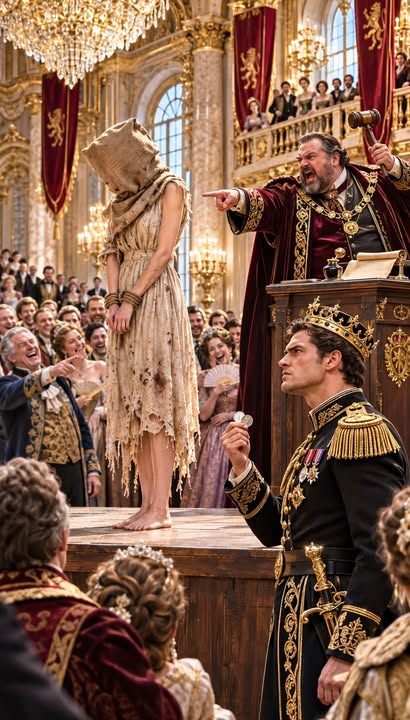
Part 5 – The Price of the Truth
Caleb read the fresh words again.
“Josephine Rourke alive. At the palace.”
The ink gleamed faintly under the lamplight, too dark and even to belong to a page that had spent three winters sealed inside an old ledger.
Someone had added the note after the inquiry began.
Someone knew she was here.
The king pushed back from the table, his face drawn with the effort of holding anger and fear in check.
“Who has handled this book since it was brought from the archive?”
The comptroller glanced toward the clerks.
“Only myself, the archive attendant, and the guard who carried it.”
“Then no one leaves until we establish who wrote this.”
Josephine’s hand closed over the compass beneath her collar.
Caleb saw the gesture and moved closer, but stopped before touching her.
“Are you all right?”
“I’m trying to decide,” she said, “whether the person who wrote that wanted me found or wanted us to know I could be found.”
The answer silenced the room.
The king looked to the comptroller.
“Have the paper and ink examined. Record everyone who has touched the ledger since it left the archive, and make copies of the page in the presence of witnesses.”
The comptroller bowed.
“I will do so.”
“And no one is to question Josephine without her consent,” Caleb added.
His father met his gaze.
“Agreed.”
Josephine lifted her covered face toward the king.
“May I see the note?”
Edric passed it to her without hesitation.
She studied the handwriting, though the hood shadowed her eyes.
“Do you recognize it?” Caleb asked.
“No.”
“Could you tell whether it was written by someone from the western provinces?”
“Not from this few words.”
She returned the slip to the king.
The room had grown crowded with clerks, guards, documents, and questions, yet Josephine seemed alone in the center of it.
Caleb turned toward her.
“We can move somewhere quieter.”
“Not yet.”
“Then tell me what you need.”
“I need to know whether this inquiry will continue when the answer becomes inconvenient.”
The king’s expression tightened.
“It will.”
“Even if it leads to someone in the royal household?”
“Yes.”
“Even if it shows your order helped end the search?”
Edric did not look away.
“Yes.”
Josephine’s hand remained over the compass.
“Then I’ll testify.”
Caleb’s attention sharpened.
“You don’t have to decide tonight.”
“I’m not deciding because you need me to.”
“I know.”
“I’m deciding because Adrian spent his last strength trying to make sure someone would hear what happened.”
The king bowed his head, accepting the words without asking her to soften them.
“Then the inquiry will hear you,” he said.
“Not in a private room where the record can disappear afterward,” Josephine replied.
The comptroller glanced at the king.
“An open inquiry would require witnesses and a public hearing.”
“Then arrange one,” Edric said.
Garrick’s empty chair remained at the far end of the table.
Caleb wondered where the magistrate was now, and whether he already knew the ledger had been found.
The fresh note had changed the shape of the danger.
It was no longer only a question of what had happened three years ago.
Someone in the present had begun moving the pieces.
The king ordered the documents secured and the room cleared of everyone except the physician, the comptroller, and two guards whose names Josephine chose after speaking with them herself.
When the last clerk had gone, Edric remained by the table.
“I should have ended the auction years ago,” he said.
Caleb looked at him.
“You should have.”
“I told myself it was a lawful arrangement for women with no families to claim them.”
“It was a way to make their choices disappear.”
The king absorbed the judgment in silence.
“I thought I was preserving order.”
“You preserved a custom because it was easier than asking what it cost.”
Edric’s gaze lowered to the marriage decree, which the clerk had brought from the Grand Hall for the inquiry.
Caleb’s signature sat beneath the royal seal.
“I will have it annulled,” the king said. “Josephine should not remain bound to a decision made in the middle of an auction.”
“I know.”
Caleb turned toward her.
“When you are ready, we can have the decree set aside.”
Josephine tilted her head.
“Is that what you want?”
“It is what you should be free to choose.”
“That isn’t what I asked.”
He took a careful breath.
“I want you to stay,” he said. “But I don’t want you to stay because the court says you are mine, or because you think you owe me for protecting you.”
“I don’t owe you.”
“No.”
“And you still want me to stay?”
“Yes.”
She was quiet long enough for the king to turn toward the window.
Caleb did not fill the pause.
He had spent years believing that a silence meant he needed to explain himself before someone judged him.
Now he understood that Josephine deserved room to answer in her own time.
At last, she said, “I don’t know if I can trust you.”
“I understand.”
“But I believe you’re trying.”
“I am.”
“That is not the same thing.”
“No,” he said. “It isn’t.”
She gave a faint breath, not quite a laugh and not quite a sigh.
“You’re learning.”
“I hope so.”
A knock sounded at the council-room door.
The steward entered and bowed.
“Your Majesty, Lord Garrick has requested that the inquiry be held tomorrow. He says he is prepared to answer the allegations before the court.”
The king looked at Caleb.
“Tomorrow is soon.”
“Then he wants the matter settled before the records are examined more fully,” Caleb said.
“Or he wants to defend himself while the evidence is still incomplete,” Josephine replied.
Edric turned toward the steward.
“Tell him the inquiry will begin tomorrow, but no ruling will be made until all evidence has been reviewed.”
The steward bowed and withdrew.
Josephine looked down at the compass cord.
“I’ll speak.”
The king nodded.
“Your testimony will be recorded in full.”
“Not summarized by Garrick.”
“No.”
“Not altered after I leave.”
“No.”
“And I want a copy.”
“You will have one.”
Caleb watched her shoulders settle.
Each condition she named seemed to return a small piece of ground beneath her feet.
That evening, the palace quieted around them without becoming peaceful.
The inquiry would begin at first light, and the new note in the ledger had made every corridor feel more watchful.
Caleb walked with Josephine to a guest suite at the end of the eastern wing, where the windows looked over the palace gardens and the snowmelt had begun to darken the paths.
Two guards waited outside the door.
Josephine asked their names, listened to their answers, and chose one to remain in the corridor while the other waited at the stair.
Only after she had settled the arrangement did she enter the room.
Caleb stayed by the threshold.
“Would you like the physician to examine your wrists?” he asked.
“No.”
“Would you like anything brought up?”
“Water.”
He asked the steward to bring it.
When the servant had gone, Josephine stood beside the window, the brass compass resting in her palm.
“Do you still remember the cave?” she asked.
“I remember more now.”
“Tell me.”
“I remember you trying to keep the fire alive with pieces of your own cloak.”
“That sounds like something I would do.”
“I remember you asking me whether my brother was stubborn.”
“Was he?”
“More than I was.”
A pause.
“Did you think I was going to die?” he asked.
“I thought we both might.”
“And yet you stayed awake.”
“So did you.”
“I wasn’t very useful.”
“You kept talking.”
“What did I say?”
“You told me the capital had a clock that ran ten minutes fast.”
Caleb stared at her.
“I remember that clock.”
“You were worried your father would miss a meeting.”
“I was worried he’d blame the steward.”
Josephine’s hidden face turned toward the window.
“You seemed younger then.”
“I was.”
“So was Adrian.”
The name softened the room and hurt it at the same time.
Caleb looked down at his hands.
“I should have found you.”
“You tried, didn’t you?”
“I did.”
“Then you stopped.”
“The king ended the search.”
“And you went home.”
“Yes.”
She turned away from the window.
“I spent a long time thinking you had decided I was not worth looking for.”
“I’m sorry.”
“I know.”
It was not forgiveness, but neither was it a closed door.
Caleb let that be enough.
“Do you want me to stay?” she asked.
“If you want me to.”
“That wasn’t an answer.”
He managed a small, tired smile.
“I do want to stay.”
“Then sit.”
He took the chair nearest the door rather than the one beside her.
She noticed but did not comment.
The water arrived, and Josephine drank slowly, holding the cup with both hands.
For a while, they spoke of small things: the snowmelt, the old palace clocks, the faint scent of the garden coming through the window.
It was the first conversation they had shared that did not need to pass through the cave, the auction, or the missing years.
And because it did not ask either of them to explain, it felt unexpectedly intimate.
When Caleb left, Josephine kept the compass beside her on the table.
She did not hide it beneath her dress.
The next morning, the court chamber filled before the inquiry began.
Word of the recovered accounts had spread through the palace, though no one seemed to know exactly what they proved.
Nobles sat in the front rows, the treasury comptroller and archive clerks took places at a long table, and the royal physician stood ready to verify the compass and its hidden messages.
Josephine entered through a side door with Caleb beside her.
She wore the same plain dress from the previous day, clean now but still worn at the seams.
Her hood remained in place.
No one laughed.
The silence was not kindness, but it was a beginning.
King Edric took his seat at the front of the chamber.
He had chosen not to wear the crown.
The empty space above his silver hair made him look less like the ruler who could command the room and more like a man prepared to answer for what he had done.
Garrick stood at the opposite table, dressed in formal black.
He looked composed.
Only the tightness at the corners of his mouth suggested that the records had unsettled him.
Caleb took his place near Josephine.
“You can stop at any time,” he said quietly.
“I know.”
“You can ask for a break.”
“I know.”
“I will be here.”
“I know that too.”
She sat before the court.
The king began the inquiry by stating that no conclusions had yet been reached, and that the purpose of the hearing was to establish how the northern expedition’s bridge had been destroyed, why its search had ended, and whether the official accounts had been altered.
The comptroller presented the original payment book.
The physician confirmed that the two brass compasses belonged to the same expedition set and that both contained hidden compartments.
The clerk read Adrian’s messages into the record.
Each detail made the story less like rumor and more like a path that could be followed.
Garrick’s counsel argued that handwriting could be imitated, memories could change, and a note hidden inside a compass did not prove who had ordered the bridge work.
The king listened without interruption.
Then he turned to Josephine.
“Are you willing to describe what you remember?”
“Yes.”
A clerk asked for her name.
“Josephine Rourke.”
“Do you swear to speak truthfully?”
“I do.”
The clerk began with the night of the blizzard.
Josephine described the cave, the dying fire, and the injured man who had arrived before dawn.
She spoke of the voices outside, the metallic rattle that she understood as chains, and the argument about a bridge being gone.
She did not embellish what she could not remember.
When asked how she knew the injured man was Prince Adrian, she explained that he had told her his name after Caleb left, and that she recognized the royal crest on the clasp of his expedition coat.
“Did he tell you who cut the bridge?” the clerk asked.
“No.”
“Did he tell you that Lord Garrick ordered it?”
“No.”
“Did he give you a compass?”
“Yes.”
“Did he say why?”
“He said it might help prove I had not invented what happened.”
Garrick’s counsel rose.
“Did Prince Adrian tell you to accuse Lord Garrick?”
“No.”
“Did anyone tell you to accuse him?”
“No.”
“Are you aware that your testimony could affect the standing of the crown?”
Josephine paused.
Caleb felt the entire chamber waiting for her answer.
“I am aware that what I say may be inconvenient,” she replied. “I am not here to protect the crown or harm it. I am here because someone left me with the truth and hoped it would survive.”
The counsel lowered his papers.
King Edric closed his eyes briefly, then opened them.
“Do you have anything else to add?”
“Yes.”
Josephine reached inside her collar and brought out the compass.
She placed it on the table in front of her.
“Adrian trusted me with this when I had no reason to believe anyone else would trust me. I carried it for three years, even when I did not know what it contained.”
The physician unfolded the hidden message and laid it beside the compass.
“Garrick ordered the bridge cut before the storm reached the pass,” the clerk read.
The court remained silent.
Josephine lifted her hooded face toward the benches.
“I cannot tell you what Adrian hoped the message would do,” she said. “I can only tell you he believed it mattered enough to hide.”
Garrick’s expression did not change.
When her testimony ended, the king asked whether she wished to remove her hood for the record.
“No.”
“Your refusal will be respected,” Edric said.
That answer brought a subtle murmur through the chamber.
Not approval.
Recognition.
Caleb looked at Josephine, and she gave the smallest nod.
She had stood before the court without showing her face, and the court had listened.
It was not the whole justice she deserved, but it was no longer the auction platform.
The comptroller presented the payment book next.
He showed the court the contractor’s charge for removing the bridge’s central supports, along with the account for supplies that had never arrived at the eastern storehouse.
He testified that the king’s official copy omitted the notation describing the bridge work.
The archive clerk confirmed that the note in Adrian’s handwriting had been found folded inside the expedition ledger, unlisted among its pages.
The fresh slip identifying Josephine as alive at the palace was placed under glass and described as a separate matter under investigation.
No one could yet establish who had written it.
The king looked over the gathered evidence.
“Lord Garrick, do you wish to respond?”
Garrick stood.
“I do.”
He did not raise his voice.
He did not attack Josephine’s account.
Instead, he placed his hands on the table and addressed the king.
“The crown has a choice before it,” he said. “The expedition records are damaged, the witnesses are scattered, and a note in a compass is not the same as a signed order. If Your Majesty declares that I acted alone, the matter can be contained. The court can affirm the king’s original report, dismiss Josephine’s claims as unverified, and prevent the entire monarchy from being judged by one failed search.”
The court stirred.
Caleb felt his father’s face harden.
Garrick continued.
“The king relied on the information brought to him. The crown need not bear the blame for the acts of one magistrate. The inquiry can preserve confidence in the throne while allowing further review of my department.”
It was a bargain dressed as reason.
Blame Garrick in private, preserve the king in public, and ask Josephine’s testimony to disappear beneath a gentler version of events.
Caleb looked at his father.
The king’s hands rested open on the table.
For years, Caleb had believed loyalty meant protecting the person who raised him, even when the truth became uncomfortable.
He understood now that silence would not protect his father.
It would only make Josephine pay once more for what the palace had failed to do.
He rose.
“The king did receive a report,” he said. “He also ended the search without questioning the officer who signed it. That decision cost my brother the chance to be found.”
The chamber became still.
King Edric did not interrupt.
Caleb faced the court.
“I will not call my father innocent of every part of this. He was afraid, and he chose to trust a report because it offered him an end to uncertainty. He should have asked more. He should have kept looking.”
The words trembled slightly, but he did not take them back.
“Lord Garrick’s actions must be investigated, and the king’s decision must be investigated too. If that puts my title at risk, then my title is not worth protecting with a lie.”
The king lowered his gaze.
Garrick looked at Caleb with the first open surprise he had shown since the inquiry began.
Caleb turned toward Josephine.
“She has given this court the truth she carried alone. She does not owe us silence to preserve our comfort.”
Josephine’s hand rested beside the compass.
“I agree,” she said.
The king stood.
“For three years, I believed the search had ended because there was nothing more to learn,” he said. “I now know I accepted an incomplete account and failed to seek the people who could have challenged it. I will not ask the court to hide that failure.”
He looked to the clerk.
“Record that I authorize a full, public inquiry into the abandoned expedition and the conduct of every official who handled its report.”
The clerk wrote down the words.
Caleb felt something inside him loosen, though the consequences had only begun.
Then the chamber doors opened.
A palace guard entered carrying a sealed envelope.
He approached the king and bowed.
“This was delivered to the outer gate for Prince Caleb,” he said. “The sender insisted it reach him before the court issued any finding.”
Caleb took the envelope.
The paper bore no crest, only his name written in a hand he had not seen since childhood.
He opened it carefully.
Inside was a narrow strip of yellowed paper.
Four words had been written across it.
“Caleb is alive. Wait.”
The note was signed in Adrian’s hand.
Caleb forgot the court, the king, and every document on the table.
He looked at the date.
It had been written the night of the storm—before the official report declared both princes dead.
Below the date, in fresh ink, someone had added a final line.
“Ask Josephine who carried it.”
**–END OF PART 5–CLICK “NEXT” AT THE BOTTOM OF THE PAGE TO CONTINUE READING**
* * *
[PREVIOUS: PART 4](https://storyly.idolsgift.com/blog/part-4-the-six-words-that-stopped-the-palace-058) | [NEXT: PART 6(THE END)](https://storyly.idolsgift.com/blog/part-6-the-end-the-six-words-that-stopped-the-palace-058)
✓ Lynn R. Adams
Part 5 – The Price of the Truth Caleb read the fresh words again. “Josephine Rourke alive. At the palace.” The ink gleamed faintly under the lamplight, too dark and even to belong to a page that ha…