PART 5: The Six Silent Hours That Forced Us to Tell the Truth About Our Marriage_063
## Part 5 – The People We Used to Be
Monica kept the list on the kitchen table for three days.
Not displayed.
Not hidden.
Just there.
Sometimes I caught her reading it while drinking coffee.
Sometimes I read it when she wasn’t around.
There was something almost unfair about meeting the twenty-year-old version of your spouse after being married to the thirty-five-year-old one for nine years.
You started wondering which promises adulthood had kept.
And which it had quietly renegotiated.
On Wednesday evening, Monica came home carrying a camera.
Not a new one.
A used digital model she had bought from a small photography shop.
She placed it carefully on the counter.
“I did something.”
“I can see that.”
“I used my own money.”
“We don’t have separate money.”
“I know.”
She smiled.
“I was trying to sound rebellious.”
“You bought a moderately priced used camera after comparing reviews for four days.”
“Wild behavior.”
“Extremely.”
She picked it up.
Then pointed it at me.
I raised a hand.
“No.”
“Why?”
“I’m eating.”
“That is how photography works. People are often doing things.”
“Take a picture of the toaster.”
“The toaster hasn’t been emotionally unavailable all week.”
I stared at her.
She lowered the camera.
“Too soon?”
“A little.”
“Sorry.”
But I was smiling.
So was she.
The camera became part of our house.
At first Monica photographed harmless things.
Sunlight across the stairs.
Coffee.
Rain on the windows.
A shoe left beside the door.
Then people.
Kayla, eventually, after they talked.
Her father repairing a lawnmower.
Our neighbor walking an ancient golden retriever.
Me reading on the porch.
That last one happened without permission.
“I look seventy.”
“You look peaceful.”
“I look asleep.”
“You were asleep.”
“That seems dishonest.”
“That seems observational.”
The pictures changed something in Monica.
Or maybe they revealed something that had always been there.
She became more attentive.
Not louder.
Not more adventurous.
Just present.
She saw things.
That was apparently the part of herself she had missed.
Boston began a month later.
Six days away.
Three weeks home.
Then six days away again.
The first trip bothered me more than I expected.
At 11:30 on her first night there, my phone buzzed.
**Back at the hotel. Dinner ran late. Calling in five if you’re awake.**
I stared at the message.
Such a small thing.
A location.
A changed schedule.
A promise to call.
Information she would once have considered unnecessary.
I typed:
**Awake. Call whenever.**
Five minutes later, she appeared on video wearing hotel pajamas with her hair piled on top of her head.
“How was dinner?”
“Long.”
“Anyone interesting?”
“Three accountants.”
“Dangerous.”
“One discussed tax compliance for twenty minutes.”
“You’re lucky to be alive.”
She laughed.
Then grew serious.
“You okay?”
“Yes.”
“You sure?”
“Yes.”
There had been a time when I might have hidden that I was uneasy because I didn’t want to sound insecure.
That was the old pattern.
So I added, “Actually, no. This is harder than I expected.”
Monica nodded.
“Thank you for saying that.”
“I’m not asking you to come home.”
“I know.”
“I’m just telling you.”
“I know.”
We were learning.
Slowly.
Imperfectly.
The strange thing about trust is that rebuilding it rarely looks dramatic.
It is mostly boring.
Messages sent when you said you would send them.
Plans communicated before they become surprises.
Questions asked instead of assumptions made.
Tiny repetitions.
A bridge constructed one ordinary piece at a time.
Kayla apologized again too.
Not with a grand gesture.
She simply stopped defending what happened.
“I thought I was helping Monica feel free,” she told me one afternoon.
We were all sitting on our back deck.
“I didn’t understand that freedom doesn’t require making someone else worry.”
Monica gave her a look.
Kayla raised both hands.
“I said I was sorry.”
“I know.”
Their friendship survived.
Changed.
But survived.
Kevin disappeared from our lives almost completely.
Monica sent him one message thanking him for returning the photographs.
He replied:
**Glad you got them. Keep taking pictures.**
That was all.
For someone who had occupied so much of my imagination, Kevin exited our story with remarkable quiet.
Maybe most imagined threats do.
Six months passed.
Monica’s new job was difficult.
She loved it.
She hated parts of it.
She complained about airports.
She developed strong opinions about hotel pillows.
She missed two flights.
I learned to cook three meals that didn’t involve pasta.
We argued.
Of course we did.
About laundry.
Schedules.
Her travel.
My habit of answering work email during dinner.
Once, during a particularly stupid argument over whether we had agreed to attend a neighborhood barbecue, Monica snapped, “You never listen.”
I snapped back, “You never tell me anything.”
Then both of us stopped.
The old weapons.
Still available.
We looked at each other.
Monica sighed.
“Can we restart?”
I nodded.
We restarted.
That, more than anything, felt like progress.
One Saturday morning, Monica came into my office.
“I want to show you something.”
I turned from the computer.
She carried a folder.
I raised an eyebrow.
“We have a bad history with folders.”
“This one is good.”
She placed it on my desk.
Inside was an application.
A community arts center downtown was holding an open exhibition.
Theme:
**HOME: Ordinary Places, Hidden Stories.**
“They accept amateur photographers,” Monica said.
“You’re applying?”
“I want to.”
“Then apply.”
“I already filled it out.”
“Good.”
“I haven’t submitted it.”
I looked at her.
She sat across from me.
“I wanted to tell you first.”
Something about that nearly broke my heart.
Not because she needed my permission.
Because she understood the difference.
“What pictures?”
“Eight.”
“Can I see them?”
She hesitated.
Then handed me her tablet.
There was the porch.
Kayla laughing with her head turned away.
Monica’s father working on his lawnmower.
An airport gate at dawn.
Our empty kitchen at night.
Two coffee cups beside the window.
Then me.
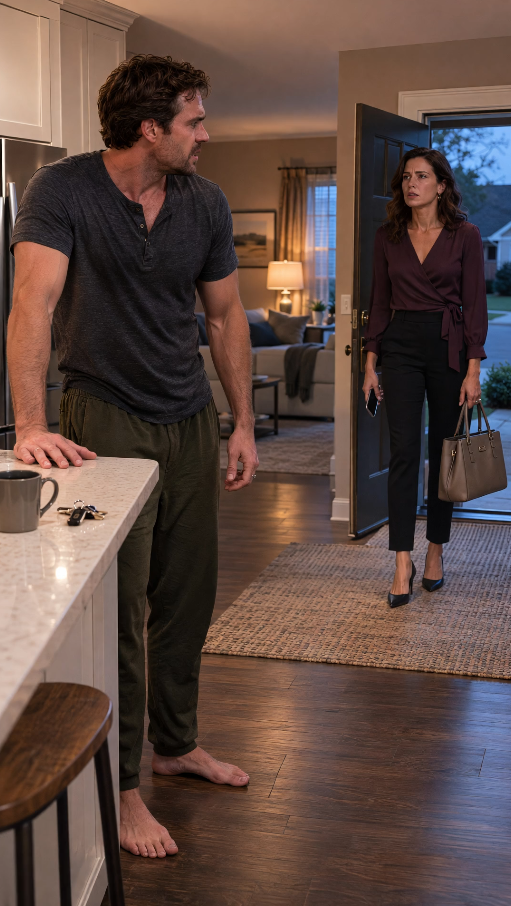
Standing at the kitchen island.
I looked tired.
My hands rested on the counter.
“What day was this?”
“A few weeks ago.”
“I hate it.”
“I love it.”
“Why?”
“Because you’re waiting.”
“For what?”
“Me.”
I stared at the photograph.
She had taken it after returning from Boston.
I remembered.
Her flight had been delayed.
I had been awake until almost one in the morning.
The final picture showed our hallway.
Nothing else.
Just the hall between the kitchen and bedroom.
Light fell across one wall.
“What’s this one?”
Monica smiled.
“That’s my favorite.”
“Why?”
“Because it’s the distance between where we talk and where we sleep.”
“That sounds suspiciously artistic.”
“I’ve become unbearable.”
“Yes.”
She submitted the application.
Three weeks later, the arts center called.
They selected four pictures.
Monica cried.
I pretended not to.
The exhibition opened on a Friday evening.
Almost exactly one year after the night everything changed.
Monica wore a dark green dress.
Her father came.
Kayla came.
Several coworkers came.
I stood in a bright gallery filled with photographs of kitchens, sidewalks, bedrooms, porches, bus stops, grocery stores, and family tables.
Ordinary lives.
Hidden stories.
Monica’s four photographs hung together.
Under each was a small title.
**Waiting.**
**Arrival.**
**The Hall Between Us.**
**Two Cups.**
People stopped.
Looked.
Moved on.
Some returned.
An elderly woman stood in front of _Two Cups_ for several minutes.
When she finally walked away, Monica squeezed my hand.
“Do you remember the old picture?”
“Your parents’ cups?”
She nodded.
“This is ours.”
I looked again.
Two coffee cups.
Our window.
Morning light.
Same idea.
Different life.
Later that night, after everyone left, Monica and I walked to the parking lot.
“You happy?” I asked.
“Yes.”
“Good.”
“And terrified.”
“Why?”
“Because now I want to do it again.”
I smiled.
“That seems manageable.”
She stopped beside our car.
“Troy.”
“What?”
“There’s something I haven’t told you.”
I stared at her.
She immediately laughed.
“You should see your face.”
“Monica.”
“It’s good.”
“That sentence has ruined entire weekends.”
“I know.”
She reached into her bag.
“I got an email this morning.”
She handed me her phone.
A regional arts publication had seen the exhibition preview.
They wanted to feature three photographers.
Monica was one of them.
I read the message.
Then again.
“You knew all evening?”
“Yes.”
“Why didn’t you tell me?”
“I wanted tonight to be about doing the thing, not what it might become.”
I looked at her.
“Fair.”
She studied me.
“Really?”
“Really.”
Then I added, “But next time perhaps tell me before beginning with the phrase ‘there’s something I haven’t told you.’”
She laughed.
“Deal.”
I started toward the driver’s side.
“Troy.”
I stopped.
Monica was still standing beneath the parking lot light.
“There’s one more thing.”
I narrowed my eyes.
“I’m serious.”
“What?”
“I found your Denver email again yesterday.”
My smile faded.
“Why?”
“Because I was looking for something.”
“What?”
She pulled a folded paper from her bag.
I opened it.
It was a job listing.
Senior operations consultant.
Travel required.
Flexible location.
I looked at her.
“What is this?”
“A possibility.”
“For me?”
“For you to decide.”
I read the description.
It was exactly the kind of work I had once imagined doing.
Before mortgage payments.
Before promotions.
Before comfort had become an argument for staying exactly where I was.
“I saw it,” Monica said, “and my first instinct was to tell you why it wouldn’t work.”
I looked up.
She smiled.
“Then I remembered I don’t get to decide your answer.”
I folded the paper.
“You think I should apply?”
“No.”
The answer surprised me.
“I think you should decide whether you want to.”
We stood beneath the light.
A year earlier, both of us had been quietly making choices on behalf of the other.
Now Monica had placed a possibility in my hands and refused to tell me what to do with it.
I looked at the listing again.
“When’s the deadline?”
“Monday.”
I glanced toward her.
“That gives me forty-eight hours.”
“Yes.”
“Not much time.”
“No.”
My heart began beating faster.
And suddenly I understood exactly what Monica must have felt when Boston appeared in front of her.
Possibility was frightening.
Not because it promised something better.
Because it asked whether you were still willing to choose.
I folded the page carefully and placed it in my pocket.
“I think I want to talk about it.”
Monica smiled.
“Then let’s talk.”
**–END OF PART 5–CLICK “NEXT” AT THE BOTTOM OF THE PAGE TO CONTINUE READING**
✓ Lynn R. Adams
## Part 5 – The People We Used to Be Monica kept the list on the kitchen table for three days. Not displayed. Not hidden. Just there. Sometimes I caught her reading it while drinking coffee. Som…