PART 5: The Signature in the Winter Ink 056
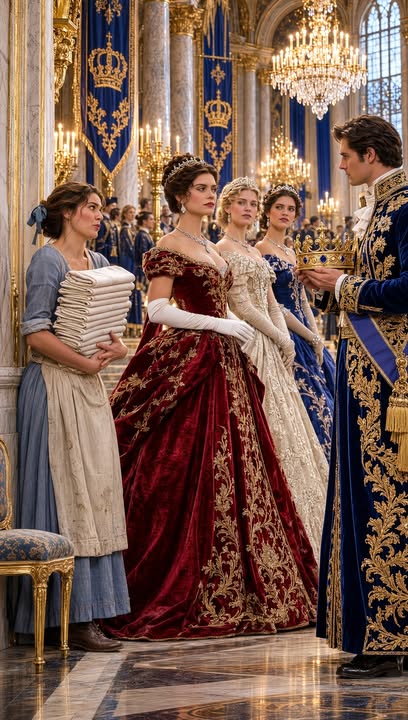
Part 5 – The Road Beyond the Palace
“The channel has moved.”
Elena read the words again, though they did not change beneath her gaze.
The original survey map lay open across the table, its old lines drawn in careful black ink and the newer red mark cutting through the lower fields.
Adrian stood beside her, holding the landowner’s message in one hand.
Master Oren leaned over the map without touching it.
“Could this have been drawn recently?” he asked.
“The red ink is fresh,” Elena said. “But I don’t know the hand.”
The package had arrived without a return mark, and the writing beneath the warning was not Carrow’s, though it had been placed beside his name.
Oren turned the map toward the light.
“The old channel ran along the estate’s eastern boundary,” he said. “This line suggests it was redirected through the lower fields.”
“Would that explain the illnesses?” Adrian asked.
“It might explain a change in the water,” Oren replied. “But we cannot know without testing it.”
“And the village?” Elena asked.
“If the channel was moved, the families may have lost the water source they were promised, or the new route may affect the land they still hold.”
Adrian looked at the landowner’s message again.
“He claims the water was tested recently and found safe.”
“By whom?” Elena asked.
“There is no name.”
“Then it is only a claim.”
“Yes.”
The red line on the map passed close to the old mill, then curved toward a cluster of cottages.
Elena knew that part of the village.
Her mother had once taken her there to visit an elderly couple who could no longer walk to the healer’s cottage.
The channel had not merely moved on paper.
It had been moved through people’s lives.
Adrian summoned his secretary and asked for a council meeting that afternoon.
He did not announce that the landowner would be arrested or that the village would be restored by royal decree.
He asked for a full review of the records, an independent examination of the water, and a list of every household whose land might be affected.
“Will the council agree?” Elena asked after the secretary had left.
“They may.”
“And if they say it is too costly?”
“Then they will have to explain why the cost of correcting an injustice is more important than the injustice itself.”
She looked at him.
“You sound certain.”
“I am certain of what ought to be done. I am less certain of how many people will help me do it.”
That was more honest.
They returned to the archive chamber, where Oren had laid out the recovered ledger, the forged statement, Mara’s receipt, and the map.
Together they began to compare the dates.
The redrawn channel first appeared on a land survey six months after Mara’s petition was crossed from the register.
A payment recorded in Carrow’s ledger had gone to a company linked to Marcus’s family.
Another payment, much larger, had been made to the landowner’s engineers.
No recent water test appeared among the palace papers.
The claim in the landowner’s letter had no evidence behind it.
Adrian read the records in silence.
At last, he closed the ledger.
“Marcus must answer for his part in this.”
“He should,” Elena said. “But a confession won’t give the village clean water.”
“No.”
“Nor will a public statement clear my mother’s name if the records disappear before anyone can verify them.”
“They won’t disappear.”
“You cannot know that.”
He paused.
“No. I can’t.”
The reply came without defensiveness, but the concern in his expression deepened.
The landowner knew the investigation had begun.
The warning about the old inquiry, the claim that the water was safe, and the map returned at the very moment they needed it all suggested someone was trying to control what happened next.
Still, there was no proof that the landowner intended to destroy anything.
There was only the risk that important evidence might be moved, hidden, or lost again while the palace debated what it should do.
That evening, the council met in the long chamber.
The nobles gathered beneath portraits of kings who had once believed themselves to be the guardians of every promise made in their name.
Marcus was not present.
He remained under supervision, pending a formal inquiry into the records.
The landowner had not accepted Adrian’s invitation to attend.
His written reply said he would cooperate once the Crown had established what it was accusing him of.
The councilors listened as Oren described the registry entries, the false statement, and Carrow’s ledger.
When he reached the survey map, the room stirred.
“The map is not proof that the current channel is unsafe,” one councilor said.
“No,” Adrian replied. “It is proof that the channel was changed after Mara petitioned the Crown.”
“Perhaps the diversion was lawful.”
“Perhaps it was,” Adrian said. “That does not explain why the inquiry vanished or why a false withdrawal statement was placed in the file.”
A councilor near the window folded his hands.
“Lord Marcus has served the royal household faithfully for decades. We should avoid drawing conclusions before he has been heard.”
“I agree,” Adrian said. “He will be heard.”
“Then perhaps the inquiry should wait until the coronation.”
The words seemed to settle on the table like dust.
Adrian did not answer immediately.
His coronation was six weeks away.
The preparations were already underway, and the neighboring courts had sent formal notices of attendance.
The marriage negotiations that had occupied his council for months had not been completed, but every postponement made the kingdom appear uncertain.
“Why should it wait?” Elena asked.
Several faces turned toward her.
She had not been invited to speak, but Adrian did not stop her.
“Because the matter is old?” she continued. “The families who lost their water did not have the luxury of waiting. My mother spent years asking for an answer. If the Crown knew enough to promise the land, it knew enough to investigate what happened to it.”
A councilor’s expression tightened.
“This is a royal matter.”
“It became a royal matter when the royal seal was placed on my mother’s petition.”
“The court is not questioning your mother’s courage.”
“No,” Elena said. “It is deciding whether her courage is worth acting on.”
Adrian watched the councilors absorb her words.
No one had asked her to speak, yet every person in the chamber was listening now.
That was not the same as welcoming her.
She did not look toward the crown displayed above the dais.
She had no wish to be turned into a symbol the council could praise and then ignore.
Adrian rested one hand on the table.
“The inquiry will not wait for the coronation,” he said. “The water will be tested, the land records reviewed, and the surviving evidence secured.”
A senior councilor leaned forward.
“Your Highness, there is a difference between reviewing a matter and traveling to the village in person. The palace can send an official surveyor.”
“An official surveyor did not prevent the first report from disappearing.”
“That was before your time.”
“It was during my father’s reign, and in my household’s name.”
“You cannot hold yourself responsible for every failure of the past.”
“No,” Adrian said. “But I can decide whether to repeat it.”
The councilor’s gaze shifted toward Elena.
“Your Highness, the court has already suffered enough uncertainty from the crown’s selection. If you travel now, people will say you are letting a household servant determine the kingdom’s policy.”
Elena’s back stiffened.
Adrian’s expression cooled.
“She is not determining my policy. She is telling me what the evidence means to the people whose lives it concerns.”
“Her presence will make the matter more complicated.”
“Only if we believe the people affected should not be heard.”
The room fell quiet.
The words had crossed from caution into a question of principle.
Adrian knew what the council wanted him to choose.
Keep the coronation on schedule.
Let the surveyor go in his place.
Keep Elena away from the palace’s decisions, where she could not trouble the old habits of rank.
Keep the appearance of stability, even if the records remained unsettled.
He also knew the risks of traveling.
The landowner’s message might be bluster, but the missing map and the altered channel made it possible that further evidence could vanish.
A royal presence might bring the village relief, or it might turn a local dispute into a public crisis before the facts were secure.
Elena watched him carefully.
She could see the choice forming in his face.
When the council recessed, she found him alone in the side gallery.
“You should not go because I am asking you to,” she said.
“I know.”
“Or because you think it would make me believe you are sorry.”
“I know that, too.”
“Do you?”
He looked at her.
“The village needs the evidence secured before it can be altered or destroyed. The water needs to be tested by someone the landowner cannot dismiss as a palace clerk. The families need to be heard before a decision is made for them.”
“Those are good reasons.”
“They are the reasons I have.”
“And the coronation?”
“I can postpone it.”
“The kingdom may not think that is a small thing.”
“It isn’t.”
“Your council may refuse to support the decision.”
“They may.”
“You may lose people who have spent years preparing for you to take the throne.”
“I may.”
“And you still think you should go.”
He took a slow breath.
“Yes.”
Elena’s expression tightened.
“Do not make the kingdom pay for what happened to my mother.”
“I am not going to the village as repayment.”
“Then why?”
“Because the Crown made a promise to those families, and someone used my family’s office to break it. If I send others to discover the truth while I remain here to preserve the appearance of order, then I am asking the same people who were ignored to trust another message from the palace.”
“That does not mean you have to travel personally.”
“No,” he said. “It means I have to decide whether duty is something I can delegate when it becomes inconvenient.”
Elena looked through the gallery window toward the courtyard.
The palace gardeners were lighting lamps along the paths.
She could not tell him what choice to make.
If she asked him to stay, he might delay a justice the villagers had waited years to receive.
If she asked him to go, the court might say she had pulled him away from his duty to satisfy her own grief.
Either way, she would be made part of the story in a way she had never wanted.
“I won’t ask you to stay,” she said.
“I know.”
“And I won’t ask you to go.”
“I know.”
She turned back to him.
“I need you to choose for the right reason, even if the choice costs you something.”
He nodded.
“That is what I am trying to do.”
“You may not know whether you chose well until much later.”
“I understand.”
“I don’t think you do,” she said gently. “But you may learn.”
For a moment, the distance between them seemed smaller than it had been.
Not gone.
Not healed.
Simply something they could look across without pretending it was not there.
Adrian’s hand lifted as if he might reach for hers, then fell back to his side.
He did not ask her to comfort him.
Elena was grateful.
“I have been thinking about your mother’s notebook,” he said. “The last line said her claim remained unanswered. It seems she knew how easily a record could be misread.”
“She was careful.”
“Careful and brave.”
“She would have said she was only doing what had to be done.”
“Perhaps that is what bravery looks like when you cannot afford to call it anything else.”
Elena’s mouth softened, though no smile came.
“She would have told you that a king should not need to be reminded to listen.”
“She would have been right.”
The council reconvened.
Adrian stood before them and announced that the coronation would be postponed until the investigation was complete.
The announcement brought a murmur of objection.
He did not tell the council that Elena had influenced him.
He did not say that the crown had chosen her or that her presence had changed his understanding of his duty.
He said only that the Crown would not celebrate its authority while a promise made in its name remained unexamined.
The councilors were not pleased.
Some warned that the neighboring courts would interpret the delay as weakness.
Others pointed out that the coronation had already brought merchants and visitors to the capital.
One asked whether the prince intended to travel with Elena.
“I do,” Adrian replied.
“Your Highness, you cannot leave the capital without a regent.”
“The council will name one.”
“And if the landowner refuses to cooperate?”
“Then he will have to answer for refusing to cooperate with a lawful inquiry.”
Adrian’s voice remained even.
He did not threaten the landowner or promise a punishment before the facts were known.
He simply refused to make inaction the price of stability.
The council did not reach agreement that night.
But the decision had been made.
The preparations for the coronation were paused, the official surveyor was summoned, and a small party began preparing to travel to Bellweather.
Elena asked to be included.
Adrian did not answer for her.
He asked what she wanted.
“I want to speak for the families who cannot travel to the palace,” she said. “I want them to hear the truth from someone who knows the cost of having their words lost.”
“You will be there as yourself,” he replied. “Not as a symbol, not as a royal witness, and not as someone required to forgive anyone.”
“I will go as Mara’s daughter.”
“Yes.”
“And as a person who has lived with what the palace failed to do.”
“Yes.”
“Then I’ll go.”
The next morning, as Oren began preparing the records for transport, the landowner’s secretary arrived at the palace with a formal response.
The landowner had agreed to meet Adrian in Bellweather and allow the water to be tested, provided the inquiry remained private until the results were known.
The council considered the offer prudent.
Elena considered it necessary.
“People in the village should know what is being tested and why,” she said. “They should not be asked to trust a private agreement they were never invited to make.”
Adrian sent back a reply accepting the meeting but rejecting the condition of secrecy.
The landowner could choose whether to attend.
The village would be told the purpose of the inquiry.
By midday, the party was ready to leave.
Adrian’s secretary carried the official records.
Oren carried the map and the ledger.
Elena carried her mother’s notebook close to her side.
The carriage waited in the outer courtyard, its wheels shining with fresh rain.
Before Elena climbed in, Victoria appeared beneath the archway.
She wore no diamonds now, only a plain blue cloak fastened at the throat.
For a moment, she looked as though she might speak and then change her mind.
“I heard you were going to Bellweather,” she said.
“I am.”
“I wanted to tell you that I was wrong to mock you at the ceremony.”
Elena did not answer.
Victoria looked down at her hands.
“I said what I did because I was afraid the crown would choose someone who had never belonged at court. I thought that meant it might choose someone who did not know how to behave.”
“And you knew?”
“I knew how to behave,” Victoria said. “I did not always know how to be kind.”
The admission held no excuse.
Elena studied her.
“I don’t trust you yet.”
“I know.”
“That is not an invitation to prove yourself by becoming my friend.”
“I understand.”
“Good.”
Victoria nodded and stepped aside.
“I hope the truth is found,” she said.
Elena believed she meant it.
That did not make them friends, but it made the apology real enough to accept without pretending the past had vanished.
“Thank you,” Elena said.
Victoria’s eyes lifted.
She seemed surprised by the small kindness, then lowered them again.
Adrian came to the carriage door.
“Are you ready?”
Elena looked once toward the palace, its stone walls bright beneath the rain.
Her mother had spent years waiting for those walls to open to her.
Now Elena was leaving them with the truth in her hands.
“I’m ready,” she said.
The carriage rolled through the gate.
As they passed beneath the arch, Adrian did not reach for her.
He sat opposite her with the map between them, while Oren and the secretary occupied the forward bench.
For a time, they listened to the rain strike the roof.
Then Adrian said, “I do not know what the village will ask of us.”
“Neither do I.”
“They may not want me there.”
“Then you will listen to that.”
“They may not want you there either.”
“I know.”
The carriage passed beyond the city walls and turned onto the road toward Bellweather.
Elena looked down at the map.
The old watercourse had been traced in black.
The new channel in red.
Near the lower bend, a small mark had been drawn beside the village boundary, so faint she had missed it before.
She leaned closer.
“There’s another note.”
Oren shifted the lantern toward her.
The words were written in the same unknown hand that had added The channel has moved.
Do not test the lower spring until the villagers have been warned.
Adrian read the line over her shoulder.
“Warned of what?”
No one answered.
At that moment, the carriage slowed.
A rider had appeared on the road ahead, soaked through and holding a sealed packet above his head.
The driver pulled the horses to a stop.
The rider reached the window and passed the packet inside.
“It came from Bellweather,” he said. “The reeve asked that it reach you before you arrived.”
Elena broke the seal.
The first page contained a list of families who still drew water from the lower spring.
The second bore a short message in a familiar hand, its letters narrow and carefully formed.
Mara’s.
Elena’s breath caught.
The note was dated three days after the palace had recorded her mother’s supposed withdrawal.
If it was genuine, Mara had written it herself.
The message contained only one sentence:
The lower spring is not the danger; look where the water leaves the estate.
Elena looked from the note to the red line on the map.
The rider leaned closer to the carriage window.
“There is one more thing,” he said. “The landowner’s party reached the village before dawn.”
Adrian’s gaze sharpened.
“Why?”
The rider swallowed.
“They are looking for the original channel markers.”
The carriage door opened, and rain swept across the floor.
Elena held the note against her chest.
The channel had moved, but the danger lay somewhere beyond the line the map showed.
And the landowner had reached Bellweather first.
**–END OF PART 5–CLICK “NEXT” AT THE BOTTOM OF THE PAGE TO CONTINUE READING**
* * *
[PREVIOUS: PART 4](https://storyly.idolsgift.com/blog/part-4-the-signature-in-the-winter-ink-056) | [NEXT: PART 6(THE END)](https://storyly.idolsgift.com/blog/part-6-the-end-the-signature-in-the-winter-ink-056)
✓ Lynn R. Adams
Part 5 – The Road Beyond the Palace “The channel has moved.” Elena read the words again, though they did not change beneath her gaze. The original survey map lay open across the table, its old line…