PART 5: The Secret Beneath the Music 046
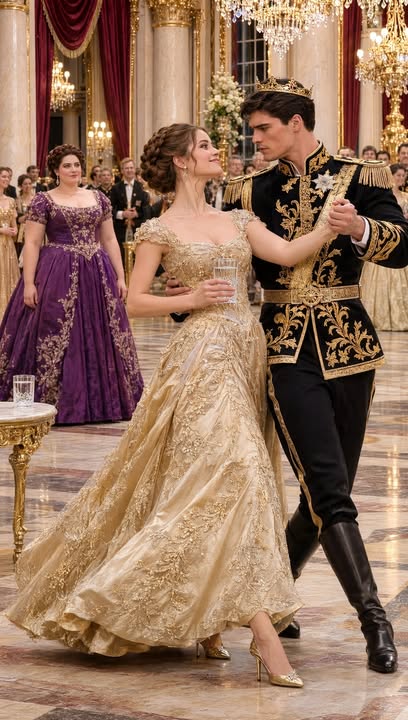
Part 5 – The Truth Between Us
“Adrian knows why.”
The words seemed to quiet the corridor around us.
The prince read them again, his face held carefully still, while Mrs. Vale kept the receipt beneath the light.
“Do you know what she meant?” I asked him.
“No.”
He looked at the faded ink, then at my notebook.
“But I may know where we can begin.”
Mrs. Vale slid the receipt back into its protective sleeve.
“There are additional papers in the correspondence box,” she said. “I can review them, but it may take time. The archive has to preserve the collection before anyone draws conclusions from a single note.”
“Of course,” the prince said.
He sounded composed, but the fingers of his right hand had begun to tremble again.
Mrs. Vale noticed, though she chose not to comment.
“I’ll contact you both when I know more,” she said. “Until then, I recommend that we keep the documents here.”
I nodded.
The prince did too.
Neither of us asked whether the note should remain secret.
We already knew that was the question waiting for us.
Mrs. Vale returned to the archive, carrying the box with both hands.
The prince and I remained in the corridor, with the old receipt’s three words following us.
Adrian knows why.
“Could she have been referring to the accident?” I asked.
“She might have been.”
“Or to the payment.”
“Or to why she asked for the step to be recorded under the family collection.”
“You don’t know.”
“No,” he said. “I don’t.”
He did not look away from the archive door.
“My father rarely spoke about the injury,” he continued. “When I was young, I thought that was because he wanted to put it behind him. Later, I understood that it might have been because he did not want me to worry.”
“Did he know your hand might be affected?”
“I don’t know.”
The truth had become a house with many closed rooms, and every answer seemed to lead to another door.
“Do you want to ask him?” I said.
The prince’s gaze shifted to mine.
“He’s been dead for years.”
I felt the weight of my assumption settle between us.
“I’m sorry.”
“You couldn’t have known.”
He turned toward the window.
Outside, the gardens were bright with late afternoon, the paths laid out in pale curves between the trees.
“I want to believe he told the truth,” he said. “I also want to know why your mother wrote that he knew.”
“You can want both.”
“I can.”
His hand trembled once more.
This time, he rested it lightly against the stone windowsill, not to conceal it but to steady himself.
I thought of the lesson my mother had given me when I was little: never confuse stillness with certainty.
The prince looked still.
He was not certain.
“Mrs. Vale will keep looking,” I said.
“I know.”
“And whatever she finds, you won’t have to decide what it means alone.”
His expression softened, but only briefly.
“I’m not sure I should ask you to stand beside me while the palace is still deciding what to do with your mother’s story.”
“You aren’t asking.”
“No,” he said. “You’re offering.”
“I’m not offering to forgive anyone before I understand what happened.”
“I wouldn’t ask you to.”
“I’m offering to find out.”
He studied me, and something in his face seemed to loosen.
“Thank you.”
The words were simple.
Their weight was not.
Before I could answer, an attendant came hurrying down the corridor and stopped a respectful distance from us.
“Your Highness,” she said. “The council is ready for you.”
His shoulders drew back.
The moment between us gave way to the role waiting for him.
“What is the meeting about?” I asked.
The attendant hesitated, then glanced at the prince.
“The competition,” he said. “And the announcement of the next stage.”
“I thought that was tomorrow.”
“It was.”
“What changed?”
“The council has concerns about last night’s challenge.”
He did not say more.
The attendant lowered her eyes.
“I’m sorry,” she said. “They asked that Miss Marian not be brought into the discussion.”
The request made my stomach tighten.
The prince looked at me.
“You should not have to wait for someone else to decide whether your mother’s name is relevant,” I said.
“I know.”
“Will you tell them what we found?”
“I don’t know what we found yet.”
“Will you tell them what you already know?”
His pause was brief, but I saw the answer take shape inside it.
“I’ll tell them the truth about the challenge,” he said. “And that your mother’s work may be part of its history.”
“May be?”
“We have a letter and a ledger entry. Mrs. Vale is still reviewing the records.”
“And the receipt?”
“We don’t know what it means.”
I understood his caution.
I also understood how easily caution could become a reason to keep silent.
The attendant shifted her weight, waiting.
“I have to go,” the prince said.
“Then go.”
He looked as if he wanted to say more, but the words did not come.
At last, he bowed his head slightly and followed the attendant.
I stayed in the corridor until his footsteps had faded.
The palace was beginning to feel less like a building and more like a person who had learned to keep its secrets in perfect order.
I did not know whether I could trust it.
I did know that I was no longer willing to let it tell my mother’s story without me.
By early evening, the palace had sent for me.
A footman escorted me to a small sitting room outside the council chamber, where Celeste was already waiting.
She wore a simple blue dress, without the bright necklace from the night before.
Her hands were clasped around a folded program.
“Did they tell you why we’re here?” she asked.
“They said the council wanted to discuss the next stage.”
“That’s what they told me too.”
She looked at the closed doors.
“Did the prince tell you anything?”
“Only that they had concerns about the challenge.”
Celeste nodded.
“I thought they might.”
“Why?”
“Because what happened last night did not look like an ordinary dance test.”
I sat across from her.
“It wasn’t.”
She glanced at me.
“Did he tell you why?”
“Yes.”
“And?”
“And there are things he has been afraid to say.”
Celeste’s expression softened.
“About his hand?”
I nodded.
“I suspected.”
She turned the program over in her fingers.
“My family has been asking whether the prince will continue the competition,” she said. “They want to know whether I still have a chance.”
“What did you tell them?”
“That I don’t know.”
“Do you still want to be here?”
She looked at the paper in her hands.
“I want to know what I want when no one is arranging it for me.”
“That seems like a difficult place to start.”
“It is.”
She gave me a thin, uncertain smile.
“But I’m trying.”
The council chamber doors opened.
A court secretary stepped out and asked us to come inside.
The room was smaller than the ballroom, but the long table and high-backed chairs made it feel no less formal.
Several advisers sat along one side.
The queen was absent.
The prince stood at the head of the table, with the court master beside him and a folder open before them.
He looked toward me when I entered.
It was a brief glance, but it held an unspoken apology for the fact that I had been called into a decision already underway.
I took a seat opposite the advisers.
Celeste sat beside me.
“Thank you for coming,” said Lord Merrick, the senior council adviser. “We need to clarify what occurred during last night’s dance challenge and determine how the competition should proceed.”
“I can clarify what I did,” the prince said.
The adviser gave a restrained nod.
“The concern is that the challenge placed contestants in a situation they could not reasonably prepare for.”
“That is fair,” the prince said.
The directness in his answer caught me off guard.
Lord Merrick’s eyes moved to the folder.
“Your Highness, the event was presented as a test of poise, coordination, and adaptability.”
“It was.”
“It was also understood that the contestants were being evaluated as potential partners for the crown.”
The prince’s jaw tightened.
“I understand that.”
“Then we should be careful not to imply that a person’s success in one dance determines her suitability for the role.”
“I agree.”
The court master glanced at the prince, then at the advisers.
There was no anger in the room, only a growing discomfort with a challenge that had raised questions no one had planned to answer.
“The prince’s hand condition,” Lord Merrick said carefully, “was not part of the announced criteria.”
The room seemed to narrow.
I felt Celeste turn slightly toward me.
The prince kept his gaze on the adviser.
“My hand has been unsteady at times,” he said. “The contestants were not told because I did not want them to judge the challenge by an explanation rather than by what happened.”
“And yet,” Lord Merrick said, “they were asked to dance without knowing the full circumstances.”
“Yes.”
The prince did not soften the admission.
The court master folded his hands.
“The question is whether that information should be disclosed beyond this room.”
“Not whether it should be disclosed,” the prince said. “Whether it already has been.”
A quiet stir passed through the council.
Lord Merrick’s gaze sharpened.
“What do you mean?”
“The hand tremor is not the only part of this story. The dance step I used last night may have been created by Miss Marian’s mother.”
The room became still.
I felt the eyes turn toward me.
“My mother?” I said.
The prince looked at me, not at the council.
“We found her name in an archive record beside the words ‘demonstration and adaptation.’ There is also a letter suggesting she designed a safer way for my father to lead after his hand was injured.”
One of the advisers leaned forward.
“Is this verified?”
“It is documented in a palace ledger and in a letter attributed to Marian,” said Lord Merrick. “The archivist is reviewing the material.”
The adviser’s eyes shifted toward me.
“Was your mother employed by the palace?”
“I don’t know.”
The answer came before I had time to make it sound more certain.
“Was she paid for her work?”
“The ledger shows one small payment,” the prince said. “A separate receipt records a much larger amount, but we have not established whether she received it.”
Lord Merrick turned to the prince.
“This is a matter for the archive to investigate. It need not affect the competition.”
The words were measured.
They were also a door beginning to close.
“My mother’s work is connected to the dance you used to test us,” I said.
“Possibly,” Lord Merrick replied. “But that connection is not yet established beyond doubt.”
“It is established enough to ask questions.”
“No one is preventing you from asking them.”
“Then why was I told not to be brought into the discussion?”
The adviser’s expression did not change.
“The council was not certain whether your involvement would be appropriate.”
“Appropriate for whom?”
The prince shifted his weight.
His right hand was hidden beneath the table.
I knew it was trembling before I could see it.
The court master answered before Lord Merrick could.
“We did not want to treat you as though your family history made you responsible for the prince’s condition.”
“Thank you,” I said. “But you also shouldn’t treat my family history as though it were inconvenient.”
The court master lowered his eyes.
“You’re right.”
Lord Merrick glanced toward the prince.
“The palace has a responsibility to protect private medical information and to avoid presenting an unverified archive matter as established history.”
“I agree,” the prince said.
“Then the simplest course is to continue the competition as planned, without discussing the prince’s hand or Miss Marian’s mother.”
The prince looked down at the open folder.
The words offered him a way out.
They offered me one too.
If the competition continued without interruption, I could remain among the contestants.
I could keep my chance to move closer to the crown.
The palace could investigate my mother’s work quietly, perhaps even recognize it later.
No one would be embarrassed before the court.
No one would have to decide what a prince’s tremor meant.
No one would have to hear that a woman outside the palace had helped the royal family and disappeared from its official history.
The prince’s gaze lifted to mine.
I could see the question he was not asking.
Would I help protect him by keeping quiet?
I thought of my mother’s note, written in the margin of an old notebook.
For King Adrian—after the fall.
I thought of the letter: I do not want my daughter brought into palace affairs because of my work.
She had wanted to protect me.
The palace had treated that wish as permission to leave her name out.
I could not know whether she would have chosen to speak now.
I could only choose what I would do with the truth that had reached me.
“If the competition continues,” I said, “will the contestants be told why the challenge was difficult?”
The prince’s hand shifted beneath the table.
Lord Merrick answered.
“We can revise the rules before the next stage.”
“That isn’t the same as telling them the truth.”
“We need to consider the prince’s privacy.”
“His privacy matters,” I said. “So does his choice.”
The prince looked at me.
There was something in his expression I had not seen before, a flicker of fear that had nothing to do with the room.
“Would you want me to speak about it?” he asked.
The advisers fell silent.
I knew what the question cost him.
He was giving me the chance to tell him what would make my own path easier.
If I said yes, I might make the truth public before he was ready.
If I said no, the palace could use my answer to keep everything hidden.
“I won’t choose for you,” I said.
His gaze did not leave mine.
“Then what do you want?”
“I want you to decide whether you can live with the truth being spoken in your name, or whether you want the palace to speak around it for you.”
One of the advisers shifted in his chair.
The prince’s fingers moved again beneath the table.
“I don’t know if I can live with the court deciding I’m unfit,” he said.
The honesty in his voice made my chest ache.
“I know.”
“And if I say nothing, people may think the challenge was only a test of obedience.”
“They might.”
“They may decide you succeeded because you were the best contestant.”
“I did succeed because I paid attention.”
“I know that.”
“Then let them know that too.”
He lowered his eyes.
For a moment, I saw the boy he might have been, standing alone in a ballroom after everyone else had gone home, practicing a turn he was afraid to attempt with another person.
I wondered how many times he had tried to make his hand stay steady by sheer force of will.
I wondered how many people had praised his composure without ever asking what it cost him.
Lord Merrick spoke gently.
“Your Highness, you need not resolve the archive question today. We can continue the competition while the records are reviewed.”
The prince’s face remained turned toward the table.
The offer was reasonable.
That was what made it difficult.
A reasonable silence could preserve privacy.
It could also preserve the old version of the story.
I looked down at my hands.
My mother had danced because she loved it.
She had designed a step to make another person safer.
She had asked for the work to be kept within the family collection, not erased from it.
I had spent years believing her notebook belonged only to our home.
Now it sat at the center of a history that did not belong to me alone.
“I won’t ask you to reveal anything you’re not ready to say,” I told the prince. “But I won’t pretend my mother’s work is unrelated just because it makes this easier.”
He looked up.
“I wouldn’t ask you to.”
“Then I’ll make my choice clear. I won’t continue as though this is an ordinary competition until the contestants are told that the challenge had a purpose beyond testing our skill.”
The silence in the room changed.
It was no longer waiting for the prince.
It was waiting for me.
“If the council decides that truth disqualifies me,” I continued, “I’ll accept that. But I won’t let my mother’s name be used quietly when her work is useful and forgotten when recognition becomes uncomfortable.”
Celeste sat very still beside me.
The prince’s expression was unreadable.
I felt the risk of what I had said settle into my body, heavy and steady.
I might lose the competition.
I might lose the trust the prince had offered me.
I might be misread as someone using a family secret to claim a place beside him.
I could not control what people would decide.
I could choose not to help them hide it.
Lord Merrick’s voice was softer now.
“Miss Marian, are you requesting that the archive findings be made public before they are verified?”
“No. I’m asking that the contestants be told the challenge was testing whether we could read the prince’s signals, and that he will decide what he wants to share about his hand.”
The prince drew a slow breath.
The room seemed to wait with him.
“I will tell them,” he said.
The words were quiet, but they did not falter.
“Your Highness,” Lord Merrick began.
“I can’t ask the contestants to understand a test I have not been honest about. I won’t give them details of my treatment or the archive before I’m ready, but I will tell them that my hand tremors and that the challenge was built around whether a partner could read my lead.”
His eyes moved briefly to me.
“And I will tell them that Miss Marian did not pass because she was willing to endure an unfair challenge. She passed because she was skilled.”
The words opened something in me that I had not realized I had braced shut.
“Thank you,” I said.
He nodded once.
“I should have told them before the music began.”
“Yes,” I said.
“I know.”
The acknowledgment did not mend the night before.
It did, however, give the truth somewhere to stand.
The council began speaking in low voices, discussing what could be shared, what required verification, and how to inform the remaining contestants without turning the prince’s condition into a spectacle.
I listened until the discussion blurred.
Then Celeste touched my sleeve.
“Come with me,” she murmured.
The secretary opened the door for us, and we stepped into the corridor.
Celeste let out a breath.
“You chose the difficult answer.”
“I don’t know if it was the right one.”
“Those aren’t always different things.”
I gave her a tired smile.
“Have you decided what you want?”
“I’m beginning to.”
She glanced toward the council doors.
“Are you going to continue?”
“I don’t know.”
“You don’t have to decide this minute.”
“I know.”
“But you’re afraid that if you stay, people will think you’re using your mother’s work to get closer to the crown.”
“Yes.”
“And if you leave, they may think you walked away because you couldn’t win.”
“I don’t know what they’ll think.”
Celeste’s gaze held mine.
“Neither do I. For once, I’m trying not to make my choices for the audience.”
The doors opened behind us.
The prince came out alone.
He had taken off his signet ring and was turning it between his fingers.
His right hand trembled faintly, the gold circle catching the light with each small movement.
I wanted to ask whether he was all right.
I knew he would say yes.
So I asked something else.
“Do you regret telling them?”
He looked at the ring.
“No.”
“Are you afraid?”
“Yes.”
The answer reached me more deeply than reassurance would have.
“You don’t have to make the fear disappear before you do something honest,” I said.
He turned the ring once more, then closed his fingers around it.
“I’m beginning to understand that.”
Celeste stepped aside.
“I’ll let you two talk.”
She moved down the corridor toward the windows, giving us privacy without pretending not to care.
The prince remained where he was.
“I won’t ask you to stay in the competition,” he said.
“I know.”
“And I won’t ask you to keep what you found in the archive quiet for my sake.”
“I know that too.”
“I’m grateful.”
“I’m not doing it for your gratitude.”
“I know.”
He looked at me then, and the guardedness between us had thinned, though neither of us had enough certainty to call it trust.
“You said you would accept it if the council disqualified you,” he said.
“I would.”
“But you don’t want them to.”
“No.”
His mouth curved, not quite a smile.
“That’s honest.”
“I’m trying.”
“So am I.”
The corridor filled with the distant sounds of the ballroom being prepared for the evening gathering.
The orchestra was tuning again.
Soon the remaining contestants would be called together, and the prince would have to speak where everyone could hear him.
“You can still choose to say nothing beyond what you planned,” I said.
“I could.”
“But you won’t?”
He looked toward the council chamber.
“I don’t want to hide my hand behind your mother’s name.”
“Then don’t.”
“And I don’t want your mother’s name to become a shield I use to make my own honesty easier.”
“Then tell your truth first.”
He gave a small nod.
“I will.”
The court secretary appeared at the far end of the corridor.
“They’re ready for you, Your Highness.”
The prince looked at me.
The moment stretched between us, fragile as the surface of water before a turn.
“I’ll be there,” I said.
He held my gaze.
“Will you?”
“I haven’t decided whether I’m staying in the competition.”
“I didn’t ask that.”
I understood then what he meant.
Not a promise of loyalty.
Not a pledge to stand beside the crown.
Only a question about whether I would witness what he chose to do.
“Yes,” I said. “I’ll be there.”
He breathed out, and the tension in his shoulders eased.
Then he turned toward the ballroom.
I followed with Celeste a few steps behind us.
The contestants had gathered beneath the chandeliers, still dressed for the evening, their expressions uncertain as the prince stepped onto the low platform near the orchestra.
The court master stood beside him.
I took my place among the women.
Celeste stood at my shoulder.
The room quieted.
The prince looked out at the gathered contestants, then down at his right hand.
For one moment, he did not hide it.
“My hand has a tremor,” he said.
A hush passed through the ballroom.
“I have been managing it privately, and I should have told you before I asked you to dance. The challenge was not only about keeping water in a glass. I wanted to know whether a partner could read my signals when my lead changed.”
He paused.
No one laughed.
No one moved away.
“I thought I could learn that without explaining what I was afraid of,” he continued. “I was wrong. The challenge was unfair to you in ways I should have considered before the music began.”
His gaze found mine.
“Miss Marian succeeded because she understood the dance, not because she was willing to overlook my mistakes. She noticed my weight shifts and adjusted before I completed the lead. That is skill. It deserves to be recognized as skill.”
The words reached me, but the ballroom was too quiet for me to answer.
“I will not ask any of you to pity me,” he said. “And I will not ask you to decide what my hand means about my ability to lead before you know me. I will only ask that you allow me the same chance to show you what I can do that I have asked you to take.”
A low murmur traveled through the room.
It was not applause yet.
It was people absorbing what they had heard.
The prince lowered his hand.
At the edge of the room, a palace physician stood near the court master.
She held a sealed envelope in both hands.
The prince had not noticed her.
When the court master did, he stepped down from the platform and went to speak with her.
Their exchange was brief.
The physician looked troubled.
The court master turned back toward the prince.
“Your Highness,” he said, quietly enough that only those nearest could hear. “This arrived from the royal archives a few minutes ago. It concerns King Adrian’s accident.”
The prince’s face changed.
The physician held out the sealed envelope.
There was no crest on it, only a name written in fading ink.
Adrian.
The prince opened it with unsteady fingers.
Inside lay a small card, folded once.
He read the first line, and his gaze lifted toward the ballroom doors.
“Your Highness?” the court master asked.
The prince looked at the envelope again.
Then he turned toward me.
“My father left a message,” he said. “It says Marian was not merely asked to help him after the accident.”
He paused, his hand trembling around the paper.
“He wrote that she was the one who stopped the fall from becoming worse—and that he never told the court because she asked him to keep the truth hidden.”
**–END OF PART 5–CLICK “NEXT” AT THE BOTTOM OF THE PAGE TO CONTINUE READING**
* * *
[PREVIOUS: PART 4](https://echoesofstories.idolsgift.com/blog/part-4-the-secret-beneath-the-music-046) | [NEXT: PART 6(THE END)](https://echoesofstories.idolsgift.com/blog/part-6-the-end-the-secret-beneath-the-music-046)
✓ Lynn R. Adams
Part 5 – The Truth Between Us “Adrian knows why.” The words seemed to quiet the corridor around us. The prince read them again, his face held carefully still, while Mrs. Vale kept the receipt benea…