PART 5: The Seam Beneath the Marble 057
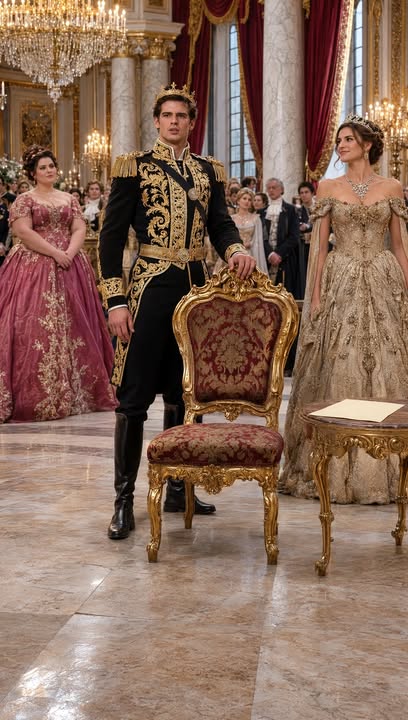
Part 5 – The Truth Before the Court
“Then the question is not only why my father kept the report,” the prince said.
He met Mara’s eyes.
“It’s who made sure it survived.”
The workshop held its quiet around them, broken only by the small sounds of the palace beyond its walls: a distant door closing, footsteps passing through the courtyard, the faint chime of a clock marking the hour.
Mara looked at the chair’s brass tag.
“Someone wanted the report found,” she said.
“Or wanted it preserved without knowing whether it would ever be found,” Celestine replied.
The prince studied the tag beneath the lamplight.
“Either way, the chair was kept by order of the king.”
Tomas shook his head slowly.
“I can’t tell you who placed it here. The tag was already on the chair when I took charge of the workshop.”
“Could the household office have records of the storage order?” Mara asked.
“They may,” the prince said. “I’ll ask first thing tomorrow.”
He placed the report and the king’s letter inside the archival folder, then secured its clasp.
Mara felt a reluctance to let the papers out of her sight, though they were safer in the prince’s hands than they had been beneath the chair lining.
“Thank you for helping us find this,” she told Tomas.
“I wish I had done more when your mother raised the concern,” he replied.
“You were an apprentice.”
“I was still old enough to understand she was worried.”
“You told the foreman.”
“I did.”
Mara regarded him for a moment, seeing not a man who had failed her mother but a boy who had trusted the people assigned to know better.
“You did what you could with what you understood then,” she said.
Tomas dipped his head, accepting the kindness without pretending it erased anything.
The prince turned toward the workshop doors.
“We should return to the palace. There are decisions to make before the court hears of this.”
Celestine’s gaze rested on the folder.
“Do you mean decisions about the record, or decisions about who will be allowed to see it?”
“Both.”
The three of them left the workshop together.
The night air in the courtyard was cool, and the stone path glimmered faintly with moisture from an earlier shower.
The prince carried the folder close beneath his arm.
Celestine walked beside him, while Mara followed a few steps behind, her thoughts moving between her mother’s handwriting and the letter that had confirmed what she had feared.
At the palace doors, Celestine paused.
“I need to speak with my father before this becomes a matter of court,” she said.
The prince looked at her.
“You don’t have to do that tonight.”
“I know.”
“Would you like me to come with you?”
“No,” she replied. “If I ask him what he knew, I want to hear his answer without a prince in the room.”
Mara understood.
Celestine had spent much of her life being seen through the expectations of other people.
This was a chance to meet her father as his daughter, not as a future queen defending her family.
“I’ll be here in the morning,” Celestine said. “Whatever he tells me, I will come back.”
Mara nodded.
“I’ll be here too.”
Celestine held her gaze a moment, then turned toward the family wing.
The prince and Mara continued along the corridor.
“You don’t have to decide tonight what to do with the letter,” Mara said.
“I know.”
“Do you?”
He looked down at the folder.
“I know I have a choice.”
“That isn’t the same thing.”
“No,” he said. “It isn’t.”
They entered the small council chamber adjoining the prince’s study.
Unlike the ballroom, it was warm and modest, with a round table, a few comfortable chairs, and shelves filled with books that seemed to have been read rather than displayed.
The prince placed the folder in the center of the table.
Mara remained standing.
“Would you like tea?” he asked.
“Not yet.”
He poured himself a glass of water and sat down, but did not open the folder.
For several moments, neither spoke.
The prince’s attention had settled on the old letter, visible through the protective paper.
“My father wrote that he would correct the record,” he said at last.
“But he didn’t.”
“No.”
“Do you think he intended to?”
“I can’t know.”
He leaned back, then straightened again, unable to find a comfortable position.
“He may have believed there would be a better moment. A quieter moment. A time when the court was not occupied by a state visit, or when the consequences would be easier to manage.”
“And then the moment never came.”
“Or he chose not to make it come.”
Mara watched him.
He had not raised his voice, but there was pain in the careful way he separated what he knew from what he wished were true.
“You loved him,” she said.
“Yes.”
“You still do.”
The prince lowered his eyes.
“Yes.”
Mara sat across from him.
“I don’t think that makes the truth less true.”
“Nor do I.”
“Then you don’t have to defend him.”
“I know.”
This time, the words held more certainty.
The prince opened the folder and looked over the letter again.
“I used to think that learning to rule meant inheriting the best of my father and avoiding the worst of his mistakes.”
“What do you think now?”
“That I may inherit the consequences too.”
Mara folded her hands on the table.
“What will you do with them?”
He looked at her.
“The report was kept private. The letter was private. My mother’s blame was public, though no formal accusation was ever entered into the record.”
“People still believed it.”
“Yes.”
“Then a private apology to me won’t change that.”
“No,” he said. “It won’t.”
He closed the folder.
“The council will advise me to investigate quietly, restore the record through an administrative notice, and avoid a public announcement until we know the full extent of the matter.”
“Would that be wrong?”
“Not necessarily,” he said. “A careful investigation is sensible. But I’m worried that ‘quietly’ could become another way of saying ‘not at all.’”
Mara held his gaze.
“That is what happened to my mother.”
“I know.”
“I don’t want her name used to make a speech about how compassionate the palace is now.”
“I wouldn’t do that.”
“And I don’t want anyone to say she was cleared only because I happened to make a chair stand still in front of the right people.”
The prince’s brow drew together.
“You’re right to be wary of that.”
“I came here to learn why she left. I didn’t come to be turned into a story about a prince choosing the brave commoner over a noblewoman.”
“I don’t want that story either.”
“Then tell the truth without making me the reason it matters.”
The prince sat quietly with that.
When he spoke, his voice was lower.
“Your mother’s name deserves to be restored because she was wronged, not because you stood in a ballroom today.”
Mara felt the words settle, but she did not let them settle everything.
“Can you say that publicly?”
“Yes.”
“Even if the court says it will weaken the crown?”
His gaze moved to the folder.
“Especially then.”
Mara searched his face for the certainty she had seen when he promised to help, and found something harder than confidence.
He looked afraid.
Not of her, or of the truth, but of what the truth might cost and what it might reveal about the people he had loved.
“That may cost you support,” she said.
“It may.”
“The court may say you are accusing your father.”
“I will say what he did. I won’t claim to know everything he intended.”
“And if the record makes him look dishonest?”
The prince closed his eyes briefly.
“Then I will not ask the record to make him look better than he was.”
Mara’s throat tightened.
She knew the courage in that answer was not the kind celebrated in ballads.
It was the quieter courage of allowing someone beloved to be imperfect in the eyes of others.
A knock sounded at the door.
The prince’s secretary entered, holding a note.
“Your Highness, the council has received word that there are questions about the old ballroom repair.”
“From whom?” the prince asked.
“The household office, I believe. Master Vey has requested a meeting with you in the morning.”
The prince’s expression shifted.
“Did he say why?”
“He only said it concerns the sealed report.”
Mara glanced at the folder.
“Has he seen it?”
“I don’t know, my lady,” the secretary replied. “He was told that the archive had located a reference to it, but not that the report itself had been found.”
The prince accepted the note.
“Tell Master Vey I’ll meet him at nine.”
The secretary bowed and withdrew.
Mara rested her hands on the table.
“Perhaps he knows who kept the chair.”
“Perhaps,” the prince said.
“Or perhaps he wants to make sure the report stays private.”
“We’ll hear what he has to say.”
The prince stood and crossed to the window.
Beyond the glass, the gardens lay in darkness, with only the path lanterns visible between the trees.
“When the court hears the report is real, they will want to know why it was hidden,” he said.
“Do they have a right to know?”
“I believe they do.”
“Even if it hurts people who had nothing to do with it?”
“It may.”
“Even if it brings suspicion onto Celestine’s family?”
His shoulders lowered.
“Especially then, I must be careful not to let her family’s position decide what the public is permitted to learn.”
Mara rose.
“Celestine is already trying to find out what her father knew.”
“I know.”
“She may discover that he did nothing more than obey a request.”
“That would still matter.”
“And if he knew the report proved my mother was innocent?”
The prince did not answer immediately.
“Then she will have to face what that means,” he said. “And so will I.”
Mara thought of Celestine’s pale face in the workshop, and how she had stayed beside the report rather than retreating from it.
“I don’t want her punished for something she didn’t do.”
“Neither do I.”
“Then be careful when you speak.”
The prince turned from the window.
“I will.”
Mara knew there was more she wanted to say, but her thoughts had become heavy with the day’s discoveries.
The prince noticed.
“You should rest,” he said. “The council will be expecting an answer in the morning, but no decision has to be made tonight.”
“Some decisions already have.”
“Which ones?”
“I know I won’t accept a private apology in place of my mother’s name being restored.”
He nodded.
“That is your right.”
“And you?”
“I know I won’t ask you to accept a private settlement.”
Mara looked at him.
“Good.”
A faint, tired smile appeared between them.
It did not feel like romance, not yet.
It felt more like the beginning of trust, built from the small willingness to say what each of them feared.
Mara left the prince’s study shortly before midnight.
She was given a quiet guest room in the east wing, far from the ballroom and the rooms used by the court.
Sleep came slowly.
Whenever she closed her eyes, she saw her mother’s signature at the bottom of the report.
She remembered the little workroom at home, the rows of cloth, and the way her mother had held a length of fabric against the light before cutting it.
“Look for the strain,” Elinor used to tell her. “The place where it pulls is the place that needs your attention.”
By morning, the palace corridors were already busy.
Mara met the prince and Celestine in the small council chamber.
Celestine looked tired, and the careful stillness she usually wore had given way to something more vulnerable.
“My father is willing to speak with me,” she said.
“Did you speak last night?” Mara asked.
“Not yet. He sent word that he wants us to talk after the council meeting.”
“Do you know what he intends to say?”
“I know what I fear he’ll say.”
The prince joined them at the table.
“Master Vey is here,” he said. “He’s waiting in the west drawing room.”
Celestine drew a breath.
“Then let’s hear him.”
Master Vey was older than Mara had first realized, with a narrow face and silver hair combed neatly away from his forehead.
He stood when they entered.
“Your Highness,” he said. “Lady Celestine.”
His eyes fell on Mara.
“Miss Vale.”
The recognition was unmistakable.
“You knew my mother,” Mara said.
“I knew of her work,” he replied.
“That is not quite the same thing.”
“No,” he said. “It is not.”
The prince indicated the chairs.
“Please sit.”
Master Vey remained standing until the others had taken their places.
“I understand that you found the ballroom report.”
“We did,” the prince said.
“And the king’s letter?”
The prince’s expression hardened.
“You knew there was a letter?”
“I knew His Majesty had written to Miss Vale after the incident.”
Celestine held her hands tightly together.
“Did you ask Lord Vale to seal the report?”
Master Vey’s eyes moved to her.
“I did.”
“Why?”
“Because the court was preparing to receive foreign delegates, and the accident had raised concerns about the palace’s readiness.”
“That doesn’t answer why the report was sealed,” Celestine said.
“No,” Master Vey replied. “It explains the reason I gave at the time.”
Mara watched him.
“What was the real reason?”
He looked down at his folded hands.
“I was afraid the report would lead to a public inquiry that would damage the king and the palace.”
“And my mother?” Mara asked.
“I did not consider the cost to her as carefully as I should have.”
The admission was plain, without decoration.
Celestine’s face tightened.
“Did my father know the report said she had warned the work crew?”
“He knew there had been a warning.”
“Did he know she was blamed afterward?”
Master Vey hesitated.
“I believe he knew.”
Celestine looked away, her eyes bright.
“Did you tell him the king had acknowledged she was innocent?”
“No,” Master Vey said. “The king’s letter was private.”
“But you knew the report contradicted the court’s explanation.”
“Yes.”
Mara’s hands rested quietly in her lap.
“Why was the chair kept in the workshop?”
Master Vey’s gaze lifted.
“I arranged for it to be stored.”
“Did you hide the report inside it?”
“No. I did not know it was inside the frame.”
“Then who did?”
“I can’t say.”
The prince leaned forward.
“Why did you arrange for the chair to be kept?”
Master Vey’s answer came slowly.
“I had hoped the matter would be revisited when the court was calmer. I kept the chair because the king asked that the evidence not be destroyed.”
The prince’s face changed.
“My father told you to preserve it?”
“He did.”
“Then why was the report sealed?”
“Because he wanted time.”
“Time for what?”
Master Vey looked at the prince.
“To decide how to correct the record without making the palace appear careless.”
The words remained in the room.
Mara felt a familiar tiredness settle over her.
The king had wanted to correct the truth without allowing the truth to damage his reputation.
He had wanted the benefit of justice without its cost.
Celestine’s voice was quiet.
“My father agreed?”
“Your father approved the request to keep the report in the household office,” Master Vey said. “He told me he was protecting the stability of the crown.”
“Did he know the king had accepted Elinor’s warning?”
“I cannot say what your father knew about the letter.”
Celestine leaned back.
“So he may have sealed the report without knowing it contained the proof that my family’s explanation was false.”
“Yes.”
“Or he may have known.”
“Yes.”
She held Master Vey’s gaze.
“I won’t pretend those possibilities are the same.”
“They are not.”
The prince stood.
“Thank you for answering.”
Master Vey bowed his head.
“I should have answered years ago.”
“Yes,” the prince said. “You should have.”
When Master Vey left, the room remained still.
Celestine looked at the closed door.
“My father may have helped hide it without knowing the full truth,” she said. “Or he may have known more than he admits.”
“Will you speak with him?” Mara asked.
“I will.”
The prince returned to his chair.
“The council is waiting for me.”
“Have you decided?” Mara asked.
“I have.”
Celestine’s gaze moved to him.
“What will you do?”
“I will release the report and the king’s letter to the council, correct the official record, and speak publicly at the gathering this evening.”
“Tonight?” Mara asked.
“The council believes a quiet notice would be sufficient. But the original account was allowed to stand in public. If I correct it only in private, the correction will never reach the people who heard the lie.”
Celestine looked down at her hands.
“If you do that, my family will be named in the inquiry.”
“I will not name your father as responsible for the entire matter unless we have evidence that he knew more than we do.”
“But the transfer note has his name attached to it.”
“It does. I will state that the report was sealed at Lord Vale’s request under the household office, and that my father’s administration approved the transfer. I will also say that the evidence does not yet establish what your father knew.”
Celestine’s eyes lifted.
“You would risk angering the council for the sake of a careful distinction?”
“I would risk angering them for the sake of the truth.”
Mara felt the force of his decision, and also the fear beneath it.
“Is there another way?” she asked.
“There is a quieter way,” he said. “I could restore your mother’s name in the archive, compensate your family, repair the floor, and allow the court to move on without a public statement.”
“Would you do that?”
“I considered it.”
“And?”
“It would protect the crown in the short term. It would also ask you to accept the same kind of silence my father asked your mother to accept.”
Mara’s eyes stung.
“I don’t want a reward.”
“I know.”
“I don’t want to be used as proof that the palace is generous now.”
“I know.”
“I only want her name restored.”
“It will be.”
Celestine rose from her chair.
“I’ll support the apology,” she said. “Whatever it means for my family.”
The prince regarded her with quiet respect.
“You don’t have to speak publicly with me.”
“I know. But I won’t stand silent while my family’s name is used to avoid the truth.”
Mara looked at Celestine, seeing the difference between the woman who had entered the ballroom expecting to win and the woman who now stood ready to face what she might lose.
“Thank you,” Mara said.
Celestine’s face softened.
“I can’t undo what happened to your mother.”
“No.”
“But I can refuse to help hide it.”
“That matters.”
The prince left to meet the council.
Celestine went to find her father.
Mara waited in the quiet chamber with the report and the letter, listening to the palace move around her.
In the afternoon, the prince returned.
He carried the report in its protective folder and wore his black-and-gold uniform, but no crown.
“The council has agreed to the public statement,” he said. “They will not all support it, but they will not prevent me.”
“What did they want you to do instead?”
“Publish a narrow correction without discussing the letter or the sealed report.”
“And you refused?”
“I told them the correction would be meaningless if it omitted the reason it was necessary.”
Mara looked at the folder.
“Will the entire letter be read?”
“The relevant passage will.”
“Will my mother’s name be spoken?”
“Yes.”
She lowered her gaze to the cover.
“What if the court decides she was only cleared because the prince wants to marry me?”
The prince’s expression tightened.
“Then I will make it clear that the challenge has nothing to do with the truth about her.”
“You can’t control what people say.”
“No,” he said. “But I can control what I say.”
Mara sat with the answer.
After a moment, the prince added, “I have also ordered an inspection of the ballroom floor.”
“Will you close it?”
“Until it is repaired.”
“Good.”
“I don’t know how much of the old marble can be preserved.”
“Then have it examined carefully before anyone removes it.”
“I will.”
Mara felt an unexpected tenderness for the care with which he asked rather than assumed.
The prince had begun the day believing he could solve a problem by making a challenge.
Now he was preparing to accept that some problems required him to speak where the palace could hear.
A bell sounded from the public hall.
The hour of the gathering had arrived.
Mara stood.
The prince offered his arm.
She looked at it, then at him.
“I’ll walk beside you,” she said. “But I won’t stand there as your chosen queen.”
“I wouldn’t ask you to.”
“Not tonight.”
“Not tonight,” he agreed.
They entered the public hall together, with Celestine walking on Mara’s other side.
Courtiers, palace staff, and invited guests filled the room.
The mood was more subdued than the celebration that had followed the chair challenge.
Word had spread that the prince intended to address an old matter, though few knew what it concerned.
At the front of the hall, a narrow table held the report and the king’s letter.
The prince stepped onto the low dais.
Mara stayed below it, beside Celestine.
For a brief moment, the prince looked down at her.
She gave him a small nod.
He faced the gathering.
“Yesterday, a chair in the ballroom rocked because the marble beneath it was uneven,” he began. “A young woman noticed what the rest of us had overlooked.”
The guests turned toward Mara.
She felt the familiar weight of their attention, but she kept her hands relaxed at her sides.
“The chair’s difficulty was not caused by a flaw in its legs,” the prince continued. “It was caused by a fault in the floor.”
He paused.
“Years ago, during a renovation ordered by my father, palace staff raised concerns about the ballroom marble. One of those staff members was Elinor Vale.”
Mara heard her mother’s name travel through the hall.
“Miss Vale reported that the stone had not settled properly and warned that the floor could become unsafe. The report was not acted on. When a guest later slipped, the public explanation placed blame on the person who had raised the warning.”
A murmur stirred among the guests.
The prince lifted the letter.
“My father later acknowledged in writing that Elinor Vale had been right, that the renovation should have been delayed, and that she had not caused the defect.”
The hall grew quiet.
“He promised to correct the record. The record was never corrected.”
No one moved.
“Instead, the report was sealed in the royal household office. My father’s administration allowed the court’s account to remain in place, and I have benefited from that silence without knowing it.”
The prince’s voice did not break, but something in it became more personal.
“I cannot speak for my father’s intentions. I can speak for the record before us. Elinor Vale warned the palace of a danger, and she was not responsible for it. The blame placed on her was false.”
Mara felt tears gather behind her eyes.
She did not look away.
The prince lowered the letter.
“On behalf of the royal house, I apologize to Elinor Vale and to her daughter, Mara. We should have corrected this years ago. We did not. That failure belongs to us.”
Celestine stepped forward.
“My family’s office approved the transfer that kept the report from the public record,” she said. “I don’t know everything my father knew, and I will not claim certainty where there is none. But I will not excuse the silence simply because it protected people I love.”
Her voice trembled slightly, then steadied.
“I am sorry that Elinor Vale was left to carry the cost of decisions made by others.”
The hall remained silent for several breaths.
Then an older palace servant near the back bowed his head.
A woman beside him began to clap once, softly.
Another joined her.
The applause did not swell into celebration.
It rose slowly, unevenly, with the solemnity of people who understood that an apology was not the same as repair.
Mara pressed her fingers together.
The prince stepped down from the dais.
“I have ordered the ballroom closed until the floor can be properly inspected and repaired,” he told the gathering. “The report and letter will be entered into the public archive, and an independent review will examine how the warning was handled.”
A member of the council rose from the front row.
“Your Highness, the review may expose failures beyond this one incident.”
“Then those failures should be examined.”
“Such an inquiry could unsettle the court.”
“The court has been unsettled by a lie for years,” the prince replied. “It is time we learned what else it has been asked not to see.”
The council member sat.
The prince turned back to the gathering.
“This is not a story about a contest or a future marriage. Mara did not owe us a solution, and her mother did not owe us silence. The truth stands apart from what the crown may gain or lose.”
His gaze found Mara.
“I will not ask her to forgive us tonight.”
She held his eyes.
“Because forgiveness is hers to give, not ours to request,” he said.
The gathering ended without music.
People moved away in thoughtful clusters, speaking quietly.
Some approached Mara to offer their sympathy, while others seemed unsure whether to meet her eyes.
She thanked those who spoke to her and did not attempt to ease the discomfort of those who could not.
Celestine stood a short distance away, watching her father speak with the prince.
Lord Vale had not yet arrived.
The prince joined Mara near the edge of the hall.
“Are you all right?” he asked.
“I don’t know.”
“That seems fair.”
“My mother’s name was spoken where the lie had been allowed to stand.”
“Yes.”
“It should
**–END OF PART 5–CLICK “NEXT” AT THE BOTTOM OF THE PAGE TO CONTINUE READING**
* * *
[PREVIOUS: PART 4](https://storyly.idolsgift.com/blog/part-4-the-seam-beneath-the-marble-057) | [NEXT: PART 6(THE END)](https://storyly.idolsgift.com/blog/part-6-the-end-the-seam-beneath-the-marble-057)
✓ Lynn R. Adams
Part 5 – The Truth Before the Court “Then the question is not only why my father kept the report,” the prince said. He met Mara’s eyes. “It’s who made sure it survived.” The workshop held its quie…