PART 5: The Rose That Remembered 046
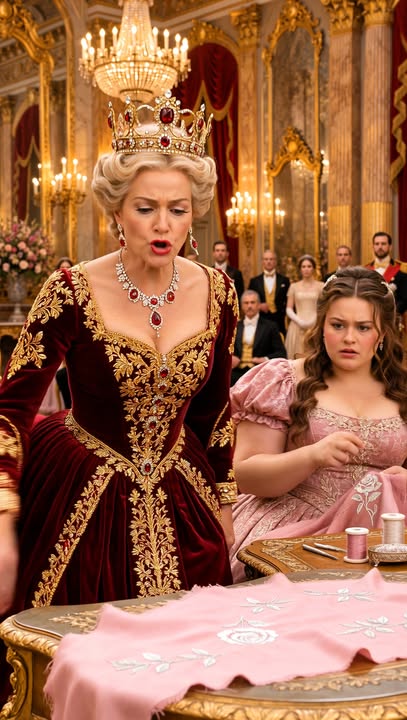
Part 5 – The Name I Choose
The council’s request lay open in Queen Eleanor’s hands, its seal broken and its careful language no less heavy for being polite.
I read the final lines again.
The council wished to establish the authenticity of the records, clarify my place within the royal family, and consider whether my birth affected the succession.
It did not say I would be forced to attend.
It did not need to.
“I won’t go before them as a question of succession,” I said.
Eleanor lowered the letter.
“You should not have to.”
“Then why are they asking?”
“Because the council must determine whether the documents are genuine,” she replied. “And because they are accustomed to treating every uncertainty as something that belongs to the crown.”
Mara folded Sera Holt’s account and returned it to its protective sleeve.
“The records are compelling,” she said. “But the council will want to authenticate them before making any public statement.”
“They can authenticate the paper without making me sit in a room while they decide what my life means.”
Alexander’s jaw tightened, though his voice remained calm.
“I agree.”
Eleanor looked at him.
“Your support will be noticed.”
“Then let it be noticed for the right reason.”
His words were quiet, but they changed the room.
Until then, he had been standing beside his mother, a prince concerned for the family.
Now he was standing beside me, a person willing to be seen doing it.
I wished I could take comfort in that without wondering what it might cost him.
The queen set the council’s letter on the table.
“We can ask them to hold a private hearing, with your consent and under clear conditions.”
“I don’t want a hearing about whether I belong on a throne.”
“Then the hearing should not be about that.”
I looked at the papers before us: Sera’s statement, the chancellor’s order, the parish record bearing my name.
For a moment, I saw my mother at the kitchen table, her hands steady over a torn seam.
A torn seam wasn’t a failure.
It was just the place where you had to begin again.
“What if they decide the records are true?” I asked.
Eleanor’s gaze softened.
“Then the council will have to acknowledge that you are Elizabeth’s daughter.”
“And what will they expect me to do?”
“Some may expect you to appear at court. Some may suggest a title or a public position. Others may argue that your existence changes the succession.”
“I don’t want to change anyone’s succession.”
“You are not responsible for what your birth means to people who sit around a table,” Eleanor said. “You are responsible for what you choose to do with your own life.”
I looked at her.
“Can the council accept that?”
“They will have to hear it from you.”
That was the difficult part.
Not the old records, or the missing page, or the name the palace had tried to bury.
The difficult part was standing in front of people who had already begun turning me into an answer and telling them I was still a person.
“I’ll attend,” I said. “But I won’t sit there while they discuss me as if I’m not in the room.”
“You won’t,” Eleanor promised.
“And I don’t want to be asked to claim a title.”
“Then that will be made clear before the hearing begins.”
“I don’t want a royal allowance or a house or a place at court.”
Eleanor’s eyes glistened.
“Those are not things I would offer as payment for your mother’s story.”
“I know you wouldn’t mean them that way.”
“But you might still feel them as a burden.”
I nodded.
“I do.”
She came around the table, slowly enough that I could step away if I wished.
“I cannot restore the years I lost with my sister,” she said. “And I cannot ask you to fill that absence for me.”
I thought of the way she had held the thimble, then returned it to the cloth rather than keeping it.
“I don’t know what I can be to you yet.”
“You can be Lily.”
The simplicity of the answer nearly undid me.
Alexander looked down, giving me the privacy of not being watched too closely.
I drew a breath.
“I’ll attend,” I repeated. “But I’ll tell them the truth as I know it, and I’ll decide what comes after.”
Eleanor inclined her head.
“Then that is what we will ask of them.”
The private hearing was arranged for the following afternoon.
The council agreed to limit attendance to its members, the queen, the prince, the archivist, and me.
No court audience would be present.
No questions about marriage would be permitted.
The council secretary sent the conditions to me in writing, and I read them at my kitchen table before signing.
A week earlier, I might have thought a document with the queen’s seal would be enough to make a choice safe.
Now I knew that even official paper could be incomplete, mistaken, or shaped by someone’s fear.
I signed because the conditions were fair, not because the seal commanded me.
That evening, I returned to my sewing room and took out the dusty-pink gown.
The silver rose at its hem was still small and neat, its seven petals catching the lamplight.
The dress had begun as a challenge.
It had become the thing that drew me into the palace and opened a door onto my mother’s hidden past.
I ran my fingers along the fitted seams.
They were good seams, carefully shaped to my body rather than forcing my body into someone else’s idea of a dress.
I thought of the beige practice gown Victoria had held against me in the ballroom.
I had been ashamed then, though I had done nothing wrong.
I had wanted to become smaller simply because the room had made no space for me.
Now I chose a deep blue gown from my workroom, one I had made for myself over the winter.
It was not royal in style.
It was not intended to flatter a court.
It fit comfortably, left room for movement, and had a narrow band of silver stitching at the cuffs.
I pinned the silver rose at its collar.
The thimble rested beside my mother’s letter on the table.
I did not wear it.
It belonged to the past, and I wanted my hands free.
At the palace the next afternoon, Alexander waited outside the council chamber.
He was dressed formally, but without the bright ceremonial sash he wore at public events.
“You look like yourself,” he said.
“I thought that was the point.”
“I think it is.”
The corridor was quiet.
Through the carved doors, I could hear the faint murmur of council members settling into their seats.
Alexander did not take my arm.
He did not tell me I would be fine.
Instead, he asked, “Do you want me beside you?”
“Yes,” I said. “But not in front of me.”
His expression softened.
“Then I’ll walk beside you.”
When the doors opened, the council chamber seemed smaller than the ballroom, but more solemn.
Seven council members sat behind a long table.
Queen Eleanor occupied the center seat.
Mara Venn had arranged the records in a precise row before her.
The official who had carried the council’s letter stood near the wall, holding a ledger of proceedings.
I felt every gaze turn toward me.
The room was not laughing.
That should have made it easier.
It did not.
The silence had the careful weight of people who believed they were about to hear a matter of state.
I took my place at the table beside Mara.
Alexander sat on my other side, not between me and the council.
The eldest council member, Lord Renn, spoke first.
“Miss Bennett, thank you for agreeing to attend. We understand that the circumstances are unusual, and we will proceed with respect for your wishes.”
“Thank you.”
“The council’s purpose today is to establish the authenticity of the documents presented and to understand whether they have any bearing on royal succession.”
“My mother’s life is not a succession matter,” I said.
A small movement passed among the council members.
Lord Renn glanced toward Eleanor.
“The records may have consequences beyond the personal.”
“They may,” I replied. “But I’m here as myself, not as a symbol of those consequences.”
The queen’s expression held steady approval, but she did not speak for me.
Lord Renn nodded.
“Then we will begin with the documents.”
Mara described the records in order.
The midwife’s entry, the parish baptism, Sera Holt’s account, and the chancellor’s order were all consistent in dates and names.
The ink and paper had been examined by the archive staff.
The handwriting on the letter from the sewing box closely resembled Elizabeth’s, though it could not be authenticated beyond doubt.
The silver thimble was consistent with the royal workshop of the period, and its rose matched the pattern found in Elizabeth’s old letters.
“Taken together,” Mara said, “the evidence strongly supports the conclusion that Princess Elizabeth survived the accident, gave birth to a daughter, and lived under the name Margaret Bennett.”
“Strongly supports,” one council member repeated. “But does not establish beyond question.”
“No historical record can establish every private detail beyond question,” Mara answered. “But these sources corroborate one another.”
The council member leaned back.
“What remains unknown?”
“The identity of the person who wrote the card found in the pin cushion,” Mara said. “The location of the original order. The circumstances that led Lord Chancellor Alcott to conceal the truth. And whether Princess Elizabeth ever intended to return.”
I felt the old letter in my pocket.
My mother’s voice seemed close enough to hear.
Some names belong to the past.
The council continued to examine each record.
They asked about the handwriting, the village, the date of my birth, and whether my mother had ever spoken about the palace.
I answered as honestly as I could.
She had called herself Margaret Bennett.
She had raised me in the village.
She had taught me to sew and had never told me she was a princess.
She had left no explanation for the rose, the thimble, or the hidden letter.
When one council member asked whether I believed my mother had chosen to leave the royal family, I stopped before answering.
“I believe she chose to raise me,” I said. “I don’t know what choices she had before that.”
The council member lowered her eyes.
That answer seemed to stay with the room.
At last, Lord Renn folded his hands.
“If the records are confirmed, Miss Bennett, you would be Queen Eleanor’s niece and a member of the royal family. The council would need to consider what recognition is appropriate.”
“I’m not asking for recognition.”
“You may not be asking for it now, but the country may expect to know—”
“The country can know the truth without being asked to decide who I should become.”
His mouth tightened, though not with anger.
“Your birth may have implications for the line of succession.”
“Then the council can consider those implications without making me take a position I do not want.”
“Would you decline any claim to the throne?”
“I have no claim to make. I have never wanted to rule, and I am not here to replace anyone.”
The words were firmer than my hands felt.
I looked around the table.
“I’m a dressmaker. I want to keep working. I want to live in the village where my mother raised me. I want the truth about her life, not a title that makes strangers think they know me.”
No one interrupted.
I turned toward Eleanor.
“I’m willing to be known as your niece, if that is what the evidence shows and if we can learn how to know each other honestly.”
Her eyes shone.
“But I won’t be used to mend an old political story,” I continued. “My mother was a person before she became a princess in your records. I want her choices treated with the same respect you would give the choices of anyone else.”
Eleanor’s chin trembled once, then steadied.
“I agree,” she said. “And I accept the terms Lily has set.”
The eldest council member looked down at the documents.
“The council will need time to deliberate.”
“I understand.”
“There may be further requests for records or testimony.”
“I’ll consider them when they’re made. I won’t promise today.”
“That is reasonable,” Lord Renn said.
The hearing ended without a ruling.
When the chamber doors opened, I found my knees had grown unsteady.
Alexander offered his arm.
I accepted it, but only to steady myself as we walked into the corridor.
“You were clear,” he said.
“I was terrified.”
“You can be both.”
We stopped near the windows overlooking the palace gardens.
The sky had turned pale with evening.
I leaned against the stone ledge, letting the cool surface steady me.
“I thought telling them I didn’t want a crown would be the hardest part.”
“What was?”
“Saying that I might want to know Eleanor without being swallowed by the palace.”
He watched me carefully.
“She wants that too.”
“Wanting something doesn’t make it simple.”
“No,” he said. “But it gives you somewhere honest to begin.”
I looked at him.
“And what do you want?”
He was quiet for a moment.
“I want you to have the life you choose.”
“That’s a careful answer.”
“It’s the true one.”
I could hear the guarded tenderness in his voice, and it made me feel both seen and wary.
The council might see a possible princess.
The palace might see a missing branch of its family.
Alexander might see someone he had come to care about.
None of those things gave anyone the right to decide my future for me.
“I don’t want you to think I’m asking you to wait,” I said.
“I’m not.”
“I don’t know what I feel.”
“I know.”
“I might choose a life that has nothing to do with the palace.”
“I hope you choose a life that belongs to you.”
The words were gentle, and he did not ask me to give him anything in return.
For a moment, the quiet between us held something warm.
Then a door opened farther down the corridor.
Victoria stepped out with a document folder pressed against her chest.
She stopped when she saw us.
“I was looking for the archivist,” she said. “The council asked me to bring my grandmother’s letters.”
“Did you find something?” I asked.
“I found a letter she wrote the year Princess Elizabeth disappeared.”
Victoria placed the folder on the windowsill but kept one hand on it.
“She says Lord Chancellor Alcott came to the servants’ quarters and told everyone the princess had died in the accident. But she also says she saw a woman who looked like Elizabeth leave the palace three days later, carrying a baby.”
Eleanor had approached from the council chamber behind us.
She heard the last words and stopped.
Victoria turned toward her.
“My grandmother wasn’t sure what she had seen. She wrote that the woman wore a plain traveling cloak and kept her face turned away.”
“Did she know who the baby was?” I asked.
“No. She only wrote that a nurse said the child was to be taken somewhere safe.”
Victoria opened the folder and removed a folded sheet.
“The letter was stored with her household papers. I didn’t know it existed until the archivist asked about family memories.”
Eleanor read the first lines.
Her face changed.
“This may help us understand what happened,” she said.
“I hope so,” Victoria replied. “I’m sorry my family’s old stories added more confusion.”
“They may have preserved what the official record left out,” Mara said, joining us from the chamber.
Victoria looked at me.
“I used to think the palace had given my grandmother a place in the family story,” she said. “Now I wonder whether she was given only a piece of it.”
She left the letter with Mara and stepped back.
For the first time, I saw her not as the woman who had mocked my gown, but as someone whose future had also been designed by other people before she knew she could question it.
“You did the right thing by bringing this,” I said.
“I hope so.”
She did not ask for forgiveness.
That made the apology feel more real.
The archivist took the letter to examine it.
While she read, Queen Eleanor stood beside me at the window.
“The council’s deliberation may take days,” she said. “The truth will be made public once the evidence is verified.”
“I want to speak publicly before anyone tells my story for me.”
Eleanor’s eyes moved to mine.
“Are you certain?”
“I’m certain I don’t want rumors to turn my mother into a scandal or a fairy tale.”
“Then we can arrange a statement.”
“I want to write it myself.”
“Of course.”
“And I want to say that I’m your niece, but that I’m not accepting a title or a royal role.”
Eleanor nodded.
“You should be able to say exactly that.”
“I also want to ask the palace to support a sewing school in the village.”
The idea had come to me as I watched the councilmen speak about my birth as if it were a matter of public ownership.
My mother had taught me to sew because it gave me work, independence, and a way to begin again when something tore.
I wanted other girls to have the same chance.
“Not a school named after the royal family,” I added. “A place for village girls to learn a trade, with good materials and fair pay for the teachers.”
Eleanor looked at me with a depth of feeling that made her silence gentle rather than empty.
“That is a generous idea.”
“It isn’t charity,” I said. “I want it designed with the village. They should decide what they need.”
“Then that is how it will be done.”
The palace could offer the rooms and funding.
It could not decide what the school would become.
That mattered to me.
As the evening deepened, I went home with my mother’s letter, the thimble, and a copy of the council’s conditions.
I wrote my public statement at the same table where I used to sit beside her.
I wrote that the records strongly indicated I was Princess Elizabeth’s daughter.
I wrote that my mother had raised me as Margaret Bennett and that I would continue to use the name Lily Bennett.
I wrote that I was grateful to Queen Eleanor for offering a relationship without demanding one.
I wrote that I had no desire to enter the succession or take on a royal role.
I wrote that I would build my life around the work I loved, and that I hoped to create a sewing school for girls who wanted the freedom to make their own choices.
The words were simple.
They did not make the choice easy.
I signed my name at the bottom.
For the first time, the name Lily Bennett did not feel like a name that hid something.
It felt like the name I had lived in, loved in, and chosen to keep.
The next morning, the palace secretary arrived with news from the council.
They had accepted the records as authentic enough to recognize me as Queen Eleanor’s niece.
They had also agreed that I had no claim to the throne and would not be expected to assume any public role.
I read the message twice.
The council had not granted me my freedom.
It had acknowledged that it was mine.
That afternoon, I stood in the palace courtyard while Eleanor read my statement aloud to a small group of reporters and household staff.
She did not introduce me as a princess.
She introduced me as Lily Bennett, the daughter of Margaret Bennett, and her niece.
I spoke briefly afterward.
My voice shook at first, but steadied when I thought of my mother’s hands guiding mine.
“I am grateful to know the truth about my family,” I said. “I will not be taking a royal title or public position. My mother built a life for us under the name Margaret Bennett, and I intend to honor that life by continuing to build my own.”
I looked toward the waiting reporters.
“I hope the attention given to my story will also bring attention to the village girls who deserve the chance to learn a craft and support themselves.”
When I finished, there was no applause.
Only a quiet pause, followed by the soft sound of pens and cameras.
It felt more honest that way.
Victoria stood near the edge of the gathering.
She had not tried to stand beside me or attach her name to the announcement.
When I met her eyes, she gave a small, sincere nod.
Alexander waited farther back, giving me room.
Eleanor did not ask me to stay at the palace that night.
She did not ask me to call her Aunt.
She only walked with me to the courtyard gate.
“I would like to know you,” she said.
“I would like to know you too.”
“Slowly?”
“Slowly.”
Her smile held relief without claiming more than I had offered.
“I can do slowly.”
As I stepped toward the carriage, the palace secretary hurried across the courtyard with a narrow packet in his hand.
“Your Majesty,” he said to Eleanor. “This arrived from the former chancellor’s estate. The archivist believes it was overlooked among his private papers.”
Eleanor accepted the packet.
Its outer seal had been broken, but the paper inside was intact.
Mara joined us, reading the label.
“It is addressed to the queen,” she said. “The date is twenty-five years ago.”
Eleanor looked at me before opening it.
“Do you want me to read this here?”
I thought of the missing page.
I thought of my mother, who had left us enough truth to find one another and enough silence to keep her choices her own.
“Yes,” I said. “But not until we know what it is.”
Mara carefully unfolded the paper.
The first line was written in Lord Chancellor Alcott’s hand.
Queen Eleanor,
I have kept the final page of Elizabeth’s letter because I could not bear to let you read what she had written.
The queen’s fingers tightened around the edge of the page.
Mara continued, her voice growing quieter.
“She wanted to come home,” the letter said. “But she feared that if she returned, the council would take her daughter from the life she had chosen.”
Eleanor covered her mouth.
The final paragraph had been written beneath that, in a hand that was not Alcott’s.
The ink was faded, but the signature remained clear.
Elizabeth.
And the last sentence read:
If Lily ever asks what I wanted, tell her I wanted her to choose for herself.
**–END OF PART 5–CLICK “NEXT” AT THE BOTTOM OF THE PAGE TO CONTINUE READING**
* * *
[PREVIOUS: PART 4](https://echoesofstories.idolsgift.com/blog/part-4-the-rose-that-remembered-046) | [NEXT: PART 6(THE END)](https://echoesofstories.idolsgift.com/blog/part-6-the-end-the-rose-that-remembered-046)
✓ Lynn R. Adams
Part 5 – The Name I Choose The council’s request lay open in Queen Eleanor’s hands, its seal broken and its careful language no less heavy for being polite. I read the final lines again. The counci…