PART 5: The Question Behind the Royal Chair 069
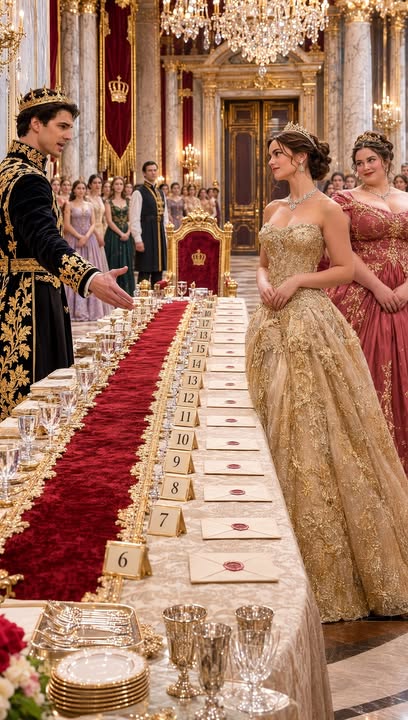
Part 5 – The Cost of Silence
For a long moment, no one moved.
The faint initial on the report seemed to darken beneath the lamplight, though Mara knew the ink had not changed.
“R,” Edwin repeated, scarcely above a whisper.
The prince kept his eyes on the page.
“Could it have been added later?” he asked.
“It could,” Edwin replied. “But the ink appears to have aged with the rest.”
Hales bent toward the report without touching it.
“I don’t recognize the hand.”
“Nor I,” the prince said.
Mara felt the wooden document box press against her ribs.
The answer was not here, not yet, but the question had found its place among them.
The prince closed the folder with care.
“We’ll have the archive examine the note and compare the ink.”
“And until then?” Mara asked.
“Until then, we don’t know who issued the instruction.”
She studied his face.
“Your office is named.”
“Yes.”
“Your family’s record blames my father.”
“Yes.”
“And you still don’t know what the palace intends to say.”
The prince did not flinch from the accusation hidden inside her words.
“I know what I intend to do,” he said. “I want the record corrected, and I want the person who wrote that instruction identified.”
“Wanting isn’t the same as doing.”
“No,” he said. “It isn’t.”
The answer held no defense, only an admission.
Mara turned toward the door.
The prince called her name, then stopped himself before taking a step closer.
“May I speak with you privately?”
She looked toward Celestine and Edwin.
“Not tonight.”
“Of course.”
She left with the box in her arms, carrying the papers that held her father’s careful handwriting and a story that had never belonged to him alone.
At home, her mother sat beside the kitchen window, mending a linen cuff.
She set the sewing aside when Mara entered.
“You found something.”
Mara placed the box on the table.
“We found enough to show that Father followed instructions. We don’t yet know who gave them.”
Her mother’s fingers rested on the folded cloth.
“Did the prince believe him?”
“He believes the records were wrong.”
“That is not quite the same thing.”
“No.”
Mara sat across from her.
The kitchen smelled of tea and the bread her mother had warmed before dusk.
For years, this room had been the place where her father’s name could be spoken without anyone lowering their voice.
Her mother glanced at the box.
“Did you find his notes?”
Mara opened it and drew out the page about the drafty east doors.
Her mother read the few lines, then closed her eyes.
“He worried about those guests all week,” she said. “He said the room was beautiful, but beauty didn’t keep anyone warm.”
Mara’s throat tightened.
“I thought he had simply been blamed for being careless.”
“So did I, sometimes.”
Her mother’s admission surprised her.
“Why?”
“Because it hurt less to believe he had made one mistake than to think people knew he was innocent and said nothing.”
Mara reached across the table and covered her mother’s hand.
For a while, neither of them spoke.
The next morning, the palace sent a formal letter.
The archive had begun examining the report, the seal, and the altered seating papers.
The prince requested Mara’s presence at the palace that afternoon.
He did not ask her to bring the originals.
Her mother read the letter twice.
“Do you want to go?”
“Yes.”
“Then go because you want the truth, not because a prince has asked.”
“I will.”
When Mara arrived, the prince was waiting in a private sitting room overlooking the winter garden.
A fire glowed behind a screen, though the day was not cold enough to need it.
He had removed his ceremonial coat, and his crown rested on a side table.
Lady Celestine sat near the window, turning a folded handkerchief between her fingers.
She stood when Mara entered.
“I asked to be here,” she said. “I won’t speak for you, but I wanted you to know my family will support a correction.”
Mara nodded, grateful for the offer and still wary of what it could not mend.
The prince gestured to a chair.
“Thank you for coming.”
“I received your letter.”
“The archive has confirmed the papers are genuine,” he said. “The altered numbers and the handwritten instructions are consistent with the original records.”
“And the initial?”
“They have not identified the writer.”
“Do they know whether it belonged to someone in your office?”
“They can’t say yet.”
The prince paused.
“There is something else I need to tell you.”
Mara sat, but did not remove her gloves.
The prince placed a second letter on the table between them.
It bore no seal, only his name written in his own hand.
“I have been asked by the council to postpone any public correction until the archive completes its inquiry.”
“Asked by whom?”
“Several senior members of the household.”
“Because the note is not identified?”
“Partly.”
“And the other part?”
“The banquet competition is still underway. The court has already begun discussing the candidates and the final selection.”
Mara looked at the letter.
“What does that have to do with my father?”
“They believe a public statement now could make it seem that the inquiry is tied to the competition.”
“Could it be?”
The prince held her gaze.
“It began with the envelopes used in the challenge. So yes, the connection is real.”
“Then postponing the truth would make it look as though the palace cared more about the competition than the record.”
“I know.”
“You know, or you agree?”
“I agree.”
Celestine turned the handkerchief over in her hands.
“The council worries that the palace will appear to have used an old injustice as part of a test,” she said.
“But it did,” Mara replied.
“The prince did not know about your father’s case.”
“I know that too.”
The prince’s expression tightened, though not with resentment.
“I did not know,” he said. “But I chose the challenge, and I allowed the household to prepare it without asking how the instructions had been made.”
Mara looked at him.
The humility in his answer did not erase the wound, but it gave her something real to meet.
“What are you asking me to do?”
He took a breath.
“Wait until the archive identifies who wrote the instruction. Then, after the competition is over, I will make a public statement acknowledging that the report about your father was unreliable and that the household failed to correct it.”
“How long?”
“Several weeks, perhaps.”
“Perhaps.”
“If the archive finds the writer sooner, we can act sooner.”
“And if it doesn’t?”
“We will still correct the record.”
“Privately?”
“Publicly,” he said. “Once we can be precise about what we know.”
Mara looked from him to Celestine.
The room was warm, but her hands had gone cold inside her gloves.
“What happens to the competition while we wait?”
“It continues.”
“And I remain a candidate.”
“If you wish to.”
“Would my name be included in the final selection?”
The prince lowered his eyes.
“The council expects the finalists to remain eligible.”
“So I can keep competing, perhaps become the prince’s chosen future wife, while everyone else believes my father was rightly dismissed.”
“That is not what I want.”
“But it is what your offer allows.”
The prince drew the letter toward himself and then stopped, his fingertips resting at its edge.
“It would protect your opportunity while we finish the inquiry.”
“Protect it from what?”
“From the story becoming public before it is complete.”
Mara let out a slow breath.
“Or protect the palace from having to answer for it before it is convenient.”
“I won’t pretend that isn’t one of the consequences.”
His honesty made the decision harder, not easier.
If he had spoken only in excuses, she could have dismissed him.
Instead, he was asking her to accept a bargain that might help her and might help the household, too.
Celestine set down the handkerchief.
“My family would prefer the truth to come out quietly,” she said. “I won’t pretend otherwise.”
Mara turned to her.
“Why tell me that?”
“Because I’ve spent years thinking of reputation as something families must protect. I don’t want to disguise that instinct as concern for you.”
“Do you think I should wait?”
“I think you should decide what you can live with.”
The prince’s voice softened.
“If you speak publicly now, the competition may be suspended. Your place in it may end.”
“Would you remove me?”
“No.”
“Could the council?”
“They could ask me to reconsider the candidates.”
“And would you?”
He was silent long enough for the fire to shift behind the screen.
“I would argue that your standing in the competition should not depend on whether you choose to keep quiet,” he said at last. “But I cannot promise the council would agree.”
Mara’s gaze fell to the letter.
It was not a threat.
It was not even a warning he had chosen to give.
It was a reality he could not make disappear.
Her father had lost his place in the royal household because people with influence wanted an inconvenient truth kept out of sight.
Now she had been offered a different place—a chance to remain in the competition if she agreed to wait.
The old injury did not become smaller because the new bargain was made gently.
“What would you do?” she asked the prince.
“I don’t know.”
“You are asking me to choose.”
“Yes.”
“Then what would you choose if you were the one whose father had been blamed?”
His eyes lifted to hers.
“I hope I would tell the truth.”
“Even if it cost you the future you wanted?”
“I hope so.”
“But you don’t know.”
“No,” he said. “I don’t.”
Mara leaned back in her chair.
Outside, bare branches moved against the gray sky.
The competition had seemed remote when she first entered the ballroom, a glittering contest for a future she had barely let herself imagine.
Yet she had allowed herself to wonder.
She had noticed the way the prince listened when no one else seemed to be watching.
She had caught a glimpse of the person beneath the royal uniform, and she had wanted to know him better.
That wanting had been quiet and new, but it was hers.
If she spoke now, she might lose it.
If she stayed silent, she would be asked to hold her father’s name inside a private room while the court carried on as if nothing had happened.
Mara looked at Celestine.
“Did your family ever apologize to mine?”
“No.”
“Did anyone correct the story?”
“No.”
“Then I don’t want another season of waiting for people to decide the truth is safe enough to say.”
Celestine’s eyes shone, but she nodded.
The prince did not interrupt.
Mara stood and removed her gloves.
“I want the records released with the correction.”
“We still need to identify the writer of the note,” he said.
“We can say that the old report is contradicted by the surviving documents, and that the palace accepts responsibility for failing to investigate.”
“That would be accurate.”
“I want my father’s name cleared now, not after the competition.”
The prince rose too.
“If you do that, the council may end your candidacy.”
“Then it may.”
“I don’t want you to lose something you care about because the palace failed you.”
“You are not the one who gets to decide what I should risk.”
He absorbed the rebuke without turning away.
“You’re right.”
The simplicity of his answer nearly undid her composure.
Mara pressed her palms together.
“I know what I came here hoping for.”
The prince’s face softened.
“Your place in the competition?”
“More than that.”
She was not ready to say the rest aloud.
Not because she wished to hide it from him, but because the choice before her had to belong to something deeper than affection or ambition.
“I wanted the chance to be seen as someone who could stand beside you,” she said. “Not as a prize, and not because my father’s name opened a door.”
“I know.”
“But if I have to choose between that hope and telling the truth about him, I cannot make my silence part of the price.”
The prince looked down at the letter from the council.
Then he lifted it and held it over the flame.
Mara took one step forward.
“Wait.”
He stopped.
“I don’t want you to burn it,” she said. “I want the choice to be mine, not a gesture you make for me.”
He lowered the letter.
“You’re right again.”
She met his gaze.
“I will make my statement today. I will present the documents, and I will say what they show. I won’t claim to know who wrote the instruction until we have proof.”
“That is fair.”
“And I won’t ask anyone to pretend my father was perfect. He was a person. He could have made mistakes. But he should not have been blamed for an order he did not give.”
The prince bowed his head.
“I will stand beside you.”
Mara held his gaze.
“Will you stand beside the truth if the council tells you to wait?”
“Yes.”
The answer came without hesitation this time.
Celestine rose from the window.
“My family will put out a statement too,” she said. “We will say that we repeated the old account without examining the evidence.”
Mara looked at her.
“You don’t have to take responsibility for every person in your family.”
“I know. I’m taking responsibility for what I said.”
That mattered.
Not enough to restore the years, but enough to begin something different.
The prince called for the archive clerk and asked him to bring copies of the verified records.
The clerk arrived with a slim portfolio and a report confirming the papers’ age, handwriting, and seals.
The palace secretary was asked to prepare a public notice for that evening.
Mara read every word before she agreed to it.
The first version said the household had “found reason to reconsider” the old report.
She crossed out the phrase.
“Reconsider makes it sound like my father’s innocence is a question of opinion,” she said.
The secretary looked to the prince.
The prince nodded.
“Use ‘the surviving records contradict the report’s claim that Thomas Vale was responsible for the seating errors.’”
They made the change.
A second sentence said the palace regretted “any distress caused to the Vale family.”
Mara stopped there too.
“Any distress caused sounds as if the harm came from feelings, not from the accusation.”
The secretary’s pen hovered.
The prince said, “Then say the household failed to investigate the original instructions and failed to correct the report.”
Mara read the revised notice.
It named her father.
It named the failure.
It did not pretend the inquiry was complete.
She signed the bottom as a witness to the records, not as a representative of the palace.
Celestine signed a separate statement acknowledging that her family had repeated the account without evidence.
The secretary gathered the pages.
“The court will ask questions,” he said. “The notice may affect the remaining competition.”
“Let them ask,” Mara said.
The prince looked at her.
For the first time since the challenge, she saw no test in his expression, no hidden standard she was expected to meet.
Only regret, respect, and something tender he did not name.
The notice was to be read in the palace hall before the evening meal.
Word had already traveled through the household, and a small crowd gathered beneath the portraits of former rulers.
Mara stood beside the prince and Celestine while the secretary read the correction.
When Thomas Vale’s name was spoken, Mara heard someone in the crowd draw a breath.
The notice did not identify who had written the old instruction.
It did not say that every question had been answered.
It did say that the report blaming her father could no longer be treated as an accurate account of the banquet.
It said the palace accepted responsibility for preserving that report without examining the evidence.
Then the prince stepped forward.
“I was not present when Thomas Vale was dismissed,” he said. “But I represent a household that accepted an unjust account and left it uncorrected. I am sorry.”
He did not look toward the crowd for approval.
He looked at Mara.
No applause followed.
There was only a deep, thoughtful quiet.
A courtier near the front asked whether the correction would interfere with the competition.
The prince answered before his secretary could.
“The competition will be reviewed. Mara Vale’s choice to speak does not diminish her standing.”
Mara felt the words settle over her, but she did not mistake them for a guarantee.
The evening meal was postponed while the council met.
Celestine stayed with Mara in a small alcove off the hall.
“I was afraid,” Celestine said, “that if we admitted the story was false, people would think my family had been foolish.”
“Were you?”
Celestine gave a small, rueful smile.
“Yes.”
“People can be foolish and still choose to do better.”
Celestine’s eyes glistened.
“I hope I do.”
Mara touched her arm.
“I think you already have.”
The prince approached them, carrying the old report in its protective folder.
“The council has accepted the public correction,” he said. “They have also decided to pause the competition until the inquiry is complete.”
Mara nodded slowly.
“Then my place is gone.”
“I argued against that.”
“I know.”
“They did not call it a punishment.”
“I know that too.”
He lowered his voice.
“I’m sorry.”
Mara looked at the folder.
“Will they continue the inquiry?”
“Yes. Mr. Hales has agreed to give a full account, and the archive is tracing the initial on the instruction.”
“Good.”
“There is another question we should discuss, but it can wait.”
“Let it wait.”
He bowed his head.
“Of course.”
The council’s decision was announced before the hall emptied.
The competition was suspended, and all candidates would be released from their obligations.
No one was selected.
No one was asked to remain in the palace.
Mara felt the strange lightness of a hope ending before it had fully taken shape.
She had not been chosen.
She had not been rejected.
She had chosen something else.
Celestine came to stand beside her as the crowd began to disperse.
“I’m sorry,” she said.
“For what?”
“For what you lost.”
Mara watched the palace attendants take down the competition banners.
“I haven’t lost the truth.”
“No,” Celestine said. “You haven’t.”
The prince remained near the dais, speaking with the council members.
When their meeting ended, he came to Mara.
“I won’t ask you to stay,” he said. “And I won’t ask you to forgive me tonight.”
“Thank you.”
“I would still like the chance to speak with you, when you’re ready.”
“I don’t know when that will be.”
“I understand.”
She believed he meant it, though neither of them knew what the future would ask of them.
Mara and Celestine were preparing to leave when the palace archivist hurried into the hall.
He carried a newly uncovered page between two boards, protected from the air.
“Your Highness,” he said. “We found the matching copy in the sealed banquet ledger.”
The prince turned.
“What does it say?”
The archivist laid the page on a nearby table.
The faint initial on the report appeared again, clearer this time.
Beneath it was a full name, written in the same aged ink.
Mara leaned closer.
The archivist looked from the page to the prince.
“It was not Mr. Hales who issued the instruction,” he said.
The prince stared at the name.
“Then who did?”
The archivist’s finger rested beside the signature.
“The instruction was issued by Prince Rowan’s office.”
The prince’s face drained of color.
Rowan was not his grandfather.
Rowan was the name he had been given at birth.
**–END OF PART 5–CLICK “NEXT” AT THE BOTTOM OF THE PAGE TO CONTINUE READING**
* * *
[PREVIOUS: PART 4](https://storyly.idolsgift.com/blog/part-4-the-question-behind-the-royal-chair-069) | [NEXT: PART 6(THE END)](https://storyly.idolsgift.com/blog/part-6-the-end-the-question-behind-the-royal-chair-069)
✓ Lynn R. Adams
Part 5 – The Cost of Silence For a long moment, no one moved. The faint initial on the report seemed to darken beneath the lamplight, though Mara knew the ink had not changed. “R,” Edwin repeated, …