PART 5: The Promise in the Photograph 041
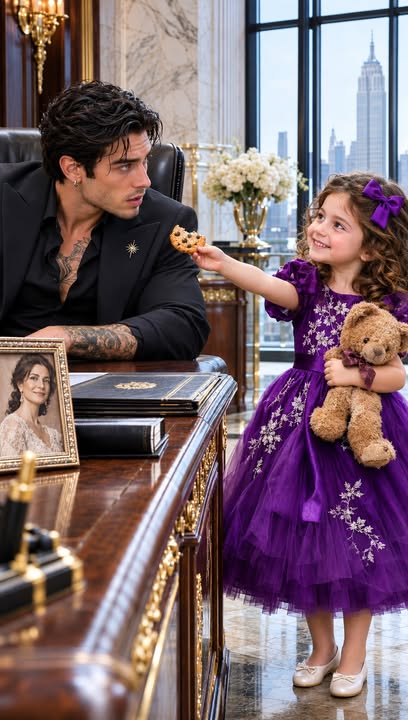
Part 5 – The Price of Protection
“What if she never wants to know?” Emma asked.
Alexander stood across the records-room table from her, the old ledger open beneath the shaded lamp, its brittle pages crowded with names and figures that had shaped lives without ever revealing them.
“Then we let that be her choice,” he said.
Emma looked down at the transfer notice, where the words surviving issue seemed to wait for her answer.
“And if the truth puts her in danger?”
“Then we keep her safe first.”
Victor’s gaze moved between them.
“The trust is not the only concern,” he said. “If the records become public, people will start asking who the beneficiary was and who inherited from him.”
“People who have no reason to know about Lily,” Alexander replied.
“That may not stop them.”
“Then we make sure they have no reason to find her.”
Emma’s shoulders had drawn inward, though she was doing her best to hold herself steady.
Alexander recognized the posture; it was the way a person stood when every possible path seemed to lead through a cost they could not afford.
He wanted to reach for her hand, but he had not earned the right to turn comfort into a promise.
Instead, he pulled the ledger closer and studied the page Victor had found.
The original entry confirmed the damaged copy: the boy had been placed under the name Parker, and Rose had been appointed his guardian until he came of age.
A later notation, written in their father’s hand, stated that the beneficiary had died before his twenty-fifth birthday.
The line beneath it authorized the remaining funds to be held for any surviving children.
No child was named.
No location was given.
Only a small cross-reference to a closed account remained.
“Could the account show where the money went?” Emma asked.
“It might show a bank or trustee,” Victor said. “Not necessarily the beneficiary.”
“Would it tell us the name he used?”
“Possibly.”
“Then we need to find it.”
Victor turned a page in the ledger.
“There’s a complication.”
Alexander looked up.
“What?”
“The account was closed less than a year after Father’s death.”
“By whom?”
“The executor.”
“That was you.”
Victor did not look away.
“Yes.”
Emma went still.
Alexander felt the room tighten.
“Why?” he asked.
“Father’s estate was being settled, and the account had no active claim attached to it.”
“You knew it belonged to the boy?”
“I knew there was an old trust. I didn’t know about Rose or the letters.”
“Did you transfer the funds?”
“I followed the instructions in the estate file. The money went into the family holding company.”
“And you didn’t question why the trust had been set up?”
“I did. The answer I received was that the beneficiary had died and there were no heirs.”
“Who told you that?”
“Father’s attorney.”
“Is he still alive?”
“No.”
Victor’s response carried no triumph, only the frustration of an answer that could no longer be tested.
Emma ran her thumb along the edge of the ledger.
“So the money is part of the company now.”
“Yes.”
“And if Lily is the surviving issue, she might have a claim.”
“There may be a claim,” Victor said. “That’s not the same as saying she is entitled to anything.”
“Could the company be forced to disclose her identity?”
“If the matter goes through court, some records could become public.”
Emma’s face lost what little color had returned to it.
Alexander closed the ledger.
“Then it won’t go through court.”
Victor studied him.
“You don’t know that.”
“I know what I’m willing to do to avoid it.”
“You can’t give away the company just because a record might belong to someone.”
“I can stop the company from using an old mistake to claim authority over a child.”
“That may cost you control.”
“I know.”
“Alexander, the company supports hundreds of people.”
“And their jobs matter. That’s why we’ll handle the transition responsibly.”
Victor’s expression sharpened.
“You’re talking about surrendering your position before we even know whether Lily has any connection to this trust.”
“I’m talking about separating the business from the records.”
“You don’t have to make a decision tonight.”
“The longer we wait, the more likely someone turns Lily into a reason to fight over the company.”
Emma lifted her eyes.
“Don’t make a promise for me.”
“I’m not.”
“You’re talking about giving up your control because of what might be in those papers.”
“I’m talking about removing the power that makes the papers dangerous.”
“You could lose everything you built.”
“I didn’t build all of it.”
The answer was quieter than the argument, and more honest.
Much of Alexander’s life had been inherited: the name, the business, the expectations, the belief that control was the only safe place to stand.
He had spent years guarding that inheritance as if it were the same thing as a future.
Now Lily’s laugh from downstairs came faintly through the corridor, and the sound made his priorities feel painfully clear.
Emma heard it too.
“She’s just a little girl,” she said.
“I know.”
“She doesn’t know anything about trusts or family names.”
“I know.”
“She thinks your teddy needs company.”
Alexander glanced at the bear resting on a chair beside the records.
“That may be the most important thing she knows.”
Emma’s mouth softened, but worry remained in her eyes.
“I don’t want to be the reason you lose your family’s business.”
“You aren’t.”
“Then don’t make this choice for me.”
“I’m not making it for you, Emma. I’m making it because I don’t want a company, or an inheritance, or my family’s old secrets to have the power to decide Lily’s life.”
Victor lowered his gaze to the ledger.
“There is another option,” he said.
Alexander looked toward him.
“What option?”
“We could settle the account quietly. If there’s a possible heir, establish a protected fund without disclosing the connection.”
“That would require Lily’s identity to be known to the people administering it.”
“Only to a small number.”
“And if those people are questioned later?”
“We’d have counsel handle it.”
Emma shook her head.
“I don’t want Lily’s future tied to money no one can explain.”
“It could provide security,” Victor said.
“She already has a home and people who love her.”
The words came gently, but they ended the proposal.
Victor seemed to understand.
He looked down at the records, his fingers resting on the corner of the ledger.
“I thought protecting the family meant preserving what it had,” he said.
Alexander watched him.
“And now?”
“Now I’m not sure what I thought I was protecting.”
It was the first time Victor had spoken without the armor of strategy.
Alexander saw no easy confession in it, only an older brother who had learned too late that caution could become another form of control.
Emma drew a slow breath.
“What happens if we give the records to the authorities?”
“We let them verify the documents, trace the trust, and decide what has to be reported,” Alexander said. “We keep Lily’s name out of anything that doesn’t require it.”
“Can we do that?”
“We can ask for a confidential review and a protective order if needed.”
Victor nodded reluctantly.
“It would still draw attention to the account.”
“Then we accept that attention.”
“And possibly lose the holding company.”
“Possibly.”
“And the board may remove you before the review is finished.”
“Possibly.”
Victor looked at him for a long moment.
“You’ve spent years building the company into something stable.”
“Then it should be able to stand without me.”
“That’s not the same thing as being ready to let it go.”
“No,” Alexander said. “It isn’t.”
He thought of his mother’s photograph, her open window, the birds she had wanted to hear.
He thought of the child she had tried to protect, and of the promise written in her hand.
If anything happens, keep the children safe.
His mother had not written that the family’s name must survive.
She had not written that the business must remain untouched.
She had written about children.
“Tell me what you need,” Alexander said to Emma.
She looked at him, wary of a question that might carry a hidden price.
“I need Lily kept out of this as much as possible.”
“I can do that.”
“I need to know you won’t decide what’s best for her without asking me.”
“I won’t.”
“And if anyone tries to use her name, or her father’s, to claim something from us?”
“Then we stop them.”
“Without turning it into another family war.”
Alexander nodded.
“Without turning it into a war.”
Emma’s eyes glistened, though no tears fell.
“I can’t promise I’ll stand beside you through all of this.”
“I’m not asking you to.”
“I don’t want you to mistake gratitude for love, or kindness for a promise.”
“I won’t.”
“I need to be Lily’s mother before I’m anything else.”
“I would never ask you to be otherwise.”
She let out a breath she seemed to have been holding since the first moment Victor carried the envelope into the office.
“Then I’ll stay long enough to make sure the records are handled properly.”
“That’s all I’m asking.”
Victor closed the ledger and placed both hands on its cover.
“We should contact the family attorney.”
“No,” Alexander said. “Not the attorney who handled Father’s estate.”
“Why not?”
“Because he relied on the old information, whether he knew it was false or not. We need independent counsel, someone with no connection to the family.”
Victor considered that.
“I know a firm that handles trusts and privacy matters.”
“Send their details to me. I’ll choose someone independently.”
“You don’t trust my judgment.”
“I trust you to provide a name. I don’t want you to make the choice for all of us.”
Victor accepted the distinction with a small nod.
“What about the board?”
“They’ll need to know there’s a records issue.”
“They’ll want details.”
“They can know the company may need to review an old trust. They do not need Lily’s name.”
“And if they demand it?”
“Then I will tell them the matter is confidential.”
“Some of them may not accept that.”
“Then they can remove me.”
The certainty in his voice surprised even him.
He had expected the words to feel like a threat to his own life.
Instead, they felt like a door opening onto a room he had forgotten existed.
Emma watched him, reading his face.
“Are you sure?”
“No,” he said. “But I’m certain I won’t make Lily pay for my uncertainty.”
He asked one of the household staff to bring the independent attorney’s contact information and a secure case for the original documents.
Then he and Victor began arranging the papers in the order they would be reviewed.
Emma helped identify the letters that belonged to Rose, but Alexander asked her to stop when he saw how tightly she was gripping the edge of the table.
“You don’t have to do all of this tonight,” he said.
“If I leave, I’ll spend the whole night imagining what you found without me.”
“Then stay, but take a break.”
She shook her head.
“I’ll be all right.”
Lily appeared at the doorway before he could answer.
Mrs. Collins stood behind her, one hand resting lightly on the child’s shoulder.
“Mommy said we were going home,” Lily announced.
“We are,” Emma said. “I wanted to finish talking first.”
Lily looked at the papers spread across the table.
“Did the old secret get bigger?”
“A little,” Alexander replied.
“Can you make it smaller?”
“I can try.”
She considered his answer, then glanced toward the teddy bear.
“Is Teddy ready?”
Alexander picked up the toy and offered it to her.
Lily accepted it, then paused.
“You keep him tonight,” she said.
“I thought he was going home with you.”
“He can visit you. He said he likes your office.”
“I don’t think Teddy said that.”
“He told me with his face.”
She held the bear out again.
Alexander accepted him.
“Thank you.”
“You have to be gentle.”
“I will.”
Lily turned toward Victor.
“You have to be gentle too.”
Victor blinked, caught off guard.
“With what?”
“Secrets.”
For a moment, none of the adults answered.
Then Victor crouched slightly to meet her eyes.
“I’ll try.”
Lily seemed to approve.
“Good.”
Emma placed a hand on her daughter’s back.
“Come on, sweetheart.”
Lily turned to Alexander.
“Are you going to be sad?”
“I might be.”
She nodded, then reached up and touched his sleeve where the pink butterfly sticker had once been.
“You can have another cookie tomorrow.”
“I’d like that.”
She smiled, satisfied by the promise of something ordinary.
As Emma led her away, Alexander watched them disappear down the hall.
He had not asked Emma to stay beside him.
He had not asked Lily to fill the silence left by his mother.
He had only asked for the chance to make one choice differently from the men who had raised him.
Victor stood beside him, looking toward the empty doorway.
“You’re ready to let the company go.”
“I’m ready to let go of the idea that it matters more than people.”
“That may not be the same as being ready.”
“Maybe not.”
The independent attorney arrived an hour later and reviewed the papers in the records room.
She confirmed that the hospital record appeared authentic, but warned them that no conclusion should be reached until the transfer ledger was examined and the surviving trust files were located.
She also explained that if the beneficiary’s descendants had a valid interest, the company’s use of the funds could require review.
“Could Lily’s name become part of the public record?” Emma asked.
“Not if we act carefully and the court agrees to protect a minor’s identity,” the attorney said. “But I cannot promise that every detail will remain private if the matter becomes contested.”
“Then we should avoid a contest,” Alexander said.
“That may not be entirely in your control.”
“I understand.”
The attorney prepared a written request for the trust files and a separate notice instructing the company to freeze any related account activity until the records were verified.
Victor signed as an officer of the company.
Alexander signed beneath him, knowing that the next board meeting might ask him to explain why.
When the attorney left with copies secured in a sealed case, the house had grown quiet.
Emma had taken Lily home.
The old photograph remained on the table, its backing carefully restored around the two hidden notes.
Alexander stood before his mother’s picture, the teddy bear tucked beneath one arm.
His mother’s face had always looked to him like a farewell.
Tonight, for the first time, it seemed as though she had been trying to leave him instructions.
Victor joined him.
“If the board finds out this could affect the trust, they’ll want to settle it internally.”
“They can want whatever they like.”
“They’ll say you’re risking the business for a possibility.”
“I am.”
“Why?”
Alexander looked at the photograph.
“Because the possibility is a child.”
Victor’s expression shifted.
“You weren’t always like this.”
“No. I wasn’t.”
“Do you think Mother would have approved?”
“I think she tried to protect someone without knowing what he would become.”
“She knew what he might lose.”
“Maybe that’s why she did it.”
Victor looked down at the bear.
“Lily gave you that?”
“She said I looked like I needed him.”
“And you do?”
Alexander considered the question.
“I don’t know. But I’m keeping him safe.”
The next morning, the board called an emergency meeting.
They had learned of the account freeze through the company’s compliance office, and several directors wanted an immediate explanation.
Alexander entered the conference room with Victor beside him and the independent attorney on a secure video call.
He described the old trust, the newly discovered hospital record, and the need to verify whether a living beneficiary had been deprived of information or funds.
He did not mention Emma.
He did not mention Lily.
He did not name the Parker family.
One director leaned back in his chair.
“You’re asking us to suspend access to assets based on a damaged record and a family letter.”
“I’m asking you to preserve the assets until the review is complete.”
“And if there is no heir?”
“Then the company loses nothing by waiting.”
“And if there is?”
“Then we address the claim lawfully.”
Another director tapped a pen against the table.
“The review could undermine confidence in the company.”
“Concealing it would do worse.”
The room fell still.
Victor watched his brother without speaking.
The board’s chairwoman folded her hands.
“Mr. Reed, the trust was closed under the instructions we were given. If you reopen it, you may trigger litigation and expose the company to liability.”
“I understand.”
“You could lose your position.”
“I understand that too.”
“Are you prepared to step aside if the board decides your judgment is compromised?”
Alexander thought of the envelope, the old photograph, and Lily’s small hand resting on his sleeve.
“I am prepared to do what is necessary to keep this review independent.”
It was not the answer they had expected.
A director across the table shook his head.
“You’re choosing a person who may not even exist over the company you’re responsible for.”
“I’m choosing not to let the company decide that question in its own favor.”
The chairwoman glanced at the attorney’s screen.
“If the board votes to preserve the funds and authorize an independent review, you’ll have our support for now.”
“For now?” Victor asked.
“For as long as the process remains transparent.”
Alexander nodded.
“That’s fair.”
The board voted to preserve the disputed assets, authorize the review, and temporarily remove Alexander from direct oversight of the trust.
He agreed without protest.
When the meeting ended, Victor remained in the empty room with him.
“They didn’t remove you,” Victor said.
“Not yet.”
“You may still lose the chair.”
“I know.”
“You sound relieved.”
“I’m relieved Lily won’t be asked to prove she deserves protection.”
Victor’s face softened.
“You really think she could be the beneficiary’s child.”
“I think it’s possible.”
“And if she is?”
“Then she is still Lily.”
“And if she isn’t?”
“She is still Lily.”
Victor looked down at the polished table.
“I spent years believing that if I held onto everything, I could keep the family from breaking.”
“Did it work?”
“No.”
The answer was almost a whisper.
Alexander rested one hand on his brother’s shoulder.
It was the first time he had touched him without suspicion in years.
Victor looked startled, then let the gesture remain.
The next several days unfolded in careful steps.
The attorney located the closed trust ledger at an outside records company.
The hospital confirmed the transfer had been made under the Parker name, but its archive did not contain the boy’s later identity.
Emma found an old box among her late mother’s stored belongings, and inside it lay one of Rose’s letters, folded around a small silver pin.
The letter did not name the boy.
It did mention that he had been placed with a couple who lived several towns away, people Rose trusted to raise him as their own.
A second note, written years later, said that he had grown strong and had begun asking questions about where he came from.
No one had answered him then.
Not while the danger remained.
The trust records suggested the boy had died as a young man, but the name on the death notice did not match Parker.
The gap between names remained.
Emma brought the letter to Alexander’s home one afternoon, carrying it in a clear protective sleeve.
Lily came with her, holding the teddy bear by one arm.
“He missed you,” she told Alexander.
“I missed him too.”
“You can have him until tomorrow.”
“I’ll take good care of him.”
Emma set the letter on the table.
“I found it behind a drawer in the old box. My mother must have kept it after Grandma died.”
Alexander read the letter without touching the paper.
Rose had written that the boy was safe, that he had been given a new surname, and that the people raising him loved him as if he had been born to them.
She had not written the name.
At the bottom, she had added one sentence.
If he ever has a daughter, tell her she was wanted long before anyone knew her name.
Emma closed her eyes.
“I thought my mother didn’t know who Lily’s father was.”
“Maybe she didn’t,” Alexander said.
“Or maybe she knew there was something she couldn’t tell me.”
“Either way, you don’t have to decide tonight.”
“I know.”
She looked at him, and the honesty in her face made the distance between them feel both smaller and more fragile.
“I’m grateful you didn’t make this about the money.”
“I almost did.”
“What stopped you?”
“Lily asking whether the secret was nice.”
Emma smiled faintly.
“She asks questions no one else thinks to ask.”
“She does.”
“Are you still willing to give up control of the company?”
“Yes.”
“Even if this turns out to have nothing to do with her?”
“Yes.”
“Why?”
“Because the company shouldn’t be the one deciding who matters.”
Emma studied him for a long moment.
“I believe you.”
The words were small, but Alexander felt them land with the weight of something earned.
He did not reach for her hand.
He let her choose the distance.
She set her palm beside his on the table, close enough that their fingers nearly touched.
“I can stand beside you through the review,” she said. “But Lily comes first, and I won’t let either of us rush her into a story she didn’t choose.”
“I agree.”
“And I won’t let your family decide that being related to her means they own a part of her life.”
“They don’t.”
“Good.”
The attorney called just before dusk.
The records company had located the original transfer ledger, and the handwriting had been authenticated.
There was a name in the entry that did not appear in any of the other documents.
Alexander listened in silence while the attorney explained that the identity would require a second verification, because the name belonged to someone who had lived under two separate records.
“Does it connect him to Lily?” Emma asked.
“We don’t know yet,” the attorney said. “The record identifies the beneficiary, but we’ll need a death certificate and an independent family link before making that conclusion.”
“What is the name?” Alexander asked.
The attorney hesitated.
“Before I give it to you, I should explain that the board has been informed the beneficiary may have surviving issue. They’ve asked for a formal identity review.”
“Did they ask for Lily’s name?”
“No.”
“Did you give it to them?”
“Absolutely not.”
Alexander looked at Emma.
She had gone very still, her fingers curled around the edge of the table.
“Tell us the name,” she said.
The attorney read it from the ledger.
Emma’s face changed.
Alexander saw her recognize it before she spoke.
“That was the first name my mother gave me,” she whispered. “The one she said might not be true.”
The room seemed to lose all sound.
The attorney continued, explaining that the beneficiary’s death certificate had been requested and that the review could take another day.
Emma did not answer.
Alexander reached for the old photograph, not to hide it or claim it, but to steady it where the frame had begun to tilt.
Lily slipped from the chair and came to stand beside her mother.
“Mommy?”
Emma looked down at her.
“Are you all right?”
“I’m not sure yet.”
Lily offered her the teddy bear.
“You can borrow him.”
Emma took it and held it close.
Alexander looked at the attorney’s notes on the table, at the name that had connected the old trust to Emma’s life, and then at the photograph of his mother and Rose.
The truth had come close enough to touch.
But before anyone could say what it meant, the attorney’s phone rang again.
She listened, then turned back to them.
“The death certificate has arrived,” she said. “There’s a second name listed as the decedent’s surviving child.”
Alexander looked at Emma.
The attorney read the name.
It was Emma’s mother.
**–END OF PART 5–CLICK “NEXT” AT THE BOTTOM OF THE PAGE TO CONTINUE READING**
* * *
[PREVIOUS: PART 4](https://echoesofstories.idolsgift.com/blog/part-4-the-promise-in-the-photograph-041) | [NEXT: PART 6(THE END)](https://echoesofstories.idolsgift.com/blog/part-6-the-end-the-promise-in-the-photograph-041)
✓ Lynn R. Adams
Part 5 – The Price of Protection “What if she never wants to know?” Emma asked. Alexander stood across the records-room table from her, the old ledger open beneath the shaded lamp, its brittle pages…