PART 5: The Promise He Never Forgot 047
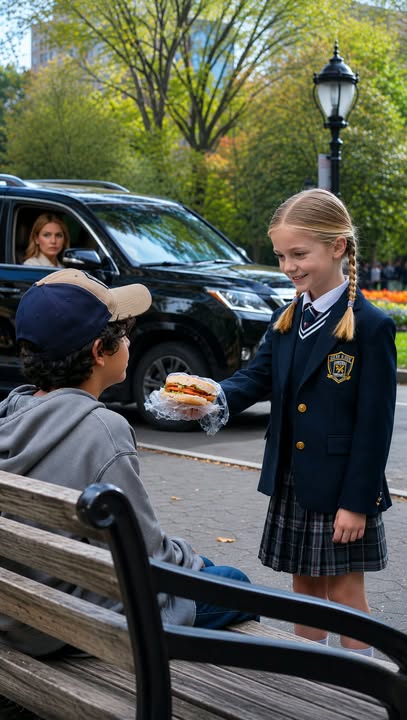
Part 5 – The Truth at the Door
Relief moved through me, gentle and uncertain, like sunlight finding its way through a cloudy window.
“I don’t want that to stop,” I said.
Milo nodded, though he kept one hand pressed over the pocket where he carried the photograph.
“I need the residence for now,” he added. “I want to keep working with the caseworker. And I want to get back to school.”
“That makes sense.”
“I don’t want to move into your house just because everyone feels guilty.”
“You won’t.”
He watched me closely, as if waiting to see whether I meant it.
“I want you there because you want to be there,” I said. “Not because you owe anyone a second chance.”
His shoulders loosened a fraction.
“Could we just keep eating lunch together?”
“Whenever you want.”
“And maybe I could come over sometime, if it doesn’t get weird.”
“I can’t promise we won’t be weird,” I said. “I’ve never had a brother before.”
That earned a small smile.
“Neither have I.”
When I turned back toward the residence, I saw my mother standing just inside the doorway.
She had heard us, but she didn’t step closer.
Milo noticed her too.
His smile faded, though he didn’t look away.
“I should go,” he said.
“I’ll see you tomorrow.”
“Maybe.”
I nodded, accepting the uncertainty without asking him to give me more.
He went back inside.
My mother stayed by the door until it closed behind him.
Then she looked at me.
“Did he say anything about me?”
“He said he isn’t ready to call you Mom.”
“I understand.”
“He said he isn’t ready to forgive you.”
She lowered her eyes.
“I understand that too.”
“He does want to keep seeing me.”
A trace of hope crossed her face, but she did not let it become a request.
“I’m glad,” she said. “That’s yours and his.”
On the drive home, my mother sat quietly beside me.
The driver kept the radio off.
I watched the city pass through the window, the gray sidewalks and small storefronts turning gold as the afternoon sun came out.
“What happens now?” I asked.
My mother folded her hands in her lap.
“I don’t know.”
“That’s not a plan.”
“No,” she said. “It isn’t.”
She looked down at her bare left hand, where her wedding ring caught the light.
“I’ve spent a long time thinking that if I could just explain my choices, people would understand them.”
“Understanding isn’t the same as making them okay.”
“I know.”
She breathed out slowly.
“I need to learn how to be honest without expecting honesty to fix everything.”
It was the first thing she had said about herself that sounded like work rather than regret.
At home, my father was in the kitchen reading the copied records.
He had set the photograph of the old house beside them.
When we came in, he closed the folder.
“How was Milo?” he asked.
“He’s taking things one step at a time.”
My father nodded.
“And you?”
“I’m fine.”
He gave me a look that said he knew better, but he didn’t press.
My mother removed her coat and hung it carefully by the door.
“I’m going to call the youth residence tomorrow and ask what supports he needs,” she said. “Not to arrange anything without his permission. Just to find out what options are available.”
“Ask him first,” I said.
“I will.”
“And don’t offer to bring him home before he brings it up.”
“I won’t.”
My father looked from her to me.
“We should all be clear about something,” he said. “Milo is not coming into this house as a way to make the past feel better.”
My mother’s chin trembled.
“No,” she said. “He isn’t.”
“He’s a person who gets to decide whether this house is somewhere he wants to be.”
“Yes.”
“And Kate isn’t responsible for carrying messages between us.”
My mother looked at me.
“You’re right.”
I hadn’t expected my father to say it aloud.
A warmth moved through me, mixed with a relief I had not known I was waiting for.
For the first time since the bench, I didn’t feel like the only person in our family willing to hold the truth steady.
That evening, I called my aunt and uncle.
They lived a few towns away and had been told, along with the rest of our family, that my twin brother had died shortly after birth.
I had never questioned the story because I had never been given a reason to.
My aunt answered on the second ring.
“Kate, sweetheart,” she said. “Is everything all right?”
I looked across the kitchen.
My mother was sitting at the table with the records in front of her.
My father stood by the window.
“Something happened,” I said. “And I need to tell you the truth about my birthday.”
A pause followed.
“Your birthday?”
“There were two babies born that day.”
My mother’s hand tightened around the papers.
I told my aunt about Milo, the photograph, the adoption, and the records.
I told her that he was alive and that I had met him.
I did not describe my mother as a monster, and I did not make excuses for her.
I explained what she had admitted: that she surrendered him, told everyone he had died, and later chose not to answer a letter from his adoptive parents.
My aunt didn’t interrupt.
When I finished, I heard her take a shaky breath.
“Your mother told us he died,” she said.
“I know.”
“Did your father know?”
“He didn’t.”
I glanced at him.
He was listening, his face drawn but steady.
My aunt was quiet for several seconds.
“I don’t know what to say,” she finally whispered.
“You don’t have to say anything right now.”
“Is Milo safe?”
“He’s at a youth residence. They’re helping him with school and support services.”
“Oh, Kate.”
Her voice broke on my name.
“Does he know about us?”
“He knows there are relatives. He hasn’t decided if he wants to meet anyone.”
“Then we should wait until he does.”
I looked at my mother.
She had lowered her head.
“Yes,” I said. “That’s what we’re doing.”
“Will you tell him I’m sorry?”
“I can tell you’re sorry,” I replied. “But if he wants to hear from you, you should say it to him yourself.”
“You’re right.”
After we ended the call, my mother sat in silence.
“I’m glad you told her,” she said.
“You used to tell everyone he was dead.”
“Yes.”
“They deserved to know the truth.”
“Yes.”
“And Milo deserved not to be introduced as a family secret.”
Her eyes filled, but she nodded.
“I know.”
I wondered if she understood that I had not made that call to punish her.
I had made it because the lie had been allowed to grow comfortable for too long.
The next day, I went to the residence after school.
Milo was in a small study room with a staff member, looking over the local school district’s information.
A caseworker named Tasha had met with him that morning and was helping him sort out transportation, enrollment, and the paperwork he needed.
He had a notebook open in front of him.
The sight of his name written at the top of the page made me unexpectedly proud.
“Any luck?” I asked when the staff member stepped out.
“They think they can help me get enrolled after they confirm which records they can request.”
“That’s good.”
“I haven’t been in a regular classroom for a while.”
“You’ll be okay.”
He tipped his head.
“You sound sure.”
“I’m not,” I admitted. “But I think you can handle it.”
He considered that, then gave a short nod.
“Better.”
We walked to the common room with the notebook.
Milo told me that Tasha had offered to explain the residence’s rules and help him make a plan for the next few weeks.
He also told me she had asked what he wanted from his biological family.
“I said I didn’t know,” he said.
“That’s a good answer.”
“I keep thinking if I don’t decide, everyone will decide for me.”
“Then you can keep saying you don’t know until you do.”
He glanced at me.
“You’re getting good at this.”
“At what?”
“Not trying to fix everything.”
I almost laughed.
“I’m learning.”
A staff member brought us two cups of hot chocolate from the kitchen.
Milo wrapped both hands around his cup.
“I saw the old letter again,” he said. “The one my adoptive parents wrote.”
“What did you think about it?”
“They sounded like themselves.”
His voice softened.
“I remember my mom writing lists before she went shopping. My dad always forgot the list at home.”
He smiled a little at the memory.
“I’m glad you have those memories.”
“Me too.”
He stared into the cup.
“I’m also glad they got to know me.”
I understood then that finding our mother had not erased the family he had lost.
He did not need to trade one truth for another.
“Do you want to meet our relatives someday?” I asked.
“Maybe.”
“You don’t have to.”
“I know.”
He looked across the room, where two younger residents were building a tower from wooden blocks.
“I might want to know what they’re like. I just don’t want a whole room of people staring at me like they’re sorry.”
“I can understand that.”
“Would you come with me if I asked?”
“Of course.”
He took another sip.
“But not yet.”
“Not yet,” I agreed.
When I returned home, my mother was on the phone with someone from the counseling practice Ms. Reyes had recommended.
She spoke in a low voice, asking about appointment availability and whether the counselor had experience with family separation and adoption.
She did not look toward me when I passed the doorway.
I heard her say that she understood it would take time.
I also heard her ask whether she could attend sessions alone before deciding whether family counseling would be appropriate.
I kept walking.
It was not my job to monitor every step she took toward being better.
But I was glad she was taking one.
That evening, our aunt called back.
She had spoken with her husband and wanted to tell us she would respect Milo’s wishes.
She said she had a box of old birthday cards from when I was little, and she wondered whether Milo might someday want to see them.
My mother thanked her.
Then she corrected herself.
“He can decide whether he wants them,” she said. “Please don’t send anything until he agrees.”
The aunt promised she would wait.
After the call, my mother sat with me at the kitchen table.
“Do you think he’ll ever want to come here?” she asked.
“I don’t know.”
“Do you think I should offer?”
“Not yet.”
She nodded.
“I keep wanting to say that there’s a room.”
“Then you can tell him when he asks what happens next.”
“And if he never asks?”
“Then you’ll have to accept that.”
Her face tightened, but she did not argue.
“I want him to have a place here,” she said.
“Then make sure it’s a real offer, not a way to prove you’re sorry.”
“I understand.”
“You can’t make him feel safe by saying he’ll be safe.”
“No.”
“You have to keep showing him.”
She looked down at the table.
“I’m beginning to see that.”
The next afternoon, Milo called me while I was walking home from school.
“Could I talk to you about something?” he asked.
“Of course.”
“I’ve been thinking about what happens after the residence.”
He sounded careful, as if each word had been tested before he let it out.
“Tasha said they’ll help me stay here while they assess what I need. They can help me with school and figure out a longer-term plan.”
“That sounds good.”
“It does.”
He paused.
“Your mom said she could help with anything.”
“She did.”
“Do you think she meant it?”
“Yes,” I said, after considering the question. “But whether she means it and whether it’s the right thing for you are separate.”
“That’s what I thought.”
He breathed into the phone.
“I don’t want to go live at your house yet.”
“Then you shouldn’t.”
“I don’t want you to be upset.”
“I won’t be.”
“Are you sure?”
“I want you to choose what feels right, not what keeps me happy.”
There was a silence.
“Thanks,” he said.
“Do you want me to tell Mom?”
“I’d rather tell her myself.”
“I can arrange that.”
“Not at the house.”
“Where would you be comfortable?”
“The residence. With Tasha there.”
I passed beneath the tall trees along our street, their branches making a dark pattern against the evening sky.
“I’ll let her know,” I said.
“Can you tell her I’m not saying never?”
“I will.”
“And Kate?”
“Yeah?”
“Please don’t make that sound like a promise.”
“I won’t.”
When I got home, I repeated his words as carefully as I could.
My mother listened without interrupting.
“He wants to tell you himself, at the residence, with his caseworker there,” I said.
“Of course.”
“He doesn’t want to move in yet.”
She closed her eyes briefly.
“Of course.”
“He said he isn’t saying never.”
She opened her eyes.
I saw hope rise in them, then stop before it reached her voice.
“I won’t treat that as a promise,” she said.
The next day, she went to the residence with me.
Tasha sat with us in a small meeting room.
Milo chose the chair nearest the window, while my mother sat across from him.
I sat to his right, close enough to be present but not close enough to make him feel surrounded.
“I wanted to tell you myself,” Milo began.
My mother nodded.
“I’m glad you did.”
“I don’t want to move into your house now.”
“All right.”
“I need to stay here while Tasha helps me figure out school and what comes next.”
“That makes sense.”
He studied her face.
“You’re not going to try to change my mind?”
“No.”
“Not even if you think it would be easier?”
“No.”
Milo lowered his gaze to his hands.
“I don’t want to feel like I’m living there because you feel guilty.”
“I understand.”
“And I don’t want to be a secret again.”
My mother’s lips parted.
She seemed to want to promise that would never happen.
Instead, she took a breath and said, “You deserve to be known as yourself, not hidden and not treated like something I need to make up for.”
Milo looked up.
“That’s the first thing you’ve said that I believe,” he told her.
The words hurt her.
I could see it.
But she did not ask him to soften them.
“Thank you for telling me,” she said.
He nodded.
“I might want to visit later.”
“You can decide when.”
“I might want my own room, if I ever move in.”
“Then you would have one.”
“I don’t want it to be a guest room that disappears if I change my mind.”
My mother’s eyes shone.
“It would be yours.”
Milo looked toward Tasha.
She gave him a small, encouraging nod.
“I don’t know when I’ll be ready,” he said.
“You don’t have to know today,” my mother replied.
He sat back.
“Okay.”
The meeting ended without a hug.
My mother did not ask for one.
As we walked out, Milo stopped beside the noticeboard in the residence hallway.
It held school announcements, information about a local library, and a flyer advertising a community dinner.
“Would you want to come to dinner at our house sometime?” I asked.
He turned to me.
“Just dinner?”
“Just dinner.”
“No discussion about moving in?”
“I’ll make sure Dad distracts Mom if she tries.”
He gave a small smile.
“I might.”
“That’s enough.”
He looked at my mother, who had waited several steps behind us.
“Could you come next week?” she asked. “Only if you want to.”
Milo thought about it.
“Maybe for lunch, after I talk to Tasha.”
“Of course.”
“Not this week.”
“All right.”
He seemed to be watching for disappointment.
My mother held his gaze and let the answer stand.
A week later, he agreed to come for lunch.
He chose the day and the time.
He asked whether my father would be home, and whether we could keep the visit short.
We promised we would.
My mother spent the morning preparing a simple meal, but she did not ask me what she should cook or whether she should put out anything special.
She made soup, bread, and a bowl of sliced apples.
When Milo arrived, he wore the same gray hoodie he had worn on the bench, though someone had sewn one of the torn cuffs.
He paused at the doorway.
My father greeted him first.
“Hi, Milo. I’m Daniel.”
“I know.”
My father smiled gently.
“I suppose you do.”
Milo looked toward my mother.
“Hi,” she said.
“Hi.”
She did not call him son.
They ate at the kitchen table, where the conversation moved slowly.
My father asked about school and listened while Milo explained what the residence was helping him arrange.
I told a story about my math teacher confusing two students with the same name, and Milo laughed hard enough to cough into his water.
My mother passed him the bread without reaching across the table.
When lunch was over, Milo stood.
“Thank you for having me.”
“Thank you for coming,” my mother said.
He looked around the kitchen.
“I might come again.”
“You’re welcome to,” she replied. “When you want.”
He headed for the door with me beside him.
Before he left, he turned back.
“Could I keep the photograph with me?”
My mother’s expression changed, but she didn’t hesitate.
“Of course.”
“It’s mine,” he added.
“Yes,” she said. “It’s yours.”
Milo tucked the photograph into his pocket.
After he left, my mother remained at the table.
She had prepared enough food for all of us, but the soup bowls sat almost untouched.
“Are you all right?” I asked.
“Yes.”
“Are you disappointed?”
She considered the question.
“I’m sad that he needs so much time.”
“That’s not the same as being disappointed in him.”
“No,” she said. “It isn’t.”
My father began gathering the dishes.
“He came,” he said. “That matters.”
My mother nodded.
“It matters.”
For the next several weeks, Milo continued meeting with Tasha and working toward school.
He visited our house twice more, each time staying a little longer.
He and my father talked about the garden, and my father showed him how the old bird feeder near the back fence had been repaired after a storm.
Milo stood beside it for a long time.
He said his adoptive father had built one almost exactly like it.
My father asked whether Milo wanted to help him make another one.
Milo said maybe.
My mother continued counseling.
She did not tell me what she discussed in her sessions, and I did not ask.
She kept the appointment even on the week when a work event ran late and she had to reschedule.
She called the agency and asked for copies of the remaining records, then gave them to Milo through Tasha rather than placing them in front of him herself.
The changes were small, and they did not make the past smaller.
They did make the present feel a little less like a performance.
One evening, Milo called me from the residence.
He had just finished speaking with Tasha about a temporary place at a youth residence closer to the school he hoped to attend.
“They said I can stay there while they assess my situation,” he said. “It’s a small place, and they’ll help with the school transition.”
“That sounds like a good next step.”
“It does.”
He paused.
“My mom heard about it.”
“What did she say?”
“She asked whether I wanted her to help with the forms.”
“And what did you say?”
“I said I’d ask Tasha first.”
“Good.”
“I don’t want her to take over.”
“She won’t.”
“How do you know?”
“I don’t know for sure,” I said. “But I know she’s trying to let you decide.”
He was quiet for a moment.
“I think I want to go to your house for dinner next week.”
“I’ll tell them.”
“Just dinner.”
“Just dinner.”
“And I don’t want to talk about what happens after.”
“I’ll make sure of it.”
When I told my mother, she didn’t smile right away.
She asked whether Milo had said he wanted her to help arrange the ride.
“He didn’t,” I answered.
“Then we should ask him.”
“You can ask, but he gets to say no.”
“I know.”
On the day of the visit, Milo arrived just before six.
He carried a small canvas bag and the faded photograph.
My mother had set four places at the table, but she hadn’t prepared a speech or written out questions.
The meal was simple.
We ate pasta and salad, and my father told a story about a disastrous attempt to grow tomatoes in the shaded part of the garden.
Milo offered several suggestions for what he should have done differently.
My mother listened as the conversation moved around the table.
When dinner was over, she asked Milo if he wanted to see the upstairs rooms.
He glanced at me.
“You don’t have to,” I said.
“I’ll look.”
We walked upstairs together.
My room was at the end of the hall.
Across from it was a smaller room that had been used for storage.
The furniture had been cleared out, leaving only a desk and a clean bed.
Milo stood in the doorway.
“Is this supposed to be my room?”
My mother stopped behind us.
“It could be, if you wanted it.”
“I told you I’m not ready to move in.”
“I know.”
“Then why set it up?”
“I didn’t,” she said. “Your father cleared the room because we needed somewhere to store the boxes from the study. The bed was already here.”
My father appeared at the top of the stairs.
“I thought you might want to see it,” he said. “But nothing changes unless you choose it.”
Milo stepped into the room.
He looked at the desk, the window, and the bare walls.
“Would it still be mine if I only came here sometimes?”
“If you wanted it to be,” my mother said.
“And if I changed my mind?”
“Then we would talk about what you needed.”
He turned toward her.
“I don’t want a room that makes everyone think I’ve forgiven you.”
“It wouldn’t mean that,” she said. “You don’t owe me forgiveness for having a place to sleep.”
The words seemed to surprise her as much as they surprised me.
Milo studied her for a long moment.
Then he looked at the window.
“I’ll think about it.”
“That’s all you need to do.”
He came back downstairs with us.
At the front door, he paused.
“I’ll come again next week,” he said.
My mother’s face softened.
“I’d like that.”
“But I’m still staying at the residence.”
“Of course.”
He looked at me.
“Walk me out?”
I grabbed my coat.
Outside, the air had grown cool, and the driveway lights made pale circles on the pavement.
Milo pressed his hands into the pockets of his hoodie.
“I don’t want to make her feel better just because she gives me a room,” he said.
“You don’t have to.”
“I also don’t want to keep acting like she can’t ever do anything right.”
“You don’t have to decide that tonight.”
He looked up at the house.
“I think she means what she says now.”
“I think so too.”
“But I don’t know if she’ll keep meaning it when I say no.”
“That’s something you can watch.”
He gave a small nod.
“Will you keep telling me if you think she’s trying to rush me?”
“Yes.”
“And you’ll tell me if you think I’m being unfair to her?”
I thought about it.
“If you ask me to, I’ll tell you what I really think.”
He smiled faintly.
“Okay.”
We walked to the front gate together.
Before he left, he took the photograph from his pocket.
The corners had softened from years of being handled, and the ink on the back had faded further.
“You still have it?” I asked.
“Always.”
He looked at the picture for a moment.
“I used to think it was the only proof I belonged somewhere.”
“Maybe it’s proof of where you started.”
He glanced at me.
“That’s not the same thing.”
“No,” I said. “It isn’t.”
He folded the photograph carefully and put it away.
The next morning, my aunt called.
She had heard from my mother that Milo was spending time at the house, and she wanted to know whether he might be ready to meet the family soon.
My mother told her he would decide when he was ready.
I watched her say it without adding that she hoped the answer would be yes.
When the call ended, she put the phone down and sat quietly.
“Did she ask you to arrange anything?” I asked.
“She asked if she could send a card.”
“Did you tell her to wait?”
“I told her I would ask Milo.”
“And?”
“And if he says no, I’ll tell her no.”
“Good.”
She looked at me.
“I know that sounds like a small thing.”
“It is a small thing.”
“But I used to think small things didn’t matter if I had good intentions.”
I sat across from her.
“They mattered to Milo.”
“Yes.”
Her eyes held mine.
“Do you think he’ll ever feel like this is his home?”
“I don’t know.”
She nodded.
“I hope he does.”
“Then you have to let him decide what home means.”
“I will.”
A few days later, Milo called to say he had been offered a place at the youth residence closer to school.
The move would happen the following week.
He sounded relieved, though nervous about starting in a new place.
“They said I can keep working with Tasha,” he told me. “And they’ll help me get to school until I know the bus route.”
“That’s great.”
“Your mom asked if I wanted her to drive me there.”
“What do you want?”
“I think I want Tasha to take me. I don’t want the first day to feel like I’m being delivered to your
**–END OF PART 5–CLICK “NEXT” AT THE BOTTOM OF THE PAGE TO CONTINUE READING**
* * *
[PREVIOUS: PART 4](https://echoesofstories.idolsgift.com/blog/part-4-the-promise-he-never-forgot-047) | [NEXT: PART 6(THE END)](https://echoesofstories.idolsgift.com/blog/part-6-the-end-the-promise-he-never-forgot-047)
✓ Lynn R. Adams
Part 5 – The Truth at the Door Relief moved through me, gentle and uncertain, like sunlight finding its way through a cloudy window. “I don’t want that to stop,” I said. Milo nodded, though he kept…