PART 5: The Promise Beneath the Scar 055
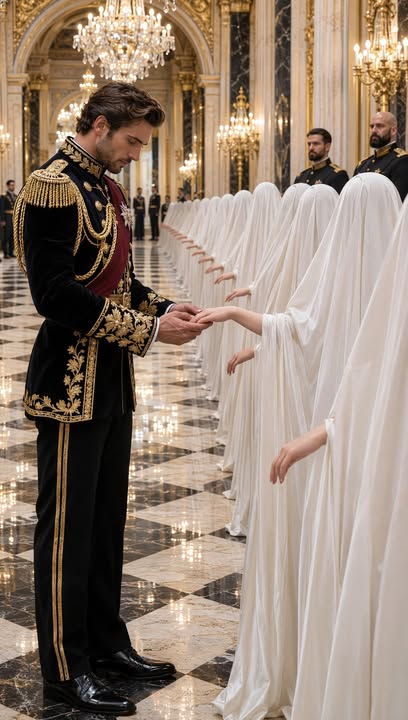
Part 5 – The Cost of Being Remembered
“I know who gave the signet to the dealer, but I promised the child I would keep his secret.”
Alexander read the sentence again, though the words had not changed.
Beyond the tall windows, the palace was still dark, the first light of morning gathering along the horizon.
Michael stood across the desk, his hands clasped behind his back, and waited.
“Did the statement say who the child was?” Alexander asked.
“It did not.”
“Then it could have been anyone.”
“It could,” Michael said. “But Eliza was speaking of a frightened child, and the records place you in the palace that day.”
Alexander lowered the paper.
“I remember the garden, and I remember being taken to a room afterward.”
“Your memory may be incomplete.”
“It is.”
He returned to the final line.
The child’s secret.
Not the prince’s secret, not the royal family’s secret, but the child’s.
“Did she say what the secret was?”
“No.”
“Then we cannot know whether it concerned the signet.”
“No,” Michael replied. “Not from this statement alone.”
Alexander rested both hands on the desk, feeling the old scar pull faintly beneath his skin.
He remembered a small room, a pale cloth around his palm, and a voice asking him to be brave.
He remembered a man’s face only as a blur of dark brows and polished buttons.
Most of all, he remembered the certainty that he had done something wrong, though no one had yet told him what.
“Find every record of the inquiry,” he said. “And every person who was present.”
“Some of the household staff are still alive, though they may remember little.”
“Ask them quietly.”
Michael inclined his head.
“And the council?”
“They will hear about this soon enough. I would rather they hear it from me than through a rumor.”
Michael’s expression grew grave.
“Your Highness, if you speak of the inquiry before we have the witness statement, you may give the council reason to question your judgment.”
“My judgment is already part of the question.”
“That is not what I mean.”
Alexander knew what Michael meant.
The council had watched his marriage challenge with unease, and Clara’s place beside him remained uncertain to them.
A prince who publicly questioned the old household records might appear less like a future king and more like a man prepared to unsettle the foundations of his own inheritance.
But he could not make the record true simply by leaving it untouched.
“Then let them question me,” he said.
Michael studied him for a moment.
“You understand that this may affect the succession.”
“I understand that silence has already affected Clara’s family.”
“And your own.”
Alexander looked down at Eliza’s statement.
“My own family has had generations to live comfortably with a lie.”
Michael did not argue.
By midmorning, the palace had begun to stir with the ordinary sounds of a new day.
Servants crossed the corridor carrying folded linens, a footman opened the shutters in the gallery, and the kitchens sent the scent of warm bread drifting through the lower halls.
Alexander found Clara in the small library adjoining the west garden.
She had come to return the wooden box, and the childhood drawing lay on the table between them.
The morning light revealed every crease in the paper.
“I read Eliza’s statement,” he said.
Clara’s eyes lifted to his face.
“And?”
“She denied taking the signet.”
“I never doubted that.”
“She wrote that she knew who had given it to the dealer.”
Clara’s fingers rested beside the drawing.
“Did she name the person?”
“No.”
“Then the palace still does not know.”
“The accounts name Lord Harrow as the person who arranged the sale.”
“Arranged it,” Clara repeated. “Does that mean he sold it himself?”
“We have not found a receipt or a witness who can confirm that.”
“Does your memory tell you anything?”
Alexander drew out the chair opposite her but did not sit until she gestured for him to do so.
“I remember being questioned after the accident. I remember being told something about Eliza and the signet, but I cannot yet separate what I saw from what adults said I had seen.”
“Did you repeat an accusation?”
“I may have.”
“Do you remember what you said?”
“No.”
Clara took in a slow breath.
The answer was honest, but the uncertainty did nothing to quiet the hurt in her expression.
“I keep thinking about what my mother wrote,” she said. “She chose to leave rather than correct you in public.”
“She may have believed the inquiry would frighten me.”
“She knew you were a child.”
“So was she?”
“No,” Clara said. “She was a young woman with little authority and no reason to trust that the household would listen to her.”
Alexander accepted the truth in her words.
“I am sorry she was put in that position.”
“I know.”
She looked down at the drawing.
“Did she think you had actually taken the signet?”
“I don’t know.”
“Did she think someone else had?”
“I don’t know.”
“And did she leave to protect you from the truth, or because she had no way to defend herself?”
“I don’t know.”
Each answer felt like another empty space in the room.
Clara folded her hands in her lap.
“I want to believe she left because she loved you,” she said. “But I don’t want her love to become a convenient explanation for what the palace did to her.”
“It won’t.”
“You cannot decide that for everyone.”
“No,” Alexander said. “But I can refuse to use her kindness to excuse the harm.”
Clara met his gaze.
For a moment, something in her expression softened.
Then the door opened, and Michael entered with a sealed letter.
“The council has requested your presence this afternoon,” he said. “They have received word that the household accounts are being reviewed.”
“Who told them?”
“I do not know. The records are not secret, but the speed of the request suggests someone spoke to a council member.”
Clara’s shoulders stiffened.
“Are they asking me to attend?”
“Not formally,” Michael replied. “They have asked for a private audience with the prince.”
Alexander took the letter and broke the seal.
The message was brief, written in the formal hand of the council secretary.
The council wished to discuss the proposed marriage, its implications for the succession, and the recent inquiries into a former household employee.
Clara read his face.
“They want you to stop looking.”
“They want to decide what the findings mean before we have them all.”
“Will you go?”
“Yes.”
“Then go without me.”
“I had no intention of making you sit through a conversation about your own life without asking you first.”
She gave him a small, tired smile.
“Good.”
Michael glanced between them.
“I will accompany you.”
Alexander nodded.
Before he left, Clara touched the edge of the drawing.
“Don’t let them turn my mother into a cautionary tale,” she said.
“I won’t.”
“And don’t let them turn me into proof that the past has been repaired.”
“I won’t do that either.”
Clara’s eyes stayed on his.
“Then remember that clearing her name is not the same as earning my trust.”
“I know.”
He left the library carrying the weight of that distinction with him.
The council chamber was bright with afternoon sun, its long windows looking out over the formal gardens.
Seven council members sat around the polished table, with the chancellor at its head.
The oldest among them, Lord Whitcomb, offered Alexander a courteous greeting.
“We are pleased you came promptly, Your Highness.”
“You asked to speak with me.”
“We understand the palace archives have uncovered troubling entries concerning the late Lord Harrow and a former servant named Eliza Vale.”
“They have uncovered records that require further examination.”
“Some records suggest Lord Harrow sold a royal signet and directed suspicion toward Miss Vale.”
“We have not yet found the supporting testimony.”
“But you believe the accusation may have been false.”
“I believe the record is incomplete and that Eliza Vale was dismissed without a properly recorded statement.”
The chancellor folded his hands.
“Her daughter, Clara Vale, is the woman you selected in the marriage challenge.”
“She is.”
“You must understand the appearance of a conflict.”
Alexander looked across the table.
“Her mother’s name was in the archive before Clara entered the palace.”
“That may be so, but the timing now connects a personal matter to the succession.”
“The matter was personal before I knew Clara’s name. It became a matter of justice when I learned what the record contained.”
One council member leaned back.
“Justice is not served by rushing to judgment against a dead adviser.”
“I have not accused Lord Harrow in public.”
“Yet the inquiry is already being discussed among the household.”
“Because the records were poorly maintained and the truth is taking years to surface.”
The chancellor’s gaze sharpened.
“We are not questioning your concern for the woman. We are asking you to consider the consequences of making this a royal matter.”
“It is a royal matter. The signet belonged to the crown, and the record was kept by the palace.”
The room settled into silence.
Lord Whitcomb spoke next.
“If the marriage proceeds, the court will ask whether you chose Miss Vale because of affection, guilt, or a desire to repair your family’s history.”
“Those are not the same thing.”
“To the public, they may be difficult to distinguish.”
“The public is entitled to know that Eliza Vale was never convicted of theft.”
The chancellor’s expression tightened.
“We could restore her name quietly.”
“By adding a note to the archive?”
“By correcting the entry and allowing the matter to rest.”
“That would correct the record without acknowledging why it was wrong.”
“Must every mistake from the past be placed before the country?”
“No,” Alexander said. “But an accusation made under the authority of the crown cannot be erased as if it were a clerical error.”
A different council member, Lady Maren, spoke in a gentler tone.
“Your Highness, this is not an argument for concealing the truth. It is a question of proportion. Miss Vale’s mother was a household employee. The signet was recovered years ago, and Lord Harrow is dead.”
“Was it recovered?” Alexander asked.
No one answered immediately.
Michael, standing behind the prince, shifted a document in his hands.
“We have not found a record of its return,” he said.
The council exchanged glances.
Alexander turned back to them.
“Then even that remains uncertain.”
Lord Whitcomb sighed.
“There are practical concerns as well. Miss Vale has no noble family, no political standing, and no experience of court life.”
“She has experience caring for her neighbors.”
“That is admirable, but it does not prepare her to represent the crown.”
“She has not agreed to marry me.”
The chancellor paused.
“Are you withdrawing your choice?”
“I am withdrawing my assumption that choosing her gave me any right to decide her future.”
The answer stirred a quiet unease around the table.
The chancellor leaned forward.
“There is a way to protect both the dynasty and Miss Vale. She could be granted a discreet position at court, with suitable support and a residence of her own. The marriage itself need not proceed.”
“You mean she should become my private companion.”
“We mean a practical arrangement, one that avoids a public dispute over the succession.”
Alexander felt the words settle in him, cold and familiar.
Clara had feared being made into a symbol or a secret.
Now the council had offered him a polished version of both.
“She would be asked to accept an unequal place while I kept my title, my inheritance, and my clean reputation,” he said.
“No one is asking her to accept anything,” Lady Maren replied. “The arrangement would be hers to consider.”
“Would the council publicly clear her mother’s name?”
“We could amend the archive.”
“Would you acknowledge that the original record implied she stole the signet without evidence?”
The chancellor’s mouth grew thin.
“That level of detail would invite questions about Lord Harrow, the reliability of the household records, and your own childhood testimony.”
“Then those are the questions we should answer.”
“You were a child,” Lord Whitcomb said. “You are not responsible for the choices of adults.”
“Perhaps not for their choices. But I am responsible for what I do now.”
The chancellor looked to Michael.
“Surely you understand the danger of turning an old uncertainty into a public crisis.”
Michael’s expression remained composed.
“I understand the danger of allowing a false record to stand because correcting it may be inconvenient.”
A small silence followed.
The council members looked at Michael with new attention.
For years, he had been the quiet voice of caution, the man who kept the royal household steady by measuring every consequence.
Alexander knew how much it cost him to speak against the council.
The chancellor turned back to the prince.
“If you make this public, you may lose the council’s support. Some members may consider your judgment compromised. Your claim to the succession could be questioned.”
“Could be questioned,” Alexander repeated.
“We are speaking plainly.”
“So am I.”
He rose from his chair.
“I will not withdraw Clara’s mother’s name from the record without correcting the truth. I will not ask Clara to accept a hidden position so the court can avoid discomfort. And I will not ask her to marry me as compensation for what happened to Eliza.”
The chancellor’s voice softened, but his words remained firm.
“If you proceed, you may sacrifice your position for a woman who has not promised to choose you.”
Alexander looked toward the window.
The garden beyond it was precise, every path bordered, every rose trained into shape.
For a moment, he saw the wild patch of his childhood instead, where one fallen rose had brought a frightened boy and a patient young maid together.
“I am not asking her to choose me,” he said. “I am asking the council to stop making the choice for her.”
He left the chamber with Michael at his side.
In the corridor, Michael kept pace without speaking.
At last Alexander stopped beside a high window.
“Do you think I have done the right thing?”
“I think you have done the difficult thing.”
“That is not the same answer.”
“No,” Michael said. “It is the one I can give before we know what Clara wants.”
Alexander gave a weary, humorless smile.
“You have always been careful with words.”
“I have learned that a careless answer can become a permanent record.”
The remark carried more weight than Michael intended.
Alexander looked at him.
“Do you regret your predecessor’s part in this?”
“I regret that I spent years trusting his judgment without asking what he had hidden.”
“That is not the same as carrying the blame.”
“No,” Michael said. “But it is enough to make me question what I chose not to see.”
They returned to the library, where Clara was waiting beside the window.
She stood as they entered.
“How did it go?”
“The council wants me to end the marriage and offer you a discreet position at court.”
Her face did not change, though her fingers closed around the edge of the wooden box.
“A position as what?”
“They did not say it plainly.”
“They did not need to.”
Alexander stepped closer but kept a respectful distance.
“I refused.”
“Why?”
“Because it would make you a secret and leave your mother’s record only half-corrected.”
“Did you refuse because you believe I should be your princess?”
“I refused because the arrangement was wrong, whether or not you ever marry me.”
Clara looked toward the open pages on the table.
“Did they say anything about the records?”
“They would amend the archive quietly. They would not acknowledge that the accusation had been unsupported, and they would not publicly address Lord Harrow’s role.”
“So they would make a small correction and call the matter finished.”
“Yes.”
Clara lowered her eyes.
“Part of me wants that,” she admitted. “If the name is corrected, perhaps my mother can rest without the court turning her into a story.”
“I understand.”
“But if it is corrected quietly, the people who believed she was a thief will never know they were wrong.”
“That is true.”
“And if you speak openly, they may make you the center of it.”
“They may.”
“They may say you are only doing it because you want to marry me.”
“They may.”
“They may say your childhood words prove you are unfit to rule.”
“They may.”
Clara studied him.
“Do you understand that I could still leave?”
“Yes.”
“Even after all this?”
“Especially after all this. I will not turn your choice into another promise you have to carry.”
She looked down at the wooden box, resting her palm against its lid.
“When my mother told me that you had promised not to forget us, I thought she meant the promise was the important part.”
“What do you think now?”
“I think the important part is what someone does after they remember.”
Alexander let the words stay between them.
Clara stepped toward the table and touched the childhood drawing with one finger.
“I cannot decide whether I want a life at court while my mother’s name is still caught between two versions of the truth.”
“Then do not decide today.”
“I may not decide at all.”
“I understand.”
She searched his face, perhaps expecting disappointment or persuasion.
He offered neither.
“I need to go home,” she said. “I need to speak with my aunt, and I need to be away from the people who keep explaining what my mother’s life should mean.”
“I will have no carriage sent unless you ask for one.”
“Thank you.”
She placed the drawing back inside the box, then closed the lid.
Alexander watched her hands, the same hands that had reached for the fallen rose years ago, that had comforted a sick neighbor, and that now refused to be guided by a prince’s fear or the council’s convenience.
“Clara,” he said.
She paused by the door.
“I will tell the truth whether or not you choose me.”
She nodded once.
“Then make sure it is the truth, not only the part that makes you feel brave.”
After she left, Alexander returned to the library alone.
The council had given him time until the following morning to reconsider his position.
He had no intention of changing it, but the choice was larger than the words he had spoken in the chamber.
He could remain the heir by accepting their quiet correction.
He could keep his place in the succession while Clara lived at court as an unnamed companion, her mother’s name restored in a record few people would ever read.
Or he could call for a public inquiry, admit that his childhood testimony may have helped condemn an innocent woman, and place his claim before the same council that now measured his worth.
The thought did not make him feel noble.
It made him feel afraid.
He took the childhood drawing from its box and held it beneath the light.
The rose had been clumsy, all its petals tilted in different directions.
He had once believed a promise could keep a person safe.
He understood now that a promise without truth could become another burden laid upon them.
Michael entered quietly.
“The archivist has found a witness statement,” he said.
Alexander turned.
“From whom?”
“A former palace gardener named Thomas Reed. He was present in the garden the day of your accident and was later called to Lord Harrow’s office.”
“Is he still alive?”
“He is. He lives in the village near the old mill.”
“Has he spoken?”
“Not yet. The archivist sent a message asking whether he would meet with us, and he agreed.”
Alexander set the drawing down.
“What does the statement say?”
“Only that Reed heard Eliza ask Lord Harrow to return what he had taken.”
The old fear in Alexander’s memory sharpened.
“Did he say what Lord Harrow had taken?”
“No. The statement was written years later, after Eliza left the palace.”
“Then we still need him to explain.”
Michael hesitated.
“There is more.”
“What?”
“The archivist found a note attached to the statement. It was written by Lord Harrow, and it says the prince must never learn that the signet was sold to pay a debt incurred on his behalf.”
Alexander went very still.
“A debt of mine?”
“That is what the note says.”
“I was a child. What debt could I have had?”
“I don’t know.”
The door opened again before Alexander could ask anything further.
A footman stood in the doorway, breathless from hurrying.
“Your Highness, the council has assembled again.”
“Why?”
The footman glanced toward Michael, then back to Alexander.
“They have received a letter from the former royal secretary. He says he can identify the person who sold the signet—and explain why Eliza chose to protect the prince.”
Alexander looked at the childhood drawing on the table.
The rose was still there, pale and uneven, held in place by the paper that had survived every silence.
“What does the letter say?” he asked.
The footman swallowed.
“It says the signet was sold to settle a debt made in your name.”
**–END OF PART 5–CLICK “NEXT” AT THE BOTTOM OF THE PAGE TO CONTINUE READING**
* * *
[PREVIOUS: PART 4](https://storyly.idolsgift.com/blog/part-4-the-promise-beneath-the-scar-055) | [NEXT: PART 6(THE END)](https://storyly.idolsgift.com/blog/part-6-the-end-the-promise-beneath-the-scar-055)
✓ Lynn R. Adams
Part 5 – The Cost of Being Remembered “I know who gave the signet to the dealer, but I promised the child I would keep his secret.” Alexander read the sentence again, though the words had not change…