PART 5: The Piece That Shouldn’t Have Been There 058
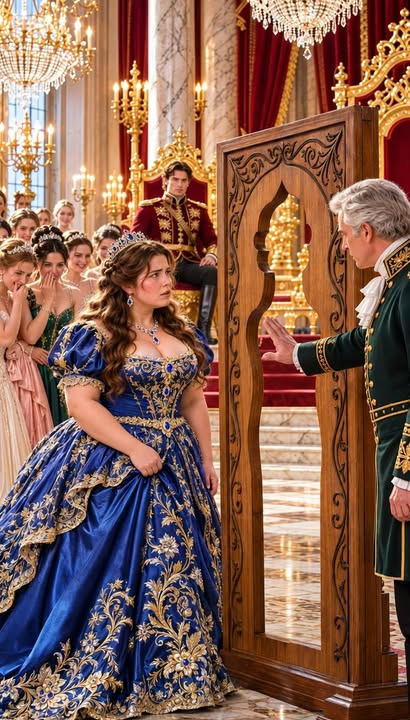
Part 5 – The Choice Beneath the Crown
William looked at the servant’s message, then at Eleanor’s letter lying open on the table.
For a moment, he seemed to weigh not what Lord Voss might say, but what the king himself would have to do once he heard it.
“Tell him I will receive him here,” William said. “With the prince, the archivist, and the carpenter present.”
The servant bowed and departed.
Alexander’s eyes rested on his father.
“You’re willing to hear him before deciding what to do?”
“I am willing to hear what he has to say,” William replied. “That is not the same as waiting to act.”
Emily watched the king fold his hands behind his back.
The morning light moved across the library floor, laying a pale stripe beneath the table where the queen’s letter and the carpenter’s drawing rested side by side.
The old words looked delicate, but nothing about them felt fragile.
They had survived a fire, a misfiled box, and years of being remembered only imperfectly.
“Whatever he tells us,” Emily said, “the candidates need to hear what we know.”
William turned to her.
“Yes.”
“And not just that the trial has been postponed.”
“No,” he said. “They deserve the whole truth.”
Alexander glanced at the letter.
“Including that the frame’s purpose was changed, that the opening was narrowed, and that we don’t yet know who ordered it.”
“Exactly,” Emily said.
She felt the force of that agreement, but also the worry gathering behind it.
If the court announced suspicion before evidence was complete, the rumor might become its own punishment.
If it said too little, the candidates would be left to think that silence was meant to protect the palace.
There was no path that would make every consequence disappear.
The question was whether they would choose the path that let everyone see the consequences clearly.
A few minutes later, Lord Voss entered the library.
He wore the same dark green coat as the day before, though his cuffs had been brushed clean.
His manner was courteous as he bowed to the king.
“Your Majesty.”
“Lord Voss,” William replied. “You said you had information about the frame.”
“I do.” His gaze passed over the open letter and lingered on the carpenter’s drawing. “I see you have found more than I expected.”
“What information did you intend to share?” Alexander asked.
Lord Voss folded his hands.
“I was responsible for arranging the frame’s installation beside the hall entrance when the current competition began.”
The admission landed quietly, but the room seemed to sharpen around it.
“Did you arrange for the inner strip to be added?” William asked.
“I did.”
No one interrupted.
Lord Voss looked toward the king rather than the prince.
“The opening had been damaged in an earlier move,” he continued. “The strip stabilized the inner edge and made the frame easier to position.”
The carpenter’s expression turned thoughtful.
“The old carving is smooth beneath it,” he said. “It was not damaged there.”
“I did not mean damaged in that precise location,” Lord Voss replied. “The frame was difficult to handle. I believed the strip would protect it.”
“Why make it narrow the opening?” Emily asked.
“I did not consider the effect it would have on the trial.”
“But you knew the candidates were being asked to stand inside it.”
Lord Voss’s gaze moved to hers.
“When the competition was first arranged, I believed the frame was simply a ceremonial object. Later, I was told it had become a measure of composure.”
“Who told you that?” Alexander asked.
“I cannot recall a single conversation. It was how the court spoke of it.”
“Did you ever read the old trial record?”
“No.”
The answer was honest enough to be troubling.
Lord Voss did not appear eager to escape blame, but he was still trying to separate his intention from the result.
William looked down at the queen’s note.
“You had access to Eleanor’s instruction.”
“I did not see that letter until today.”
“Your office mark is on the strip.”
“My office mark identifies the order. It does not mean I knew the queen had objected to narrowing the opening.”
Emily glanced at the hidden note.
“She did not merely object to the narrow opening,” she said. “She said the frame should make people question who had narrowed it.”
Lord Voss’s expression changed.
For a brief instant, his careful composure slipped, revealing something like recognition.
Then it was gone.
“I was not aware of that instruction,” he said.
William regarded him steadily.
“Did you use the queen’s name to justify the trial?”
“No, Your Majesty.”
“Did anyone in your office?”
“I don’t know.”
The uncertainty in his voice sounded real.
That did not clear him.
It did, however, leave space for a truth more complicated than one man’s deliberate plan.
Alexander stepped closer to the table.
“You knew the final trial was used to judge the candidates. You ordered a strip that made the opening smaller. Then, when we discovered it, you called the change practical and warned that an inquiry might give one candidate an advantage.”
“I was concerned about appearances.”
“Whose appearances?”
“The Crown’s,” Lord Voss said. “And the candidates’. I thought the matter could be corrected quietly before it became a spectacle.”
Emily heard the familiar rhythm of good intentions offered as a reason for secrecy.
“Corrected how?” she asked.
“The frame could be restored. The trial could be adjusted. The candidates could be told there had been a problem with the carpentry.”
“That would not have been the truth.”
“It would have been enough to explain the delay.”
“Enough for whom?”
Lord Voss paused.
“For the court to move forward without turning an old mistake into a public accusation.”
His words were measured, but something beneath them had begun to falter.
Emily thought of the women in the antechamber, each waiting to learn whether her own experience had meant anything.
“Would you have told them the trial was never meant to test their bodies?” she asked.
“I would have explained that the procedure had changed.”
“Would you have told them the king’s wife had warned the court not to turn the frame into a contest?”
Lord Voss did not answer.
Alexander’s voice remained calm.
“Would you have told them that you knew the strip was there?”
“I have just told you.”
“After we found the mark.”
“Yes,” Lord Voss said, meeting his gaze. “After you found the mark.”
The silence that followed held no dramatic accusation.
It held a more difficult thing: the plain shape of what each person had done, and what they had left undone.
William turned toward the window, then back to Lord Voss.
“Why did you fit the strip?”
“I believed the frame was too unstable to be moved safely.”
“Why was that not entered in the repair ledger?”
“It was a small alteration carried out by my office. I did not believe it required a separate entry.”
The carpenter frowned.
“Any change to a royal object should have been recorded.”
“You’re right,” Lord Voss said.
“Did you measure the opening before it was fitted?”
“I cannot remember.”
“Did you notice that it narrowed the frame?”
“I must have.”
Emily looked at him.
The courtier lowered his eyes, but not in shame alone.
There was a tiredness in his face now, as though he had spent years protecting his place by making every problem seem smaller than it was.
“I thought I was keeping order,” he said. “I have spent much of my life believing that a palace could not function if every custom had to be examined again.”
“And now?” William asked.
“Now I see that a custom can remain only because no one has thought to question it.”
The admission did not undo what had happened.
Still, Emily felt the room shift, as it had when Alexander first stopped the attendant.
Lord Voss had come ready to explain himself.
He had not come prepared to say that the explanation was not enough.
Alexander looked to his father.
“We have to halt the competition.”
William’s eyes narrowed slightly.
“Not only the trial?”
“The whole competition.”
Lord Voss glanced between them.
“Your Highness, the other trials have been conducted fairly.”
“Some may have been,” Alexander said. “That does not mean the structure was fair.”
“The candidates have come a long way.”
“Exactly.”
“If we suspend it now, we risk leaving them with nothing.”
“They already have nothing except uncertainty,” Emily said. “We should not make them take part in a process we no longer trust just because they have invested time in it.”
The king’s expression grew more grave.
“There will be consequences if we end it.”
“Yes,” Alexander said. “There will be consequences if we pretend it is still working.”
William considered his son’s words.
“The competition was intended to let you choose freely.”
“I know.”
“If you end it, people will say you have discarded the process because you want someone in particular.”
A quietness settled over the table.
Emily felt the remark touch the room and then stop before it reached her.
She wanted Alexander to answer for himself.
She did not want him to defend her.
“I know they may say that,” he replied.
“Then you must understand that halting the competition could be interpreted as a private choice disguised as public principle.”
“I do understand.”
“Do you?” William’s voice held no anger, only the weight of a father who had learned too late that caution could become another form of delay. “If you end it today, you may lose the chance to choose Emily without suspicion. You may lose the chance to choose anyone without suspicion.”
Emily’s hands tightened around the edge of her sleeve.
For a moment she could hear the ballroom again: the laughter, the attendant’s palm raised in front of her, the words that had tried to make her believe she had no right to enter.
She had come to the palace wanting to be seen without apologizing.
She had not come to become the reason the palace changed.
“Alexander,” she said, “if you end the competition because of me, people will use my name to explain away everything you do.”
“I know.”
“Then don’t make me the reason.”
“I won’t.”
“Not privately, either. Not in the speech. Not as an example of the person you want to choose.”
He looked at her fully.
“I won’t.”
“Make the decision because the rules have failed every candidate, including the ones who fit through the opening.”
The prince’s face softened, though his reply came without warmth that could be mistaken for a promise between them.
“That is the reason.”
“Then say it to your father, and say it to the court.”
“I will.”
She studied him.
There was no appeal in his expression, no unspoken request that she stay or believe in him.
He was offering no future for the price of her approval.
That made the choice belong to him.
William moved away from the window and stood beside the table.
“Ending the competition will anger the families who have supported it,” he said. “It will invite questions about why we allowed it to continue.”
“We should answer those questions,” Alexander replied.
“It could harm the Crown.”
“Yes.”
“You could have avoided that risk by finishing the trials and announcing a winner.”
“I could have.”
“Would you?”
Alexander looked toward the queen’s letter.
“No.”
The answer was quiet, and it seemed to cost him more than a louder one would have.
William lowered his head.
“You know what your mother would have wanted.”
“I know what the letter says.”
“That is not quite the same.”
“No,” Alexander agreed. “It isn’t.”
He glanced at Emily, then at the king.
“I cannot use Mother’s words to make this choice easier. She warned us, but I am responsible for what I decide now.”
William’s face tightened, and for a heartbeat Emily thought grief might make him turn away.
Instead, he nodded.
“What do you propose?”
Alexander drew a breath.
“We announce that the competition is suspended. We tell the candidates the frame was altered, that the palace failed to preserve its original purpose, and that we cannot ask them to continue as if the other trials remain untouched by the same failure.”
“Some candidates may wish to continue,” William said.
“Then they should be free to say so. But we should not call it a fair competition while we are still discovering what fairness meant.”
Lord Voss looked down at his hands.
“Your Highness, I will accept responsibility for the alteration.”
“Responsibility is not the same as being the only person responsible,” Alexander said.
The courtier looked up.
“The mark points to my office.”
“It does,” William replied. “And we will investigate what happened there. But the trial was allowed to grow beyond the record, and the king’s office allowed the competition to use it without asking what it meant.”
William’s voice was steady, though each admission seemed to press against his formal composure.
“I will not make Lord Voss the whole explanation for a failure I shared.”
Lord Voss bowed his head.
“I did not intend to cause harm.”
“I believe you,” Emily said.
He looked at her, surprised.
“I also believe that intention cannot be the only thing we count.”
“No,” he said. “It cannot.”
The king looked to the archivist, who had been silent beside the table.
“Can you prepare copies of Eleanor’s letter and the relevant trial record?”
“Yes, Your Majesty.”
“Share them with the candidates. Let them judge for themselves what the frame was meant to represent.”
The archivist nodded.
“And a statement for the court,” William continued. “It must name what we know, what we do not know, and what we intend to do next.”
Alexander’s gaze stayed on his father.
“We should speak to the candidates before the court.”
“Agreed.”
“And not select a winner afterward.”
William’s face tightened again.
“You are certain?”
“No,” Alexander said. “I am willing.”
The distinction seemed to matter.
He went on.
“I wanted the competition because I hoped there was a way to choose freely inside the expectations placed on me. But I cannot claim freedom for myself while asking the candidates to accept rules we have not examined.”
The confession was not the same one he had given Emily earlier.
It was larger, spoken before witnesses, and no longer protected by the privacy of the hall.
For the first time, he had said plainly that his wish to choose had been stronger than the appearance of obedience.
William regarded his son with an expression in which pride and regret were difficult to separate.
“I should have asked you what you wanted,” he said.
“You did,” Alexander replied. “I should have answered.”
“And I should have listened past the first answer.”
Neither man reached for the other.
Yet something between them had changed, not healed, but opened.
Emily turned from them to the letter.
She thought of Eleanor writing in a room much like this one, knowing her instruction might be misunderstood or ignored.
The note had survived.
The question was whether anyone would finally act on it.
“What happens to the candidates after we tell them?” she asked.
William answered carefully.
“They may leave without penalty. Their travel costs will be repaid, and we will offer them a choice to remain as guests while they decide what they wish to do.”
“And if they want to continue meeting the prince?”
“Then they may speak with him,” William said. “But not as contestants.”
Alexander nodded.
“I will not ask anyone to stay because I have not yet made a decision about my own life.”
Emily felt a small, unexpected easing in her chest.
It did not mean she wanted to be chosen.
It meant she no longer felt that every kindness in the room was secretly pointing toward a crown.
The archivist began arranging the documents.
The carpenter laid his careful drawing beside them.
Lord Voss remained still, waiting for the king to say what came next.
William regarded him.
“Your position will be reviewed. We will examine the records from your office and determine what was ordered, who knew of it, and why it was not documented.”
“I understand.”
“You will not oversee the competition or the inquiry.”
“No, Your Majesty.”
“This is not a punishment decided in anger,” William said. “It is a necessary separation while the facts are established.”
Lord Voss bowed.
“I understand that as well.”
When the courtier left, no one watched him go with satisfaction.
His departure was quieter than his arrival.
Emily wondered whether that was what accountability ought to feel like: not a victory, but the beginning of a clear record.
Alexander looked toward the library doors.
“The candidates are waiting.”
William gathered the queen’s letter.
“I will speak first.”
“Father,” Alexander said.
The king stopped.
“I should say this myself.”
For a moment, William studied his son.
Then he handed him the letter.
“You should.”
They crossed the palace together, with Emily beside them and the archivist carrying copies of the records.
The throne room doors stood open.
In the adjoining chamber, the candidates waited in small groups, their expressions sharpened by uncertainty.
When Alexander entered, the conversation faded.
He did not climb the dais.
He stood on the same level as the women who had been asked to submit themselves to a process no one had properly explained.
“My father and I owe you an honest account,” he said.
The candidates listened.
He described the removable strip, the royal mark, and the discovery that it had been fitted through Lord Voss’s office.
He explained that the oldest record described the frame as a symbolic measure of judgment, and that the candidates had once been meant to question whether the measure itself was fair.
He told them about Eleanor’s letter and read its words aloud.
When he finished, the chamber remained silent.
The woman in lavender was the first to speak.
“So the trial should never have been conducted as a test of our bodies.”
“No,” Alexander said. “It should not.”
“Then are you continuing the competition?”
“No.”
A tremor passed through the gathered women.
One candidate lowered her eyes.
Another looked toward the open door as if already imagining the road home.
Alexander did not hurry to fill the silence.
“The competition is halted,” he said. “The palace failed to preserve the purpose of the frame, and we have not earned your trust by asking you to continue as though that failure were small.”
“What happens to the days we spent here?” someone asked.
“Your expenses will be covered,” William said. “You may leave without penalty, or remain as our guests while you decide what you want to do.”
“Will there be another competition?”
“We will not announce one today,” the king replied. “We must first understand how this one failed.”
The noblewoman who had once questioned Emily’s motives stood near the window.
“And what happens to Lord Voss?”
“The inquiry will examine his office’s role,” William said. “He will not oversee the matter. I will also take responsibility for allowing the trial to continue without asking what the frame meant.”
The woman studied him.
“Will the candidates be allowed to see the records?”
“Yes,” said the archivist. “You may read the original trial entry and copies of the queen’s letter.”
A younger candidate glanced at Emily.
“Did you know the prince would stop everything?”
“No,” Emily said.
“Did you hope he would?”
She considered the question.
“I hoped he would tell the truth.”
The woman nodded, though uncertainty remained in her face.
Alexander addressed the room again.
“I will not ask any of you to accept an apology as though it restores what the competition took from you. You may decide what you want to do next. We will not make that decision for you.”
He stepped back then, giving the candidates room to speak among themselves.
No one applauded.
No one cheered.
There was only the sound of women beginning to ask one another what they wanted, and the quieter sound of a process ending without pretending that its ending solved everything.
Emily felt relief, but it was not bright or simple.
The competition had been the reason she had traveled to the palace.
It had also been the thing that placed her before the frame and made the frame’s hidden question impossible to ignore.
Now there was no contest to enter, no trial to pass, and no promise of what the future might hold.
She looked at Alexander.
He stood near his father, listening as the candidates asked questions.
He did not search for her gaze.
That, more than anything he had said, made her believe he understood what she had asked of him.
When the women dispersed to read the documents or speak with the household steward, Emily remained near the doorway.
Alexander came to stand a respectful distance away.
“I meant what I said,” he told her. “I will not make you the reason.”
“Good.”
“I also meant what I said about being sorry you were put in the position of asking for fairness.”
“I heard you.”
He seemed to wait for something more.
Emily did not know what she could give him.
“You chose the harder answer,” she said at last.
“I chose the answer that was true.”
“It can be both.”
His expression softened.
“I hope you stay.”
There was no demand in the words.
No argument about what she owed the palace, or him, or the memory of the queen.
“I haven’t decided,” she said.
“You shouldn’t decide because of me.”
“I know.”
He accepted that.
Beyond them, the candidates moved through the antechamber in quiet conversation, some already asking for the documents, others asking the steward about travel arrangements.
The palace seemed to be making room for choices it had once tried to arrange.
Emily turned toward the window.
Outside, the afternoon sky had cleared, and a thin brightness rested on the wet garden paths.
She felt tired enough to leave and curious enough to stay.
Neither feeling seemed to cancel the other.
Before she could say anything, the archivist came through the doorway carrying a second paper.
“There is one more record,” she said.
William looked up from the candidates.
“What is it?”
“A private order from the king’s office, dated two days after Lord Voss arranged the strip.”
She placed the document on the nearest table.
The writing was William’s.
The king read it once, then again, his face losing color.
Alexander stepped beside him.
“What does it say?”
William’s voice was low.
“It says that I was told the opening had been narrowed.”
The room went quiet around them.
Emily looked from the document to the king.
“But you said you didn’t know.”
“I did not remember this,” William replied.
The letter trembled slightly in his hand.
At the bottom, beneath his signature, was a note written in another hand.
It read: “His Majesty is not to be troubled with the queen’s objections. The frame is prepared for the final presentation.”
Part 6 – A Measure Set Right
**–END OF PART 5–CLICK “NEXT” AT THE BOTTOM OF THE PAGE TO CONTINUE READING**
* * *
[PREVIOUS: PART 4](https://storyly.idolsgift.com/blog/part-4-the-piece-that-shouldn-t-have-been-there-058) | [NEXT: PART 6(THE END)](https://storyly.idolsgift.com/blog/part-6-the-end-the-piece-that-shouldn-t-have-been-there-058)
✓ Lynn R. Adams
Part 5 – The Choice Beneath the Crown William looked at the servant’s message, then at Eleanor’s letter lying open on the table. For a moment, he seemed to weigh not what Lord Voss might say, but wh…