PART 5: The Photograph in His Wallet 046
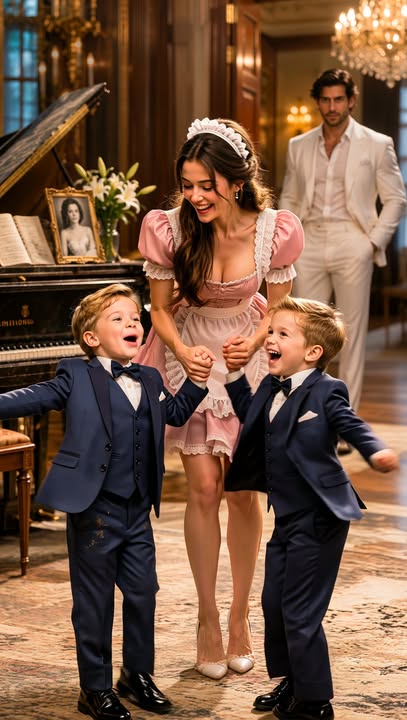
Part 5 – The Name She Chose
“If Clara gave me to Rosa, why did she spend the rest of her life believing I was dead?”
The question remained between us long after the hospital card had gone still in Adrian’s hand.
He looked down at the line again, as if it might change beneath his eyes.
“Because someone told her you were,” he said at last.
The answer was not a certainty, but neither of us could find another that fit the record.
I thought of Clara’s letter, written in a hand that had trembled around the plea to keep me safe.
I thought of Rosa carrying me away from the hospital, then raising me in the small apartment where the moon song had been the soundtrack to my childhood.
“She knew I was alive,” I said.
“According to this, yes.”
“Then she chose to take me.”
Adrian nodded.
He did not reach for me or offer reassurance too quickly.
Perhaps he understood that the truth was not yet simple enough to comfort me.
“My mother raised me,” I said, holding on to the fact that had never been in question. “Whatever else happened, she was my mother.”
“She was.”
“And Clara was my mother, too.”
His face softened, and grief moved through it like a cloud passing over sunlight.
“Yes,” he said. “If these records are right, she was.”
The words should have made the room feel smaller.
Instead, they seemed to open a distance neither of us knew how to cross.
The twins were upstairs with the housekeeper, unaware that the story of their family had quietly changed shape.
I looked toward the staircase.
“Not yet,” I said. “We can’t tell them until we know what we’re telling them.”
“I agree.”
“And I don’t want anyone else to know until we understand the legal side.”
“Agreed.”
Adrian put the hospital card away.
His movements were careful, but his hands had begun to shake again.
“I’ll contact the archive first thing in the morning,” he said. “There may be more records, perhaps a physician’s notes or a copy of the corrected entry.”
“And the letters?”
“I’ll keep searching.”
“We should talk to Vivienne.”
“I will.”
“Not alone,” I said, then reconsidered. “Actually, perhaps you should speak with her first.”
He met my eyes.
“You don’t have to step aside because she may be uncomfortable with you.”
“I’m not stepping aside for her,” I said. “I’m trying to understand what Rosa’s leaving looked like to someone who was there.”
He considered that, then nodded.
“I’ll ask her what she remembers.”
The next days passed with the strange slowness of waiting for a life to be confirmed.
The twins still wanted me in the playroom each morning.
They still made their trains travel over bridges that could not bear their weight, and still asked me to sing the moon song when the afternoon grew quiet.
I did not sing the river verse.
I wanted to hear it from the complete record, not from my uncertain memory, and I was afraid that if I sang it now I might give the boys a promise I did not yet understand.
Adrian kept his word about speaking to Vivienne.
He did not tell me what they discussed afterward, only that she remembered the night Rosa left and had agreed to search through a box of old family papers at her apartment.
“She says she was young,” he told me one morning, standing at the playroom window. “She remembers an argument, but not the words.”
“Between Rosa and Clara?”
“She thinks so.”
“What did she remember clearly?”
“That Clara was crying.”
He paused, watching Leo and Tomas arrange their wooden train.
“Vivienne thought Rosa had betrayed her.”
“Did she say why?”
“She remembers our father telling her not to ask questions.”
The answer sat uneasily in the room.
Adrian’s father had died years earlier, and there was no easy way to ask him what he had meant.
But the warning itself seemed to have shaped the silence that followed.
“Did Vivienne say what Rosa was accused of?” I asked.
“No. She says she didn’t understand the argument. She only remembers that the next morning, Rosa was gone, and Clara told everyone she needed time.”
“That sounds less like betrayal than a decision made in fear.”
“It does now.”
He looked toward the boys again.
“I’m beginning to see how often a family can mistake silence for an answer.”
That afternoon, the hospital archive sent notice that its search was complete.
There were no additional medical notes.
The hospital had retained the birth and transfer records, but nothing explained how the second infant came to be marked presumed deceased or why Clara had not been told the truth.
A legal review would be needed before the records could be treated as conclusive.
Adrian arranged for a family lawyer to examine the documents, but he insisted that the first meeting include me and take place without the press or extended family.
The lawyer, a woman named Mrs. Chen, listened without interrupting as we explained what we knew.
When we finished, she laid the hospital card beside the transfer form.
“The records are significant,” she said. “But they do not, by themselves, establish identity with the certainty a court would require.”
“What would?” I asked.
“An independent test, if you consent to one, along with the original hospital documentation and any corroborating family records.”
She looked from me to Adrian.
“There may also be a process to amend the birth record, but we should not begin that until we have a clearer picture of the consequences.”
“What consequences?” I asked.
“Changes to identity records can attract attention, especially where a well-known family is involved. I’m not saying that should prevent you from pursuing the truth. I’m saying we should protect your privacy while you decide what you want.”
Adrian’s shoulders stiffened.
“I will make sure no one has access to her information.”
Mrs. Chen gave him a measured look.
“Your protection is valuable, Mr. Vale, but this is Elena’s decision.”
He turned to me at once.
“She’s right.”
The correction was quiet, but I heard the effort in it.
Mrs. Chen continued.
“There may also be inquiries from relatives once the family understands the situation. We can ask for confidentiality, but we cannot promise that every conversation will remain private forever.”
I thought of the twins’ laughter, still new and easily startled.
I thought of Clara’s photograph, Rosa’s hand resting on her shoulder.
I thought of what it would mean for the boys to know they had a sister, then to watch adults argue about whether she belonged in their family.
“Would a test expose them to this?” I asked.
“Not unless you choose to share the result,” Mrs. Chen said. “But if the matter becomes part of a legal proceeding, some information may eventually become public.”
Adrian leaned forward.
“I don’t want Elena turned into a story for strangers.”
“Neither do I,” I said.
Mrs. Chen looked at me.
“What do you want, Elena?”
The question seemed simple until I tried to answer it.
I wanted the truth about Clara.
I wanted to understand why Rosa had kept it from me.
I wanted the twins to keep trusting me without being asked to carry the weight of old decisions.
I wanted my life not to be claimed by a name or an inheritance I had never asked for.
“I want the truth established,” I said. “I want the boys to know they have a sister, if that’s what I am. But I don’t want to make my identity a public contest.”
“That is a reasonable position,” Mrs. Chen said. “We can proceed quietly, with your consent at each step.”
Adrian nodded.
“Whatever she chooses, I’ll support it.”
I looked at him.
He had said the words easily, but I knew how much he wanted the result to mean something.
He wanted the family restored.
He also knew better than to claim restoration before I had chosen it.
Mrs. Chen prepared the paperwork for an independent identity review.
I signed where needed, then sat with the pen still in my hand.
It felt strange to put my name beneath a document asking the world to confirm who I was.
For all my life, my name had belonged to me because Rosa had spoken it.
I was not willing to give that away.
At the mansion, Adrian kept the boys’ routine steady.
He sat with them at meals, walked with them in the garden, and let them tell the same stories as many times as they needed.
When I was there, they still came to me first with the day’s discoveries.
When I was not, the housekeeper said, they asked when I would return.
The news arrived on a gray Thursday morning.
Mrs. Chen called Adrian first, then asked if I was with him.
I was in the sunroom, helping Tomas fit a paper moon onto the wall above the piano.
Adrian came to find me with his phone in his hand.
“They’re ready to speak with us,” he said.
The first results had come back.
The independent review confirmed a biological relationship between me and Adrian.
It also confirmed that I was the daughter of Clara Vale.
Mrs. Chen explained the findings carefully when we joined the call, making sure I understood what the report could and could not establish.
The result was clear.
The old hospital record had not been mistaken in its central fact.
Clara had given birth to me.
The baby marked as presumed deceased had been transferred into Rosa’s care.
No one could yet tell us exactly why the official record had been changed or how Clara had been led to believe her daughter was gone.
That would require more than a test.
It would require the truth of the people who had been there, and some of those people were no longer alive.
When the call ended, Adrian remained seated at the desk.
For a long moment, he did not speak.
I stood by the window, holding my own hands together.
“I’m your daughter,” I said.
“Yes.”
“And Leo and Tomas are my brothers.”
“Yes.”
The words felt both obvious and impossible.
Adrian rose slowly.
He looked as though he wanted to come closer, but was waiting for me to decide whether he should.
I closed the distance between us.
He put one hand on my shoulder, then drew it back slightly, giving me the chance to step away.
I did not.
His arms closed around me with a restraint that seemed to contain years of grief.
I had not known Clara.
I could not mourn her the way he did.
But I mourned the life we had been denied, the lullaby passed between women in place of the daughter who should have known them both.
When Adrian released me, his eyes were wet.
“I’m sorry,” he said.
“You didn’t do this.”
“I should have asked more questions while she was alive.”
“You can’t change what you didn’t know.”
“No,” he said. “But I can make sure you get to choose what comes next.”
The result remained private for less than a day.
Mrs. Chen had warned us that the family would need to be told before anyone else heard, and Adrian gathered Vivienne in the study that evening.
I was there because I wanted to hear the words myself.
Vivienne listened without interrupting.
When Adrian finished, she sat very still.
“I remember Rosa standing by the kitchen door,” she said after a while. “She had a bundle in her arms. I thought she was leaving with her own things.”
She looked at me.
“I didn’t realize the bundle was you.”
“Did she say anything?” I asked.
“Not to me. Clara was upstairs. I remember asking where Rosa was going, and Father told me she had made her choice.”
“What did Clara say afterward?”
“That Rosa would return when she could.”
Vivienne lowered her eyes.
“I believed she had chosen to abandon Clara. I was angry with her for a long time, though I barely knew her.”
“She may have been trying to keep me safe,” I said.
“I know that now.”
Vivienne looked at the table, where the hospital papers lay.
“Clara must have been desperate to let you go.”
“Or frightened,” Adrian said.
“Perhaps both.”
Vivienne reached across the table and touched the edge of the report.
“I’m sorry,” she said to me. “I treated your presence like a risk before I understood what it meant.”
“You were protecting the boys.”
“I thought I was.”
Her apology held no demand for forgiveness.
I appreciated that.
“I don’t know what this makes me to the family yet,” I said.
“It makes you Clara’s daughter,” Vivienne replied. “It makes you Adrian’s daughter. It makes you the twins’ sister.”
She paused.
“But it doesn’t tell you what you have to do with any of that.”
That evening, the house was quieter than usual.
The boys were in the playroom, working together on a train station with a roof made from two books and a blanket.
Adrian watched them for a while before he spoke to me.
“They should know,” he said.
“I know.”
“Not tonight if you’re not ready.”
“I’m ready for them to know I’m not leaving.”
He turned toward me.
“But not ready to tell them everything?”
“Not in a way that makes them feel they have to choose what to call me or what they’re allowed to remember.”
“They already care about you.”
“I care about them, too.”
The words came easily.
The choice did not.
Adrian leaned against the doorframe.
“Mrs. Chen told me there may be a family inquiry once we start correcting the records.”
“What kind of inquiry?”
“She believes we should expect someone to question the transfer arrangement. The old record is incomplete, and a relative may argue that the child’s identity was never properly established.”
“Who?”
“She hasn’t named anyone. She says it may not happen at all.”
“But it could.”
“Yes.”
“And if it does, the boys might be pulled into a legal process.”
“They could be asked to confirm what they know about you, though they wouldn’t be required to speak publicly.”
I looked into the playroom.
Leo was holding the blanket roof while Tomas arranged wooden people beneath it.
They had spent so many months protecting themselves from the loss of their mother.
I did not want to become another source of uncertainty.
“What are you asking me to do?” I said.
“Nothing.”
“Adrian.”
“I’m asking you to choose freely,” he replied. “I will support you whether you want your name recognized, whether you want to keep your life private, whether you need time, or whether you decide this family is too much to step into.”
His voice faltered on the last words.
He swallowed and continued.
“I want you here. I want the boys to know you. But wanting that does not give me the right to ask you to accept the consequences.”
I looked down at my hands.
For years, I had been Elena Marquez, Rosa’s daughter.
That name held every memory I had of being loved.
If I claimed Clara’s name, would people decide the life I had lived belonged to someone else?
Would they look at me and see a missing heir instead of the woman who had worked in this house, sung to two lonely children, and loved the mother who raised her?
“I won’t give up Rosa’s name,” I said.
“I wouldn’t ask you to.”
“I don’t want people calling her a thief.”
“Neither do I.”
“And I don’t want the boys to grow up thinking their sister disappeared because she chose not to come back.”
Adrian’s expression changed.
The answer had reached him before I finished explaining it.
“I want to tell them the truth,” I said. “I want to claim who I am, but on my terms. I will answer questions if there is a legal inquiry. I will not let strangers turn the boys’ grief or Rosa’s choices into a spectacle.”
“That is your decision to make,” he said.
“I know it may bring trouble.”
“It may bring scrutiny.”
“Then I’ll face it.”
He took a slow breath.
“I’ll stand beside you.”
The boys looked up from their train station.
“Are you talking about us?” Leo asked.
Adrian moved into the room and sat on the rug beside them.
“Partly,” he said. “Elena and I have learned something important about our family.”
Tomas came to my side.
“Is it bad?”
“No,” I said, kneeling so he could see my face. “It may be surprising, and it may take us a little while to understand.”
Leo looked between me and Adrian.
“Are you still coming tomorrow?”
“I’m coming tomorrow,” I told him.
“And the day after?” Tomas asked.
“If you want me to.”
Both boys nodded, as if this were the part of the story they needed most.
Adrian sat beside them.
“Elena is your sister,” he said gently. “She is Clara’s daughter, and she is my daughter. Rosa raised her and loved her, and nothing changes that.”
The twins looked at me.
Leo’s mouth opened, but no words came out.
Tomas pressed both hands against his chest, thinking.
“Then the moon song was Mommy’s and Rosa’s?” he asked.
“Yes,” I said. “They shared it.”
“Did Mommy know you were alive?”
The question came softly, but it carried the whole weight of the room.
“I don’t know,” I said. “I don’t think she did.”
Tomas’s eyes grew wet.
“Then she didn’t leave you.”
“No,” Adrian said, his voice thickening. “She didn’t.”
Leo stepped toward me.
“Are you our sister even if you still live somewhere else?”
“I’m your sister even if I live anywhere.”
He seemed to consider this, then reached for my hand.
Tomas reached for the other.
Adrian moved closer, but he did not crowd us.
For the first time, I understood that choosing the truth did not mean choosing every part of the family at once.
I could keep Rosa’s name.
I could claim Clara’s.
I could stand beside the boys without pretending that love erased the years we had missed.
The next morning, Mrs. Chen called again.
A formal notice had arrived at her office, asking that the proposed record correction be delayed pending review of the hospital transfer.
No one had accused Rosa of wrongdoing.
No one had yet challenged my identity.
But the old arrangement was no longer a family secret that could be quietly carried between us.
Someone had noticed that the records were being examined.
Adrian asked Mrs. Chen to determine who had filed the notice.
The answer came that afternoon.
It had been submitted by a representative for Adrian’s late father’s estate, acting on behalf of a family trust that had been created decades earlier.
The notice did not explain the reason for the request.
It only asked the court to preserve the original records until the trust’s beneficiaries could be informed.
Adrian read it twice, then set it down.
“Who would have known about this?” I asked.
“Someone who had access to the estate files,” he said. “My father, his solicitor, perhaps Vivienne.”
Vivienne was standing near the window, her face pale.
“I knew nothing about the trust,” she said. “I swear it.”
“I believe you,” Adrian replied.
I looked again at the notice.
A line near the bottom named the person authorized to speak for the trust.
The name was not one I recognized.
Adrian read it and went still.
“What is it?” I asked.
He turned the page so I could see.
The representative was his father’s former solicitor, a man who had retired many years earlier.
Beneath the signature was a handwritten note.
The trust was not merely waiting to hear whether I belonged to the Vale family.
It had been created to protect the identity of the child Clara Vale was told had died.
**–END OF PART 5–CLICK “NEXT” AT THE BOTTOM OF THE PAGE TO CONTINUE READING**
* * *
[PREVIOUS: PART 4](https://echoesofstories.idolsgift.com/blog/part-4-the-photograph-in-his-wallet-046) | [NEXT: PART 6(THE END)](https://echoesofstories.idolsgift.com/blog/part-6-the-end-the-photograph-in-his-wallet-046)
✓ Lynn R. Adams
Part 5 – The Name She Chose “If Clara gave me to Rosa, why did she spend the rest of her life believing I was dead?” The question remained between us long after the hospital card had gone still in A…