PART 5: The Photograph in Her Mother’s Wallet 041
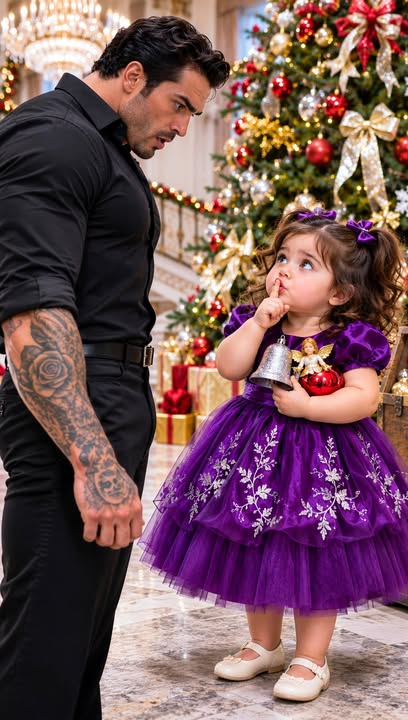
Part 5 – The Name He Chose to Clear
“Your father’s sister,” Vincent repeated.
Bellini’s silence on the other end of the call seemed to stretch across the room.
“Her name is Francesca,” the lawyer said at last.
“I know her name.”
“Then you know she has spent most of her life keeping her distance from the family.”
“I know she left Chicago years ago.”
“She didn’t leave because of the business.”
Vincent looked again at the photograph of Rosa standing beside the laundry cart, his small sleeping form hidden beneath the linen.
“Why did she leave?”
“I don’t know what she told herself,” Bellini replied. “But she was there that night.”
“Did she help my mother?”
“She did.”
“And did she know Rosa was being accused?”
“Yes.”
The admission came quietly, without defense.
Vincent shut his eyes, feeling the years of silence settle into a shape he could almost touch.
“Why did she let Rosa take the blame?”
“She didn’t,” Bellini said. “Not at first.”
“What does that mean?”
“She tried to speak to your father. He wouldn’t hear it.”
“And you?”
“I was there.”
“That isn’t an answer.”
“No,” Bellini said. “It isn’t.”
Vincent’s voice remained low, but something in it had changed.
“You had the authority to preserve the record.”
“I had the authority to advise your father. He chose what went into the family files.”
“You could have told the truth later.”
“I could have.”
“Why didn’t you?”
A long pause followed.
“Because I believed silence would protect the family,” Bellini said. “And because I was afraid that telling the truth would bring the danger back to Rosa’s door.”
Vincent looked at the angel.
“Did it?”
“I don’t know.”
“Did anyone ever threaten her after she left?”
“Not that I heard.”
“So you let people believe she was dishonest to protect her from something that may never have happened.”
Bellini did not answer.
Vincent understood, then, that there would be no words capable of making the choice sound clean.
His father’s decisions had been wrapped in concern for the family, and Bellini’s in fear of what might follow.
But Rosa had borne the cost of both.
“Francesca is alive?” Vincent asked.
“Yes.”
“Where?”
“I won’t give you her address without asking her first.”
“That’s reasonable.”
Bellini sounded surprised.
“I’ll speak to her,” he said. “Not to force anything. I need to know what she remembers.”
“She may not want to speak with you.”
“Then I’ll accept that.”
“You should know she has refused every invitation to return.”
“I won’t ask her to return.”
Bellini let out a quiet breath.
“Vincent, if you bring this into the open, there will be questions about your father, about the family, and about the old threat.”
“I know.”
“There are people who still have an interest in keeping those events private.”
“Are you warning me?”
“I’m asking you to understand what the truth may cost.”
Vincent’s gaze moved to the paper on his desk, where he had written Rosa’s name beside the date of her dismissal.
“What did the lie cost her?”
Bellini had no reply.
After the call ended, Vincent sat alone in the old family room.
The housekeeper had left the Christmas lights glowing around the windows, and the small golden angel rested beside Lucy’s crooked paper star.
His mother’s portrait stood on the mantel, her expression peaceful in a way that made the letters and the photograph feel even more painful.
He had thought his mother’s story ended with her death.
Now he knew that, after she was gone, other people had decided what could be remembered and what had to be buried.
He called Elena.
She answered after several rings.
“Is everything all right?”
“I’m not sure,” Vincent said. “But I want you to know what Bellini told me.”
He explained carefully, leaving out nothing, though he did not use a single word to make the lawyer sound worse than he was.
When he finished, Elena remained silent for a moment.
“Francesca was there?” she asked.
“That’s what Bellini says.”
“Did he say she saw the accusation?”
“Yes.”
“Did she try to stop it?”
“He says she tried to speak with my father.”
Elena’s breath caught faintly.
“Did anyone believe her?”
“I don’t know.”
“Will you find out?”
“If she’s willing to speak.”
“And if she isn’t?”
“Then I won’t force her.”
Elena was quiet again.
“I’m trying to understand what you want from me,” she said.
“Nothing.”
“Vincent.”
“I want the truth known, and I want Rosa’s name cleared.”
“That isn’t nothing.”
“No,” he admitted. “But I’m not asking you to help me do it.”
“I don’t want my mother or Lucy caught in the middle of this.”
“You won’t be.”
“You can’t control what other people do.”
“No,” he said. “I can’t.”
The honesty seemed to reach her more than a promise would have.
“Then I need to know what you plan to do,” she said.
“I’m going to correct the family record.”
“How?”
“Publicly, if that’s the only way to make the correction mean anything.”
Elena’s voice went quiet.
“Your family has a lot of influence.”
“I know.”
“People will ask who told you.”
“I won’t give them your name.”
“They’ll ask where the photograph came from.”
“I can say it came from Rosa’s family, with your permission. If you don’t give it, I won’t use the photograph.”
“I don’t know what permission I can give.”
“You don’t have to decide tonight.”
“I’m worried about what happens if people start searching for your aunt.”
“I won’t name her without her consent.”
“And Bellini?”
“I’ll ask him to speak with her. I won’t ask him to persuade her.”
Elena let out a slow breath.
“I’m thinking of leaving.”
The words were not dramatic.
That made them harder to hear.
“For how long?” Vincent asked.
“I don’t know.”
“Are you afraid for Lucy?”
“I’m afraid of being surrounded by a story that isn’t mine, then finding out I can’t get away from it.”
He leaned his free hand against the mantel.
“I understand.”
“I don’t think you do.”
“You’re right,” he said. “I don’t know what it’s like to have your family’s safety become a question because of someone else’s name.”
There was a faint rustle on her end of the call.
He imagined her standing in her kitchen, perhaps with Lucy asleep in the next room, trying to decide whether the truth would protect them or pull them into danger.
“I won’t ask you to stay,” he said.
“That doesn’t make leaving easier.”
“I know.”
“I don’t want Lucy to lose the little trust she has in you.”
“I don’t want her to feel she owes me anything.”
“She doesn’t.”
“Neither do you.”
The silence returned, but this time it felt less like a wall than a space in which she could consider his words.
“I’ll call you tomorrow,” Elena said.
“Whenever you’re ready.”
She ended the call.
Vincent stayed by the mantel until the housekeeper brought in his dinner, which he barely touched.
The next morning, he called Bellini’s office and asked him to come to the mansion.
He did not bring the letters into the room.
The originals belonged to Rosa’s family, and he would not turn them into exhibits without their permission.
He brought only copies of the old household ledger and a typed summary of what he had confirmed.
Bellini arrived shortly after ten.
His silver hair was neatly combed, and he carried his familiar leather folder, but he looked older than he had the evening before.
“Francesca has agreed to speak with you,” he said.
“Here?”
“By phone.”
“That’s her choice.”
“She asked me to stay on the line.”
“Then you can.”
Bellini placed his folder on the table.
“She wants to know whether the photograph is safe.”
“It’s with Rosa’s family.”
“Good.”
“She also wants to know whether you intend to repeat what happened that night.”
“I don’t know every detail, and I won’t pretend I do.”
Bellini nodded once.
“That will matter to her.”
He placed a phone on the table and called his sister.
After a few rings, a woman answered.
“Hello, Vincent.”
Her voice was older than the one he remembered from childhood, but the cadence stirred a trace of memory.
He had seen Francesca at family gatherings before she left Chicago, usually sitting apart from the louder relatives, listening more than she spoke.
“Thank you for talking with me,” he said.
“I didn’t agree to answer everything.”
“I understand.”
“I have not spoken to your family about that night in decades.”
“I’m not asking you to defend yourself.”
“Your father expected that of everyone.”
The words were calm, not bitter.
Vincent let them stand.
“Bellini says you tried to speak up for Rosa.”
“I did.”
“What happened?”
“Your father had learned that someone might use you to pressure him. Maria believed the household was no longer safe, but your father thought the people around him could handle it.”
Francesca paused.
“Your mother wanted you taken somewhere quiet until they understood the risk.”
“And she trusted Rosa.”
“She trusted her more than she trusted any of us in that moment.”
“Why?”
“Because Rosa had no reason to bargain with anyone over you.”
Vincent looked down at the ledger.
“Did you help Rosa leave?”
“Yes.”
“Did you know she was later accused of taking the angel?”
“I heard about it.”
“Did you tell my father she hadn’t?”
“I did.”
“And he didn’t believe you?”
“He said he believed what he needed to believe in order to keep the household from asking more questions.”
Vincent looked up at Bellini.
The lawyer’s face was still, but his eyes had lowered to the table.
“Why didn’t you go to Rosa?” Vincent asked.
“I was nineteen, and my father told me that if I made the matter public, I would put everyone who had helped Maria at risk.”
“Was that true?”
“I don’t know.”
Francesca’s voice softened.
“I was young enough to believe that keeping quiet was the same as keeping someone safe.”
Vincent felt the words land close to home.
He had been taught a similar lesson, though in a different form: that silence was strength, that control was protection, that family loyalty meant preserving the story the family wanted to tell.
“What do you remember about Rosa?” he asked.
“She was kind to you.”
“Do you remember the night itself?”
“I remember your mother holding your coat while Rosa wrapped you in laundry.”
“Did I wake up?”
“Not while I was there.”
“Did you see them leave?”
“I watched them go through the service passage.”
Francesca paused for a breath.
“Your mother stayed behind because she believed the men watching the front of the house would follow the wrong trail.”
“Was she in danger?”
“She thought she might be.”
“Why did she never tell me?”
“Perhaps she wanted you to remember her as your mother, not as someone who had been afraid.”
Vincent’s throat tightened.
“And Rosa?”
“She left the next morning.”
“Did Maria give her the angel?”
“I saw her wrap it in a piece of red cloth.”
“Why was the ornament later called missing?”
“My father wanted the household to believe nothing unusual had happened.”
“And Rosa was dismissed.”
“She was already gone.”
“So she was accused after she had left?”
“I believe the accusation came later, yes.”
“Why?”
“I don’t know.”
Vincent glanced at the angel beside the paper star.
“Did you take anything from the house?”
“No.”
“Did you remove anything else for my mother?”
Francesca hesitated.
“There was a small envelope with a list of names.”
“What names?”
“I don’t remember all of them. People your mother trusted.”
“Where is it now?”
“I gave it to Bellini.”
Vincent turned toward the lawyer.
Bellini’s expression had gone pale.
“Do you still have it?” Vincent asked.
“I don’t know,” Bellini said. “I would need to check the files.”
“Then check.”
Francesca spoke again before Bellini could answer.
“I don’t want my name in a newspaper.”
“It won’t be there,” Vincent said.
“I don’t want people asking me to retell a frightening night just to make you look honorable.”
“I won’t ask you to do that.”
“Then what will you do?”
He took a moment before answering.
“I’ll say that my family wrongly allowed suspicion to fall on Rosa, and that I have no evidence she took anything.”
“You have more than that,” Francesca said.
“I have the letters and your account, but those belong to people who must decide whether they want them shared.”
“Good.”
Her voice eased slightly.
“Maria would have liked that answer.”
Vincent held still.
“Did you know she had written to Rosa?”
“I knew she wrote something.”
“Did she ever speak of it?”
“She said she would make sure Rosa was not forgotten.”
“Do you think she did?”
“No,” Francesca answered plainly. “I think she hoped someone else would remember.”
When the call ended, Bellini gathered his folder but did not stand.
“I can search my old files,” he said.
“Do that.”
“If the envelope is there, it may answer questions about who knew what.”
“It may.”
“Are you going to make your announcement before you see it?”
“I’m not making an announcement to satisfy curiosity.”
“What are you making?”
“A correction.”
Bellini studied him.
“Your father would have considered this disloyal.”
“My father is gone.”
“His choices remain.”
“So does the harm they caused.”
Bellini looked down at his hands.
“I should have done more.”
“Yes,” Vincent said.
“I know.”
The lawyer’s voice was unsteady for the first time.
“I can’t give Rosa back the years she spent carrying that accusation.”
“No.”
“I can give you the records I kept.”
“Then do it.”
Bellini left the mansion an hour later.
Vincent did not feel triumphant.
Nothing had been settled in a way that could make the past harmless.
A woman who had died without knowing her name would be cleared could not hear the apology.
Her family could receive the truth, but they could not return to the years when it was withheld.
He spent the afternoon drafting a statement with his attorney, ensuring it said only what the evidence supported.
He did not name Francesca.
He did not describe the threat in a way that might expose anyone still connected to those events.
He did state that Rosa had been a trusted seamstress in the Moretti household, that no evidence existed that she had taken the angel or any other property, and that the family had wrongly allowed an accusation to follow her after she left.
He wrote that Rosa’s actions had helped protect him as a child, and that his family had failed to recognize her courage.
The sentence remained on the screen while he read it again and again.
He had been taught to make words useful.
These words could not restore Rosa’s reputation in every place it had been damaged.
They could not make his relatives grateful, or make Bellini’s choices vanish.
But they could stop the family from repeating a lie.
By evening, his attorney had arranged for a small gathering with the people who maintained the family archive and a few members of the local press who had covered the Moretti charitable foundation over the years.
Vincent refused to turn the story into a spectacle.
He would make the correction in the same city where the accusation had begun, then place the supporting material in a public archive so no one in the family could quietly erase it again.
Elena called just before he was due to leave.
“I’m taking Lucy to my mother’s for a while,” she said.
His hand tightened around the phone.
“I understand.”
“I’m not sure how long.”
“You don’t need to decide that now.”
“Are you going to make the correction tonight?”
“Yes.”
“Are you going to tell them about my grandmother’s box?”
“Only with your mother’s permission.”
“We haven’t decided.”
“Then I won’t.”
“Will you say my name?”
“No.”
Elena let out a soft breath.
“Thank you.”
“I wish there were more I could do.”
“So do I.”
He could hear Lucy in the background, humming to herself.
“She wants to know whether you’ll be at the house tomorrow.”
“I don’t know yet.”
“Tell her I said hello.”
“I will.”
A pause followed.
“Vincent,” Elena said, “I know this matters to you.”
“It matters because it happened to Rosa.”
“And because it happened to your mother.”
“Yes.”
“I hope you do what you believe is right.”
“I’m trying.”
“I know.”
The call ended, leaving him with no promise that Elena or Lucy would return.
He dressed in a dark suit and placed the golden angel in a padded box.
He did not intend to display it as proof.
It was his mother’s, and it was a keepsake Rosa had been entrusted to protect.
He would not turn either woman’s kindness into a prop.
At the archive room, a small group had gathered.
Several relatives stood near the back, their faces tense with curiosity.
Bellini sat alone beside a table, holding a thick folder.
When Vincent approached, the lawyer rose.
“I found the envelope,” he said.
“Is it the one Francesca mentioned?”
“I believe so.”
Bellini held it out but did not release it at once.
“I never opened it.”
“Why not?”
“Your mother asked me to keep it until she could retrieve it.”
“Did she?”
“She never came back for it.”
“And you kept it?”
“I did.”
Vincent accepted the envelope.
The paper was worn, and Maria’s handwriting crossed the front.
For Rosa’s family, when the truth can be told safely.
His pulse quickened.
“Have you read it?” he asked.
“No.”
“You could have.”
“I know.”
“Why didn’t you?”
“Perhaps because I knew enough to be ashamed.”
Vincent opened the envelope carefully.
Inside was a single sheet of paper folded into thirds.
He read it silently first, then looked at the room.
“My mother wrote this shortly after Rosa left,” he said.
“It says she asked my father to correct the accusation.”
A murmur passed through the small gathering.
“My father refused because he believed the story would draw attention to the threat against me.”
Vincent paused, choosing each word.
“He was wrong to protect the family’s appearance at Rosa’s expense.”
He placed the letter on the table without handing it around.
“I will not share private details that belong to Rosa’s family without their permission.”
“But I will correct the record.”
He read the statement he had prepared.
He named Rosa’s years of service, her integrity, and the fact that his family had failed to defend her when suspicion fell upon her.
He acknowledged that the family had preserved an incomplete and unfair account of her departure.
Then he said that the golden angel had been entrusted to Rosa by his mother, and that the photograph and letters recovered by Rosa’s family confirmed her role in protecting him.
When he finished, the room remained still.
One of the reporters asked whether the Moretti family would accept responsibility.
“Yes,” Vincent said. “I am speaking for the family archives and for myself.”
“Will you apologize publicly to Rosa’s descendants?”
“I have already apologized privately to her family. They did not ask for public attention, and I will respect their privacy.”
Another reporter asked whether the family would face legal consequences.
“I don’t know,” Vincent replied. “If there are consequences, they should be considered honestly.”
His aunt Francesca was not present.
Elena and her mother were not present.
Rosa herself was not present.
Vincent felt the absence of each of them as he spoke, a reminder that doing the right thing did not mean he had earned anyone’s forgiveness.
When the gathering ended, Bellini remained by the table.
“You said everything the evidence supports,” he said.
“I hope so.”
“Your father would have hated the attention.”
“Rosa deserved to have her name spoken without shame.”
Bellini nodded.
“I’ll place the old files in the archive.”
“Include the dismissal record and your notes.”
“I will.”
“And write down what you remember.”
Bellini looked toward the open envelope.
“I can do that.”
Vincent returned to the mansion alone.
The evening had deepened into snow, and the drive was lined with the soft glow of winter lights.
In the family room, Lucy’s crooked star remained beside the angel.
He picked up the small paper star, its bent point slightly crushed from being moved between branches.
Then he set it back beside the ornament.
The next morning, he found a message from Elena.
My mother wants to meet you. Not at your house. She says there is one more thing Rosa left with her.
Before he could reply, his phone rang.
Bellini’s name appeared on the screen.
“I found another page tucked behind the letter,” the lawyer said.
“From Maria?”
“Yes.”
“What does it say?”
Bellini’s voice faltered.
“It isn’t a letter.”
“Then what is it?”
“A list of people who knew Rosa had saved you.”
Vincent looked at Elena’s message.
“Who is on the list?”
“Your father. Francesca. Me.”
“And?”
A pause.
“Your mother wrote one more name at the bottom.”
Vincent’s fingers tightened around the phone.
“Whose?”
“Rosa’s,” Bellini said. “She wrote that Rosa was not the only person who helped her get you out of the house.”
**–END OF PART 5–CLICK “NEXT” AT THE BOTTOM OF THE PAGE TO CONTINUE READING**
* * *
[PREVIOUS: PART 4](https://echoesofstories.idolsgift.com/blog/part-4-the-photograph-in-her-mother-s-wallet-041) | [NEXT: PART 6(THE END)](https://echoesofstories.idolsgift.com/blog/part-6-the-end-the-photograph-in-her-mother-s-wallet-041)
✓ Lynn R. Adams
Part 5 – The Name He Chose to Clear “Your father’s sister,” Vincent repeated. Bellini’s silence on the other end of the call seemed to stretch across the room. “Her name is Francesca,” the lawyer s…