PART 5: The Photograph Behind the Locked Door 034
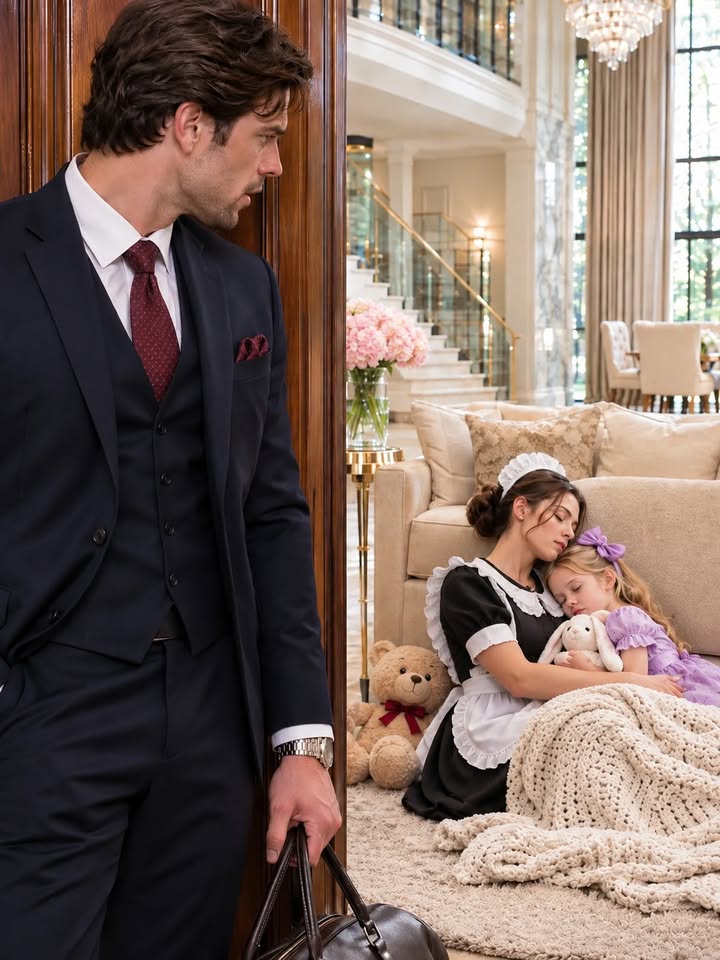
Part 5 – The Cost of Staying
“If Grant asks, tell him Caroline already canceled the appointment.”
The sentence remained between them after Grant read it aloud, as if the studio itself had been waiting for someone to say it.
Ruby pressed closer to Tessa.
Grant set the appointment card on the desk and looked at Doreen, not with the fury that had seized him the night before, but with a weariness that seemed to reach deeper.
“Do you recognize the handwriting?”
Doreen leaned toward the card without touching it.
“No,” she said. “It isn’t mine.”
“You’re certain?”
“I’m certain.” Her voice shook, but she met his eyes. “I never told the clinic Caroline had canceled anything.”
Grant looked again at the sentence.
It was written in pencil, the letters cramped and uneven, unlike Caroline’s graceful script.
The card had passed through too many hands, and the date on the front did not tell him who had added the note or when.
It might have been an innocent reminder to a staff member, an instruction meant to keep a message from being repeated, or something else entirely.
He had no proof, and Ruby was standing close enough to hear every word.
“We’re not going to guess,” he said. “We’ll ask the clinic to investigate their records and tell us what they can.”
Doreen nodded.
“I’ll answer every question they have.”
Grant turned to Ruby.
“You haven’t done anything wrong,” he told her. “This is for the grown-ups to sort out.”
Ruby’s brow furrowed.
“Did someone stop the doctor?”
“We don’t know,” he said honestly. “But we’re going to call the doctor, and we’ll make sure you get the help you need.”
“Even if the paper says Mommy canceled?”
“Even then. We’ll find out what happened together.”
Ruby held his gaze for a moment, then looked down at the rabbit in her arms.
“Can Tessa come?”
“If she wants to,” Grant said.
Tessa glanced at Ruby, then back at him.
“I’ll come with her.”
The answer eased something in Ruby’s face.
Grant called the specialist’s office again and left a message requesting an urgent appointment, explaining that Caroline’s records had surfaced and that Ruby had begun describing difficulty understanding voices.
When the clinic called back, a nurse spoke with him for nearly half an hour.
She asked about Ruby’s hearing, her speech, the months since Caroline’s death, and the changes in her routines.
Grant answered as carefully as he could, admitting where he did not know.
The nurse did not scold him for the missed follow-up.
She said the old assessment was incomplete, that children’s hearing could be affected in different ways, and that grief and stress could make it harder for a child to communicate even when hearing was not the only concern.
They needed to evaluate Ruby in person before deciding what treatment or support would help.
The earliest appointment was two days away.
Grant accepted it.
After he hung up, he sat at the desk and looked at the envelopes in Caroline’s cedar box.
He had expected to find a simple answer.
Instead, he had found a beginning, and the knowledge that beginning should have happened months earlier.
He could not change that.
He could decide what he did next.
The clinic’s assessment took most of the morning.
Ruby sat between Grant and Tessa in a softly lit room, trying headphones, watching pictures appear on a screen, and answering questions in her own time.
The specialist, Dr. Sethi, spoke to her face-to-face and checked that Ruby could see her mouth clearly.
When the tests were finished, Ruby looked tired but not frightened.
Dr. Sethi invited Grant and Tessa to sit with her while Ruby played quietly in the adjoining room with a set of wooden blocks.
“The original notes suggest a hearing condition that may be treatable,” she said. “Today’s tests give us a clearer picture, though we’ll need additional testing before we make a firm plan.”
Grant’s hands were clasped so tightly that his knuckles had gone pale.
“What does she need?”
“First, a more detailed assessment and a few follow-up visits. After that, we can discuss the options. One likely path would involve a procedure, but I want to be precise about what it can and cannot do before I recommend anything.”
“Will she hear normally afterward?”
“I can’t promise that,” Dr. Sethi said gently. “I can tell you there are encouraging signs, and that the condition appears to be one we can address. Treatment may help Ruby hear certain sounds more clearly, but it won’t erase the grief or make every sound easy at once.”
Tessa glanced toward Ruby through the open doorway.
“Would she need support afterward?”
“Yes. The medical care is only one part. She would benefit from ongoing hearing support, regular checks, and counseling with someone experienced in grief and childhood communication.”
Grant thought of the months when he had believed silence meant Ruby was unreachable.
“What should we tell her?”
“Small truths, given in a way she can understand. Let her ask questions. Don’t make speech a test she has to pass.”
He nodded, taking in each instruction as if his attention could compensate for the time he had lost.
Dr. Sethi described the next appointment and the possible procedure.
The first treatment would require Grant to stay available for several days, and the follow-up would come soon afterward.
Ruby might be tired or unsettled, and someone familiar would need to be with her while she adjusted.
On the drive home, Ruby sat in the back seat with Tessa beside her.
Grant kept his eyes on the road, resisting the urge to watch Ruby through the mirror every few seconds.
“Did the doctor say I’m broken?” Ruby asked.
“No,” Grant replied. “She said there are ways to help your ears do more of what they’re meant to do.”
“Will it hurt?”
“The doctor will explain what she thinks you’ll feel. We’ll ask her all your questions before we decide anything.”
Ruby pressed her rabbit’s soft ear against her cheek.
“Will you be there?”
“I will.”
“Not at work?”
“Not at work.”
Tessa’s eyes met his in the rearview mirror.
He understood what she was asking without her saying it.
A promise did not become trustworthy simply because he made it.
He would have to keep it when keeping it cost him something.
That evening, Grant sat alone in his study with the clinic’s proposed schedule and his work calendar open before him.
The first procedure was tentatively reserved for the following week.
The specialist wanted a parent present for the consultation beforehand and available through the first follow-up afterward.
The same week, Grant was scheduled to finalize a major development deal that had taken nearly two years to negotiate.
Three days after that, he was expected to leave for a career-defining trip to Singapore, where he would oversee the final presentation and meet the investors who would determine whether the project moved forward.
His phone rang.
His business partner, Martin, was calling.
Grant answered.
“Tell me you saw the latest figures,” Martin said. “The investors want you in person. This is the moment we’ve been waiting for.”
“I saw them.”
“We can still make the presentation work if we leave on schedule, but we need you there.”
Grant looked through the study doorway.
Ruby was in the living room, listening while Tessa read the blue rabbit book.
The reading corner lamp was on.
Caroline’s photograph stood on the low table, its frame catching the warm light.
“I have to postpone the trip,” Grant said.
The pause on the other end lasted long enough to be an answer.
“What happened?”
“Ruby has a medical assessment and treatment plan. I need to be here.”
“Can’t Tessa take her?”
Grant’s expression hardened, though his voice stayed level.
“She’s her caregiver, not her parent.”
“I know that. I’m asking whether the appointments can happen without you.”
“They can happen without me. That doesn’t mean they should.”
Martin sighed.
“We’ve put everything into this deal.”
“I know.”
“If you’re not there for the presentation, the investors may delay their decision. If they delay, the financing could fall apart.”
Grant looked down at the calendar, where the trip dates were boxed in thick red ink.
“I understand the risk.”
“Then let’s think this through. We can hire another specialist to go with them, or move the appointment by a week.”
“The clinic has already been trying to reach us for months. I’m not asking Ruby to wait another week because my schedule is inconvenient.”
“You’re not asking her. You’re deciding for her.”
“I’m her father.”
The words came out more firmly than he expected.
Martin went quiet.
Grant lowered his voice.
“I can’t undo the missed appointment. I can’t recover the months I wasn’t paying attention. I can be there now.”
“What about the deal?”
“I’ll work with the team remotely if the clinic says Ruby can manage that. But I won’t get on the plane.”
“You could lose the project.”
“I know.”
“And your place in the company.”
“I know that too.”
The answer felt like stepping onto ground he could not see.
He was not choosing Ruby because it was easy or because he believed everything would be all right.
He was choosing to accept a real cost rather than ask his daughter to carry another one.
“I’ll send the formal notice tonight,” he said.
Martin let out a slow breath.
“I don’t agree, but I understand.”
Grant hoped that was true.
He ended the call and sat still for a few seconds.
Then he canceled the trip through the company’s travel office and sent a message to the investors explaining that he would be unavailable for the in-person presentation because of a family medical commitment.
He did not give the details.
He did not soften the decision into a temporary inconvenience.
The meeting might proceed without him.
The deal might fail.
For the first time in years, he allowed the uncertainty to remain without trying to buy his way out of it.
The next morning, he told Ruby they needed to talk.
They sat together in the reading corner, with the rabbit book closed on the table and Caroline’s photograph beside it.
Tessa stayed nearby, but Grant spoke himself.
“The doctor is still learning about your ears,” he began. “She thinks she may be able to help, but she wants to do more tests and explain everything first.”
Ruby sat cross-legged on the rug.
“Will there be a procedure?”
“Maybe. If the doctor recommends it, she’ll tell us what will happen and answer your questions. You won’t have to decide anything alone.”
Ruby looked at the photograph.
“Mommy knew?”
“She knew there might be a problem, and she wanted to find out more. She left us letters so we could understand what she was thinking.”
“Did you know?”
“No,” he said. “And I should have asked more questions when she mentioned the clinic.”
“You didn’t know.”
“I didn’t,” he replied. “But I’m sorry I wasn’t here enough to notice when things got hard for you.”
Ruby rubbed one of the rabbit’s worn paws between her fingers.
“Were you sad?”
“Yes.”
“Were you busy?”
“Yes.”
“More busy than sad?”
The question settled in him.
He thought of the boardrooms and flights, the long hours he had called necessary, the quiet house he had kept at a distance because every room reminded him of Caroline.
“I think I used work to hide from being sad,” he said. “That was a grown-up mistake. It wasn’t because you did anything wrong.”
Ruby watched him closely.
“Are you going away now?”
“No. I canceled my trip.”
“Because of the doctor?”
“Because you need me here, and I want to be here.”
She looked down again.
“Will the deal be mad?”
Grant almost smiled.
“Deals don’t have feelings. People do, and some of them may be disappointed. I can handle that.”
“Will you be sad?”
“I might be. But I’ll still be here.”
Ruby leaned against his arm.
He stayed still, letting her decide how much closeness she wanted.
After a moment, she rested her head against his shoulder.
Tessa watched from the window, her eyes bright.
When Ruby went upstairs for a rest, Grant found Tessa in the kitchen making tea.
“I canceled the trip,” he said.
She set two cups on the counter.
“I heard.”
“The deal may be delayed. Martin thinks it could put the financing at risk.”
“I’m sorry.”
“So am I. But I’m not sorry I stayed.”
Tessa handed him a cup.
“That distinction matters.”
He accepted the tea, then looked at her.
“I need to ask you something, and I don’t want you to hear it as pressure.”
Tessa waited.
“Would you consider staying with Ruby through the next appointment and the first treatment, if you’re still comfortable being here?”
“I can stay for that.”
“And after?”
“I don’t know.”
Grant nodded.
“I was afraid you’d say that.”
“You were offered a job elsewhere before all this happened,” she said. “A stable one, with regular hours and a place of your own. I can’t ask you to put your life on hold while I learn how to be present.”
“You’re not asking me to.”
“I could offer you a permanent position,” he said. “With clear hours and boundaries, if that’s something you want. But Ruby’s care can’t depend on keeping you here, and you don’t owe us your future because you helped us through one bad night.”
Tessa’s expression softened.
“Thank you for saying that.”
“I mean it.”
“Then let’s get through the appointment first. I’ll make my decision when I can hear my own thoughts, not because Ruby is frightened and not because you feel guilty.”
“That’s fair.”
“It has to be.”
They stood in the quiet kitchen, each holding a cup neither had yet tasted.
For the first time, Grant understood that caring for Ruby meant more than choosing the right medical plan.
It meant refusing to turn Tessa’s kindness into an obligation.
That afternoon, he called the clinic to confirm the next appointment and ask them to document the unknown message on Caroline’s reminder card.
The clinic agreed to review its archived notes and contact records.
The person who had written the pencil sentence still could not be identified.
Doreen offered to speak with them and answer questions, but Grant asked her to wait until the office had the card in hand.
He did not want suspicion to become the same kind of certainty that had once made him fire Tessa without listening.
Doreen accepted the boundary.
“I should have told you about the photograph,” she said before leaving the study.
“Yes,” Grant replied.
“I should have made sure you knew about the clinic.”
“Yes.”
“I don’t expect you to say it’s all right.”
“It isn’t all right yet.”
Doreen lowered her eyes.
“I understand.”
Grant saw the pain in her face and did not mistake it for proof of innocence or proof of guilt.
“I believe you cared about Ruby,” he said. “I also need to know what happened.”
“I’ll help you find out.”
When she had gone, Grant returned to the reading corner.
Caroline’s photograph had been set back beside the books, though not yet in its old place.
Ruby had asked to keep it where she could choose whether to look at it.
Grant thought that was wise.
He sat in the low chair and listened to the house.
Tessa’s voice drifted from upstairs as she helped Ruby choose pajamas.
A moment later, Ruby called down.
“Dad?”
“I’m here.”
“Can you read the blue book tonight?”
“Yes.”
“Use Mommy’s fox voice.”
“I’ll do my best.”
A quiet pause followed.
Then Ruby asked, “What if I can’t hear you?”
“Then I’ll sit where you can see me, and we’ll try another way.”
“And if I can’t talk?”
“You don’t have to talk to be with me.”
The words came from a place he had not known how to reach before.
Ruby appeared at the top of the stairs, holding her rabbit.
“Can we put Mommy’s picture back on the little table?”
Grant looked at the frame.
“Of course.”
Ruby came down slowly and stood beside him as he lifted it.
Together, they carried the photograph to the reading corner.
Grant placed it on the table near Caroline’s favorite chair.
Ruby adjusted the frame so her mother’s face turned slightly toward the room.
“Now she can see us,” she said.
Grant did not correct her.
He rested his hand on the table beside hers.
“Tomorrow we’ll ask the doctor all our questions,” he said.
Ruby nodded.
“Will you still be here after?”
“I will.”
She leaned against him, and he put an arm around her only when she tucked herself beneath it.
For a little while, the three of them seemed to occupy the same small circle of light: Ruby beside her father, Tessa watching from the doorway, Caroline smiling from the photograph.
Then Grant’s phone vibrated on the table.
A message from the clinic appeared on the screen.
They had found the archived note associated with the old appointment, and the office manager wanted to speak with him before Ruby’s next visit.
The message ended with a sentence that made Grant’s hand go cold around the phone.
The clinic had identified the person who asked them to stop contacting the Holloway household—and it was not Doreen.
**–END OF PART 5–CLICK “NEXT” AT THE BOTTOM OF THE PAGE TO CONTINUE READING**
* * *
[PREVIOUS: PART 4](https://puretales.idolsgift.com/blog/part-4-the-photograph-behind-the-locked-door-034) | [NEXT: PART 6(THE END)](https://puretales.idolsgift.com/blog/part-6-the-end-the-photograph-behind-the-locked-door-034)
✓ Lynn R. Adams
Part 5 – The Cost of Staying “If Grant asks, tell him Caroline already canceled the appointment.” The sentence remained between them after Grant read it aloud, as if the studio itself had been waiti…