PART 5: The Photograph Across the Way 056
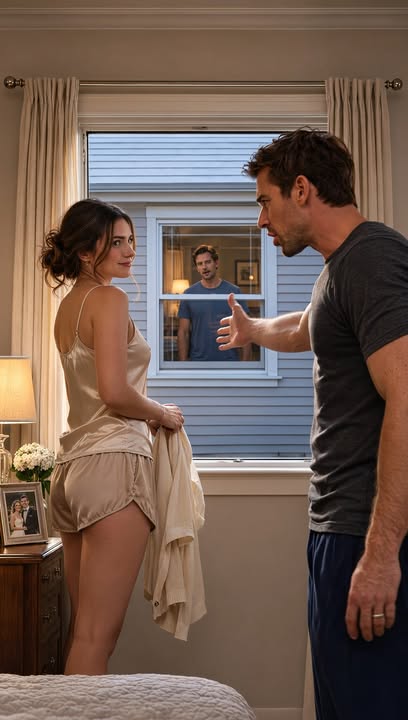
Part 5 – What We Could Keep
Megan rested her palm over the envelope.
“Then we need to know what she gave up,” she said, “and why my mother wanted it kept secret.”
Arthur looked at the words on the paper as if they might shift beneath his gaze.
“I can take the letters home,” he said. “We can read the rest together, or I can look through them first and tell you only what seems relevant.”
Megan’s hand lifted from the envelope.
“I don’t think we should decide that for you.”
“I’m not sure I can decide at all.”
His voice was low, and for the first time since he had come across the way, he seemed less like a neighbor carrying an old mystery and more like a son standing before the part of his mother he had never been allowed to know.
I glanced at the open box.
The letters had begun as a way to return a photograph.
Now they held the possibility that Megan’s mother had given something up to protect Arthur’s family, and that the truth had been kept from both children for reasons neither could yet understand.
“Maybe we should find out what the letter says before we decide what to do with it,” I said.
Megan looked at me.
“That’s what we’ve been doing.”
“I know. I just don’t want curiosity to make the choice for us.”
She lowered her eyes to the envelope.
“Neither do I.”
Arthur turned it carefully, examining the faded cross near the seal.
“I don’t know whether my mother meant for this to be opened,” he said. “But she wrote that it shouldn’t be opened until Megan knew what her mother gave up.”
“Which suggests she expected me to learn,” Megan said.
“Or hoped you would.”
The distinction did not make the decision easier.
Megan picked up the envelope, but did not break the seal.
“What if what’s inside tells us something my mother never wanted me to know?”
“Then you can stop,” Arthur said.
“What if it tells us something about you that your mother never wanted you to know?”
“Then I’ll have to decide what to do with it.”
His answer was honest, but it did not disguise the fear in his face.
Megan set the envelope down between them.
“I don’t want to open it because I’m angry that my mother kept secrets,” she said. “And I don’t want to leave it sealed just because I’m afraid of what I might find.”
“I understand,” I said.
She looked at me, searching my expression.
“Do you?”
“I think so. You want the truth, but you don’t want the truth to become another way of hurting someone.”
“That’s it.”
Arthur rested his hands beside the box.
“If you decide not to read it, I’ll accept that.”
“And if we do?”
“Then I’ll read it with you.”
Megan studied him for a moment.
“You don’t have to make yourself brave for us.”
“I’m not.” Arthur’s gaze dropped to the envelope. “I’m trying to stop my mother’s silence from making the decision for me.”
That sentence stayed with me.
I had thought of silence as something a person chose once, a door closed and left closed.
But silence could also become a habit that outlived its purpose, a promise that kept being carried after the people who made it were gone.
Megan took the envelope again.
The flap had been sealed with a thin line of yellowed adhesive, but the paper was already loose at one corner.
She looked at Arthur.
“Are you ready?”
He drew a breath.
“No,” he said. “But I don’t think I’ll be ready later, either.”
Megan eased the flap open.
The sound was almost nothing, a soft crackle of old paper giving way.
Inside was a single sheet, folded into thirds.
She laid it flat, then turned it toward Arthur.
He read the first line silently.
His shoulders shifted, as if he had expected the letter to be about him and had found something else.
“What does it say?” Megan asked.
Arthur swallowed.
“It’s from your mother to mine.”
“Read it aloud,” I said, “if you’re comfortable.”
He nodded, then began.
“‘Margaret, I know you will ask me to reconsider, and I know you will say that the promise was made for Arthur’s sake.’”
His voice faltered, but he continued.
“‘I have considered it. I cannot tell him the whole truth while he still believes I left because I wanted to. I cannot allow him to believe that you took him from me, even for a little while, when you were the one who brought him safely back.’”
Arthur looked up from the letter.
Megan’s face had gone very still.
“Keep going,” he said, though he seemed to be speaking to himself.
Arthur continued.
“‘When he is grown, you may tell him what you can. Until then, let the children have a story they can live with.’”
He paused over the next lines.
“‘You have already paid enough for helping us. I will not ask you to give up anything else.’”
Megan put one hand against her mouth.
The letter did not explain what the sacrifice had been.
It revealed only that it had been real, and that both women had been trying to keep its cost from being placed on the children.
Arthur turned the page slightly.
“There’s another paragraph.”
His voice had become quieter.
“‘If the families never meet again, then the promise has failed, but it will not be because you broke it. I will carry my part of that failure. Please do not blame yourself.’”
Megan’s eyes shone, though she did not look away.
“Why would my mother write that?”
“I don’t know,” Arthur said. “Maybe my mother thought she had failed to bring everyone back together.”
“Or maybe something stopped them.”
He read the final line.
“‘Keep the letters with the photograph. One day, when Megan is ready, she will understand why she was never told.’”
Megan sat back.
For a moment, the room was filled with the sounds of an ordinary afternoon: a bird calling from the garden, a car passing at the end of the street, the quiet movement of air through the open kitchen window.
Then Megan closed her eyes.
“She knew I might find out,” she said.
Arthur set the letter down.
“It sounds as if she hoped you would.”
“But not while she was here to tell me herself.”
The grief in her voice was soft, but it seemed to draw every other feeling in the room toward it.
I moved my hand over hers.
She turned her palm up and held on.
“What do we know?” I asked gently.
“That my mother helped Arthur’s mother during the time she was ill,” Megan replied. “That she kept Arthur from believing his mother had abandoned him. That she gave up something, or at least was asked to give up something, and never wanted the children to carry the cost of it.”
Arthur looked at the open letter.
“And that she believed my mother’s confidence mattered more than her own need to be understood.”
Megan looked at him.
“I think she cared about both.”
“I wish she had told me.”
“I wish she had told me too.”
There was no easy comfort in their shared regret.
The two mothers had tried to spare their children the weight of what had happened, but the silence had left each of them with a different emptiness.
I thought of the story I had made from a man standing in his window.
I had believed I was protecting Megan, but I had not asked what she remembered or what she wanted.
Megan had believed she was protecting me from worry, but she had left me to fill the gaps with my own fears.
We had both thought silence would prevent pain.
We had both been wrong.
“Do you think the letters say what your mother gave up?” I asked.
Megan glanced at the bundle.
“Maybe.”
“Would you keep reading?”
She considered the question before answering.
“I want to. But I don’t want to read every private thing they wrote simply because I’m curious.”
Arthur nodded.
“There may be letters that were never meant to be read by anyone else.”
“How would we know?”
“I don’t know,” he said. “The letters were kept with the photograph. Perhaps that was enough of a reason for my mother to save them. Perhaps she wanted them returned. Perhaps she wanted them to remain hidden.”
Megan turned over the sheet and read the last line again.
“One day, when Megan is ready, she will understand why she was never told.”
Her fingers rested beside her name.
“I don’t know whether I’m ready,” she said.
“You don’t have to be ready for everything,” I replied. “You can be ready for the next decision.”
She looked at me.
“And what do you think that decision is?”
I could have told her what I thought she should do.
I could have said that privacy mattered more than clearing up an old family story, or that the truth should be told to everyone who had been hurt by the silence.
Instead, I tried to hear the question beneath the question.
“I think we should ask what sharing the letters would give people, and what it might take from them.”
Megan gave a small nod.
“That’s what I’m trying to work out.”
Arthur gathered the opened papers into a neat stack.
“My mother has a sister still living,” he said. “My aunt Ruth. She’s the only person left who might remember what happened around that time.”
“Does she know about the letters?” Megan asked.
“No. I haven’t told her yet.”
“Would she want to see them?”
“I don’t know. She was young when my mother was ill, but she may remember the separation.”
Megan looked at the bundle.
“Are there other relatives on your side who were told there had been a falling-out?”
“My cousins, probably. They heard the same family version I did.” Arthur’s expression tightened with thought. “I don’t know whether correcting it would bring them comfort or simply reopen something they’d stopped thinking about.”
Megan looked down.
“My family has the same story. Some of my relatives thought your mother had turned away from ours. They blamed her for it, even though nobody knew what had happened.”
Arthur’s brow furrowed.
“I never heard that.”
“They didn’t say it in front of me when I was young. Later, I heard enough to understand.”
“Then maybe they should know.”
“Maybe.”
The word remained suspended between them.
Megan looked at the opened letter, and I could see her weighing the value of setting the record straight against the cost of revealing what her mother had deliberately protected.
I reached for the cup of tea I had made earlier, then realized it had gone cold.
The room seemed to have forgotten its ordinary habits.
“What did your mother give up?” Arthur asked.
Megan shook her head.
“Nothing we’ve read says.”
“But the letter says she’d paid enough.”
“It could mean she gave money. It could mean she gave up her time, or a place to stay, or something else.”
“Could the next letters tell us?”
“Possibly.”
Megan looked at me.
“I want to know.”
“I understand.”
“But even if we find out, I’m not sure the rest of the family needs to know every detail.”
“Maybe they don’t,” I said.
Arthur’s hands rested on the table.
“If my mother’s illness is the private part, I don’t think I need to share it beyond what I’m comfortable sharing.”
“Would you be comfortable telling your aunt that my mother helped your mother?” Megan asked.
“Yes. I think so.”
“Would you be comfortable telling her what the help was?”
Arthur paused.
“I don’t know. I’d want to know first.”
Megan’s gaze returned to the unopened parts of the bundle.
There were still several envelopes, some addressed to her mother and some to Arthur’s.
Among them was a smaller packet tied separately with a narrow blue ribbon.
Megan had not noticed it until then.
She reached toward it, then stopped.
“Was this tied in with the others?”
Arthur leaned closer.
“I think so. I didn’t untie it when I found the box.”
The ribbon was faded but intact.
A small card had been tucked beneath it.
Megan lifted the card and read the writing.
“‘For the family, when the promise can be spoken without hurting anyone.’”
Arthur’s face changed.
“Who wrote that?”
“The ink looks like my mother’s,” Megan said.
She held the card up beside the letter.
The handwriting was a close match.
Arthur leaned in, studying the packet.
“Then maybe this part was meant for everyone.”
“Maybe,” Megan replied.
The phrase did not resolve the choice.
It made it more difficult.
Megan looked at the packet for a long time.
“Could we open it?” I asked.
She shook her head.
“Not yet.”
The answer sounded less like fear now than a decision to pause before crossing another threshold.
She turned the card over.
There was writing on the back, small and almost hidden by the ribbon.
Megan’s lips parted as she read it.
“What does it say?” Arthur asked.
She hesitated.
“‘Not the details. Only the truth they were kept from.’”
Arthur lowered his eyes.
“Your mother knew exactly what she wanted.”
“Or what she didn’t want.”
Megan placed the card beside the packet.
That small instruction seemed to offer a path through the confusion, though it did not tell her where to step.
She could correct the family story without exposing the private circumstances behind it.
She could tell them the separation had not been caused by a betrayal.
She could say the women had remained loyal to each other, that Megan’s mother had helped Arthur’s mother, and that their silence had been a promise meant to protect the children.
She could keep the rest sealed.
But correcting the story would still mean carrying her mother’s private history into the open, at least in part.
“Would telling them that be enough?” Arthur asked.
“It might be enough to stop them blaming your mother,” Megan said.
“And your mother?”
“People blamed her too, but in a different way. They thought she had been stubborn or unforgiving.”
Arthur nodded.
“So we tell them the friendship didn’t end because either woman betrayed the other.”
Megan looked at the card.
“We tell them that, and that they intended the families to meet again.”
“Without saying why they were apart?”
“Without giving them details about your mother’s illness or what she asked mine to do.”
Arthur was quiet.
“Would that leave too much out?”
“Maybe,” Megan said. “But it would leave out the part they weren’t meant to carry.”
I watched her work through the choice.
She was not trying to protect a family legend or preserve her mother’s image.
She was trying to honor the person who had written the words on the card, while also refusing to let a false story keep hurting people.
“I can support that,” Arthur said.
Megan looked at him.
“You don’t have to agree just because I’m the one whose mother wrote it.”
“I’m not.” He took a moment before continuing. “I don’t want my aunt or my cousins to believe my mother walked away from your family. I don’t want them to think she was ashamed of needing help, either. But I don’t need the whole family to know every detail of the worst time in her life.”
His eyes moved to the letters.
“If I decide I need to know more, I can read those parts myself.”
“That seems fair,” I said.
Megan’s expression was thoughtful.
“Could we tell them the women made a promise to protect one another’s children?”
Arthur looked at the note.
“Would that reveal too much?”
“It says the promise itself was meant to protect you. It doesn’t say what happened.”
He considered it.
“I think I’d be comfortable with that.”
Megan gathered the letters and placed them back in the box.
She did not untie the small packet.
For a moment, her movements were slow, almost careful enough to be ceremonial.
“I want to give the letters back to the family,” she said. “Not just keep them in a box between our two houses.”
Arthur watched her.
“Your family and mine?”
“Yes. They belong to both histories.”
“But if we bring them all together, someone may want to read every page.”
“Then we’ll have to tell them what we know about the promise before they decide what to do.”
“Some might say they have a right to know.”
“They might.”
Megan tied the bundle again, leaving the blue-ribbon packet separate.
“Would you be all right with people knowing that your mother was ill?” she asked.
“I haven’t decided.”
“Then I won’t share it.”
Arthur took in a breath, then gave a slow nod.
“Thank you.”
“I don’t want to give them a truth that isn’t mine to give.”
Megan glanced at me.
“But I also don’t want to let an old lie keep hurting people because I’m afraid of upsetting anyone.”
“That’s a hard line to walk,” I said.
“I know.”
She looked down at the letters.
“I can say the families didn’t fall out. I can say my mother and your mother stayed in contact and meant to bring everyone together again. I can say the story about a betrayal was wrong.”
She paused.
“And I can say they kept the reasons private because they believed the children should not have to carry them.”
Arthur looked at the packet.
“Would you share the card?”
“Maybe after we talk to your aunt. I want her to understand that the letters aren’t permission to open every part of the story.”
“Would your relatives understand?”
“Some will. Some may be disappointed.”
“Will you let them be disappointed?” I asked.
She looked at me, and I saw the answer forming before she spoke.
“I think I have to.”
The admission carried its own quiet sadness.
Megan had spent years imagining what her mother might have said if she could ask her.
Now she had to choose without that answer, knowing that whatever she did would leave something unresolved.
She put the photograph back in its protective sleeve, then slid it into the box beside the letters.
“I’ll call my aunt Claire tomorrow,” she said. “She was close to my mother’s side of the family, and she remembers the stories people told.”
Arthur glanced toward the front window.
“I’ll speak with Aunt Ruth.”
“We can tell them together,” Megan said. “After we’ve both decided what we’re comfortable sharing.”
“Yes.”
The agreement was simple, but it felt like the first thing the two families had made together in a long time.
I watched Megan lay the ribbon across the top of the letters.
Her hands were steady now, though her eyes remained bright.
“You’ve chosen what to say,” I said.
“I’ve chosen what I think we can say for now.”
“Those are different things?”
“Maybe.” She looked at the box. “I may change my mind after I’ve slept on it.”
“That’s allowed.”
She gave me a small smile.
“I’m glad you said that.”
Arthur stood, then seemed to remember the photograph was still on the table.
“Should I take the letters home?”
Megan glanced at the box.
“I think they should stay with you until we speak to your aunt. They were in your mother’s things, and you should have the chance to decide what you need to read privately.”
“Are you sure?”
“Yes. But the photograph should stay here.”
Arthur nodded.
“I agree.”
He lifted the box, holding it with both hands.
At the doorway, he paused.
“I thought I was bringing you a photograph,” he said. “I didn’t realize I was bringing you a choice.”
Megan stood beside me.
“Neither did I.”
He looked at her, then at me.
“Thank you for not asking me to tell more than I know.”
“And thank you for bringing the letters,” she said.
After Arthur left, Megan stood in the quiet sitting room with the photograph in its sleeve.
She did not look toward the upstairs window.
She looked at the empty space on the coffee table where the box had been.
“I’m afraid I’ve left something important unread,” she said.
“Maybe.”
“I’m also afraid that if I read everything, I’ll discover something I can’t keep private.”
“You don’t have to decide that today.”
She nodded.
Then she looked at the photograph.
Her mother’s face seemed bright beneath the plastic sleeve, her smile preserved by the long years in which no one had known it was waiting to be found.
“I’ll tell Aunt Claire that the falling-out was never real,” Megan said. “I’ll tell her the women kept their friendship, and that they meant to bring the families together again.”
“And the rest?”
“I’ll keep it sealed unless Arthur decides it’s his to open.”
She took a careful breath.
“I think that’s what my mother wanted.”
I reached for her hand.
She held it, and together we stood beside the table where the old photograph had rested.
For the first time since Arthur appeared in his window, I understood that privacy was not simply a curtain to close or leave open.
It was a trust someone placed in your hands, and the hardest part was knowing how much of it you were allowed to share.
Megan turned the photograph over.
The cardboard backing had come loose at one corner, exposing a narrow strip of paper tucked behind it.
She frowned.
“That wasn’t there when we looked at it yesterday.”
I leaned closer.
The strip was folded so tightly it had almost disappeared inside the frame’s old backing.
Megan drew it out with two careful fingers.
On it, in her mother’s handwriting, were just six words:
“If they ask about the house, tell them.”
Megan stared at the sentence.
“Which house?” I asked.
She turned the strip over.
On the other side, a name had been written in Arthur’s mother’s hand.
It was not a person’s name.
It was the address of a house that had belonged to Megan’s family.
**–END OF PART 5–CLICK “NEXT” AT THE BOTTOM OF THE PAGE TO CONTINUE READING**
* * *
[PREVIOUS: PART 4](https://storyly.idolsgift.com/blog/part-4-the-photograph-across-the-way-056) | [NEXT: PART 6(THE END)](https://storyly.idolsgift.com/blog/part-6-the-end-the-photograph-across-the-way-056)
✓ Lynn R. Adams
Part 5 – What We Could Keep Megan rested her palm over the envelope. “Then we need to know what she gave up,” she said, “and why my mother wanted it kept secret.” Arthur looked at the words on the …