PART 5: The Note Behind the Photograph 047
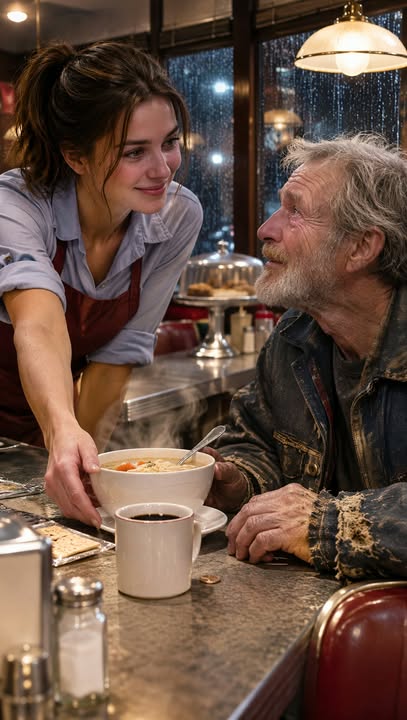
Part 5 – The Kind of Help That Lets You Stay
The care coordinator turned the envelope over once more, checking the faded handwriting as though it might answer the question for her.
“If Harper comes looking, tell her why I kept the photograph,” Alexander read aloud.
Harper held still.
The words had been written by Arthur, but the hand that formed them looked uncertain, each letter pressed into the paper with more care than confidence.
“Why didn’t he tell me himself?” she asked.
“He may have planned to,” Alexander said.
The care coordinator glanced at the chart beneath her arm.
“This was found in the belongings he brought to the hospital, along with the photograph and several letters.”
Harper looked toward the room where Arthur was resting.
“Can we read it?”
“Of course,” the coordinator replied. “It belongs to him, but he asked that you both have it.”
She handed the envelope to Alexander.
He opened it gently and slid out a single sheet of paper.
The letter was addressed to him, though its first lines were about Eleanor.
My son,
If Harper has found the photograph, then the past has reached her before I could explain it.
I kept it because it was the last picture I had of Eleanor, but that is not the whole reason.
Harper felt the air catch in her lungs.
Alexander continued reading.
She asked me to keep it safe until her daughter was old enough to understand that kindness can join people even when the world has separated them.
She said she wanted Harper to know the truth one day, but only when the truth could be given without asking anything of her in return.
The page trembled slightly in Alexander’s hands.
Harper took the letter from him and read the remaining lines herself.
I promised I would tell her when she came looking.
I did not know how long that would take.
I did not know whether I would be able to remember.
If I fail, please tell her I never kept the photograph to hold on to what I had lost.
I kept it because Eleanor trusted me with what came next.
Harper lowered the page.
The hospital corridor around her seemed to recede, leaving only the words in her hands.
“She knew,” she said.
“She knew he was trying to keep the connection alive,” Alexander replied.
“Not everything,” the care coordinator said gently. “But perhaps she trusted him with this much.”
Harper read the letter again.
Her mother had wanted her to know the truth without feeling that she owed anyone anything.
That thought had followed Harper since finding the penny, but now it had become something she could hold.
Eleanor had not hidden Arthur because she was ashamed of him.
She had been trying to give Harper the freedom to decide what family meant when she was old enough to choose.
Harper’s eyes moved to the envelope.
“Did he carry this with him all those years?”
“It appears so,” the coordinator said. “The creases suggest it was opened and folded repeatedly.”
Alexander looked at the bedroom door.
“Can we see him?”
The coordinator nodded.
Arthur was awake, though the lines around his eyes showed how tired he was.
His gaze shifted between them as they approached.
“Did you find the letter?” he asked.
“We did,” Harper said.
Arthur watched her face.
“Did it help?”
“Yes.”
She sat beside him and rested the folded page on the blanket.
“My mother trusted you with the photograph.”
Arthur’s eyes lowered to it.
“She asked me to keep it somewhere safe.”
“Why didn’t you send it to her?”
“I thought I was meant to hold it until you were ready.”
“Ready for what?”
“To know me.”
The simplicity of his answer hurt more than a complicated explanation would have.
Harper reached for his hand.
“You could have written.”
“I did.”
“We found some of the letters.”
“Did you?”
“Some were returned.”
Arthur’s brow tightened as he tried to make sense of it.
“I remember being told she didn’t want them.”
“Do you remember who told you?”
“No.”
He looked toward Alexander.
“I should have gone to find out for myself.”
“You were young, and you believed what you were told,” Alexander said.
“I was old enough to ask another question.”
Harper did not rush to excuse him.
She did not have to.
Arthur already understood the cost of what he had done.
“I don’t want the rest of my life to be made of apologies,” he said quietly.
“Then we’ll make something else of it,” Harper replied.
His fingers curled around hers.
For a moment, they remained there, linked by a history that had been waiting for them to learn its name.
Then Arthur’s gaze traveled to Alexander.
“You’ve been asking the care coordinator about places for me.”
“I have,” Alexander said.
“Will Harper have to give up her work to help me?”
“No,” Harper answered before Alexander could.
Arthur looked at her.
“I asked him.”
“And I’m answering too.”
She shifted closer to the bed.
“You need care that I can’t provide by myself.”
“I don’t want you to feel that you have to give up your life.”
“I don’t.”
“Harper.”
“I don’t,” she repeated, more gently. “But I have spent a long time believing that if someone needs me, I have to become everything they need.”
Arthur’s expression softened.
“Your mother did that.”
“She did.”
“She was always trying to carry more than one person could.”
“So am I.”
The admission settled between them.
Harper looked down at her hands.
She had kept her nursing-school plans in a drawer with old bills and unfinished forms, telling herself that the timing was wrong.
First her mother’s illness.
Then the debt left behind by her treatment.
Then years of working double shifts and helping wherever she could.
Now Arthur had returned to her life, not as a stranger, but as a grandfather with more years behind him than she had ever known.
She could feel the old impulse gathering: stay close, do everything, postpone herself again.
Yet she could also hear Eleanor’s words, written to a daughter she had wanted to protect.
Support should not ask for a life in payment.
Harper met Arthur’s eyes.
“I want to be part of your life,” she said. “I want to visit and bring you soup and hear the stories you remember.”
“I’d like that.”
“But I can’t be your nurse.”
“I wouldn’t ask you to be.”
“I need you to understand that I’m going to try for nursing school.”
Arthur looked at her for a long moment.
“Your mother would be proud.”
“I’m not telling you because I need permission.”
“I know.”
“I’m telling you because I don’t want either of us to pretend that love means I have to give up my future.”
Arthur’s face softened into something close to relief.
“Then don’t give it up.”
Alexander sat quietly beside the window.
He had offered to cover Arthur’s care, and Harper knew he could do it without changing the course of his own life.
She also knew money could carry expectations even when no one intended it to.
“I need to talk about what comes next,” she said.
Alexander leaned forward.
“I’m listening.”
“I don’t want you to pay for everything without talking to me.”
“I understand.”
“I don’t want to find out later that I’ve somehow become responsible for repaying you.”
“You won’t.”
“I need clear boundaries.”
“You should have them.”
His answer was immediate, but not defensive.
Harper took a breath.
“If you help with Arthur’s care, it needs to be a decision we make openly, with him included.”
Alexander nodded.
“And if I accept help with school, I need it to be something I choose, not something that makes me feel beholden to you.”
“Agreed.”
“I don’t want a job in one of your companies or some position you arrange for me.”
“I wasn’t going to offer one.”
“I don’t want you to turn the diner into a family project because you feel guilty about the wages Stan took.”
“I wouldn’t.”
She studied him, searching for the impatience of someone unused to hearing no.
Instead, Alexander gave her time.
“You’ve thought about this,” he said.
“I’ve had plenty of practice refusing things I can’t afford to accept.”
“That’s not the same as accepting help freely.”
“No,” she said. “It isn’t.”
Arthur watched them, his expression thoughtful.
“Alexander,” he said, “don’t offer money as if money can fix what we missed.”
“I won’t.”
“Offer what Harper asks for.”
“I will.”
“And if she says no?”
“Then I’ll respect it.”
Arthur nodded, as if that answer mattered to him as much as the letter.
The care coordinator returned with a folder of options.
She described a rehabilitation center nearby, an assisted-living community with memory-care support, and a plan that would allow Arthur to move between levels of care as his needs changed.
The choices were practical, but none of them felt simple.
Arthur listened closely, stopping the coordinator twice to ask whether residents could keep their own belongings and whether families were allowed to visit without advance notice.
When she mentioned a private room, he asked what it would cost.
Alexander answered honestly.
“It’s possible,” he said. “But there are other options if you’d rather not use your savings on the room.”
“I don’t want anyone choosing the place because it looks impressive,” Arthur said.
“Neither do I,” Harper replied.
They looked through photographs of the facilities together.
One building had a garden with a brick path and raised beds.
Another had a sunroom where residents could read, but it was nearly an hour away.
Arthur preferred the place with the garden.
“I used to grow tomatoes,” he said.
“Did you like tomatoes?” Harper asked.
“Not particularly.”
“Then why grow them?”
“Eleanor liked them.”
The memory came so naturally that no one interrupted.
Harper glanced at Alexander.
It was not a complete recollection, but it was a piece of the life that had existed before the letters stopped.
“I want to see the garden,” Arthur said.
The following afternoon, they visited the nearby community.
The garden was small, with a wooden bench beneath a red maple and several empty planters awaiting spring.
Arthur walked slowly along the path, using a cane the therapist had given him.
He stopped beside the largest planter and ran his hand over its wooden rim.
“This is enough room for tomatoes,” he said.
“Or herbs,” Harper suggested.
“Tomatoes grow where you put them.”
“Not always.”
He smiled at her.
“I remember that.”
The tour continued through a bright dining room, a small library, and a common area where a few residents were playing cards.
The staff answered questions without rushing them.
Arthur asked about his ability to keep his old jacket.
He asked whether he could have a radio in his room and whether someone could help him walk outdoors if the weather was clear.
They promised to make room for the jacket, the radio, and daily walks as he recovered.
Harper watched him make his own decisions.
The care he needed did not take away his right to choose.
On the drive back to the hospital, Arthur sat in the rear seat, quiet with thought.
“I could live there,” he said.
“You should have a few days to decide,” Alexander replied.
“I have decided I could live there. I haven’t decided whether I want to.”
“That makes sense,” Harper said.
“I don’t want to move somewhere because I’m inconvenient.”
“You aren’t inconvenient.”
“I don’t want you rearranging your life around me.”
“I won’t.”
Arthur turned toward the window.
“Then I’ll consider it.”
At the hospital, he asked for the room brochure and placed it on the table beside the photograph.
The next morning, Alexander came to Harper’s apartment with a folder.
She opened the door but did not step aside at once.
“What is it?”
“Information you asked for.”
“I asked for the care costs.”
“And the nursing programs in the area.”
She glanced at him.
“I didn’t ask you to apply for me.”
“I haven’t.”
He held out the folder.
“Your mother’s school still has an adult-entry program. I found the application dates and the financial-aid office. I thought you might want the information.”
Harper hesitated, then accepted it.
Inside were printed pages about prerequisites, application deadlines, grants, and student advising.
A sticky note on the first page said, The school confirmed that your prior coursework can be evaluated at no charge.
She read it, then looked up.
“You called them?”
“I asked one question.”
“About me?”
“About the program. I didn’t share your information.”
The explanation eased the tightness in her shoulders.
“Thank you.”
“You don’t have to do anything with it.”
She set the folder on the table.
For years, the path to nursing had seemed to be made of obstacles too numerous to count.
Now it was still difficult, but at least she could see where the next step began.
Alexander placed another sheet beside it.
“This is the cost estimate for the care options Arthur is considering.”
Harper read the numbers.
They were substantial, though Alexander could cover them.
The gap between what Arthur needed and what Harper could contribute felt like a wall.
“I can’t pay this,” she said.
“You’re not expected to.”
“I don’t want to sit in a facility while you pay every bill and tell myself I’m part of the family.”
“You are part of the family whether you pay or not.”
“I know you believe that.”
“I do.”
“But I need to know that it’s true in a way I can live with.”
Alexander sat across from her.
“Tell me what would make it feel possible.”
Harper considered the question.
“Arthur decides where he lives.”
“He will.”
“The care plan is shared with him, not made over his head.”
“Agreed.”
“I visit because I want to, not because I’m assigned a schedule.”
“Of course.”
“And the financial arrangement is written down. I want to understand what is being paid, by whom, and whether anyone expects anything back.”
Alexander nodded.
“I can have a care fund set up in Arthur’s name using his own resources first, then I can make up whatever remains.”
“Will you show me the account?”
“If you want to see it.”
“I do.”
“I’ll arrange that.”
She watched him for signs of annoyance, but there were none.
“What about school?” she asked.
“I can help you look at grants and scholarships.”
“I don’t want you paying my tuition directly.”
“Then I won’t.”
“What would you do?”
“Only what you agree to.”
Harper thought of the photograph in the hospital, of Eleanor standing beside Arthur in the garden.
Her mother had accepted help from him once.
She had not become less independent because someone opened a door for her.
Maybe the danger was not the help itself, but being denied the right to choose what it meant.
“I might accept a scholarship,” Harper said.
Alexander waited.
“Not from you alone. Not as a private arrangement that can change whenever we disagree.”
“I understand.”
“If it’s through the school or a transparent fund, with clear criteria and no obligation to work for you, I would consider applying.”
“That sounds fair.”
“And I want the name to be my mother’s.”
Alexander’s expression shifted.
“Eleanor Lane?”
“Yes.”
He nodded slowly.
“That would honor her.”
“It would honor what she chose to do with the help she received.”
“I agree.”
Harper looked at the application dates again.
The earliest deadline was in six weeks.
She felt her chest tighten, not with panic this time, but with the recognition that the decision was real.
She could apply.
She could let the school assess her credits and learn what she needed to complete.
She could accept a scholarship if one existed, without promising her future to the person funding it.
“I don’t know if I can afford to study full-time,” she said.
“Then you could ask about a part-time path.”
“I don’t know if I can keep working and study.”
“Then you can decide after you have the facts.”
The care in his answer lay in its refusal to demand courage on the spot.
Harper closed the folder.
“I’ll speak to the school myself.”
“All right.”
“I’ll decide after that.”
“All right.”
“I’m not asking you to promise you’ll support every choice I make.”
“I won’t.”
She let out a slow breath.
For once, the next step did not have to be a surrender of everything else.
It could simply be a step.
That evening, Harper went to the diner for a cup of tea before visiting Arthur.
She had not been scheduled to work, and she was still waiting for the payroll review.
The familiar smell of coffee and warm bread filled the room.
Stool four was empty.
On the counter sat a small dish holding several tarnished pennies Arthur had left over the past weeks.
Harper stared at them.
The first one had seemed like a thank-you.
Now she understood it as a fragile thread between her mother’s past and her own.
She took one from the dish and turned it over in her palm.
Stan came out of the office carrying a folder.
“I heard Arthur is doing better,” he said.
“He is.”
“I’m glad.”
Harper waited.
Stan set the folder on the counter.
“The accountant finished reviewing the meal charges and your wages.”
“And?”
“The deductions were entered incorrectly.”
“Incorrectly by whom?”
“By me.”
His face was tired, but he did not look away.
“I thought I was correcting the inventory. I didn’t check the ledger closely enough, and I shouldn’t have assumed you were taking food.”
“Will the wages be restored?”
“Yes. The accountant is correcting them in the next payroll.”
“And my hours?”
“That’s a separate matter.”
“Are they restored?”
Stan paused.
“The schedule has been tight.”
“That isn’t an answer.”
“No,” he said quietly. “It isn’t.”
Harper felt the old anger, but beneath it was a deeper hurt.
She had spent years trying to do good quietly, hoping that if she made herself useful enough, no one would have reason to push her aside.
“You told people I stole,” she said.
“I told them there were discrepancies.”
“You let them decide what that meant.”
He lowered his eyes.
“I’m sorry.”
Harper studied him.
The apology did not erase what had happened, but it was not empty.
“Thank you for saying it,” she replied.
“I don’t expect you to come back tomorrow.”
“I haven’t decided what I’m doing.”
“I understand.”
She left the diner with the penny in her pocket.
At the hospital, Arthur was sitting in a chair beside the window.
The brochure from the care community lay on his lap, folded open to the photograph of the garden.
“I’ve decided,” he said when Harper arrived.
“To move there?”
“To try it.”
He looked toward Alexander, who had come in just before her.
“On the condition that I can change my mind if the place isn’t right.”
“Of course,” Alexander said.
“And I want my own radio.”
“You can have your radio.”
“And I want to keep seeing Harper because she wants to visit, not because someone’s written it on a calendar.”
Harper smiled.
“I’ll visit because I want to.”
Arthur nodded.
“That’s what I want.”
The next few days passed in a series of practical decisions.
The care coordinator confirmed that Arthur’s savings could cover part of the move, and Alexander agreed to pay the remaining cost through an account that would be managed openly for Arthur’s care.
Harper reviewed the plan with them both.
She asked questions about fees, medication, transportation, and what would happen if Arthur’s needs changed.
Alexander answered each one without impatience.
Arthur made his own choices about which belongings to bring.
He chose the mechanic’s jacket, the old radio, a framed photograph of Eleanor, and the tarnished penny Harper had given him from her mother’s envelope.
He placed the penny in a small wooden box.
“I want this where I can see it,” he said.
Harper smiled.
“I’ll bring the photograph over once you’re settled.”
“Keep it safe for now.”
“I will.”
Before he left the hospital, Arthur asked Harper to bring the nursing-school folder.
She did.
He studied the cover and read the program name.
“You should go,” he said.
“I’m going to apply.”
“Good.”
“I don’t know what will happen after that.”
“Neither did Eleanor.”
He looked at her over the folder.
“She was frightened too.”
Harper sat beside him.
“She never seemed frightened.”
“She was excellent at hiding it.”
That sounded like Eleanor.
Arthur tapped the paper lightly with one finger.
“Don’t make your fear a reason to stay where you are.”
Harper looked toward Alexander.
He stood near the window, giving them the same quiet space he had offered since the first day.
“I won’t,” she said.
When Arthur was transferred to the care community, Harper accompanied him.
She helped place the radio on the dresser and set the photograph where the afternoon light would fall across it.
Arthur chose the chair closest to the window.
The garden could be seen through the glass, still bare from winter, with damp soil waiting for spring.
“Do you think they’ll let me plant tomatoes?” he asked.
“I’ll ask.”
“I’d like to grow one that Eleanor would have liked.”
“Then we’ll have to find out what kind she liked.”
He looked at her, and for an instant the years of separation seemed to soften.
“We can learn together.”
Harper reached for his hand.
“Yes,” she said. “We can.”
The care staff finished explaining the evening routine.
Arthur asked one more question about visiting hours, received his answer, and seemed satisfied.
Then he turned to Harper.
“You don’t have to stay all night.”
“I know.”
“You have your own life.”
“I know that too.”
He studied her face, perhaps searching for the promise that she would come back.
“I’ll visit tomorrow,” she said.
“Because you want to?”
“Because I want to.”
He nodded and released her hand.
Outside the building, Alexander walked her to the car.
“You did well,” he said.
“I didn’t do anything extraordinary.”
“You made room for yourself without leaving him behind.”
Harper looked back at the lit windows.
“I’m trying to learn that those aren’t opposites.”
“They aren’t.”
The next morning, she called the nursing school and asked to speak with an adviser.
She was given a date to meet, a list of documents to gather, and a reminder that she could apply for financial assistance before deciding how many classes to take.
When the call ended, Harper stood at her kitchen table with the folder open.
She placed her mother’s graduation photograph beside the application information.
Then she took the tarnished penny from her pocket and set it between them.
For the first time, the future felt less like a debt she had to repay and more like a door she might choose to open.
Her phone rang.
The number was from the care community.
“Harper Lane?” a woman asked.
“Yes.”
“Arthur’s doing well, but he asked me to call you. He’s found something in the box he brought from the hospital.”
“What did he find?”
There was a pause.
“He says it’s the final page of a letter your mother wrote to him.”
Harper’s hand tightened around the phone.
“What does it say?”
“He wouldn’t let us read it aloud. He said he wanted you and Alexander there together.”
“When?”
“Whenever you can come.”
Harper looked at the photograph, the penny, and the school application waiting on the table.
For a moment, the pieces of her life seemed to be asking the same question.
She called Alexander.
“I’ll pick you up,” he said when she told him.
“Arthur asked for both of us.”
“I know.”
“Are you ready?”
A breath passed over the line.
“No,” he said. “But I’ll come.”
Harper closed the folder and tucked the penny into her pocket.
When she reached Arthur’s room that afternoon, he was sitting beside the window with a folded sheet of paper on his lap.
Alexander stood near the door, his face tense with anticipation.
Arthur looked from one to the other.
“I think I remember what Eleanor wanted me to say,” he told them.
Then he unfolded the letter and read the first line.
“Harper, if your brother has brought you here, then it’s time you both understood why I kept you apart.”
**–END OF PART 5–CLICK “NEXT” AT THE BOTTOM OF THE PAGE TO CONTINUE READING**
* * *
[PREVIOUS: PART 4](https://echoesofstories.idolsgift.com/blog/part-4-the-note-behind-the-photograph-047) | [NEXT: PART 6(THE END)](https://echoesofstories.idolsgift.com/blog/part-6-the-end-the-note-behind-the-photograph-047)
✓ Lynn R. Adams
Part 5 – The Kind of Help That Lets You Stay The care coordinator turned the envelope over once more, checking the faded handwriting as though it might answer the question for her. “If Harper comes …