PART 5: The Name She Tried to Forget 061
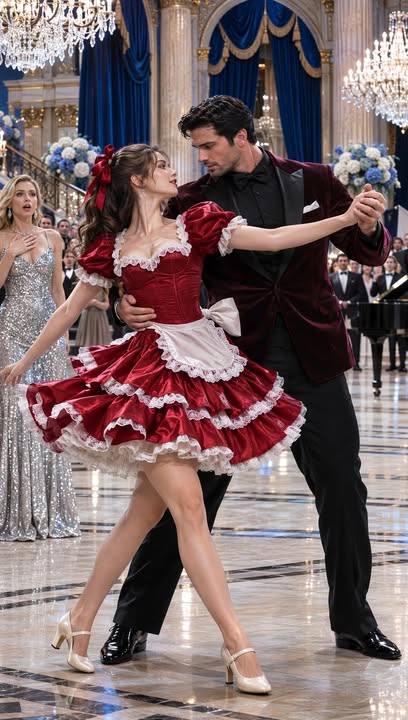
Part 5 – The Story Is Hers
The message from Julian stayed on my screen while the archive technician finished saving the footage.
I found out who wrote the first report.
And it wasn’t me.
The words brought no relief.
They only made the room feel smaller.
I had believed the first report was one more piece of paper that had turned a complicated night into a simple accusation.
Now it seemed someone had written a version of events before the people involved had even understood what had happened.
I looked at the timestamp frozen on the monitor.
“Can you send me a copy of the full recording?” I asked Ruth.
“Yes,” she said. “But I want to be clear that the image may not establish what the person did to the fixture.”
“I understand.”
“And whoever has that footage should be given a chance to explain what we can actually see.”
“I understand that, too.”
My voice sounded steadier than I felt.
The technician saved the file to a secure drive and handed it to Ruth, who promised to send me a copy once the archive director approved its release.
I thanked them both, then stepped into the corridor and called Julian.
He answered on the second ring.
“Where are you?” I asked.
“Near the river.”
“I’m still at the archive.”
“I know.”
“Who wrote the report?”
A pause opened between us.
“Can we talk in person?”
“You’ve had five years to talk in person.”
“I know.”
“Then tell me now.”
He let out a careful breath.
“Vanessa wrote it.”
I closed my eyes.
The old program in my bag seemed to press against my side, though it was only folded paper.
“Are you certain?”
“I saw her name on the copy.”
“Where?”
“The theater’s legal file.”
“How did you get access to that?”
“I didn’t take anything. I asked the theater director to look for the original incident documents after I saw your video.”
“And she found a report with Vanessa’s name?”
“Not the report itself. A signed intake sheet that listed who provided the first account.”
I leaned against the hallway wall.
“Was it written before the accident?”
“No. It was filed afterward.”
“Then why did you say it was written before anyone understood what happened?”
“I didn’t say it was written before the fall.”
I heard the distinction in his voice, and it made my stomach tighten.
“You said the report wasn’t yours.”
“It wasn’t.”
“What did Vanessa write?”
“I don’t know. I haven’t seen the full document.”
“Then how do you know she wrote it?”
“Her name was on the intake sheet.”
“Did you read the statement?”
“No.”
“Did you ask the director to send it?”
“I didn’t want to make the file public without talking to you.”
I went silent.
“Emma,” he said, “I’m not trying to keep anything from you.”
“I’m trying to understand how you can be so certain about what she wrote when you haven’t seen it.”
“I’m not certain.”
“Then stop making it sound certain.”
“You’re right.”
The apology did not soften my anger.
I pressed two fingers against my brow, trying to slow the rush of thoughts.
“Why did you message me that you found out who wrote the first report?”
“Because I wanted you to know it wasn’t me.”
“You let me think you were the only one who had lied about that night.”
“I know.”
“What did you expect me to do with that?”
“I don’t know.”
His answer was weary, and I heard how often he had relied on that phrase to avoid choosing.
“Did you tell Vanessa you had found the intake sheet?”
“Yes.”
“And?”
“She asked to speak with you.”
“Of course she did.”
“She said she knows why the fixture was loose.”
My grip tightened around the phone.
“Those were her exact words?”
“She said she remembers what happened to it.”
“Did she say she loosened it?”
“No.”
“Did she say she saw someone else loosen it?”
“No.”
“Then I’m not meeting her because she says she knows.”
“Emma, she wants to tell you herself.”
“I’m not going to let her turn this into another conversation where I’m expected to accept an explanation because she looks ashamed.”
“I understand.”
“You don’t have to arrange anything.”
“I already have.”
I closed my eyes again.
“Then cancel it.”
“I will.”
He did not argue.
The quiet made me feel both heard and strangely alone.
“Send me the location,” I said.
“Are you sure?”
“No. But I’ll decide for myself whether to go.”
“I’ll send it.”
“And Julian?”
“Yes?”
“Don’t show anyone the footage or those documents unless I say so.”
“I won’t.”
I ended the call.
A moment later, Nathaniel’s message arrived with the address of a small conference room at the arts center.
Vanessa had asked to meet there after the archive closed.
I put the phone away without answering.
The image from the recording followed me through the rest of the day: Vanessa kneeling beside the fixture, her hands moving near its base, then rising and looking toward the corridor.
The footage did not show what she had done.
It did not show why.
It did not show her face clearly enough for anyone else to identify her without help.
But I knew her.
I knew the jacket and the posture, the quick glance over her shoulder.
I also knew what it meant to be recognized by an image that left no room for the rest of a person.
For years, a headline had reduced me to a woman who had injured her partner for the sake of winning.
I did not want to turn Vanessa into another headline before I knew what the evidence showed.
That evening, I visited my mother at the hospital.
She was sitting upright with a blanket over her knees, a pale blue scarf tucked around her shoulders.
When I entered, she studied my face.
“You look tired,” she said.
“I am.”
“Did something happen at work?”
I set the fruit bag on the small table beside her bed.
“Not at work.”
She waited, as she always did, leaving room for me to choose whether to speak.
I sat in the chair beside her.
“I found an old rehearsal recording,” I said.
Her gaze sharpened.
“From Chicago?”
“Yes.”
“Does it show what happened?”
“Some of it.”
“And?”
I looked at her hands resting on the blanket.
They were smaller than I remembered, their knuckles marked by years of piano practice and winter gardening.
“I don’t know yet.”
She reached for my hand.
“You don’t have to know tonight.”
“I’m afraid that if I wait, someone else will decide what it means.”
“Then don’t let them decide.”
Her thumb moved over my fingers, slow and gentle.
“What if I say the wrong thing?” I asked.
“Then you’ll have said something wrong,” she replied. “That isn’t the same as losing your voice.”
I leaned closer, resting my forehead against her shoulder.
She smelled faintly of soap and the lavender hand cream she kept in her bedside drawer.
“I don’t want to hurt anyone,” I whispered.
“Truth can hurt.”
“I know.”
“But silence has its own kind of hurt.”
I closed my eyes.
“I don’t want the story to belong to the newspapers again.”
“Then tell it in your own words.”
When I lifted my head, she squeezed my hand.
“You have always known when to stop dancing and when to keep going,” she said. “You’ll know what to do.”
“I’m not sure I remember how.”
“You remember more than you think.”
The next morning, I watched the recording again with Ruth.
The person in the pale jacket entered the frame at , knelt by the fixture, then left.
At , Julian and I came onto the stage.
At , the image captured someone holding the clipboard.
The figure’s face remained hidden, but the sleeve and hand were visible.
Ruth had obtained the surviving staff list from the theater’s old records.
Only three people working that night had worn jackets with the Lyric emblem.
Me.
Vanessa.
And a stage manager named Peter Hall.
Peter had died two years earlier.
The records did not prove who held the clipboard.
They did establish that the footage had captured the first written account being completed while the room was still in disarray.
I watched the image until I could no longer separate what I knew from what I feared.
Ruth paused the screen.
“I’m going to send you a clean copy,” she said. “I’ll also write down the limitations of the footage so no one mistakes the image for a complete answer.”
“Thank you.”
She rested her hands on the table.
“I used to work in theater,” she added. “I know how quickly an accident can become a story before everyone has caught their breath.”
I looked at her.
“Were you there that night?”
“No. I was at another venue in the city.”
“Did you ever hear what happened?”
“I heard different versions. People tend to remember the version they were told first.”
The thought stayed with me after I left.
That afternoon, Vanessa called.
I let the first call go unanswered.
She did not call again.
Instead, she sent one message.
I’ll meet wherever you choose, and I’ll answer what I can. I won’t ask you to keep anything private.
I read it twice.
Then I typed:
Tomorrow. The archive room. No guests, no lawyers, no cameras.
Her reply came a few minutes later.
Agreed.
I sat at my kitchen table that night with the old program beside my laptop and the hospital estimate tucked beneath a stack of mail.
The fifty thousand dollars Nathaniel had offered remained folded in my work bag.
I had refused it as a personal reward.
That did not change the fact that my mother’s treatment needed funding.
I opened the gala’s public page.
The event had been organized to support a medical fund serving low-income patients, with a portion of the evening’s donations reserved for urgent treatment grants.
Nathaniel’s money could go there without passing through my hands.
I called the event coordinator and asked about the fund’s application process.
She explained that the money would be distributed by an independent committee and that no donor could choose an individual recipient.
“That’s what I want,” I said.
“Are you calling about the amount Mr. Cross offered you?”
“I am.”
“You can redirect it to the fund, if he agrees.”
“Then I’d like to do that.”
“I’ll make a note and confirm the paperwork.”
I ended the call, then sat with the decision.
The money would not belong to Nathaniel.
It would not be a prize for entertaining a ballroom.
It would not be a debt I owed him.
It would be a donation to the same fund that helped people whose lives had narrowed around medical bills.
My mother might benefit from it.
So might someone else.
When Nathaniel called, I answered.
“I’m redirecting the money to the gala’s medical charity,” I said.
“All of it?”
“Yes.”
“Do you want me to make the donation?”
“I want you to fulfill the offer you made, but not as a reward to me.”
“I can do that.”
“The charity needs to know the gift is unrestricted.”
“I’ll tell them.”
“And I don’t want my mother’s name attached to it.”
“Understood.”
“Don’t use it in a company announcement.”
“I won’t.”
He was quiet for a moment.
“I’m sorry the offer put you in this position.”
“I’m not accepting it because I trust you.”
“I know.”
“I’m accepting it because I chose where it goes.”
“I understand.”
I did not thank him.
I did not offer forgiveness.
But after we hung up, the folded card in my bag felt less like a reminder of his power and more like a decision I had made for myself.
The next afternoon, I returned to the archive.
Vanessa was already there, standing beside the table where the recording had played.
She wore a simple navy coat and no emerald.
Without the ballroom around her, she seemed younger, though the tension in her face made her look more tired.
Julian sat near the wall.
I had not invited him, but I had told him he could attend if he wanted.
He had chosen the chair farthest from Vanessa.
Nathaniel was not there.
I had asked him not to come, and he had agreed without protest.
Ruth remained in the room to oversee the archive equipment.
She placed the copy of the footage on the table.
“Before we begin,” I said, “I want to be clear about what this meeting is.”
Vanessa nodded.
“You’ll tell me what you remember. I’ll ask questions. You can say you don’t know. You can say you don’t remember. But you don’t get to tell me what I should do with the information.”
“I understand.”
“And no one is going to make this public for me.”
“I understand.”
I looked at Julian.
“Anything you need to add?”
He shook his head.
“Then, Vanessa, tell me what happened to the fixture.”
She glanced at the paused image on the monitor.
For several seconds, she said nothing.
Then she sat down.
“I was angry with you,” she said.
“Why?”
“Because you were about to get everything I wanted.”
The answer came quietly, but it did not feel incomplete.
“I had spent years training for that scholarship,” she continued. “I had been told the championship would determine who received the lead role and who got to stay in the program for another season.”
“I thought the scholarship was based on the whole year.”
“It was supposed to be. But the director had already made it clear that the championship mattered more than anything.”
“You thought I was in your way.”
“I thought you had every advantage. You were a better dancer, you had a partner people trusted, and the press already liked you.”
“I wasn’t responsible for any of that.”
“I know.”
“Did you want to hurt me?”
Vanessa looked directly at me.
“No.”
Her answer did not make the room lighter.
“Then why did you touch the fixture?”
“I wanted the lift stopped.”
“By making the floor unsafe?”
“I thought if the platform shifted before you went up, the rehearsal would be halted.”
“That isn’t what happened.”
“No.”
“What did you loosen?”
She pressed her hands against her knees.
“The locking pin had started to catch. I pulled it partway out, thinking the platform would wobble when someone tested it.”
“You knew it would be checked?”
“I thought the crew would notice.”
“You were the one who had just argued with me about checking it.”
“Yes.”
“You wanted the crew to stop the rehearsal.”
“I wanted you to miss the final run. I wanted the judges to see that the new lift wasn’t ready.”
The words entered the room softly.
They did not need to be louder to hurt.
“You didn’t think Julian might be hurt?”
“I told myself we would check the platform before the run.”
“But you didn’t.”
“No.”
“Why not?”
“I saw you and Julian come back onto the stage, and I panicked. I thought someone else had checked it. I thought the pin had been secured.”
“Did you tell anyone?”
“No.”
“Did you see the fall?”
“Yes.”
“Did you help?”
“I called for the stage manager.”
“You helped after it happened.”
“Yes.”
“And then you lied.”
Vanessa’s eyes lowered.
“Yes.”
I turned to Julian.
“Did she tell you this before now?”
“No,” he said. “I didn’t know.”
Vanessa faced him.
“I’m sorry.”
“I wanted to believe you were scared,” he replied. “I didn’t know you’d touched anything.”
“I know.”
“You were there. You could have stopped it.”
“I know.”
He looked down at his hands.
I knew he was trying to contain something more complicated than anger.
Grief, perhaps, for the person he had thought she was.
Or for the season of dance we had all lost.
“Why did you write the first report?” I asked.
“I didn’t write the official report.”
“You gave the first account.”
“Yes.”
“What did you say?”
“I said I had seen you and Julian argue about the lift.”
“That was true.”
“I said you appeared upset.”
“That was not an explanation.”
“No.”
“Did you tell them you had touched the fixture?”
“No.”
“Did you tell them Julian had asked for the lift?”
“I didn’t know he had.”
“I asked you before we tried it.”
“I remember that now.”
“You remember now?”
“I remember you saying it was dangerous. I remember Julian telling you he could manage it. At the time, I was focused on my own fear and my own choices.”
“Your first account became the basis for the story.”
“I know.”
“You let the investigation treat it as proof that I caused the accident.”
“I did.”
“And when the papers repeated it?”
“I stayed quiet.”
“Why?”
“Because I had already lied, and the scholarship decision was coming.”
“And later?”
“By the time I was settled in New York, the story had become so large that I didn’t know how to tell the truth without making everything worse.”
“For whom?”
“For you. For Julian. For me.”
“That’s not the same thing.”
“No.”
The room remained silent.
Vanessa did not reach for my hand.
She did not plead.
She seemed to understand that the truth was not a gift she could give in exchange for forgiveness.
“I was jealous,” she said. “I was afraid. I made a choice that put people at risk, and then I protected myself with silence.”
“You were an adult.”
“I was twenty-one.”
“So was I.”
“Yes.”
“You knew better.”
“I did.”
Her gaze held mine.
“I’m not asking you to make this easy for me.”
“I don’t know that it can be made easy.”
“I know.”
I looked toward the monitor, where the grainy image of Vanessa remained frozen beside the stage.
“The footage is incomplete,” I said. “Your account matters, but it doesn’t erase what the camera can’t show.”
“I understand.”
“Julian’s truth matters, too.”
“I understand.”
“His recovery is not mine to turn into a public story.”
Julian lifted his eyes.
“I want the truth out,” he said. “But I don’t want the details of my health or the years after the injury turned into a spectacle.”
“Then those details stay private,” I said.
He nodded.
Vanessa looked down.
“I’ll make a public statement,” she said. “I’ll say what I did, what I said, and what I failed to say.”
“You don’t get to write my part of it.”
“I won’t.”
“You don’t get to describe my intentions.”
“I won’t.”
“And I’m not going to use your confession to punish you.”
Her face tightened.
“I know I don’t deserve—”
“This isn’t about what you deserve.”
I glanced at Julian.
“It’s about what I choose to share, and what he chooses to share.”
He nodded.
Vanessa looked between us.
“I’ll give you both the full statement before anything is released.”
“No,” I said. “You write your statement. I decide whether it’s published beside the evidence. Julian decides what of his experience he wants included.”
She took that in.
“All right.”
The choice left a taste of old fear in my mouth.
For years, people had told my story without asking me what belonged in it.
Now I was being asked to choose what became public, and I could feel how quickly that choice might become another kind of pressure.
If I released the footage, Julian’s private recovery could become public conversation.
If I shared Vanessa’s confession, strangers would demand details she could not take back.
If I stayed silent, the old accusation would remain easier for people to find than the truth.
There was no clean answer.
Only the decision that belonged to me.
I looked at Julian.
“Are you willing to confirm that you asked for the lift and later told the hearing that I chose it?”
“Yes,” he said. “I’ll make a statement that says exactly that.”
“Nothing about your treatment or what happened after you left dance?”
“Nothing unless I decide to share it later.”
I looked at Vanessa.
“Are you willing to confirm what you did to the fixture and that you concealed it?”
“Yes.”
“Will you say you did not know whether the platform would be checked before the run?”
“Yes.”
“Will you say you did not intend for anyone to be injured, but that you knew your choice created a risk?”
Her face paled.
“Yes.”
“And you’ll answer questions through a lawyer or a designated contact, not through a live interview?”
“Yes.”
“Not because I’m protecting you.”
“I know.”
“Because I’m protecting the truth from becoming another performance.”
Vanessa nodded.
The archive room was quiet enough that I could hear the ventilation moving through the ceiling.
I had expected that learning the truth would feel like the end of a long journey.
Instead, it felt like reaching the edge of a bridge and seeing the next stretch disappear into fog.
Ruth began preparing a secure copy of the recording and a written note about its limitations.
I watched the progress bar move across her screen.
Julian sat with his hands clasped, his expression turned inward.
Vanessa stared at the table.
I had spent years imagining that, if the truth ever emerged, someone would hand it to me like a certificate.
Instead, it had arrived as a collection of damaged images, incomplete memories, and admissions that could not restore what had been lost.
When Ruth finished, she saved the footage to an encrypted drive and handed me a copy.
“Keep the original file secure,” she said. “If you release it, include the archive note about the image quality.”
“I will.”
I slid the drive into my bag.
Vanessa stood.
“Would you like me to leave?” she asked.
“Yes.”
She nodded.
At the door, she paused, not looking back.
“I’ll send you my statement,” she said.
“Send it to both of us.”
“I will.”
Then she left.
Julian remained seated.
“I’m sorry,” he said.
“I know.”
“I wish I had told the truth earlier.”
“So do I.”
He rose carefully.
“Whatever you decide to share, I’ll respect it.”
“I believe you.”
We stood near the door, closer than we had been at the café, but not close enough for the old ease to return.
“Will you dance again?” he asked.
“I don’t know.”
“You don’t have to answer that now.”
“I know.”
He smiled faintly.
“I used to think dancing had to mean winning something.”
“So did I.”
“Maybe we were wrong.”
“Maybe.”
He left first.
I stayed behind, the encrypted drive warm in my hand.
The archive room seemed ordinary again, with its shelves and labels and careful light.
Only the recording had changed.
Or perhaps it had changed me.
On the train home, my phone rang.
Nathaniel’s name appeared on the screen.
I answered.
“I heard you met with Vanessa,” he said.
“Who told you?”
“She did.”
“Why were you talking to her?”
“She called me afterward. I told her I would not ask what you had decided.”
“Then why are you calling?”
“Because the gala committee received a message from a reporter asking whether I would comment on the video and the old scandal.”
I looked through the train window at the darkening city.
“What did you say?”
“I said I would not speak for you.”
“Good.”
“I also told them my original challenge was cruel and that the money would be donated to the medical fund, not to you personally.”
“You didn’t need to mention me.”
“I didn’t use your name.”
I watched the lights slide across the glass.
“Are they preparing a statement?”
“The committee is reviewing its options.”
“Don’t let them issue one on my behalf.”
“They won’t.”
“And don’t let your company issue anything.”
“I won’t.”
He paused.
“Emma, there’s something else.”
I felt the old tension return.
“What?”
“The gala video has been shared by several outlets. One of them contacted the theater archive.”
My hand tightened around my bag.
“How did they know about the archive?”
“I don’t know.”
“Did anyone tell them about the footage?”
“I didn’t.”
“Did you tell them Vanessa confessed?”
“No.”
“Did Vanessa?”
“I don’t know.”
The train slowed toward my stop.
“I need to go,” I said.
“I understand.”
I ended the call and stepped onto the platform.
By the time I reached my apartment, the first draft of Vanessa’s statement was waiting in my email.
She had written it without a lawyer’s polish.
She named her jealousy.
She named the scholarship.
She admitted that she had interfered with the floor fixture and failed to disclose it.
She acknowledged that she had given an incomplete account, that Julian had asked for the lift, and that he had later accepted responsibility for a choice he had not made.
She did not claim that she had meant for anyone to be hurt.
She did not ask for forgiveness.
At the bottom, she wrote that she was willing to answer questions from the theater’s board and to cooperate with any review of the incident records.
The statement was honest.
It was also only the beginning of what the public would want to know.
I forwarded it to Julian.
His reply came ten minutes later.
This is accurate.
I don’t want my medical history or the years after the accident mentioned.
I wrote back:
They won’t be.
Then I forwarded the statement to the archivist and asked her to confirm that the footage copy and its limitations were ready.
Only after I had taken those steps did I call my mother.
“I think I know what I’m going to do,” I said.
“What is it?”
“I’m going to release the footage and Vanessa’s statement with a short statement of my own.”
“Are you ready?”
“No.”
“Are you waiting to feel ready?”
I looked at the image of the old theater, still open on my laptop.
“No.”
“Then perhaps you’re ready enough.”
I rested my hands on the table.
“I don’t want to turn Julian into a story.”
“Then don’t.”
“I don’t want to turn Vanessa into one either.”
“Tell the truth about what she did. Let her tell the truth about herself.”
“And if people still ask for more?”
“You don’t have to answer every question just because someone asks it.”
I breathed out slowly.
“I’m scared.”
“I know.”
“I thought I’d feel stronger.”
“Strength isn’t always a feeling.”
Her voice softened.
“You have already spent five years surviving a story you did not choose. You can choose what you share now.”
After we hung up, I wrote
**–END OF PART 5–CLICK “NEXT” AT THE BOTTOM OF THE PAGE TO CONTINUE READING**
* * *
[PREVIOUS: PART 4](https://storyly.idolsgift.com/blog/part-4-the-name-she-tried-to-forget-061) | [NEXT: PART 6(THE END)](https://storyly.idolsgift.com/blog/part-6-the-end-the-name-she-tried-to-forget-061)
✓ Lynn R. Adams
Part 5 – The Story Is Hers The message from Julian stayed on my screen while the archive technician finished saving the footage. I found out who wrote the first report. And it wasn’t me. The words…